
Portable Energy Storage System Overview
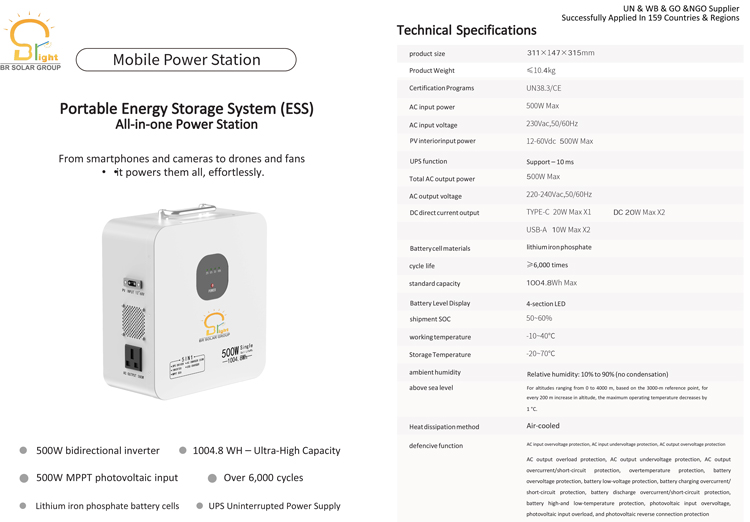
A Portable Energy Storage System helps solve a common problem: keeping essential devices running when grid power is unavailable, unstable, or inconvenient. For buyers who need backup electricity for small appliances, communications equipment, or off-grid daily use, a compact lithium-based power unit can simplify energy storage and delivery in one enclosure. The model described here is a 500W unit with 1004.8Wh capacity and single-cell LiFePO4 chemistry, designed to combine charging, inversion, and power-management functions for practical portable use.
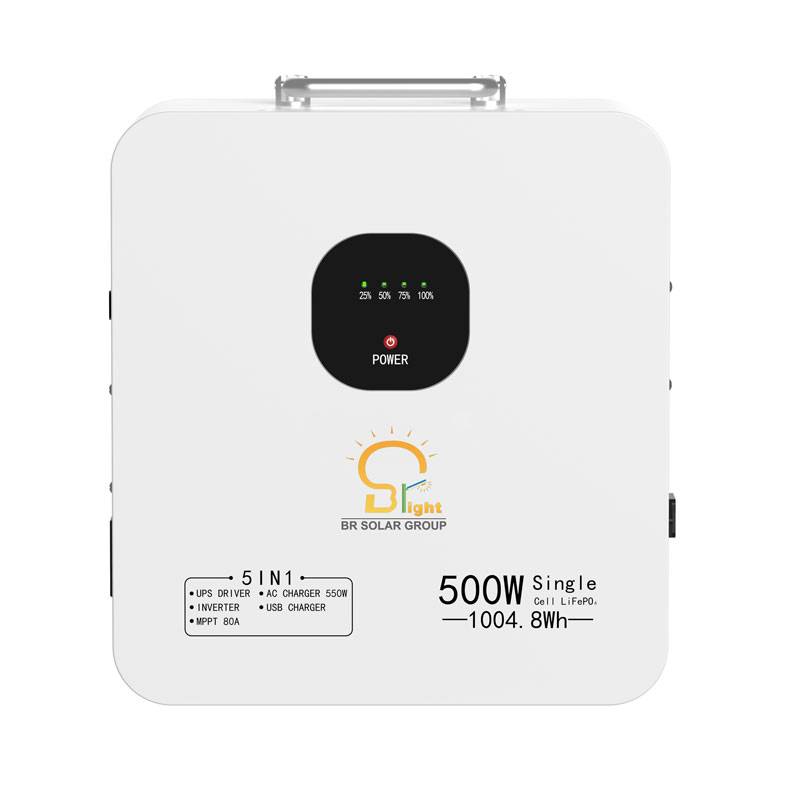
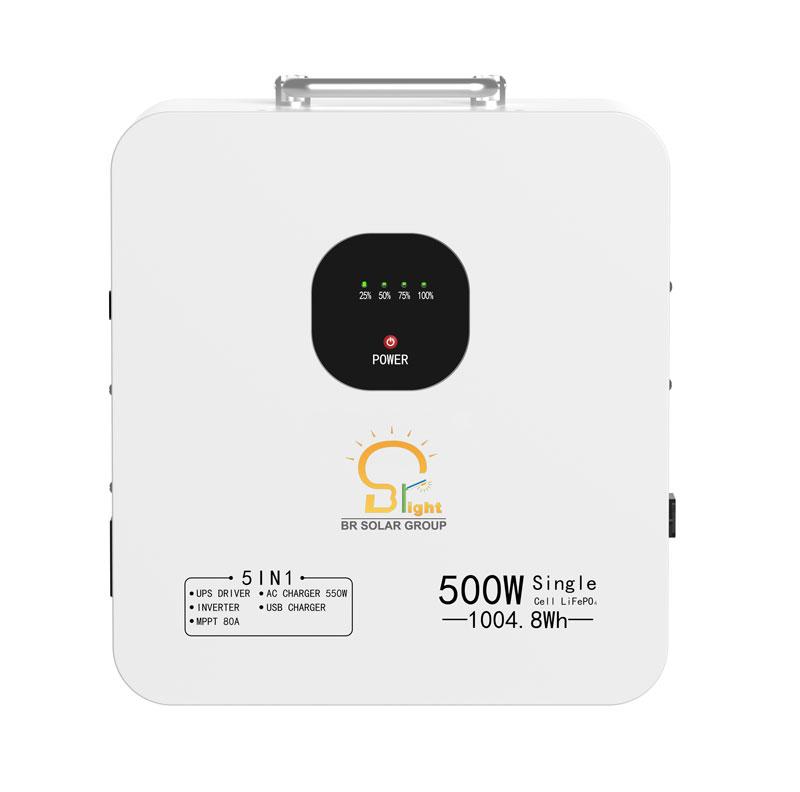
Based on the visible product label, this unit is positioned as an all-in-one power station rather than a simple battery box. The front panel shows a “5 in 1” function list that includes UPS driver, inverter, MPPT 80A, AC charger 550W, and USB charger. That combination is useful for buyers who want one product to support solar charging, utility charging, and portable AC output without assembling separate components.
What This Product Is Designed to Do
This type of all-in-one power station stores electrical energy in an internal lithium iron phosphate battery pack and then manages how that energy is charged, converted, and distributed. In practical terms, it can provide backup power for phones, laptops, lights, routers, small fans, and other modest loads. It can also be used as a short-duration UPS-style backup for sensitive equipment, depending on the connected load and the unit’s configuration.
The visible display shows battery percentage indicators at 25%, 50%, 75%, and 100%, which is a helpful feature for quick status checks. A central power button on the black control panel suggests straightforward operation for non-technical users, while the top handle supports transport between rooms, vehicles, work sites, or outdoor locations.
Key Visible Specifications and Capabilities
Rated Power and Capacity
The unit is marked 500W and 1004.8Wh. These two numbers matter for different reasons. The watt rating indicates the level of load the system is intended to support, while watt-hours describe how much energy is stored. For buyers, the important takeaway is that this is a compact backup and mobile power product suited to light-to-moderate electrical demand rather than high-draw equipment.
Battery Chemistry
The label indicates Single Cell LiFePO4. Lithium iron phosphate chemistry is widely used in energy storage because it is favored for stability and long service expectations in general industry practice. It is a common choice where safety, durability, and repeat charge use are more important than extreme energy density. Exact cycle life, however, is not provided here and should not be assumed.
Integrated Power Functions
The visible “5 in 1” list suggests the product integrates several functions into one system: UPS driver, inverter, MPPT 80A, AC charger 550W, and USB charger. For buyers, this reduces setup complexity. Instead of sourcing a separate inverter, battery charger, and solar controller, a single enclosure can serve as a more compact power-management platform.
Materials, Housing, and Product Structure
The enclosure appears to be a white rectangular housing with rounded corners and a smooth matte or semi-gloss finish. That style is common for portable electronics because it provides a clean exterior and helps protect internal battery modules and electronics from incidental contact. A molded outer shell also improves product appearance for home or office use.
The top-mounted carry handle makes the unit easier to move. From a manufacturing standpoint, the product likely combines battery pack integration, inverter/charger electronics, a control board, and a finished housing assembly. Exact internal cell format, port layout, cooling design, and protective circuitry are not visible, so they should be confirmed directly before purchase if those details matter to the application.
Manufacturing and Assembly Approach
Products in this category are typically built through electrical assembly rather than simple mechanical fabrication. The main steps generally include battery pack integration, connection of the inverter and charging electronics, installation of the control/display panel, wiring of output interfaces, and final enclosure assembly. Because the visible unit combines multiple functions, careful internal layout is important for heat management, cable routing, and serviceability.
In a B2B context, buyers often look for consistency in pack assembly, secure electrical connections, stable output behavior, and repeatable controller performance. The visible product information supports the idea of an integrated energy platform, but exact build details, safety approvals, and test results are not supplied and should be verified separately.
Application Scenarios
Home Backup for Small Loads
For short power interruptions, a Portable Energy Storage System can keep essential low-power devices operating. That may include Wi-Fi routers, LED lighting, charging devices, and small office electronics. It is not intended as a whole-house backup solution, but it can fill the gap between outage and generator startup or provide quiet backup in apartments and compact spaces.
Outdoor and Mobile Use
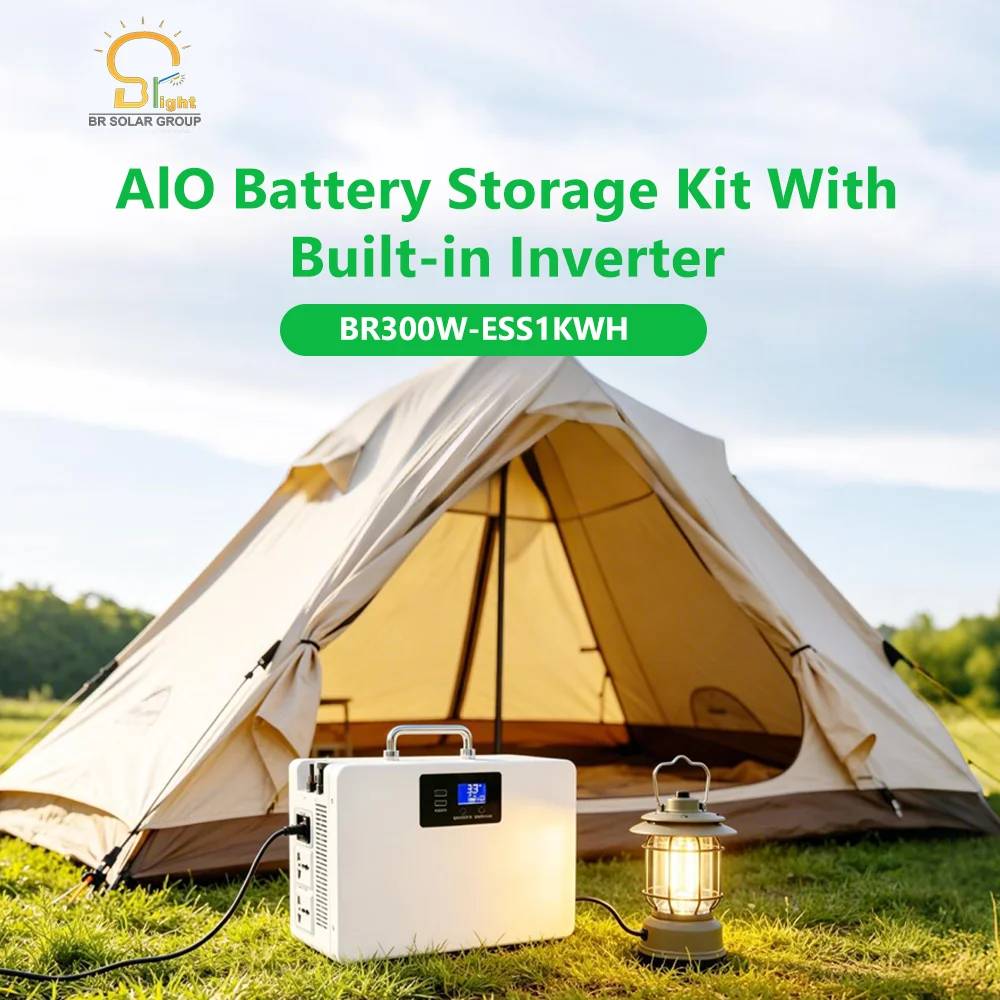
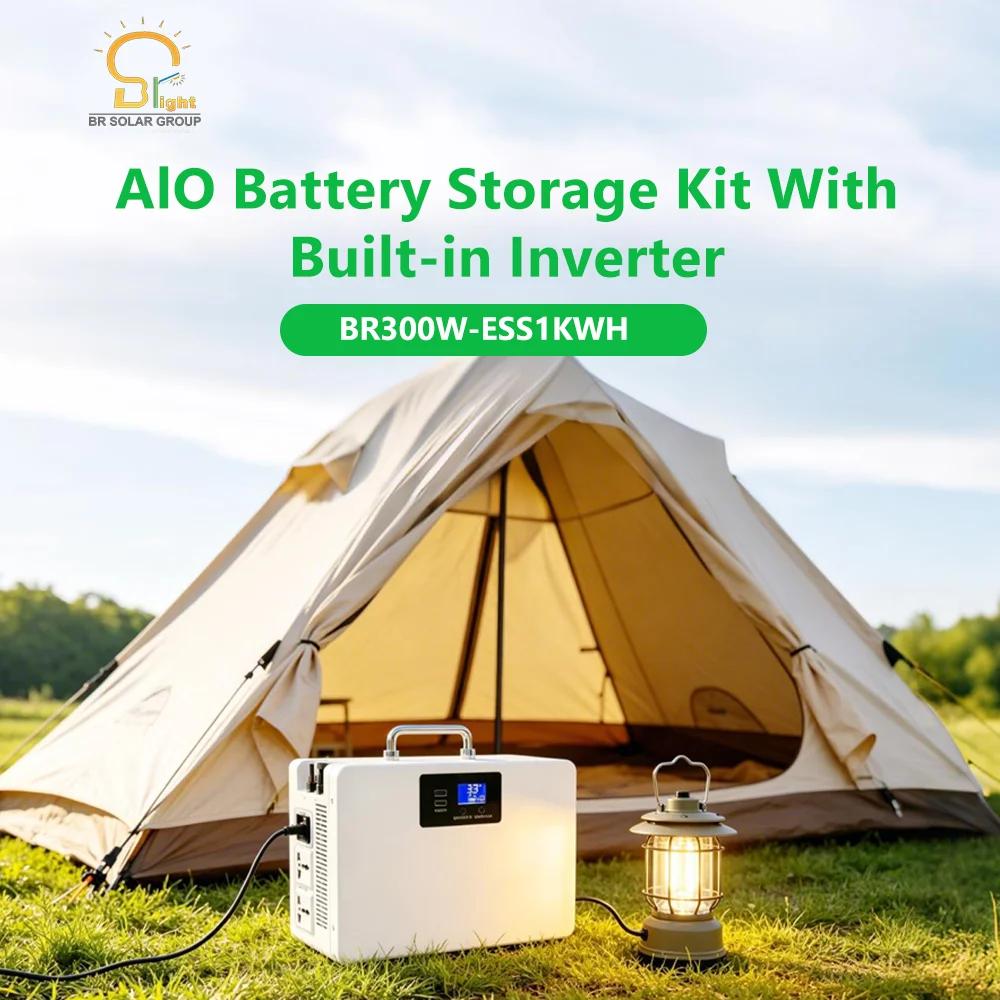
Campers, event crews, and mobile workers often need portable electricity without relying on fuel-powered generators. An all-in-one power station can support device charging and light electrical loads in areas where grid access is limited. The handle and enclosed format make transport easier than handling separate battery modules and converters.
Basic Solar Storage
The visible MPPT 80A function indicates solar-charging capability is part of the product concept. For buyers building a small solar setup, this creates a pathway to store daytime solar generation for later use. Actual panel compatibility range, charging behavior, and wiring requirements are not provided, so installation planning should be confirmed against the supplier’s electrical guide.
Quality Control Considerations
When evaluating a unit like this, quality control should focus on more than external appearance. Buyers should ask about battery pack consistency, inverter stability, charge-controller performance, connector fit, display accuracy, and thermal behavior under load. For an integrated product, both the electronics and the enclosure must work together reliably.
Since exact certifications and test data are not visible, procurement teams should request documentation for electrical safety, battery protection features, output waveform details, and shipping compliance where relevant. For portable lithium products, these checks are especially important before large-volume purchase or private-label resale.
Customization and Buyer Selection Guidance
Not every application needs the same output ports, charging profile, or enclosure styling. Buyers seeking a Portable Energy Storage System should first define the load profile: how much power the connected devices require, how long backup is needed, and whether AC output, USB charging, or solar charging is the priority. Those details determine whether this 500W / 1004.8Wh unit is a suitable fit.
If you are comparing an all-in-one Power Station against other options, consider these points: usable capacity, supported load level, battery chemistry, charging method, portability, and whether the UPS function matches your equipment needs. For sensitive electronics, continuity of output during switchover is also a key question. For mobile use, weight, handle design, and enclosure durability matter just as much as electrical ratings.
Why Buyers Choose an Integrated Portable Power Design
An integrated design reduces clutter and simplifies deployment. One enclosure can be easier to place in a home, vehicle, workshop, or field environment than a system assembled from separate battery, inverter, and charger modules. It can also shorten the learning curve for end users who only need basic backup power and charging access.
The visible branding, B light / BR SOLAR GROUP, suggests a product line focused on solar and energy-storage applications. Whether the buyer needs a backup unit for intermittent outages or a portable supply for off-grid tasks, this style of product offers a compact way to package energy storage with conversion and charging functions.
Requesting the Right Information Before Purchase
To make a sound purchasing decision, ask for the output type, port configuration, charging time, dimensions, weight, protection features, and any available compliance documents. Those details are especially important if the product will be used in a commercial setting, resold, or integrated into a larger energy system. Since some internal specifications are not visible here, confirming the electrical data is the safest way to match the product to your application.
Get a Quote or Technical Details
If you are sourcing a Portable Energy Storage System for backup power, outdoor use, or basic solar storage, this 500W LiFePO4 unit is a practical reference point. Contact the supplier to confirm configuration, available interfaces, and customization options before placing an order. A clear electrical brief will help ensure the unit fits your load, charging, and installation requirements.