

Why buyers keep asking about energy storage system manufacturers
The phrase energy storage system manufacturers gets used loosely, but buyers rarely mean only the company that assembles the battery pack. In practice, they are often trying to identify who can deliver a complete cabinet-level system that fits the electrical, thermal, and maintenance needs of a project. That distinction matters. A utility-scale install, a factory backup line, and a telecom site do not fail in the same way, and they are not maintained the same way either.
For engineers and sourcing teams, the real decision is usually this: who can build an enclosure or system package that protects the power electronics, simplifies service access, and integrates cleanly with the rest of the site. A cabinet may look plain enough from the outside, but the internal layout tells a much bigger story. In this category, sheet-metal fabrication, cable routing, ventilation, and front-access serviceability can be as important as the energy components themselves.
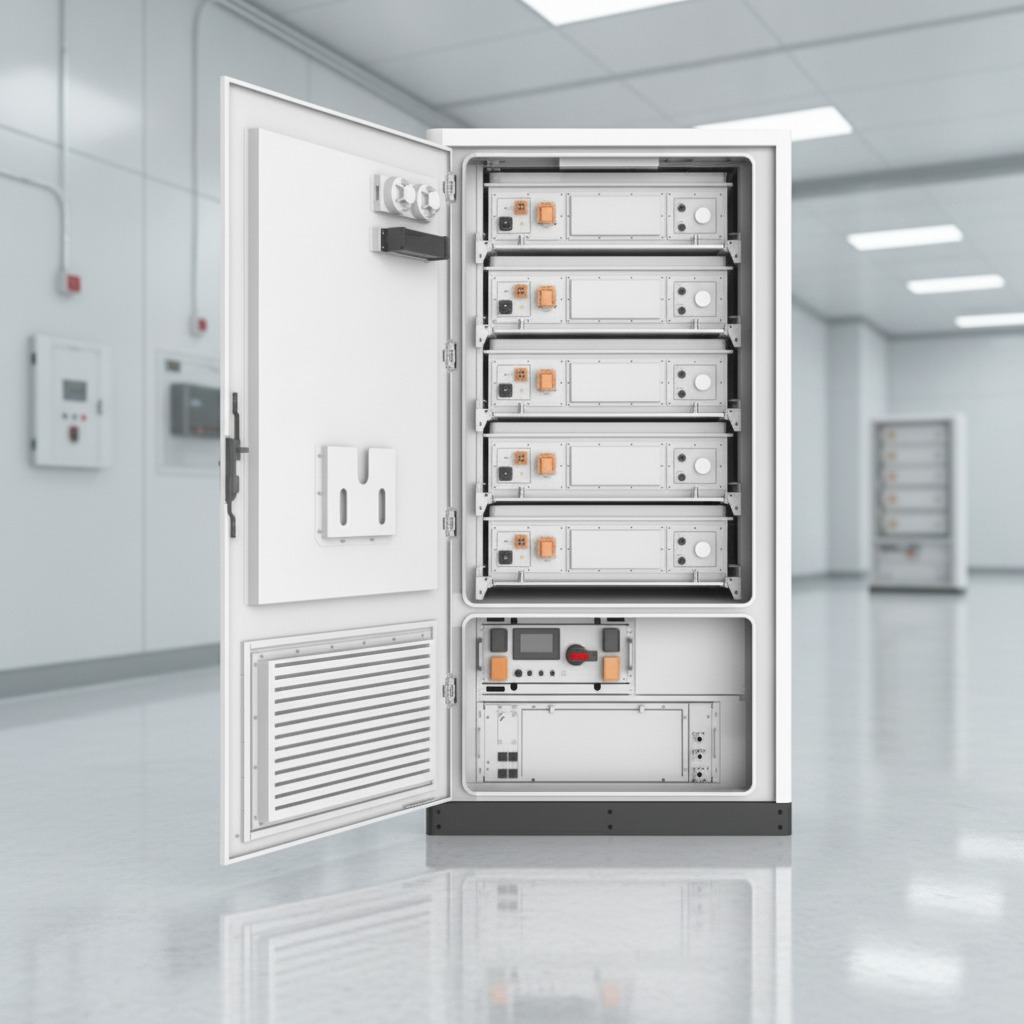
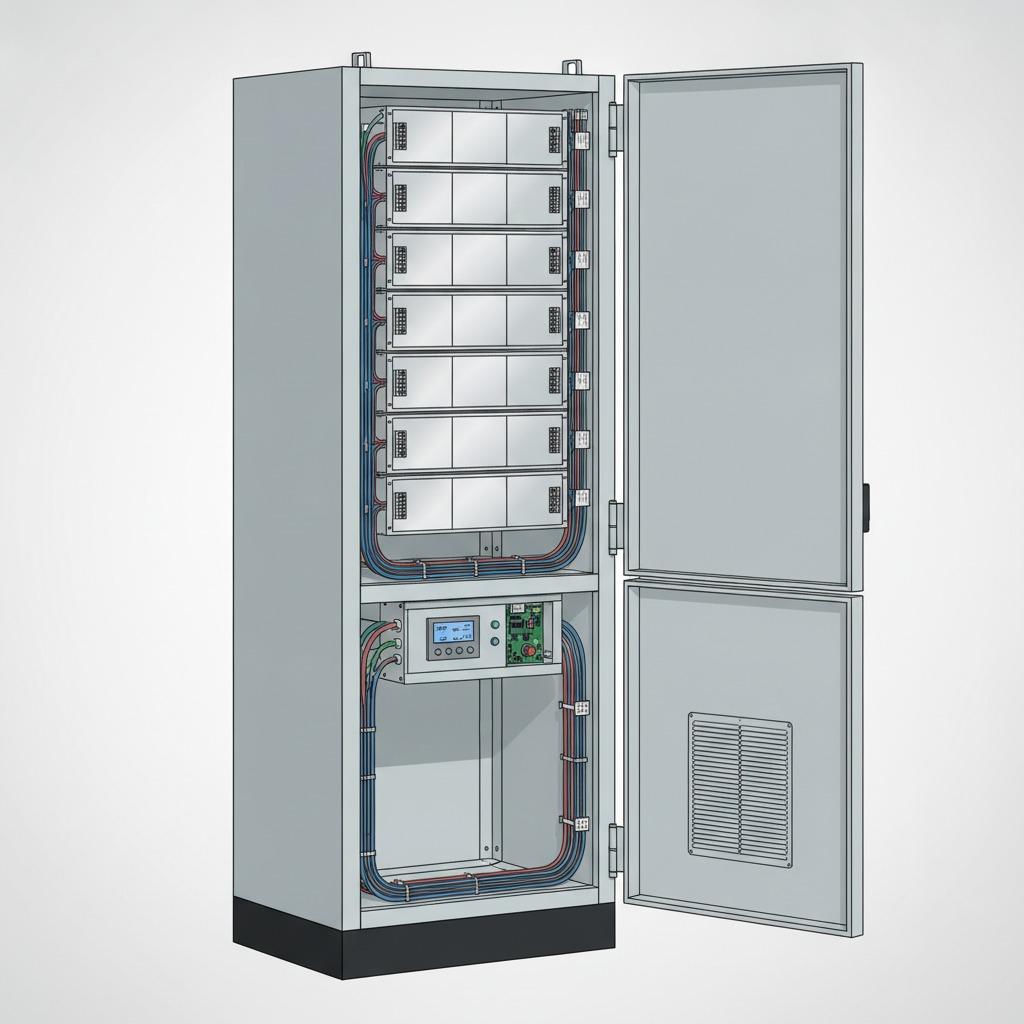
The visible cabinet structure here is a useful example. It is a tall floor-standing enclosure with a hinged front door, a ventilated lower section, and a separate internal lower compartment beneath a bank of rack-mounted modules. That arrangement is common in industrial power equipment, UPS packages, and battery energy storage system manufacturers’ cabinet builds, where maintenance access and internal separation are both part of the design logic.
What the cabinet layout suggests about the system
A quick look at the form factor gives away several practical priorities.
The upper section contains five identical rack-mounted modules with front-facing connections. That usually means the system is designed for modularity, service replacement, or staged expansion. Whether those modules are battery-related, power conversion units, or other electronics is not visible here, so it would be a mistake to claim more than that. Still, the layout suggests repeatable installation and straightforward access for technicians.
Below that, the cabinet has a separate electronics or power bay. The lower area appears to include a control interface with a display and buttons, plus additional internal equipment. That split between upper modules and lower controls is not unusual. It helps keep monitoring, switching, and protective functions in a more accessible zone while isolating the heavier or hotter components above or beside them.
The lower front door includes a ventilation grille, which points to airflow being part of the cabinet strategy. Buyers should not read too much into that alone. Ventilation does not automatically mean active cooling, and it certainly does not define performance. But it does signal that the enclosure is expected to manage heat, which is one of the first issues engineers check when comparing an energy storage system supplier against a generic metal box vendor.
What matters more than the name on the door
When sourcing cabinetized power systems, the manufacturer name matters less than the ability to match the application. That sounds obvious, but it is where many projects go sideways. A good-looking enclosure can still be the wrong product if the internal layout makes cable terminations awkward, the door swing conflicts with site clearance, or the airflow path is too optimistic for the ambient conditions.
A better way to evaluate energy storage system manufacturers is to ask practical questions:
Can the cabinet support front-service access without dismantling half the assembly?
Is the internal division between control, power, and module sections logical, or is it squeezed together to save footprint?
Does the enclosure appear designed for repeatable rack mounting, or does every component look custom-fit in a way that will complicate maintenance later?
Is there enough ventilation and space for heat to move out of the cabinet, especially in dense industrial environments?
Those questions matter because the cabinet is not just packaging. It is part of the thermal and maintenance strategy.
Cabinet fabrication is not a cosmetic exercise
The visual language of the enclosure tells you a few things about the likely manufacturing process. This looks like a fabricated sheet-metal electrical enclosure assembly, with a painted or powder-coated finish and a black plinth at the base. That is standard enough in industrial equipment, but it still requires care if the system is going to live in a factory, utility room, or telecom shelter.
The practical issue is tolerance stacking. Not in the precision-machining sense, but in the everyday assembly sense: door fit, rail alignment, component spacing, latch engagement, and service clearance. If one internal frame lands a little off, rack-mounted equipment can become annoying to install. If the front door is not aligned properly, the lock may feel cheap or the gasket line may not seat cleanly. None of that is glamorous, yet it is exactly what distinguishes a reliable battery energy storage system manufacturer from a builder that only looks prepared in the sales room.
There is also a maintenance angle that buyers sometimes underweight. Front-access hardware, visible latches, and a segmented lower section can save time during inspections. That is not just a convenience. It reduces the temptation to leave a cabinet partially serviced because the crew needs to wait for more labor, more space, or a less awkward time window.
Quick comparison: what to look for in a cabinet-based storage partner
1. System integration capability
Some vendors are strong at cabinets but weak at systems. Others can integrate controls, power modules, cable management, and thermal features into one workable package. The second group is usually more valuable for project teams, even if the first group can quote a lower starting price.
2. Serviceability
Look for a front-access layout, clear module separation, and enough room around the lower control area. If routine checks require removing multiple assemblies, the design is not really service-friendly.
3. Heat management
Visible grilles are only part of the story, but they are still worth noting. Buyers should ask how the enclosure handles heat under expected load and ambient conditions, not just whether it has openings in the door.
4. Enclosure robustness
Industrial electrical cabinets need more than a neat finish. Hinges, latches, and door structure must tolerate repeated use. A sleek appearance is useful, but not if the cabinet feels loose after a few maintenance cycles.
Common mistakes buyers make
One mistake is buying the system on the basis of apparent modularity alone. Five stackable modules look convenient, and they may be. But modular access only helps if the underlying architecture supports clean wiring, safe isolation, and sensible diagnostics.
Another mistake is assuming that a cabinet with ventilation is automatically suitable for every site. It may be fine in one room and marginal in another. Ambient temperature, dust load, and airflow around the enclosure can change the picture quickly. That is especially true in factories and utility buildings where equipment density tends to creep upward over time.
A third mistake is ignoring the lower control compartment. Engineers focus on the visible module bank, which is understandable, but the lower section often carries the logic that makes the rest of the system usable. If the control interface is awkward or crowded, operators feel it immediately.
How to evaluate an energy storage system supplier without overcomplicating it
The best sourcing approach is usually a short, disciplined checklist rather than a long procurement novel. Ask for the cabinet layout, internal segregation strategy, service access method, and thermal approach. Ask how the enclosure is assembled and how repeatable the module mounting is. If the product is intended for industrial use, ask what the manufacturer expects in terms of environment, clearance, and maintenance access.
That is also the point where the term energy storage system supplier becomes useful. A supplier should not only ship a cabinet; it should help define what the cabinet needs to do in the field. If the vendor is vague about how the design supports maintenance, airflow, or module replacement, the project team should treat that as a warning sign, not a minor omission.
Buyer-facing questions worth asking early
Before moving from inquiry to quotation, it helps to ask a few direct questions:
What equipment is mounted in the upper rack area, and how is it accessed?
How is the lower compartment separated from the upper modules?
What kind of front-service activities are expected during normal maintenance?
How is airflow handled through the cabinet, especially near the lower door section?
Can the enclosure be adapted for a different site layout or control architecture?
These are simple questions, but they surface design weaknesses quickly. A manufacturer that answers them clearly is usually easier to work with throughout the project.
When a standard cabinet is enough, and when it is not
A standard enclosure can be perfectly adequate for some industrial power projects, especially when the package is straightforward and the operating environment is controlled. But once the system involves multiple modules, a lower control bay, and front-service expectations, the cabinet becomes a functional component rather than a commodity shell.
That is where experienced energy storage system manufacturers tend to separate themselves. They know that enclosure geometry, service access, and internal organization influence uptime just as much as the electrical components do. The buyer may still be comparing multiple vendors on price and schedule, but the hidden variable is whether the cabinet will remain easy to live with after installation.
A practical next step for sourcing teams
If you are comparing battery energy storage system manufacturers or broader industrial cabinet suppliers, start with the cabinet architecture first and the brochure language second. The layout shown here is a reminder that a useful system is usually built around accessibility, segregation, and thermal common sense.
For project teams, the next step is to request a layout drawing, ask how the modules are serviced, and confirm whether the cabinet design suits the target environment. That saves time later, and it prevents a lot of awkward field surprises that nobody wants to explain after commissioning.
If you are shortlisting an energy storage system supplier, focus on the cabinet details that operators will actually touch. That is where the real quality shows up.






