

Quick answer: Once a company operates storage at more than two or three sites, the question changes from "does the battery work?" to "can one team see and manage all of them?" Mature fleet operators answer with a monitoring architecture built on three layers: on-site controllers that talk to each cabinet over standard interfaces (ETH, 4G, CAN, RS485, LAN on the BR-261), a cloud platform that aggregates every site's data into one dashboard with automatic alarms, and O&M processes that turn alarms into defined actions with response-time commitments. Done well, one operator supervises dozens of sites remotely, dispatching each battery against local tariffs and keeping availability above contractual levels without a technician on every corner.

Why fleets need a different operating model
A single-site BESS can be operated informally: the facility manager glances at a screen, a local integrator takes service calls, and problems surface quickly because someone is always nearby. That model collapses at fleet scale. Distributed C&I storage portfolios — cabinets across factories, warehouses, cold stores, charging hubs or industrial parks — face a different reality: sites are far apart, local staff change, and a fault that sits unnoticed for weeks quietly destroys revenue and, worse, warranty availability commitments.
The economics amplify this. Each additional site multiplies the value of shared learning: a dispatch strategy tuned for one cold store can be templated across every cold store in the portfolio; a firmware issue found on one cabinet can be checked fleet-wide in hours. Fleets also aggregate negotiating power — a portfolio of batteries can participate in demand response or trading programmes that no single 100 kW site could access alone. But none of that materialises without visibility. Remote monitoring is what converts scattered hardware into a portfolio.
The three-layer architecture
Layer 1: on-site communication and control
Everything starts at the cabinet. The BR-261 integrates EMS, PCS and BMS in one enclosure and exposes ETH, 4G, CAN, RS485 and LAN interfaces, which means it can connect to the site network, talk to utility meters and plant controllers, and reach the cloud over ethernet or cellular without additional gateway hardware. Integration scope matters more than interface count: when one vendor supplies the whole stack, the data models match across a fleet, and fleet-level software sees identical signals from every site. That uniformity is a quiet but decisive O&M advantage — and it is why "all-in-one" appears in datasheets, as explained in reading a BESS datasheet.
Layer 2: cloud platform and alarming
The cloud layer aggregates real-time telemetry — state of charge, power flows, cell temperatures, fault codes — into a single view across all sites. But raw dashboards are not monitoring. The value is in structured alarming: thresholds that reflect each site's duty (a cold-store cabinet working two daily cycles needs different limits than a reserve-holding cabinet), alarm severity levels, and escalation routes that guarantee a human sees what matters within minutes. Modern platforms also do online updates, pushing firmware and configuration improvements across the fleet without site visits — a capability listed among the BR-233's monitoring features and increasingly expected at fleet scale.
Layer 3: O&M process and people
Software finds problems; people and processes resolve them. A fleet O&M model defines, in writing: who receives each alarm class, the maximum time to acknowledge and to act, what can be fixed remotely, and what triggers a site visit. It also schedules the preventive work that monitoring data informs — filter and coolant checks on liquid-cooled systems, torque checks, enclosure inspection — clustered geographically so one trip covers several sites. Response commitments belong here precisely because they are what the warranty's service levels refer to; the connection is detailed in warranty and performance guarantees.
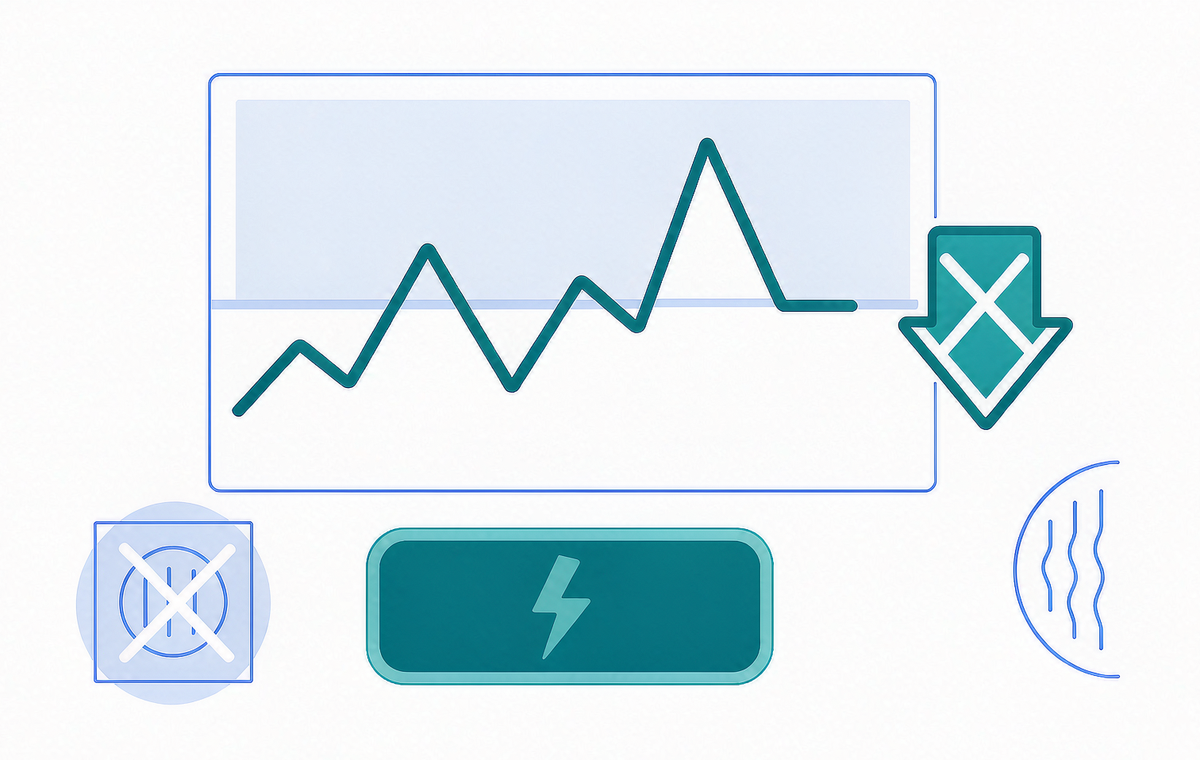
What good monitoring actually watches
Dashboards vary, but the signals that drive fleet decisions are consistent:
- Energy and dispatch performance. Did the battery execute the planned peak shave? Actual versus target state-of-charge at each tariff boundary reveals controller problems before the electricity bill does.
- Temperature behaviour. Cell temperatures and spread — the BR-261 holds cells ≤38°C at full load with ≤3°C difference — are the earliest measurable indicator of cooling or balance drift, long before capacity fades.
- Cycle accumulation. Throughput against the warranty allowance, fleet-wide, so no site silently erodes its guarantee, a risk described in our warranty article.
- Availability and downtime. The share of time each system is ready to perform, mapped against contractual availability levels.
- Safety-related signals. Leakage detection status, suppression system readiness, door and access events — monitored continuously, tested on schedule.
Dispatching a fleet, not just watching it
The highest-value use of fleet software is coordinated dispatch. Each site's battery should follow its local tariff and load shape, but a portfolio layer can arbitrate between them: prioritising which sites charge when a shared solar asset underperforms, coordinating demand response events across many sites, or holding extra reserve at sites whose power quality duties are critical. Fleets with virtual capacity expansion duties at some sites and pure arbitrage at others need this portfolio view to keep every battery doing its most valuable job each day.
Fleet dispatch also protects the physics. Coordinated schedules prevent the classic mistake of cycling every battery hard every day regardless of duty; instead, throughput is distributed to respect each cabinet's duty profile and cycle-life budget. Since pack life depends directly on thermal discipline — the reason liquid cooling and its 3°C spread matter, as covered in LFP cycle life and warranty — dispatch restraint is a life-extension tool, not just a trading preference.
Security, connectivity and the stand-alone site
Fleet platforms inherit every IT risk of industrial control systems, so basic hygiene matters: segmented networks between battery control and corporate IT, encrypted transport to the cloud, role-based access, and firmware updates through controlled channels. Remote sites without wired internet rely on the 4G path; the BR-261's support for both means connectivity survives router failures, and the cloud-edge collaboration model keeps local control running autonomously even if the wide-area link drops. Sites on weak grids with islanding duties add another requirement — the controller must keep the microgrid running while disconnected, a scenario covered in microgrid-ready storage for remote sites.
Building the business case for fleet O&M
Fleet-scale monitoring pays through four channels: avoided downtime (alarms catch faults in hours instead of billing cycles), longer asset life (temperature and throughput discipline), labour efficiency (one control room instead of site visits), and portfolio revenue (aggregated demand response and trading). For a ten-site portfolio, the labour effect alone is usually decisive — and each saved site visit also saves the drive time and carbon that fall outside the spreadsheet. The economics interact directly with the availability commitments in contracts: the better the monitoring, the stronger the availability level a supplier will sign, which loops back into project economics and value stacking.
FAQ
Can we use our existing SCADA or building management system?
Usually yes, at the site level, via RS485, CAN or LAN interfaces and standard industrial protocols. The practical question is whether your platform can absorb fleet-scale BESS data models; many operators run both — site SCADA for local integration, the vendor's cloud for fleet analytics and alarming.
What happens if the internet connection at a site fails?
Local control continues autonomously: the cabinet's EMS keeps executing its dispatch plan offline, buffers data, and re-syncs when the link returns. With dual paths (ETH plus 4G), complete disconnection is rare. Safety systems never depend on the cloud.
How many sites justify a fleet monitoring platform?
Most operators feel the need around three to five sites, when informal oversight starts missing things. The economics improve with every site added, because the platform's cost is largely fixed.
Does remote monitoring void the warranty?
The opposite: most warranties depend on it. Monitoring data is how capacity guarantees are verified, availability is proven and degradation is diagnosed early. Contracts typically require the monitoring service to remain active for warranty validity.
Who should operate the dispatch strategy — us or the supplier?
Either can work, but define it in writing. Supplier-operated dispatch comes with performance accountability; self-operated keeps strategy in-house and maximises flexibility. Hybrid models — supplier sets guardrails, owner optimises within them — are increasingly common for portfolios with mixed duties.
Next step
Map your portfolio: sites, duties, tariffs and the monitoring you have today. We will propose an architecture — site integration, cloud layer, O&M process — and show what one fleet dashboard looks like with your sites on it. Request a fleet architecture review from BR Solar.
Continue reading
- From Pilot to Fleet: Rolling Out Multi-Site C&I Storage Programs
- Warranty and Performance Guarantees in C&I Battery Contracts
- Reading a BESS Datasheet: The 12 Specs That Actually Matter
- Microgrid-Ready Storage for Remote Industrial Sites
Talk to a BR Solar storage engineer about your storage fleet





