

Quick answer: Virtual capacity expansion means using on-site storage to meet peak demand instead of paying the utility to upgrade the grid connection. When a site's peak approaches its contracted capacity, the utility may require an expensive transformer or line upgrade — often with a long lead time. A battery that shaves the peak below the limit can defer or avoid that upgrade entirely, turning a capital project into a storage investment that also earns from peak shaving and arbitrage.

The problem: peaks that exceed contracted capacity
Every site has a contracted capacity — the maximum power the grid connection can deliver, set by a transformer and the utility's rules. When new equipment, EV charging or expanding production pushes the site's peak toward that limit, the options are usually to reduce load, pay for a grid upgrade, or add storage. Upgrades are frequently the most expensive and slowest path: a new transformer or service line can cost a great deal and take months to deliver. Storage offers a third route.
The savings arithmetic behind this decision overlaps with the standard C&I storage ROI framework — the grid-upgrade deferral is one of several stacked value streams.
How storage creates "virtual" capacity
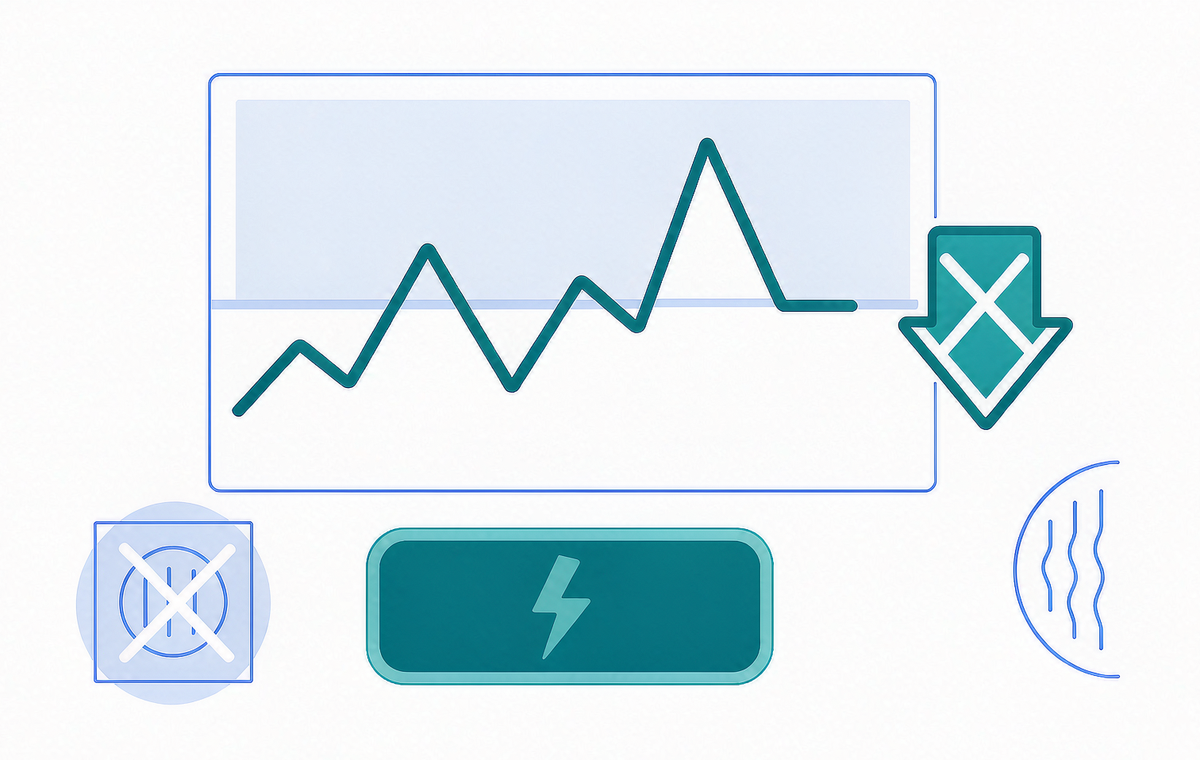
The idea is simple in principle. If your peak demand exceeds the connection limit for only a short window each day, a battery can supply the difference during that window, keeping the site's draw from the grid beneath the limit. The site then behaves as if it had a larger connection without one being built. The battery's power rating sets how much peak it can cover, and its energy capacity sets how long. A single BR-261 provides 100 kW of power and 261 kWh of capacity; where the gap is larger, units parallel up to eight, so capacity can be matched to the shortfall in steps.
What it takes to make the case
- Know the shortfall precisely. The gap between peak demand and the connection limit, in kW, and the duration it lasts, in hours.
- Get the upgrade cost and lead time. The value of deferral is measured against the capital and delay you avoid.
- Confirm the tariff treatment. How the utility charges for demand and whether storage dispatch is permitted to lower the billed peak.
- Stack additional revenue. The same battery that defers an upgrade can also shave demand charges and arbitrage — improving the return described in our ROI guide.
- Plan for growth. Reserve space for parallel units so later expansion does not require a redesign.
A practical checklist
- Current peak demand and the contracted connection capacity.
- Frequency and duration of peaks near or above the limit.
- Quoted cost and lead time of the grid upgrade being deferred.
- Utility rules on storage dispatch against billed demand.
- Required power (kW) and energy (kWh) of the shortfall.
- Additional value streams — demand charge, arbitrage, demand response.
- Site space and foundation for parallel cabinets.
- Grid-interconnection and protection requirements for the storage.
FAQ
Does storage really avoid a grid upgrade?
It can defer or avoid one when the excess demand is short and predictable. If the site needs more energy continuously, storage shifts rather than creates supply — in that case a genuine upgrade may still be necessary. The decision hinges on the shape of the peak.
How much capacity do I need to shave a peak?
Enough power to cover the kW shortfall and enough energy to cover its duration. The power rating sets the first, the kWh capacity the second; a BR-261 supplies 100 kW and 261 kWh per unit, with parallel units for larger shortfalls.
Is virtual capacity expansion allowed by utilities?
Rules vary by market and utility. Some explicitly allow behind-the-meter storage to reduce billed demand; others have conditions. Confirm the treatment with the utility before committing to the design.
Can the same battery also reduce my demand charge?
Yes. Beyond avoiding an upgrade, the battery discharges against the monthly peak to lower the demand charge, and can arbitrage between tariff bands. These are documented benefits of the BR-261 platform.
What if the site grows later?
Because the BR-261 parallels up to eight units, capacity can be added in steps as demand grows rather than over-sizing on day one — preserving optionality while deferring further upgrades.
Next step
Share your peak demand, connection limit and any quoted upgrade cost, and our engineers will assess whether storage can defer the upgrade. Request a capacity review from BR Solar.
Continue reading
- C&I Energy Storage ROI, Payback and LCOS
- How to Size a 100 kW 261 kWh BESS for Peak Shaving
- Data Center Backup Power with BESS
- Microgrid-Ready Storage for Remote Industrial Sites
Talk to a BR Solar storage engineer about deferring your grid upgrade





