

Quick answer: A data center needs three things from backup power: enough runtime to ride through an outage or bridge to generators, clean power quality for sensitive IT loads, and a fire-safety design that protects both the facility and the asset. Battery energy storage suits all three — it can cover the short interruption before gensets start, filter power-quality events and, for some sites, carry load for longer. The BR-261 delivers 100 kW / 261 kWh per unit with ≥98.2% DC round-trip efficiency and a layered fire-safety stack; the 5.01 MWh container scales that to larger reserves with richer detection.
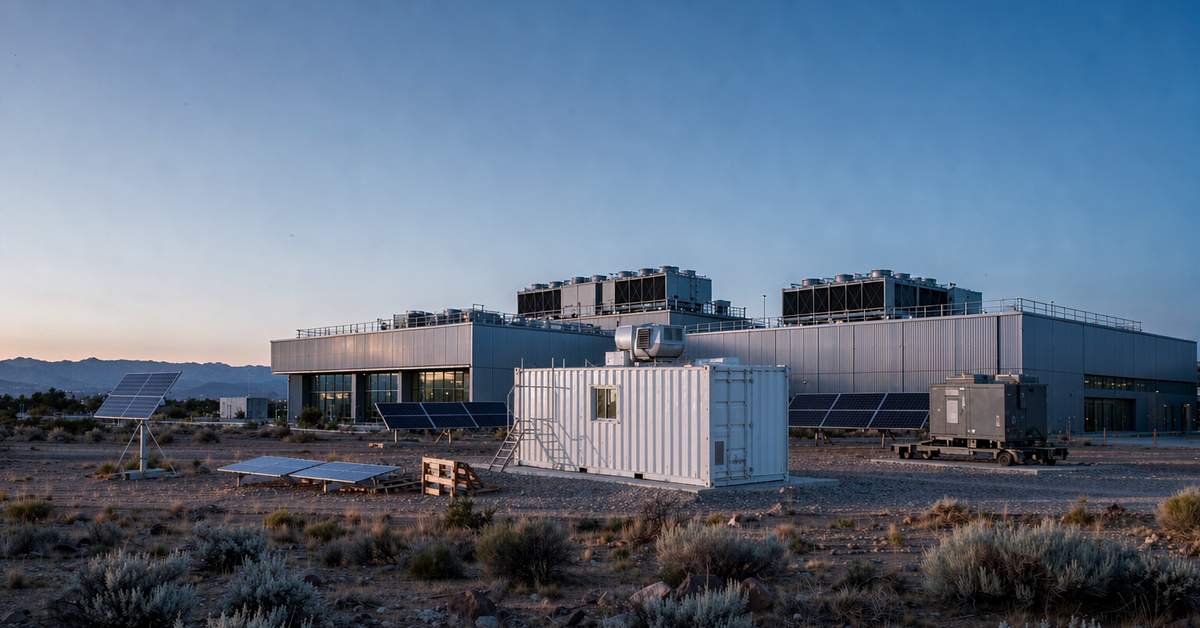
What data centers actually require
The classic tiered redundancy models are built around uninterruptible power supplies and diesel generators. Storage enters the design in three roles. First, as a fast bridge: when the grid fails, there is a gap before generators accept load, and a battery covers it instantly. Second, as a power-quality device: it can absorb sags, swells and transients that stress IT equipment, prolonging lifespan. Third, as a longer-duration or supplemental source where generators are limited by fuel, permitting or emissions rules.
Bridge runtime and how to size it
The bridge window is short — often measured in seconds to a few minutes — but it must be reliable, because it is what prevents a hard shutdown when the grid trips. The battery power rating must exceed the critical IT load, and the energy rating must cover the window with margin, including the time generators need to start and stabilise. A single BR-261 supplies 100 kW and 261 kWh, and units parallel up to eight, so a facility can match the reserve to its critical load and redundancy tier. Where a site needs megawatt-hour-scale reserve from one asset, the container platform described in container versus cabinet fits better.
Power quality for sensitive loads
Data center equipment is sensitive to voltage and frequency disturbances. A storage system with integrated PCS and EMS can respond in milliseconds, smoothing the supply the IT load sees and reducing stress on power supplies. The BR-261's power conversion system is rated at 144 A output current with a power factor of −0.99 to +0.99 and THDi at or below 3%, which describes a clean output waveform — relevant when feeding electronics rather than motors.
Fire safety and siting take priority
Lithium-ion assets inside or near a data center attract close scrutiny, and rightly so. The design should specify LFP chemistry, detection at cell and pack level, suppression at pack and system level, and an enclosure with a fire rating. The BR-261 uses aerosol suppression at pack and system level, an explosion-proof cabinet, 50 mm fire-resistant rock wool and at least one hour of fire resistance; the container adds temperature, smoke and combustible-gas detection with deflagration venting and water sprinkler. Siting must satisfy local fire-separation rules, which for a data center often means outdoor placement with defined access. The layers are explained in battery fire safety in commercial energy storage.
A practical data center checklist
- Critical IT load in kW and the redundancy tier required.
- Bridge window until generators accept load, in seconds or minutes.
- Required energy for the bridge plus any extended-runtime role.
- Power-quality performance — THDi, power factor, response time.
- Fire detection, suppression and containment at each level.
- Enclosure fire rating and siting against local code.
- Integration with UPS, generators and the facility EMS/BMS.
- Monitoring and remote diagnostics for unattended operation.
FAQ
Can batteries replace diesel generators in a data center?
For short interruptions, storage can replace the bridge function. For long outages, energy density usually still favours generators, so most facilities use storage together with generators or fuel cells rather than in place of them. The right split depends on your runtime requirement and fuel constraints.
How long does a battery need to bridge to generators?
Typically seconds to a few minutes, covering the gap until generators start and stabilise. Size the energy with margin for the site's generator start profile and for repeated events.
Are lithium batteries allowed in or near data centers?
They are widely used when chemistry, detection, suppression and siting meet code and insurer requirements. LFP plus a layered fire-safety design is the common approach; confirm specifics with the authority having jurisdiction and your insurer.
Will storage improve power quality for my IT load?
Yes. The integrated PCS and EMS can respond in milliseconds and, with clean output characteristics (THDi ≤3% on the BR-261), reduce disturbances reaching sensitive equipment.
Cabinet or container for a data center?
Use paralleled cabinets for reserves in the hundreds of kilowatt-hours and container scale when a single asset must carry megawatt-hour reserve. Both share LFP chemistry and liquid cooling; the container brings a richer detection suite.
Next step
Share your critical load, redundancy tier and runtime requirement, and our engineers will size a backup system for your facility. Request a data center design from BR Solar.
Continue reading
- Battery Fire Safety in Commercial Energy Storage
- 5.01 MWh Container vs 261 kWh Cabinet
- Microgrid-Ready Storage for Remote Industrial Sites
- How to Choose a Liquid-Cooled C&I Battery Cabinet
Talk to a BR Solar storage engineer about data center backup






