

Quick answer: Choose between a 5.01 MWh container and a 261 kWh cabinet by scale, not by brand. A cabinet such as the BR-261 delivers 100 kW and 261 kWh and parallels up to eight units, which suits medium commercial sites that may grow in steps. A 5.01 MWh liquid-cooled container serves megawatt-hour demand from a single asset, with a richer detection and protection suite. If your site needs hundreds of kilowatts, cabinets scale neatly; if it needs megawatt-hours in one footprint, the container wins on density and simplicity of integration.
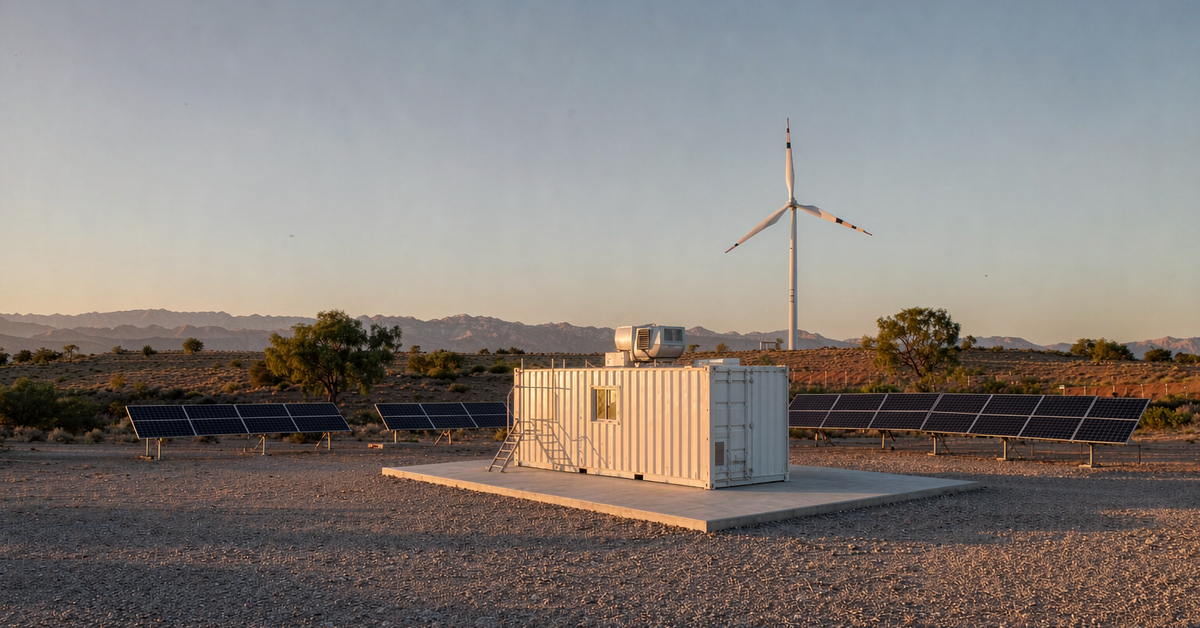
The two platforms at a glance
The BR-261 is a 100 kW / 261 kWh outdoor all-in-one liquid-cooled system: LFP chemistry on 3.2 V / 314 Ah cells, ≥6,000 cycles, ≥98.2% DC round-trip efficiency, IP55 with C4 corrosion protection, a −20 to 55°C operating range, and up to eight units in parallel. The 5.01 MWh container is a liquid-cooled LFP asset configured 1P416S × 12, rated 5.01 MWh at 1331.2 V nominal, with a 1164.8–1497.6 V range, IP55 (C5 optional), −30 to 50°C, and 0.5C charge/discharge. They share a chemistry and a cooling philosophy but differ by roughly twenty times in energy.
When cabinets are the better answer
Cabinets win when a site is medium-sized and likely to grow in steps. Because each BR-261 is a self-contained unit paralleled up to eight, an operator can install one, prove the savings, then add units as load grows — spreading capital outlay and matching capacity to demand. Cabinets also install on smaller pads and are easier to place around an existing building than a full container. For a factory, business park or retail site in the low hundreds of kilowatts, this stepwise model is usually the most capital-efficient route. See solar plus storage for factories for a worked application.
When containers are the better answer
Containers win when the requirement is genuinely at megawatt-hour scale and density matters. A single 5.01 MWh asset delivers that energy in one footprint of about 6.06 × 2.44 × 2.90 m, with a detection and containment suite — temperature, smoke and combustible-gas detection, deflagration venting, extinguishing gas and water sprinkler — sized to the larger cell count. Fewer, larger assets mean fewer grid-interconnection points and less site cabling for the same energy. Remote industrial and microgrid sites that need substantial reserve, as described in microgrid-ready storage for remote industry, often fit this model.
The decision in five questions
- How many kilowatts must the site shave, and how many kilowatt-hours must it hold? Below a few hundred kWh, cabinets; at megawatt-hour scale, containers.
- Will the load grow in steps? If yes, paralleled cabinets defer capital.
- How much site space is available? Containers need a larger, purpose-prepared pad.
- What protection and detection does the site require? Larger assets need a richer containment suite.
- How many interconnection points do you want? Fewer, larger assets reduce cabling and interface complexity.
FAQ
Can I mix cabinets and containers on one site?
They are separate product lines with their own controls and integration, so mixing is uncommon for a single project. Choose the platform that matches the site's scale and plan expansion within it.
How much energy is 5.01 MWh in practical terms?
At a 100 kW draw it would run for roughly fifty hours on paper; in practice it is sized to grid-support, peak-shaving and reserve duties at a utility or large-industrial scale, not to a single building's load.
Is a container harder to install than a cabinet?
A container needs a prepared foundation and heavier lifting, but it delivers far more energy per asset. Cabinets install on smaller pads and are simpler to relocate or expand.
Which platform cools better?
Both use liquid cooling. The BR-261 holds maximum battery temperature at or below 38°C with a 3°C cell-to-cell difference at full load; the container is designed for 0.5C operation across a −30 to 50°C range.
Which is more cost-effective per kilowatt-hour?
Larger assets usually cost less per kilowatt-hour of installed energy, but only if the site can use that energy. Sizing to actual need matters more than the headline unit price; our ROI guide explains the comparison.
Next step
Tell us your target peak and required duration, and our engineers will confirm whether a cabinet or a container is the right platform for your site. Request a platform recommendation from BR Solar.
Continue reading
- How to Size a 100 kW 261 kWh BESS for Peak Shaving
- Microgrid-Ready Storage for Remote Industrial Sites
- 6,000 Cycles Explained: LFP Cycle Life and Warranty
- Solar Plus Storage for Factories






