
Why a 2V gel battery still matters in stationary power systems
A 2V gel battery is not the flashy part of a solar array or backup system, but it is often the part that decides whether the system behaves predictably when the grid drops or the sun goes missing. For engineers, sourcing teams, and product managers, the real question is not whether the battery is “good” in the abstract. It is whether a 2V stationary battery unit fits the voltage architecture, charging profile, space constraints, and duty cycle of the application.
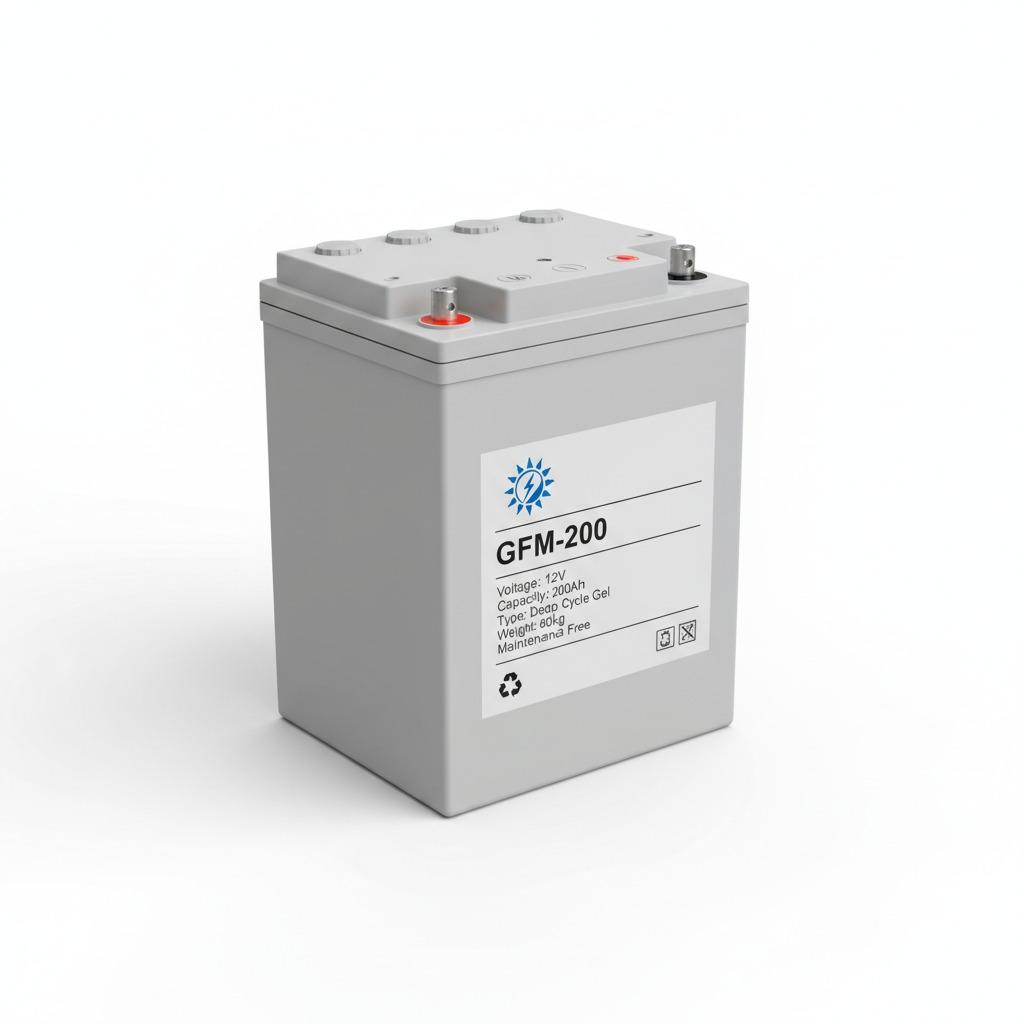
The product shown here, branded GFM-200 under BR Solar Group / B Light, sits squarely in the stationary VRLA category. From the label, it is a nominal 2V, 200Ah/10HR battery intended for cycle use and standby use in DC storage systems. That makes it relevant for solar energy storage banks, UPS rooms, telecom reserve power, and industrial backup cabinets. In other words, this is the kind of component buyers select when system uptime matters more than portability.
There is a small but important caution here: the visible information supports a valve-regulated lead-acid design, but it does not let us confirm every internal construction detail. So if you are comparing gel, AGM, or other VRLA variants, do not assume the internal chemistry from the outside label alone. That distinction matters in procurement, especially when your charging strategy is already set.

Quick reference: what the label tells you
For busy buyers, a label like this is worth more than a glossy product description. It gives you the operating envelope you can actually design around.
- Nominal voltage: 2V
- Nominal capacity: 200Ah at the 10-hour rate
- Cycle use: 2.35–2.40V
- Standby use: 2.23–2.27V
- Charging current: ≤50A
- Markings shown: CE, ISO 14001 symbol, recycling and warning icons
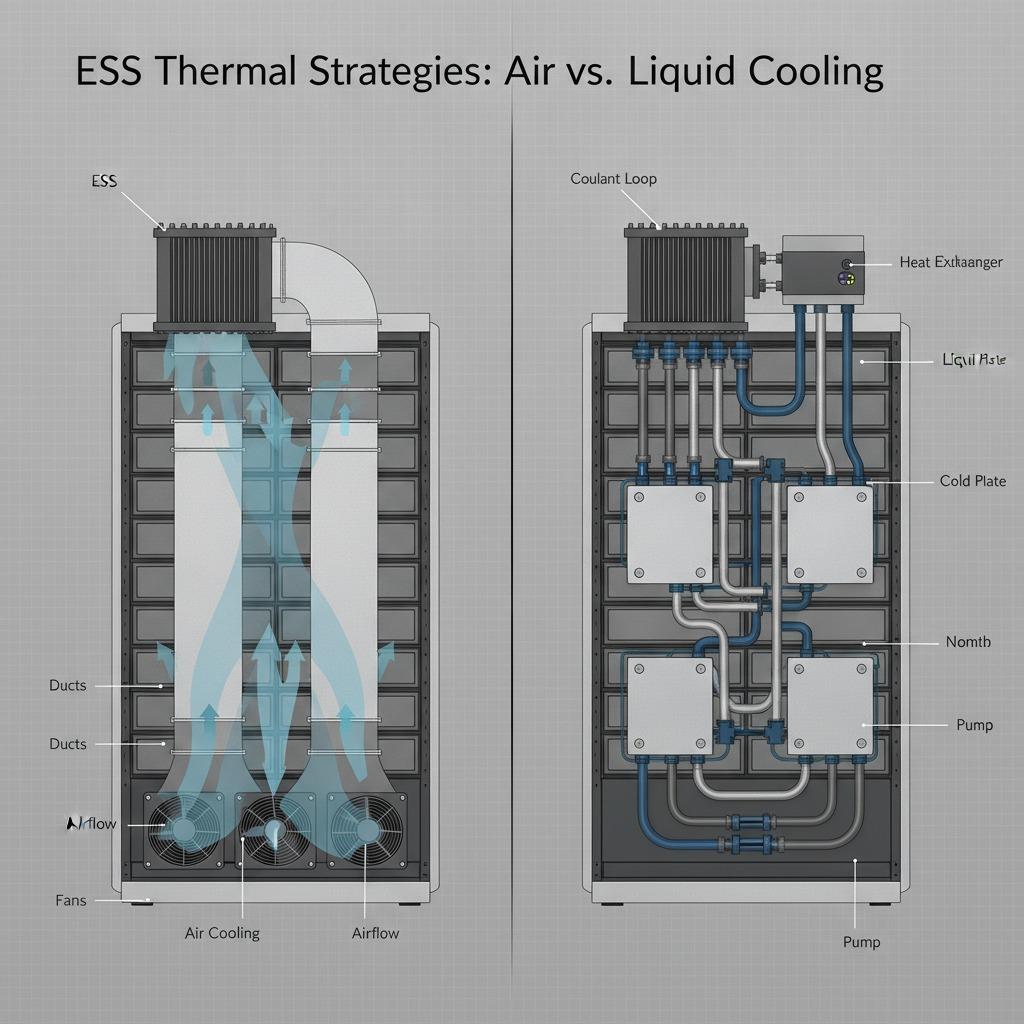
Those values are not decorative. They influence charger settings, string design, balancing strategy, and the thermal load you should expect in service. If the battery bank will sit in float most of the time, the standby voltage window matters most. If it will be cycled daily in a solar energy storage battery bank, the cycle charge range becomes the key reference point.
Where a 2V stationary battery fits best
A 2V unit is usually not chosen for convenience. It is chosen because the system is built from series-connected cells to create higher bank voltages with more control over sizing and replacement. That is one reason these batteries are common in large cabinets and racks rather than in smaller consumer products.
Typical applications include:
- Off-grid and hybrid solar energy storage systems
- UPS battery rooms and critical power installations
- Telecom backup strings
- Industrial standby power for controls, instrumentation, and emergency loads
- Other stationary DC systems that use a 2V battery module
In those environments, the battery is rarely treated as a standalone item. It is a building block. Buyers should think in terms of bank behavior, not just individual capacity. A set of 2V cells will perform only as well as the charging regime, interconnect quality, and maintenance discipline around it.
What stands out in the visible construction
The product appears as a rectangular upright battery with a molded plastic housing, a flat front face, and top-mounted terminal posts. There is also a central vent or fill-style cap feature on the cover. The housing is light gray or white with a printed front label, and the terminals show visible metal inserts/posts. That is typical of a stationary VRLA battery form factor designed for rack or cabinet installation.
From a buyer’s perspective, this geometry suggests practical things even when the internal plate design is not visible. Upright cases are generally easier to arrange in strings, inspect for labeling, and service in cabinets. The top terminals are also a clue that cable routing and busbar layout should be planned carefully. A neat mechanical layout saves real time during installation and later maintenance, especially in dense battery rooms where access is never as generous as the drawings imply.
Still, do not over-read the appearance. External shape tells you little about cycle durability, internal resistance drift, or how the battery will behave after repeated partial-state-of-charge operation. Those are performance questions, not packaging questions.
Cycle use versus standby use: why the charge numbers matter
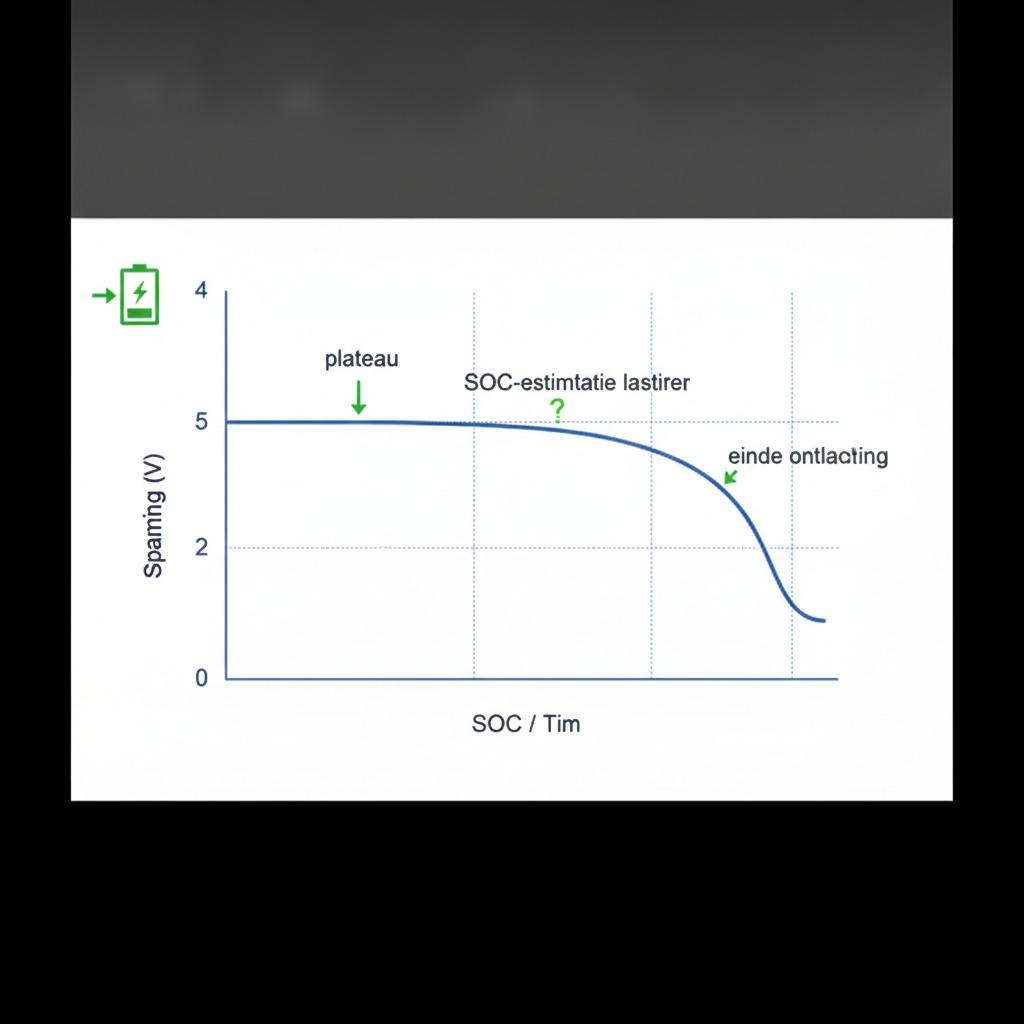
The label gives two charging references: cycle use at 2.35–2.40V and standby use at 2.23–2.27V. That split is not unusual, but it is often ignored by non-specialist buyers who assume one charger setting can serve every job. It usually cannot.
Cycle use settings are used when the battery is regularly discharged and recharged, such as in solar storage. Standby settings are used when the battery spends most of its life on float charge and only discharges during outages. If the voltage is set too low in cycle service, the bank may never fully recover. If it is set too high in float service, the risk shifts toward overcharge stress and unnecessary water loss in designs where that is relevant. The practical point: charger matching is part of the battery purchase, not an afterthought.
The listed charging current limit of ≤50A also deserves attention. For a 200Ah unit, that number helps define how aggressively the battery may be replenished. Faster charging sounds attractive on paper, but real systems are governed by heat, life expectancy, and charger control quality. If a vendor talks only about capacity and ignores charging limits, that is a warning sign.
How to evaluate a 2V gel battery for procurement
Even when a supplier offers a solid-looking VRLA battery, the buyer still has to check fit against the actual application. The point is not to demand every possible specification up front. The point is to avoid discovering a mismatch after the bank has been installed.
1. Match the duty cycle first
Ask whether the system is mostly float, mostly cyclic, or somewhere in between. Solar energy storage battery applications are rarely identical to telecom standby use. The same battery family can serve both, but only if the charging profile and expected depth of discharge align with the design intent.
2. Confirm the bank voltage architecture
A 2V battery makes sense when the system is built from a larger series string. That helps with control and capacity scaling, but it also means the whole string is only as strong as its weakest cell. Procurement should cover matching and replacement strategy, not just single-unit price.
3. Verify charger compatibility
The cycle and standby voltage ranges on the label should be checked against the charger settings in the cabinet or power system. If the charger cannot be adjusted within those windows, the battery choice may be wrong even if the catalog sheet looks fine.
4. Ask for the missing data before committing
The visible label does not show exact dimensions, weight, terminal thread size, enclosure rating, or temperature range. Those are not minor details. They are the difference between a straightforward install and a field problem. A serious buyer should request those values before releasing a purchase order.
Common mistakes buyers make with stationary VRLA batteries
The first mistake is treating every lead-acid battery as interchangeable. That usually ends badly. Stationary batteries are selected around system behavior, not just nominal voltage.
The second mistake is assuming that “gel” or “AGM” can be inferred from a product photo or a partial label. Unless the supplier states it clearly, that is a guess. In procurement, guesses are expensive because they show up later as charging issues or shortened service life.
The third mistake is underestimating the role of installation quality. Loose terminals, uneven string layout, poor ventilation, and inconsistent maintenance can ruin a decent battery bank faster than many buyers expect. That may sound obvious, but it is one of the most common failure modes in real projects.
What the compliance markings suggest
The label shows CE and ISO 14001 symbols, along with recycling and warning icons. Those markings are useful as part of the document trail, but they should be read carefully. They do not replace a proper technical file, and they do not prove suitability for every market or every application on their own. For most engineering teams, they are best treated as part of the screening process rather than the final proof of acceptance.
The recycling icon is especially relevant for lead-acid products because end-of-life handling matters. Buyers should plan for return, collection, or local recycling routes before the battery reaches the end of service. That is both a compliance matter and a practical one.
Practical buyer advice before you place an order
If you are sourcing this kind of battery for a project, ask for the data that actually affects installation and operation: dimensions, weight, terminal details, recommended charging parameters, operating temperature range, and the exact battery chemistry claim from the supplier. If you are building a large bank, ask whether the cells will be matched and how replacements are handled later. Those are not nuisance questions; they are the questions that prevent service calls.
For solar and backup systems, it also helps to align the battery spec with the site reality. A battery that looks perfect on paper may be a poor fit if the enclosure is tight, the charger is fixed, or the ambient temperature is harsher than expected. The cheaper option on the quote sheet can become the expensive option after commissioning.
FAQ
Is this battery suitable for solar energy storage?
Yes, based on the visible information, it is positioned for stationary DC use and can fit solar energy storage battery banks. The final answer still depends on system voltage, charger settings, and cycle expectations.
Can I assume it is a gel battery just from the product name?
No. The safest reading is that it is a VRLA lead-acid battery. If gel chemistry is important to your design, you should confirm it directly with the supplier.
What does 200Ah/10HR mean?
It indicates the nominal capacity measured at a 10-hour discharge rate. In practice, runtime will vary with load, temperature, and system configuration.
Why are there two charging voltage ranges?
Because cycle use and standby use are not the same operating condition. The battery needs different charge behavior depending on whether it is being cycled regularly or held on float.
When this battery category is the right choice
A 2V stationary VRLA battery is the right choice when the system needs a scalable series-string architecture, dependable backup behavior, and a form factor suited to cabinet or rack installation. It is less about novelty and more about controllable performance. For engineers and sourcing managers, that is often exactly what the project needs.
If you are comparing options, begin with the operating profile, then verify the charger window, string size, and physical fit. For the GFM-200 class of battery, the visible specifications already provide a useful starting point. The remaining questions are the ones that should be answered by the supplier’s technical documentation before the order moves forward.
For procurement teams building out solar storage or backup power systems, the next step is straightforward: request the full datasheet, confirm the installation envelope, and compare the battery’s charge profile against the actual site controller. That small amount of checking usually pays back quickly once the system is live.