


Why an off-grid solar system is a different buying decision
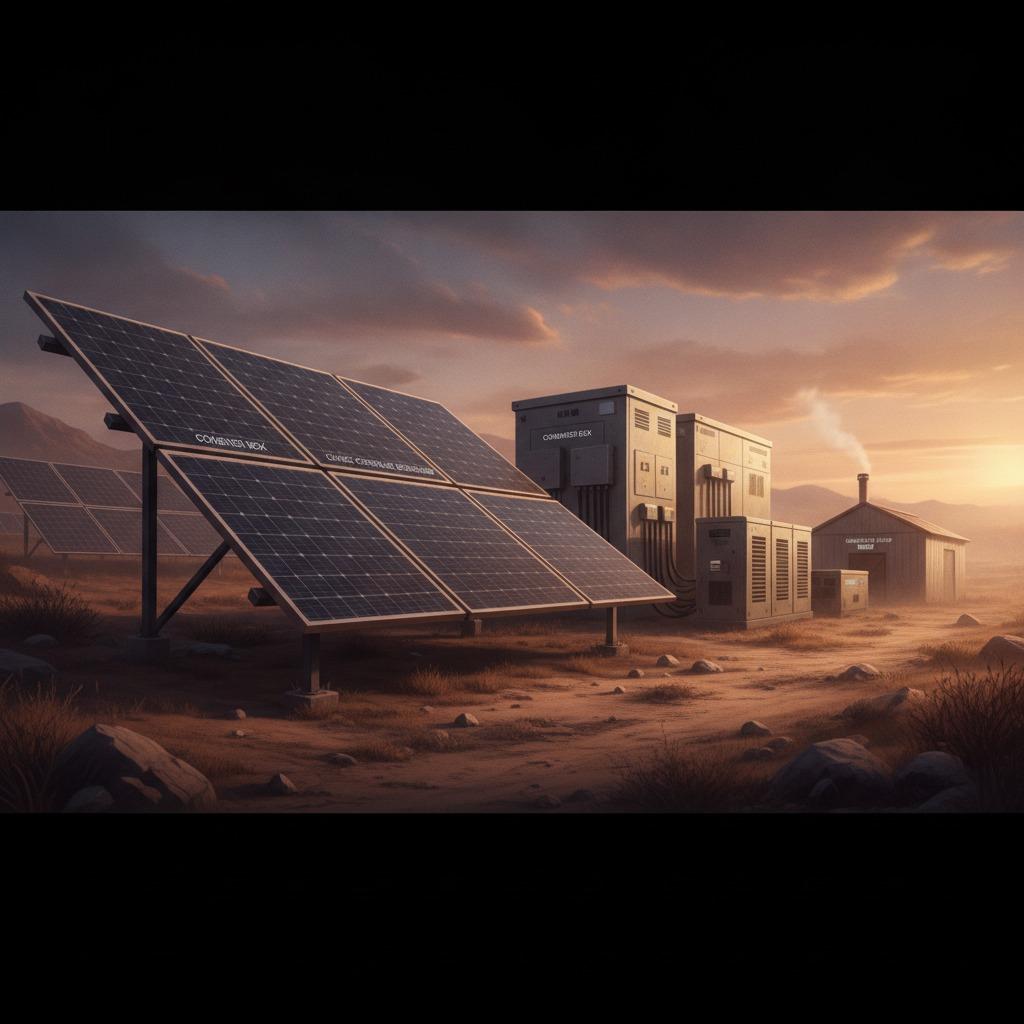
An off-grid solar system is not just a smaller version of a rooftop grid-tied setup. It is a self-contained power plant, and that changes everything from component selection to how carefully you think about load growth, bad weather, and maintenance. For engineers, sourcing teams, and product managers, the real question is rarely whether solar works. It is whether the system will keep critical loads running when the utility is nowhere in sight and the weather is not cooperating.
That distinction matters because off-grid users do not have the grid as a safety net. A system that looks adequate on paper can become fragile once you account for seasonal variation, battery aging, startup surges, or a few cloudy days in a row. I have seen otherwise sensible buyers focus too much on panel wattage and not enough on storage, controls, or realistic usage patterns. The result is usually the same: undersized batteries, too-small charge controllers, and an unhappy customer who expected “solar” to mean “infinite power.”
So the buyer’s job is not simply to source panels. It is to match generation, storage, inverter capacity, and the load profile to the actual operating environment. That is the decision this article is meant to help with.
What an off-grid system has to do that grid-tied systems do not
A grid-tied system can sometimes get away with being optimistic. If solar output drops, the grid covers the gap. An off-grid system cannot. It has to manage three jobs at once: generate enough energy, store enough energy, and deliver that energy in a stable form for the load.
That is why the core architecture usually includes solar panels, a charge controller, battery storage, and an inverter. In some installations there is also a backup generator, which is not a sign of failure; it is often a practical hedge against prolonged low-sun periods or unusually heavy demand. In remote industrial use, that backup layer can be the difference between a manageable power plan and a service call at midnight.
The load profile is the real driver. A monitoring cabinet, telecom site, remote pump, cabin, or small workshop each behaves differently. Continuous loads, intermittent loads, and surge loads all put different stress on the system. Motors are the usual troublemakers. A load that looks modest in kilowatts may demand far more at startup.
Key building blocks and what buyers should pay attention to
Solar modules
Panels are often the easiest part of the quote to compare, which is one reason buyers overfocus on them. In an off-grid solar system, panel quality still matters, but it should be viewed in context. The important question is not just nominal wattage. It is how the modules behave in the actual site conditions: heat, dust, partial shading, and seasonal sun angles.
A remote site with uneven shading may need better array layout and more conservative expectations than a clean open field. If the installation will be difficult to access, then long-term reliability and mechanical durability become more valuable than squeezing out a few extra watts on paper.
Battery storage
This is where many off-grid projects are won or lost. Storage determines how long the system can carry loads without sun, and it also affects how forgiving the system is during poor weather. Buyers should be cautious about comparing battery banks only by nominal capacity. Usable capacity, discharge behavior, temperature sensitivity, and expected lifespan all shape the real outcome.
Battery chemistry choices depend on application, budget, and operating expectations. General industry practice favors different options for different use cases, and there is no universal winner. A system meant for frequent cycling may call for a different storage strategy than a backup-only installation. The practical question is not “Which battery is best?” but “Which battery fits this duty cycle, environment, and maintenance plan?”
Inverter and charge controller
The inverter is where DC becomes usable AC, and its sizing should be conservative. Engineers know this, but procurement deadlines can still tempt teams into selecting the smallest acceptable unit. That is usually a mistake. Inverters should cover continuous load, surge demand, and any nuisance factors such as motor starts or short-term peaks.
Charge controller selection is similarly important. It has to match array size, battery voltage, and charging strategy. Undersized controllers may force design compromises, while oversized ones can add cost with little value. The sensible approach is to start with the system architecture, not with a catalog page.
A practical way to think about sizing
A buyer-friendly sizing process usually starts with three questions:
1. What must run every day?
2. How many hours can the system survive with little or no sun?
3. What are the largest starting or surge loads?
That sounds obvious, but projects often skip straight to equipment selection. A more disciplined approach is to list critical loads first, then estimate daily energy use, then add margin for weather and aging. Margin is not waste. It is what keeps the system from becoming a maintenance problem in year two.
For example, a remote communications site may have a relatively small average load but very strict uptime requirements. In that case, the system design may prioritize battery autonomy and monitoring. A workshop or pumping station may tolerate some downtime but need strong surge handling. Same word, off-grid solar system, very different design priorities.
Common mistakes that show up in the field
The first mistake is underestimating the load. People often count the nameplate ratings of equipment and ignore hidden consumers like standby losses, controls, and auxiliary devices. The second is assuming the battery will perform like new forever. It will not. Storage degrades, and the design should acknowledge that.
Another recurring issue is poor site assessment. Solar output depends on orientation, shading, cleaning access, and local climate. A system placed well on a drawing can still fail if the physical site is awkward or if maintenance access is ignored. I would add one small caution here: installers sometimes promise that “we can always add more later.” That may be true in theory, but expanding an off-grid system after the fact can be more disruptive and more expensive than getting it right initially.
There is also a human problem: the end user may change behavior once the system is installed. Additional loads creep in. Someone plugs in a heater, a tool, or a refrigeration unit that was never in the original estimate. In off-grid design, load discipline matters as much as hardware.
Selection criteria that make a real difference
When comparing proposals, the most useful criteria are often the least glamorous ones:
Reliability under real weather
Ask how the system behaves during low-irradiance periods, not just under ideal conditions. A design that works only on good-sun days is not robust enough for remote duty.
Serviceability
If the site is hard to reach, components should be accessible, durable, and easy to inspect. A clever design that cannot be maintained is a liability.
Monitoring and control
Basic monitoring can reveal battery state, array performance, and load anomalies before they become failures. For remote assets, this is not a luxury feature.
Expansion room
Some buyers need headroom for future loads. Others need a compact, tightly optimized system. The mistake is not leaving room; the mistake is leaving room without understanding the cost of that extra margin.
How buyers can compare suppliers without getting lost in the spec sheet
The spec sheet matters, but it does not tell the whole story. Suppliers should be able to explain the system design logic in plain terms. If they cannot clearly show how they sized the battery bank, the inverter, and the charge controller against the load profile, that is a warning sign.
A good supplier will also discuss assumptions openly: how many sun hours were used, what autonomy was targeted, what ambient temperatures were expected, and what level of maintenance is assumed. Those assumptions are not fine print. They are the design.
For sourcing teams, it helps to ask for a bill of materials, a one-line system diagram, and a simple operating explanation. If the vendor cannot walk you through how the system handles an extended cloudy spell, that should slow the purchase down.
When an off-grid system makes business sense
Off-grid power is not always the cheapest energy path, but cost is only one part of the equation. In remote locations, the economics may favor solar because grid extension is expensive or impossible. In mission-critical applications, the value may come from independence and continuity rather than the lowest upfront number.
That is why these projects are usually judged on total system performance, not just component price. A cheaper package that fails early or requires frequent site visits often costs more in practice. The buyer should think in terms of uptime, labor, and replacement risk.
What to ask before placing an order
Before you buy, ask these questions in plain language:
What loads are critical, and which can be shed?
How many days of autonomy are actually required?
What happens during a prolonged cloudy period?
How will the system be monitored and maintained?
What loads may be added later?
Those questions may sound basic, but they expose most weak proposals quickly.
A practical next step
If you are evaluating an off-grid solar system for a remote facility, the smartest move is to start with the load profile and site conditions before you compare hardware. Once those are clear, the component choices become easier to defend and easier to source. A well-designed system should feel a little conservative. That is not a flaw. In off-grid work, a little caution usually buys a lot of uptime.





