


Why do solar energy systems for desert areas need a different approach?
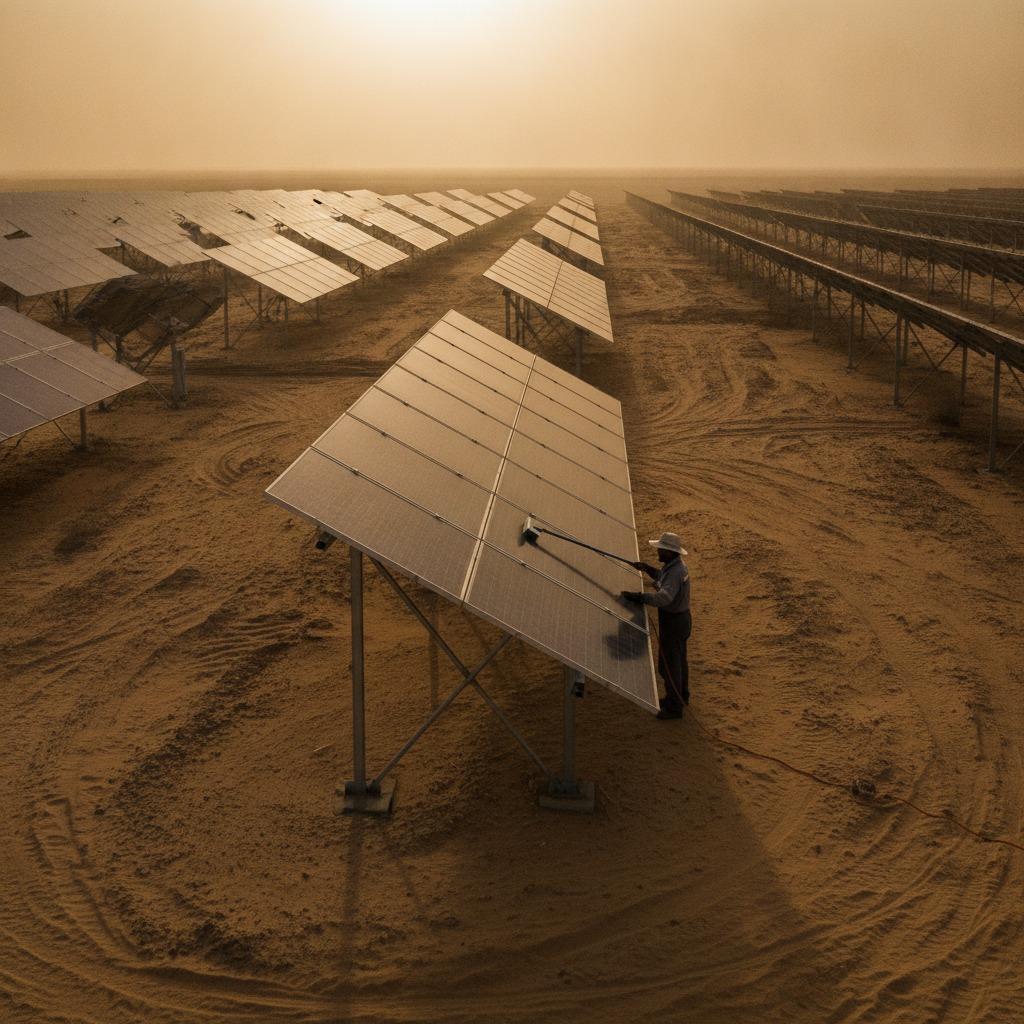
Solar energy systems for desert areas seem, on paper, an ideal choice: abundant sun, open spaces, and scattered loads that require an independent power source. But those who have worked in procurement or field design know that desert doesn't always equal ease. High temperatures, dust storms, temperature differences between day and night, and lack of infrastructure are all factors that make the solar system there an engineering issue and not just installing panels on metal bases.
The real question that this article is trying to help you resolve is: How do you choose a system that works efficiently and lasts a long time in a harsh environment, instead of it turning into a broken asset that needs frequent maintenance or early replacement? This is important for purchasing managers and technical teams because the true cost in desert locations appears not only in the purchase invoice, but in cleaning, cooling, component deterioration, and downtime.
What distinguishes the desert environment from others?
In temperate regions, a solar system is often evaluated based on annual solar radiation and panel efficiency. In the desert, there is an additional layer of practical considerations. Fine dust can reduce production if it accumulates on the surface of panels. High temperatures reduce the actual performance of some electrical components, even if the panels themselves look adequate on paper. Sharp thermal differences also stress cables, insulators, seals, and structural fasteners.
There's also a factor that some buyers don't notice: accessibility of the site. In remote desert projects, even a small failure can become costly because it requires a complete site visit, transportation, and sometimes a temporary shutdown of operation. Therefore, the selection of components must balance initial efficiency, durability and ease of maintenance.
Basic elements in system design
There is no single recipe that suits every location, but there are ingredients and considerations that are frequently present in most desert projects.
1) Solar panels
Panels are the most obvious element, but their choice is not limited to nominal capacity only. In hot environments, performance at high temperatures becomes as important as rated power. Dust resistance, glass thickness, frame quality, and reliability of internal connections are all factors that affect service life.
In locations that are difficult to clean regularly, it may be wise to consider a layout that facilitates periodic washing rather than relying on “self-tolerance” of dust. This is a simple detail, but it makes a noticeable difference in annual production.
2) Inverters and charging regulators
Reflectors in the desert do not always operate in ideal conditions. It must be able to withstand ambient temperature and load fluctuations if the site uses pumps, communications equipment, or intermittent operating loads. Ventilation inside technical rooms is very important, and sometimes some people make the mistake of focusing on the capacity of the inverter and neglecting the environment of its installation.
Charging regulators, especially in hybrid or standalone systems, need to be chosen compatible with the type of batteries and charging method. Negligence here accelerates battery damage, and is one of the most costly mistakes in desert locations.
3) Batteries or storage
If the project requires nighttime operation or low radiation standby, storage becomes an integral part of the design. In desert areas, the location of the battery is as important as its capacity. It must be protected from direct heat and from poor ventilation, because heat accelerates chemical deterioration and reduces the effective life.
Here some buyers forget a practical point: a battery that seems economical when purchased may become expensive if it requires early replacement or very careful monitoring. It is usually best to evaluate the life cycle cost, not just the unit price.
4) Structures and installation
Structures in desert areas need mechanical stability and resistance to corrosion and wind. Quicksand is not only a cleanliness problem, it can affect anchorage points and row stability if the design is poor. The slope of the panels, their height off the ground, and the spacing between them are all factors related to both performance and maintenance.
In some locations, raising the panels slightly may be beneficial to reduce sand buildup and improve cleaning, but more elevation is not always better because it may increase exposure to wind. Balance here is important, and should not be decided by one copy of the diagrams.
Quick comparison: What matters most in the desert?
If you had to prioritize, they would probably be as follows:
Actual efficiency under heat is more important than mere laboratory efficiency.
Cleanability and maintainability are more important than a very compact form.
Reliability and long-term performance of components are more important than a small initial saving.
Ventilation and cooling of containers or equipment rooms is more important than many people think.
If the site is sensitive to service interruptions, Backup storage and remote monitoring become part of the basic decision and not an additional option.
Choose the system according to the type of application
Agricultural and irrigation pumps
In pumping applications, loads are often clear and scheduled, and this makes solar very attractive. However, attention must be paid to changing seasonal demand, and that direct pumping may sometimes be better than electrical storage, depending on the mode of operation. If water is extracted during daylight hours, you may rely less on batteries, which reduces cost and maintenance.
Remote installations and communications
Here continuity is more important than maximum daily production. A communications tower or control station in the desert cannot tolerate frequent downtime. So buyers tend to go for a more conservative design in capacity, with good redundancy and remote performance monitoring.
Camps and service facilities
In desert service facilities, the load changes with daily use. The presence of refrigeration, lighting and small pumps creates variation in consumption. Therefore, quality load management may increase system performance more than simply increasing the number of panels.
Common mistakes in desert projects
One of the most common mistakes is to take a design intended for a generic environment and then literally transport it to the desert. This seems acceptable at the presentation stage, but reveals its shortcomings at the first dust or long summer.
Another mistake is to ignore the ease of cleaning. If the system requires complex dust removal procedures, cleaning will be neglected over time, and production will gradually decrease in a way that is difficult to notice at first.
It is also a mistake to choose indoor equipment without sufficient attention to the environmental protection of inverter and battery rooms. Sometimes the problem is not the solar panel itself, but rather the heat inside the control box or poor insulation at the cable entrances.
What should the purchasing team ask before awarding?
Before making a decision, it is useful to ask the supplier or engineering team practical questions:
Are the components suitable for high temperatures and frequent dust conditions?
How will the panels be accessed for cleaning and maintenance?
Is there a clear plan for ventilation or cooling in the equipment rooms?
What happens if performance decreases during the harsher summer months?
Is the design heavily battery-intensive, or can this be reduced if loads decrease? Allow?
These questions seem straightforward, but they quickly reveal whether the commercial offer is based on a real understanding of the environment or on a ready-made model.
Practical advice for remote locations
In desert projects, it is best to think about service before supply. That is, the plan for maintenance, spare parts and site access should be part of the design itself. This may seem obvious, but it's actually the difference between a system that runs quietly for years and one that consumes the team's time monitoring.
If the location is too remote, remote monitoring is not a luxury. It's a way to identify problems before they turn into an actual outage. The presence of clear performance indicators also helps the technical team distinguish between a decrease caused by dust and a decrease caused by an electrical malfunction.
How do you make the right decision?
Choosing solar energy systems for desert areas is not only about the specifications of the panels or the size of the batteries. The right decision starts with understanding the location: temperature, dust, nature of the load, number of possible field visits, and whether the system is standalone, hybrid, or linked to direct day operation.
If you are reviewing a commercial offer now, do not just compare nominal capacity or total price. Ask about environmental friendliness, ease of maintenance, and cost of operation over years. This is the difference between a project that achieves real savings and a project that seems economical at first and then tires its owner after the first difficult season.
Frequently Asked Questions
Do solar panels work efficiently in the desert despite the high temperature?
Yes, but it does not always work at theoretical maximum performance. Temperature affects actual performance, so site conditions must be taken into account when designing.
Is dust the biggest problem?
It is one of the biggest problems, but it is not the only one. Heat, wind, and difficulty of maintenance may be equally or more influential in some locations.
Is it better to use large batteries?
Not always. Larger capacity is useful when continuity is needed, but batteries add cost and maintenance, and the installation environment has a significant impact on their life.
What factor do buyers make the most mistakes?
Focus on the initial price and neglect the cost of operation and maintenance. In the desert, this error appears quickly.
Next step
If you are planning a new project or reviewing an existing system, start by evaluating the site itself before selecting components. Determine the dust and heat profile, know the load requirements, and evaluate whether the system needs storage or whether direct daytime operation is sufficient. Only then does the supplier's offer become truly comparable, not just a pretty list of specifications.





