


Why grid-connection testing for ESS has become a make-or-break step
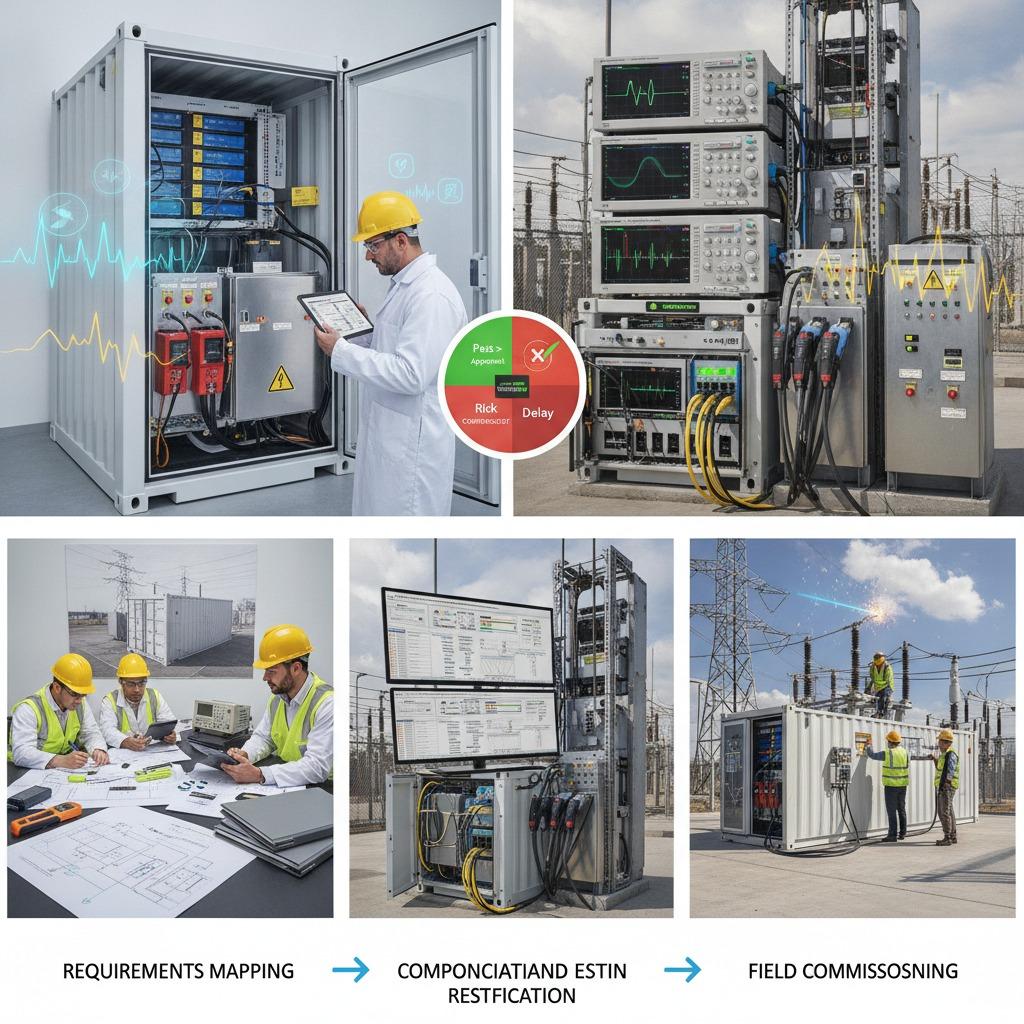
Grid-Connection Testing for ESS is no longer a paperwork exercise that happens near the end of a project. For engineers, sourcing teams, and product managers, it is one of the points where a battery system either proves it can live on the grid safely and predictably, or it becomes a delay magnet. That matters because energy storage systems are increasingly asked to do more than sit behind a meter and shave peaks. They are expected to support renewables, respond to dispatch signals, ride through disturbances, and remain stable under changing grid conditions. If the interface to the grid is weak, the whole system becomes harder to certify, harder to sell, and harder to maintain.
The practical question for a buyer is simple: will this ESS behave like a well-mannered grid asset, or will it create interconnection risk? Answering that question early can save months later. It also shapes procurement decisions, because grid requirements influence inverter selection, controls architecture, enclosure design, protection hardware, and software logic. In other words, testing is not a final checkbox; it is part of the product definition.
What grid-connection testing is actually trying to prove
At its core, the testing is meant to show that the ESS can connect to the utility network and operate within required limits under normal and abnormal conditions. That includes voltage and frequency behavior, protection coordination, anti-islanding response, power quality, and the system’s ability to respond to grid events without creating instability of its own.
For buyers, this is where the phrase ESS grid compatibility testing becomes more than a compliance label. Compatibility means the system can communicate and interact with the grid environment it is meant for. That environment is not uniform. A storage system destined for one market may face very different rules from one destined for another, and even within a country the interconnection process can vary by utility, project size, and application.
A cautious note is worth making here: not every successful bench test guarantees smooth field approval. Lab conditions are controlled. The field is messy. Cables are longer, assumptions get challenged, and utility engineers may ask for evidence that the system behaves properly under scenarios the original test plan did not emphasize. That is not unusual, just expensive if you are unprepared.
The main areas buyers should expect in a test program
A serious grid-connection program usually covers several categories, even if the exact sequence changes by market or standard.
1. Protection and disconnect behavior
The ESS must stop energizing the grid when conditions move outside allowed limits. Overvoltage, undervoltage, overfrequency, underfrequency, and abnormal ride-through behavior are typical concerns. The key is not only whether it trips, but how cleanly it trips and whether it resets correctly afterward.
2. Voltage and frequency ride-through
Modern grids do not always want equipment to disconnect at the first sign of disturbance. Many interconnection regimes ask storage systems to remain connected through brief deviations. This is especially important in networks with high renewable penetration, where small disturbances can cascade if devices leave too early.
3. Power quality
Harmonics, flicker, and reactive power behavior all affect how the ESS sits on the network. A storage system that looks fine on paper can still annoy a utility if its waveform quality is poor or its control response is sloppy. Engineers know this, but sourcing managers sometimes underestimate how much waveform quality can influence acceptance.
4. Communication and control response
Many systems are expected to accept remote commands, report status, and integrate with site controllers or energy management systems. If communications are unstable or poorly documented, commissioning slows down. In practice, this is where electrical and software teams have to meet in the middle.
5. Islanding and reconnection behavior
The system should not continue supplying power to a de-energized portion of the network unless the application explicitly allows it. Reconnection should also be orderly, with no abrupt surges or synchronization problems. This is a classic source of utility concern, and for good reason.
Why grid requirements are not the same from one project to the next
It is tempting to treat one successful ESS test report as a reusable passport. That rarely works cleanly. Grid codes and utility interconnection rules can differ by region, voltage level, and application type. A residential or small commercial system may face one set of rules, while a large front-of-meter project faces a much stricter one. Projects tied to renewable smoothing, frequency regulation, or backup power may also carry different control expectations.
This is where the procurement team should slow down and ask a few obvious questions before placing an order:
What market will this ESS enter first?
Which utility or grid operator will review the package?
Is the application purely behind the meter, or does it export power?
Will the site controller need custom logic?
Are the inverter and battery management functions already aligned with the target interconnection standard, or will software changes be needed?
Those questions sound basic, but they prevent one of the most common failures: buying a technically sound product that does not match the approval path.
How engineering teams usually structure the validation process
A good validation process starts before hardware is fully frozen. That is not always how projects are run, but it is how the best ones avoid rework.
First comes requirement mapping. The team identifies the applicable interconnection rules, utility specifications, and project-level operating modes. Then they translate those into test objectives. At this stage, the inverter manufacturer, ESS integrator, controls supplier, and certification lab often need the same reference document. If those parties are working from different assumptions, problems show up late and expensively.
Next is component-level verification. Inverters, protection devices, relays, controllers, and metering systems are checked separately where possible. Then the system is tested as a whole, because that is where control interactions reveal themselves. A battery system can pass individual component tests and still fail integration tests if the coordination logic is not tuned properly.
Finally, field commissioning closes the loop. This step is less glamorous than lab testing, but it is where many approval delays are resolved or created. Settings files, firmware versions, and utility witness requirements all matter here. The unglamorous detail is often the important one.
Common mistakes that slow down approval
One frequent mistake is assuming the inverter datasheet tells the full story. It does not. Datasheets are helpful, but they rarely capture how the system behaves after a control update, under a specific site voltage profile, or when external communications are interrupted.
Another mistake is waiting until late procurement to ask for evidence of compatibility. By then, replacing a component may mean redesigning wiring, controls, or the entire approval package. That is a painful way to learn that a nominally equivalent product is not functionally equivalent in the field.
A third issue is underestimating the role of documentation. Utilities and certification bodies often care about traceability: test methods, settings, firmware versions, and operating boundaries. If those records are incomplete, a technically successful system can still stall in review.
There is also a human factor. Project teams sometimes push for the fastest available configuration and assume the testing can “catch up” later. It rarely does. The testing schedule should be built into the project timeline, not attached at the end like a spare label.
What buyers should ask suppliers before ordering
If you are sourcing ESS hardware or a full integrated package, the questions below can save time:
Which grid markets has the system been configured for before?
What type of interconnection testing has already been completed, and under what conditions?
Can the controls be adapted for utility-specific settings without a redesign?
How are firmware and settings changes tracked after shipment?
What documents will be available for the approval package?
Can the supplier support field commissioning and witness testing if required?
These are not exotic questions. They are the questions that separate a pilot project from a repeatable supply chain.
Where ESS grid compatibility testing adds the most value
The value is highest when the project is complex: higher power levels, export to grid, renewable integration, or a utility with strict interconnection review. It also matters when the buyer wants a platform that can be deployed in multiple regions. In that case, compatibility testing becomes part of product scalability. A system that can be adapted to different grid rules with documented settings and known test evidence is easier to commercialize.
For product teams, this is a design issue. For sourcing managers, it is a risk issue. For engineers, it is a stability issue. Those are different viewpoints, but they lead to the same conclusion: treat the grid interface as a core product requirement, not a last-mile compliance task.
Practical next step for project teams
Before finalizing an ESS purchase, align the electrical spec, controls strategy, and approval path in one review. Ask for the test evidence that matches the actual target grid, not just generic performance data. Then confirm that the supplier can support the final commissioning process, because the grid does not care how polished the brochure was.
If you are comparing options, start with the interconnection requirement set and work backward to the hardware. That order is usually slower at the beginning, but it prevents far more expensive delays later.





