
Can You Add a Solar Battery to Existing Solar Panels?
If you already have rooftop solar, the question of how to add solar battery to existing solar panels usually comes up for one reason: the system is working, but it is not working the way the owner hoped. Maybe the utility buyback rate dropped. Maybe evening usage is higher than expected. Maybe the site needs backup power for critical loads. Whatever the trigger, battery storage changes the value of solar from a daytime offset tool into something closer to an energy management system.
That matters to homeowners, facility managers, and small commercial teams alike because the decision is not just about adding hardware. It affects inverter compatibility, wiring, monitoring, usable capacity, and how the system behaves during outages. In other words, a battery is not a simple accessory. It is a design decision.
What Adding a Battery Actually Changes
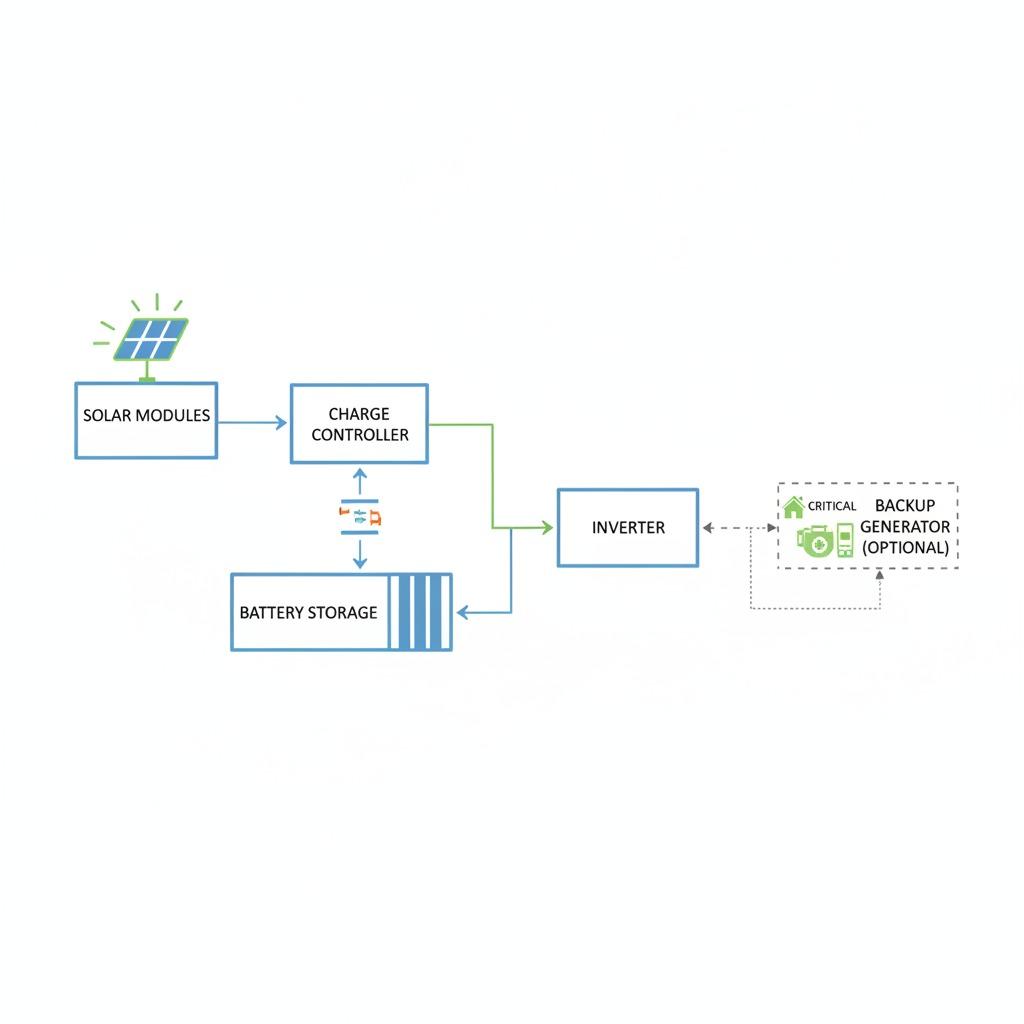
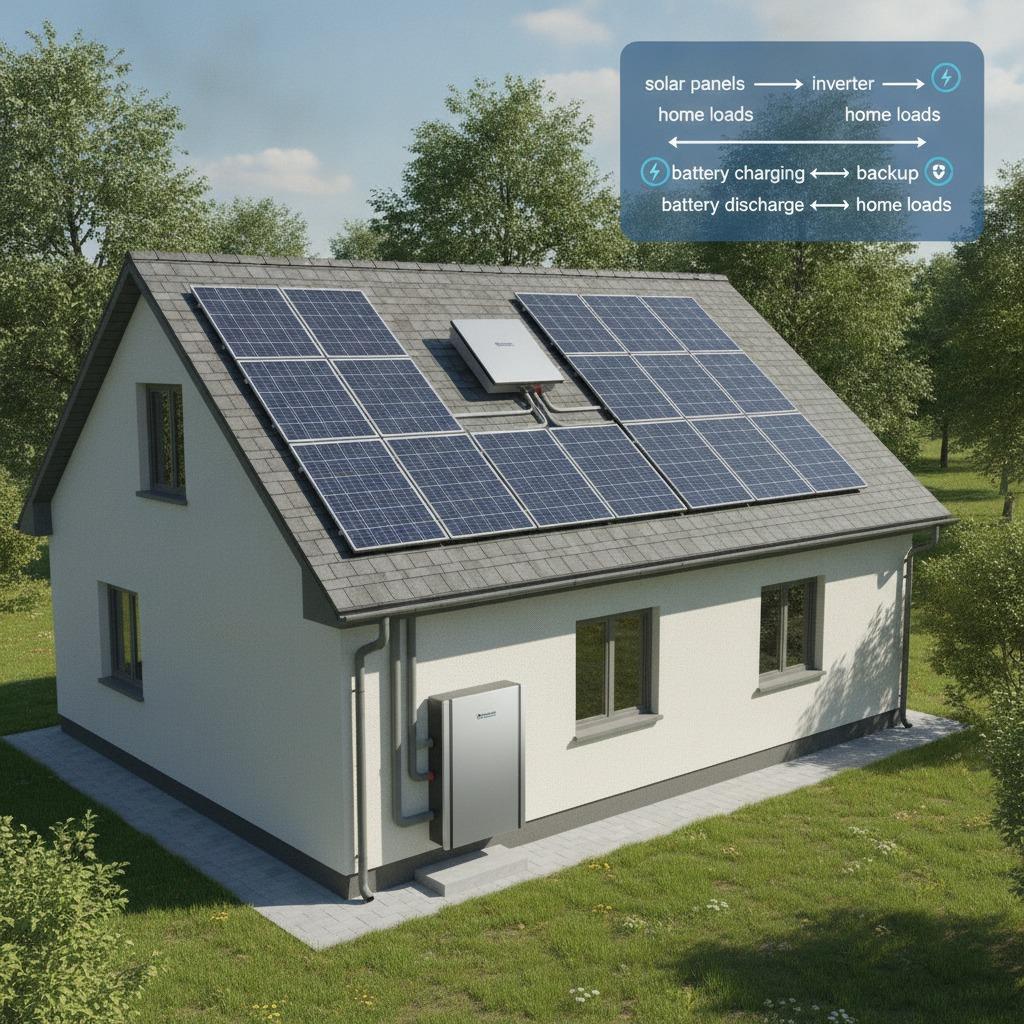
Existing solar panels generate DC power, which is either used immediately, exported to the grid, or converted for storage depending on the system design. Once a battery enters the picture, the electrical path gets more complicated. The system must decide when to charge the battery, when to discharge it, and whether the inverter can manage both solar production and battery control without conflicts.
There are usually two broad retrofit approaches:
AC-coupled storage
This is often the most practical retrofit route for a system that already has a string inverter or microinverters. The battery system includes its own inverter/charger and connects on the AC side. That means it can usually be added without replacing the whole solar array architecture.
For many existing installations, this is the least disruptive option. It also tends to simplify retrofits where the original solar equipment is older or from a different manufacturer. The tradeoff is that energy may be converted more than once, which can reduce overall efficiency a bit. That is not always a deal-breaker, but buyers should know it before they compare quotes purely on capacity.
DC-coupled storage
A DC-coupled design connects storage on the DC side and often uses a hybrid inverter or charge controller arrangement. It can be efficient and tidy in new-build systems, but retrofitting an existing solar array can require more equipment changes. In some cases it makes sense to replace the inverter; in others it does not. The answer depends on the age of the current system, the inverter model, and the site’s operating goals.
For an owner trying to add solar battery to existing solar panels, this is where the conversation usually becomes technical. Not all current systems are good retrofit candidates for DC coupling. That is not a flaw; it is just the reality of equipment evolution.
Why People Retrofit Storage Instead of Starting Over
The appeal is straightforward. Existing panels still have usable life, and many solar owners do not want to scrap a functioning array just to gain evening energy use or outage backup. A battery can help with:
Evening self-consumption, where solar energy collected in the day is used after sunset.
Backup power for loads that matter, such as routers, lighting, refrigeration, or selected production equipment.
Load shifting, which can reduce exposure to time-of-use rates where electricity is more expensive during peak periods.
Grid support goals, depending on local rules and the system controls available.
That said, not every user needs storage. If a site exports most of its generation at a favorable rate, or if outages are rare and short, the economics may be slower to justify. A sensible buyer should ask what problem the battery is solving, not whether batteries are fashionable. That sounds blunt, but it saves money.
Key Compatibility Questions Before You Buy
This is the part where retrofits succeed or turn into expensive rework. Before specifying a battery, confirm these points:
What inverter is already installed?
Some inverters are battery-ready, some can be paired with AC-coupled storage, and some are basically dead ends for elegant retrofit work. The model number matters more than the brand name on the brochure.
What kind of solar array do you have?
String inverter systems, microinverter systems, and mixed setups all behave differently. A battery retrofit that works cleanly on one roof may need a different architecture on another.
What is the operating goal?
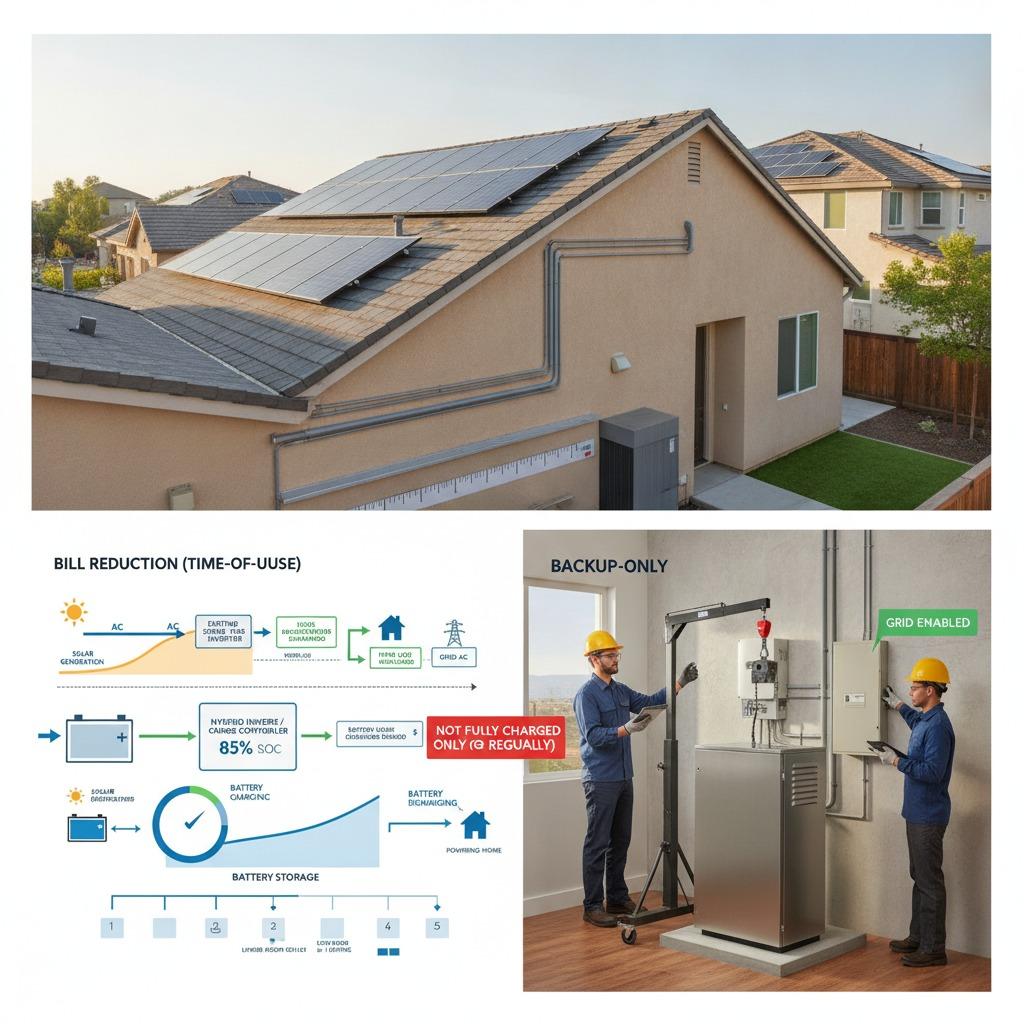
Backup-only, bill reduction, self-consumption, demand management, or hybrid use cases all push the design in different directions. A battery sized for outage support may be too small for meaningful bill savings, while a battery sized for peak shaving may be more expensive than the owner expected.
How much critical load needs support?
A whole-home or whole-facility backup setup is not the same as a critical-loads panel. If the goal is to keep only essential circuits on during an outage, the system can often be simpler and less costly.
Battery Types and System Design Considerations
Most modern retrofit discussions focus on lithium-ion chemistry, especially lithium iron phosphate in many stationary storage applications. It is widely used because of its stability, cycle life profile, and suitability for daily cycling. But chemistry is only one piece of the puzzle.
Capacity, measured in kilowatt-hours, tells you how much energy is stored. Power, measured in kilowatts, tells you how much the system can deliver at once. Buyers sometimes fixate on capacity and forget power. That can be a costly mistake if the site needs to start motors, keep compressors running, or handle several loads at the same time.
Usable capacity also matters more than nameplate capacity. A battery rated at a certain size may not make all of that energy available in practice because systems reserve a buffer to protect battery life.
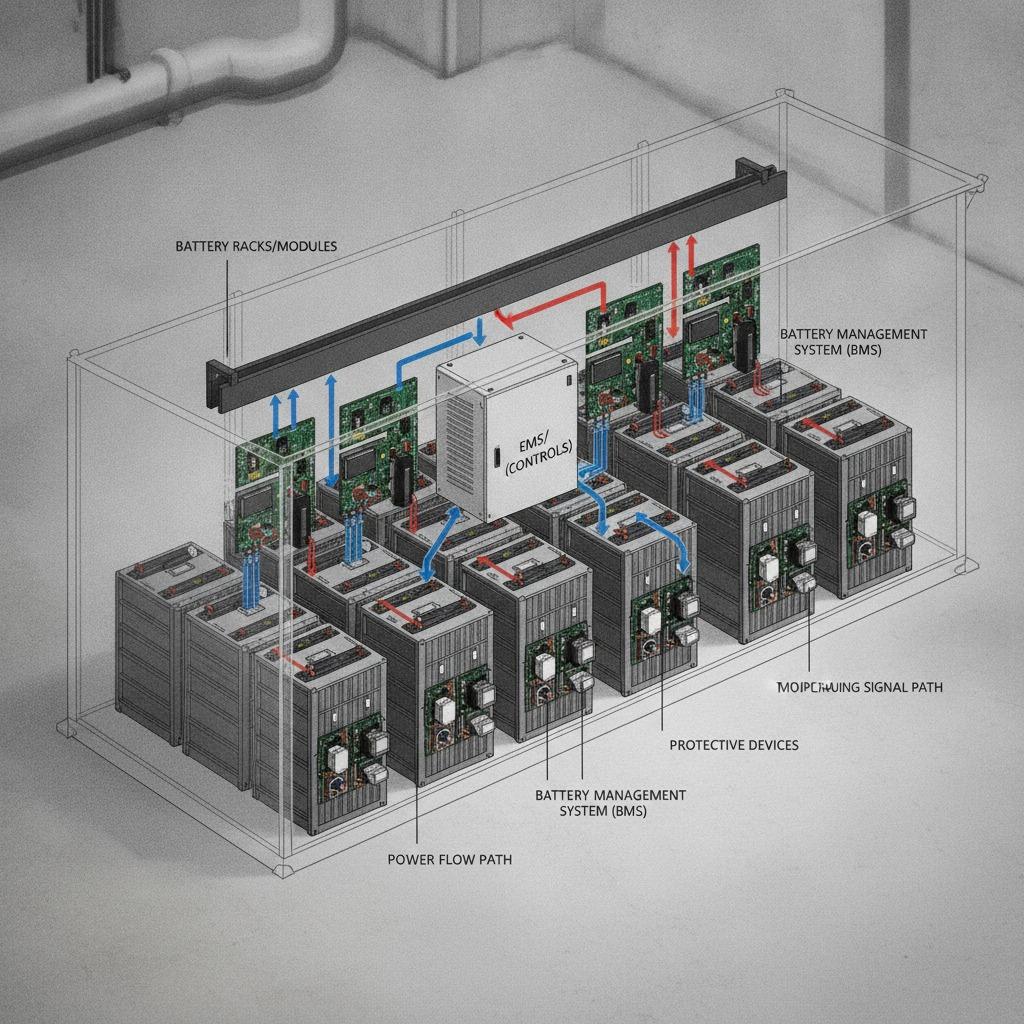
Monitoring and controls are another practical issue. Good systems should show charge state, solar production, grid import/export, and battery flow in a way that normal operators can actually interpret. If the dashboard reads like a puzzle, that is a warning sign.
Common Mistakes When Retrofitting Storage
A lot of retrofit problems come from assumptions rather than hardware failure.
One common mistake is oversizing the battery for the solar array. If the array does not produce enough surplus energy, the battery may not charge fully on a regular basis. The result is poor utilization and weaker payback.
Another is ignoring the inverter’s age. If the inverter is near end of life, adding storage around it may look cheaper on day one but less attractive once replacement costs arrive.
A third is failing to map outage behavior carefully. Some systems provide backup only to designated loads. Others can isolate and support broader circuits, but only if the design includes the right transfer equipment and controls. Buyers should not assume “battery backup” means the whole property stays live.
Permitting and utility rules are another easy place to slip. Local interconnection requirements can affect export behavior, protection settings, and even whether a retrofit is allowed without additional review. This is not glamorous work, but it matters.
How to Evaluate Retrofit Options Like a Buyer
If you are comparing bids, keep the discussion grounded in a few practical questions:
Does the proposed system work with the existing inverter, or is replacement included?
Is the storage AC-coupled or DC-coupled, and why does that fit the site?
What loads will be backed up during an outage?
How much usable battery capacity is included, not just nameplate size?
Will the system support time-of-use shifting, self-consumption, or only emergency backup?
What monitoring features are included for ongoing operation?
These questions help separate a true retrofit plan from a generic battery package. A good supplier should be able to explain the architecture without leaning on jargon.
When It Makes Sense to Upgrade the Solar Inverter Too
Sometimes the best answer is not simply to add storage, but to modernize the rest of the system at the same time. That may be worth considering if the inverter is old, the site needs more advanced energy management, or the battery you want is only compatible with a newer hybrid platform.
There is no universal rule here. Replacing equipment too early is wasteful, but forcing an aging inverter to do a new job can create service headaches later. The decision usually comes down to the age of the current system, the desired backup behavior, and the cost of leaving things as they are.
FAQ: Retrofit Storage Basics
Can any solar system accept a battery?
Not automatically. Many can be retrofitted, but the compatibility path depends on the inverter, array design, and control requirements.
Will a battery make my solar panels work during a blackout?
Only if the system is designed for backup operation and has the needed isolation and controls. Standard grid-tied solar alone usually shuts down during outages for safety reasons.
Is a battery always worth it financially?
No. It depends on electricity rates, outage value, consumption patterns, and local incentives or export rules. For some sites, resilience is the main benefit; for others, bill reduction is.
What is the safest first step?
Start with a system assessment from a qualified installer or engineer who can verify inverter compatibility, load requirements, and local permitting rules before any equipment is ordered.
A Practical Next Step
If you want to add solar battery to existing solar panels, treat the project as a system integration exercise, not a simple product purchase. The right answer depends on how the existing array was built, what problems you want the battery to solve, and how much change you are willing to make to the current equipment.
For buyers, the most useful next step is a site-specific review: current inverter model, array layout, critical loads, and utility requirements. Once those pieces are known, the storage path usually becomes much clearer. And if it does not, that is a sign to slow down rather than spend on the wrong architecture.