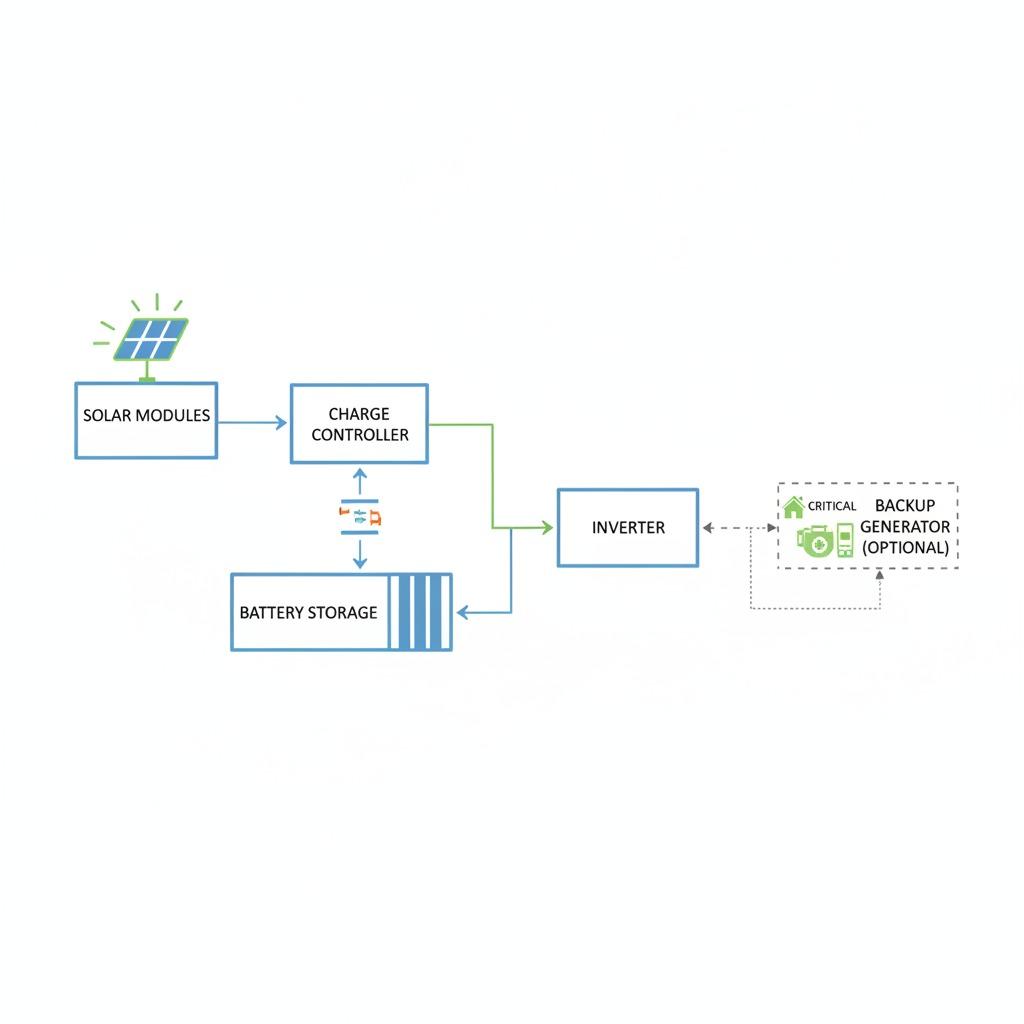

Why the battery cabinet has become a serious piece of industrial equipment
A Battery Energy Storage Cabinet is no longer just a box for batteries. In industrial projects, it is the physical boundary between stored energy and everything around it: operators, switchgear, power electronics, and the building itself. That sounds obvious, but buyers still get tripped up by the same mistake: they focus on battery capacity first and cabinet design second. In practice, the cabinet is often what decides whether a storage system is serviceable, safe, and easy to integrate into a plant or utility site.
For engineers and sourcing teams, the real question is not only “How much energy do we need?” It is also “How will this cabinet be accessed, cooled, protected, and maintained over years of use?” That is where the Industrial Energy Storage Cabinet concept matters. These enclosures sit at the intersection of electrical protection, thermal management, and mechanical durability. If the cabinet is poorly designed, even a strong battery pack can become difficult to inspect, disconnect, or replace.
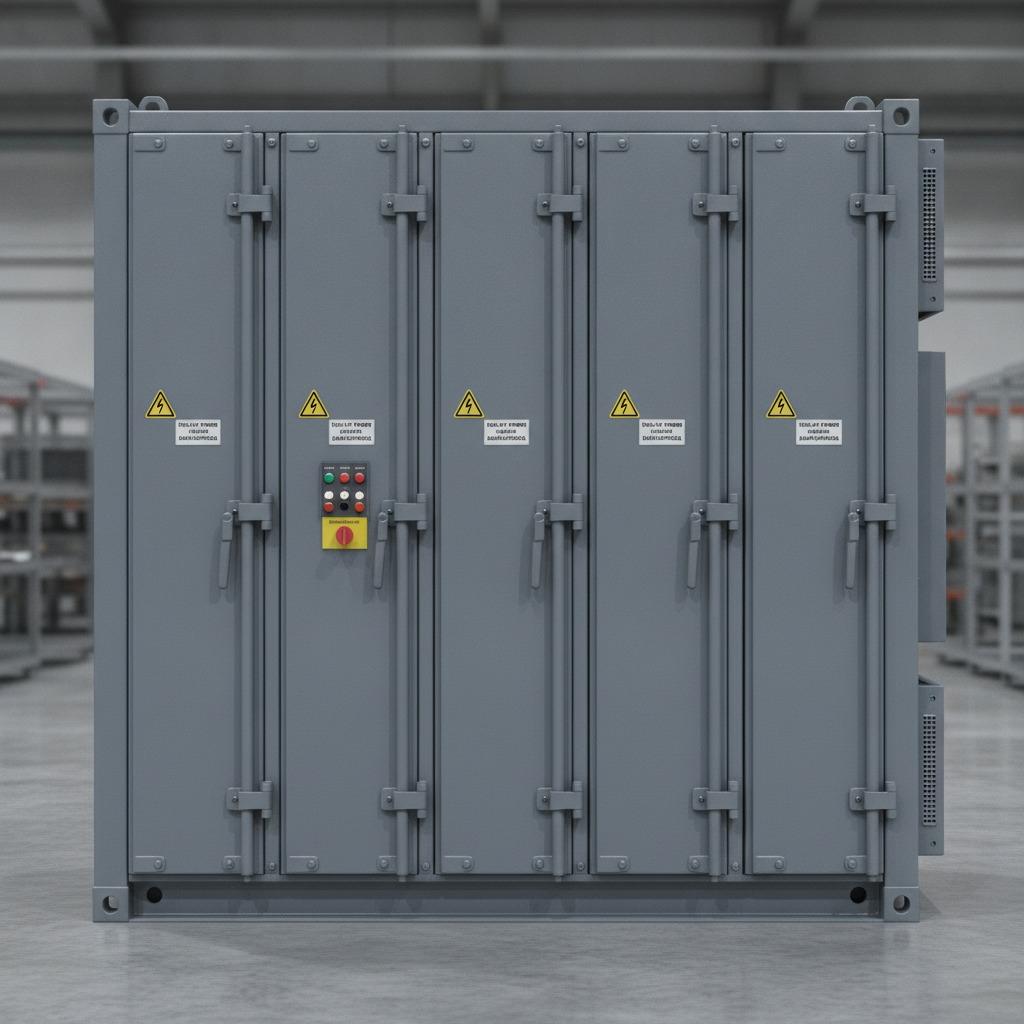
In industrial settings, the cabinet also has to play nicely with the rest of the electrical room. A fabricated metal enclosure with multiple front-access doors, heavy-duty hinges, latches, warning decals, and compartment separation can make a project easier to service. The wrong cabinet, by contrast, can force awkward access, slow maintenance, and create avoidable safety risks. That is the practical decision this article is meant to help with.
What a battery energy storage cabinet actually needs to do
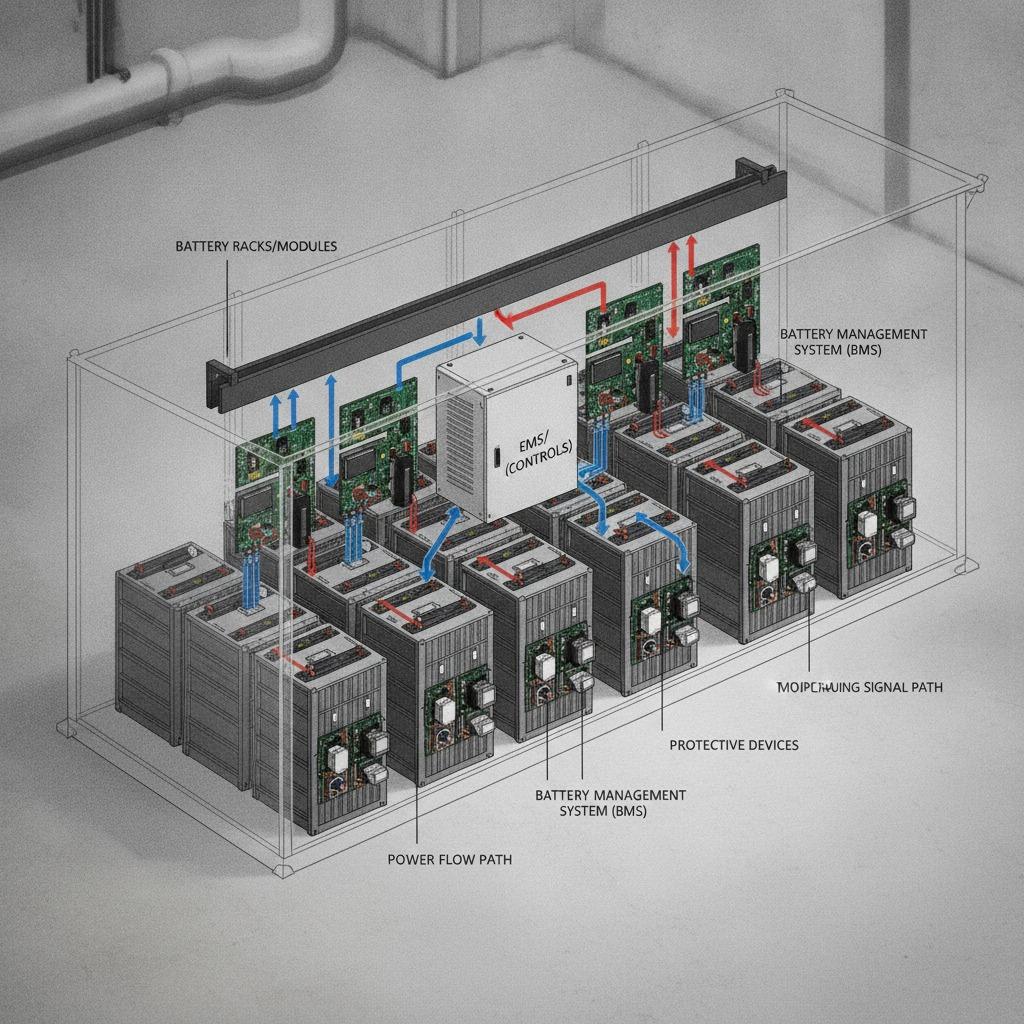
At a basic level, a battery cabinet must contain energy. But in a real installation it does more than that. It organizes electrical equipment, separates functional zones, supports service access, and helps manage heat, airflow, and operator interaction. In many industrial projects, the cabinet also becomes a visual control point, which is why front-mounted indicators, pushbuttons, and emergency stop devices are often integrated into the enclosure layout.
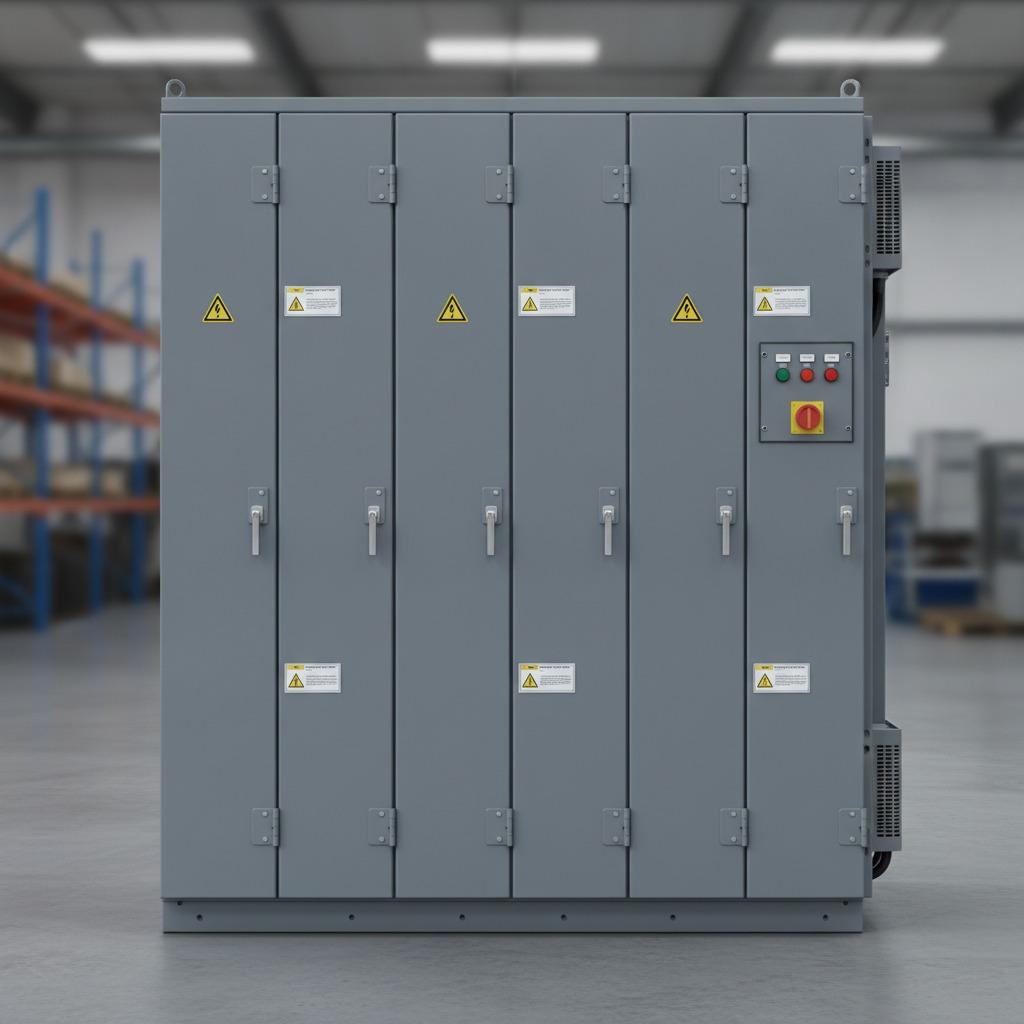
From a manufacturing standpoint, the enclosure itself is usually a fabricated sheet-metal structure. The product information here points to a large rectangular metal cabinet with multiple front-access sections, likely steel, with an industrial painted or powder-coated finish. That is a common approach because it gives the designer flexibility: doors can be sectioned by function, internal frames can support electrical devices, and the outer surfaces can be built for service access rather than decoration.
For buyers, the important takeaway is simple. The cabinet should support the electrical architecture, not fight it. If it is only sized around the battery footprint, later changes to disconnects, protection devices, or auxiliary modules can become expensive.
Design features that matter in the field
The visible details on a battery or control cabinet often reveal how it will behave in service. A few features are worth paying attention to.
Multi-compartment access
A multi-door layout is more than a convenience. It can help separate controls, protection equipment, and energy components into different service zones. That makes maintenance less disruptive and reduces the chance that one minor inspection requires opening the entire cabinet. In larger systems, compartment separation also helps teams work more methodically during startup and troubleshooting.
Robust door hardware
External hinges, locking bars or rods, and solid latching hardware are not cosmetic. They help the enclosure survive repeated access and, in some cases, frequent vibration or site handling. A cabinet used in industrial power distribution or process environments may be opened often; flimsy hardware becomes a maintenance problem long before the batteries wear out.
Operator interface placement
The visible red display/light, green button, and emergency stop-style control area on the right side suggest an integrated operator interface. That can be useful when the cabinet needs local acknowledgement, status indication, or emergency action. The caution here is that control placement should be deliberate. If the interface is awkwardly positioned or too exposed, operators may bypass it or, worse, hit the wrong control under pressure.
Warning labels and access discipline
Safety decals are easy to ignore in a spec sheet, but they are part of the cabinet’s real-world usability. Clear labeling supports lockout/tagout habits and helps technicians avoid opening the wrong compartment. In a mixed facility, where electrical teams and operations teams share space, that kind of clarity matters more than many procurement checklists admit.
Material and construction choices: what can be said with confidence
Based on the product information, the enclosure appears to be a fabricated metal cabinet, likely steel, with an industrial painted or powder-coated surface. That is a sensible base construction for switchgear, control panels, and energy storage housings because it balances strength, manufacturability, and service access. But the exact metal grade, coating system, thickness, corrosion performance, and rating details are not visible here, so those should be verified rather than assumed.
In sourcing terms, this is where many buyers over-specify the wrong thing. They ask for a fashionable feature and skip the practical questions: How will the coating hold up in the actual environment? Will the doors remain aligned after repeated opening? Are cable entry and accessory boxes planned from the start, or added later as a compromise? Those details often decide whether a cabinet feels robust after two years or starts showing wear after the first season.
For outdoor or harsh-site use, cabinet construction becomes even more critical, but this specific image does not confirm outdoor rating, insulation scheme, or ingress protection. Those requirements should be established in the project specification, not guessed from appearance.
How battery storage cabinets differ from general industrial electrical enclosures
At first glance, a battery energy storage cabinet may resemble a general industrial electrical enclosure. That resemblance can be misleading. A standard control cabinet is usually optimized for electrical distribution, automation, or protection gear. A battery storage enclosure has to account for energy density, thermal behavior, and potentially more frequent access to energy-related subsystems.
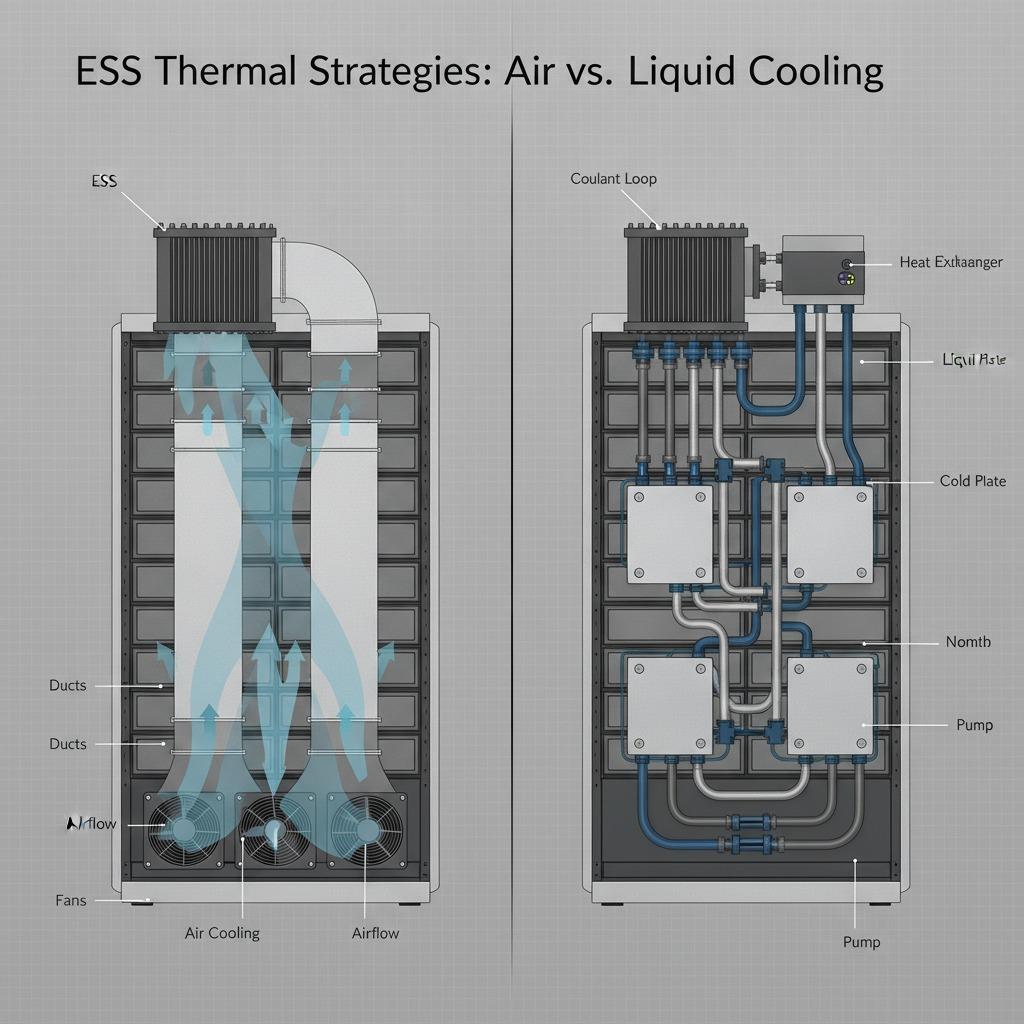
This is why some projects begin with a standard enclosure platform and then adapt it for battery use. That can work, but only if the internal architecture supports the added demands. Extra ventilation housings, side-mounted accessory boxes, compartmentalized doors, and service-friendly layouts become more important as the cabinet grows in complexity. The cabinet in the provided product information seems to follow that logic: a large, modular, service-accessible structure with visible auxiliary housings and an operator panel.
In that sense, the term Industrial Energy Storage Cabinet is useful because it signals a cabinet built for industrial integration, not a consumer-style energy box. The distinction matters when teams are comparing vendors or reviewing fabrication drawings.
Selection criteria that actually help buyers
If you are sourcing a Battery Energy Storage Cabinet, start with the application, not the catalog. Ask what the cabinet must contain, where it will sit, who will open it, and what maintenance actions are expected over time.
Key questions include:
Will the cabinet house batteries only, or batteries plus protection, controls, and operator interface hardware?
Is the site indoor, outdoor, dusty, humid, or otherwise demanding? The environment should drive enclosure design, not the other way around.
How often will service access be needed? Frequent access calls for stronger hinges, better labeling, and a layout that reduces interference between compartments.
Does the project need local indicators, emergency stop functions, or status lights on the cabinet face?
Are cable routing and accessory mounting planned in the original fabrication, or will they be improvised later?
Those questions sound basic, but they prevent expensive redesign. A cabinet that looks suitable in a rendering can become frustratingly awkward when the first field technician tries to work inside it.
Common mistakes in battery cabinet projects
One common mistake is treating the cabinet as a final packaging step. By the time the enclosure is considered, the electrical architecture is already fixed, and every adjustment becomes a compromise. That often leads to cramped service space, poor access to disconnects, or control components mounted where they are hard to reach.
Another mistake is ignoring maintenance behavior. A cabinet can look good on paper and still be a nuisance if doors block each other, latches require awkward force, or the operator panel is placed where it is vulnerable to impact. The image-based product description suggests a layout with multiple front-access doors and industrial-grade hardware, which is encouraging, but the broader lesson remains: serviceability is a design requirement, not a nice-to-have.
Buyers also sometimes assume all metal enclosures behave similarly in corrosion or thermal performance. They do not. Two painted steel cabinets can perform very differently depending on material prep, coating process, seam design, and assembly quality. If the environment is difficult, ask the fabricator to explain the enclosure build-up in plain language.
Practical buying advice for engineers and sourcing teams
If you are comparing options, request enough documentation to judge the cabinet as a system, not just a shell. That means internal layout drawings, door/access plans, cable entry details, and a clear list of which components are included versus customer-supplied. For custom metal fabrication, clarity matters more than broad claims.
Also, do not overlook the human side of the design. Maintenance crews care about sightlines, reach, lockout access, and whether a panel can be opened without disturbing adjacent equipment. Procurement teams sometimes focus on the purchase order line item, but field teams live with the cabinet every day. Their feedback is usually the most honest performance review you will get.
If the project is still in the concept phase, a good next step is to align the battery system vendor, enclosure fabricator, and electrical integrator early. That reduces last-minute changes to door layouts, control placements, and accessory boxes. It also improves the chance that the final Industrial Energy Storage Cabinet actually fits the site instead of merely fitting the drawing.
FAQ: quick answers buyers usually need
Is a battery cabinet the same as a switchgear cabinet?
Not exactly. They can look similar, but battery storage cabinets usually have different thermal, safety, and service-access priorities.
Can a standard electrical enclosure be adapted for battery storage?
Sometimes, yes. But the internal layout, cooling strategy, and access requirements must be checked carefully before assuming it will work.
What should be verified before ordering?
Material, coating, enclosure rating, internal arrangement, door hardware, accessory provisions, and service access details should all be confirmed in writing.
A sensible next step
If you are specifying a Battery Energy Storage Cabinet for an industrial project, start with the cabinet architecture itself. Map the service zones, confirm the interface requirements, and make sure the enclosure is being designed around maintenance reality rather than only around capacity. A well-built cabinet can simplify everything downstream. A poorly planned one tends to announce itself later, usually when someone needs to open it in a hurry.
When reviewing supplier options, ask for a drawing set or fabrication breakdown that shows the compartment layout, door hardware, accessory interface, and mounting provisions. That is the quickest way to separate a thoughtful enclosure solution from a generic metal box with batteries inside.