
What buyers actually mean when they search for a battery energy storage system company
When engineers, sourcing teams, or project managers look for a battery energy storage system company, they are usually not just comparing logos and brochures. They are trying to answer a more practical question: who can supply an energy storage package that is electrically sound, mechanically robust, and straightforward to integrate into a real site. In many cases, the decision is not about one component at all. It is about whether the supplier can handle the cabinet, the battery modules, the wiring, the monitoring interface, and the thermal and safety details that make the system workable on the shop floor or at the edge of the grid.
That matters because BESS purchases tend to sit at the intersection of procurement and engineering. A system may look simple from the outside, but the details inside the enclosure determine a lot: how cleanly the cabling is routed, whether service access is reasonable, whether monitoring is built in, and how the assembly copes with heat and vibration. Buyers who miss those details often end up with a product that is technically presentable but awkward to install, maintain, or scale.
A quick read on the cabinet-style BESS design
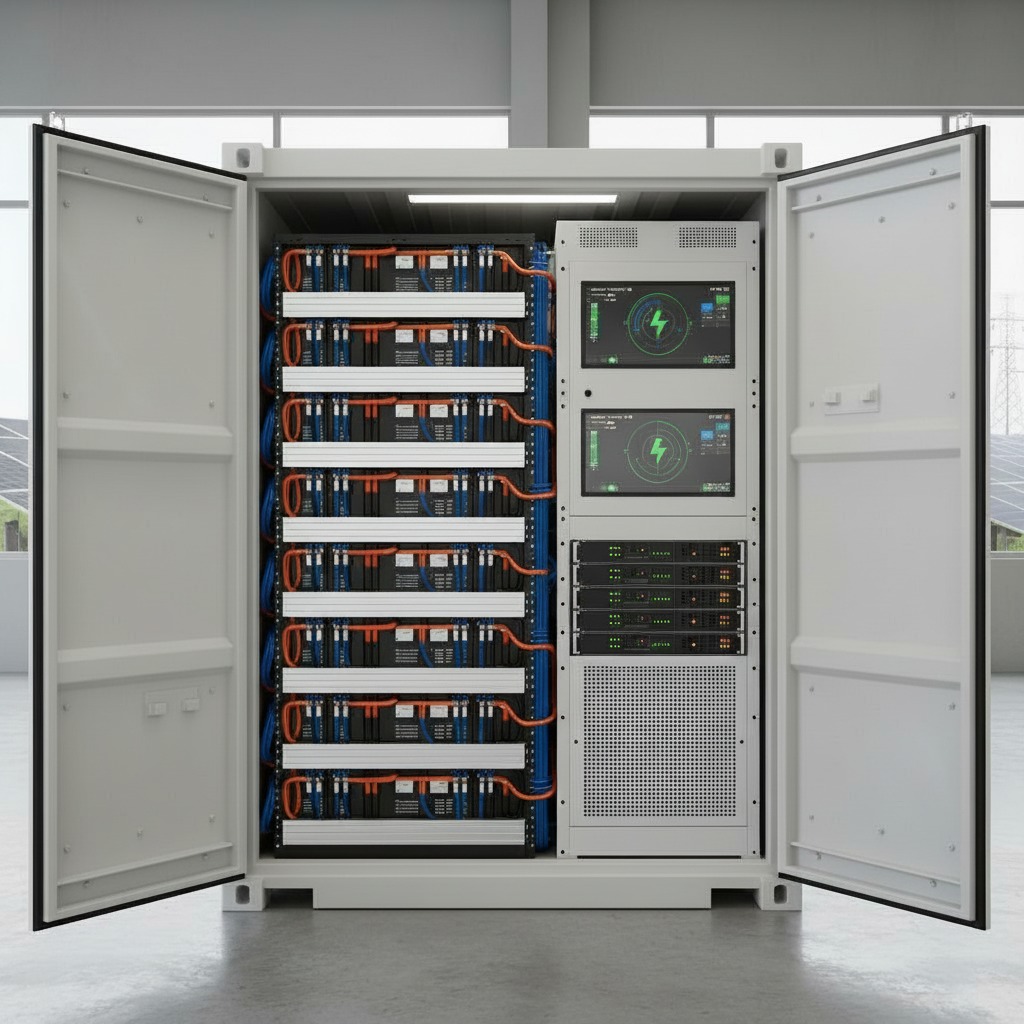
The product information here points to a large floor-standing electrical energy storage cabinet with a double-door metal enclosure, internal rack structure, and integrated electronics. Visually, it resembles the kind of enclosed battery rack system used for industrial power storage and distribution rather than a small consumer device. The light gray powder-coated sheet metal housing, vented panels, and organized internal layout suggest an assembled electrical cabinet built for controlled placement in a facility, containerized site, or other power infrastructure environment.
Inside, the design appears modular. Multiple battery modules are stacked vertically on the left, while the right side contains a control or power electronics section, two built-in display screens, and lower electronic modules behind a perforated grille. That split layout is worth noticing. It usually signals a practical engineering approach: keep the energy modules grouped, separate the monitoring and control area, and route the cabling in a way that makes servicing possible without tearing the whole cabinet apart.
For buyers comparing energy storage solutions, that kind of arrangement can be a real advantage. It does not tell you everything about capacity, chemistry, or certification, and those details would need to be verified separately, but it does tell you the supplier is working within the physical logic of industrial cabinet integration.
Why the supplier matters as much as the hardware
A BESS company is not just selling a box of lithium battery storage components. At least in the better cases, it is delivering a system-level assembly where mechanical fabrication, electrical integration, and user interface design have to work together. That is a different task from simply sourcing cells or racks.
If the cabinet is for renewable-energy buffering, backup power, peak shaving, microgrid support, or facility power management, the practical demands change quickly. The system may be expected to cycle often, sit idle for long periods, or respond instantly when load conditions shift. In every case, the buyer needs confidence that the enclosure can keep internal components organized and accessible, and that the monitoring interface gives usable information rather than decorative screens.
There is also a sourcing reality that people sometimes overlook. A polished exterior is easy to specify. What is harder is getting consistent sheet-metal quality, reliable cable management, sensible component placement, and repeatable assembly across units. That is where a serious battery energy storage system company earns its place.
What to look for in a BESS company
1. Mechanical integration quality
The enclosure should look like an engineered product, not a loose collection of parts installed in a cabinet. For a floor-standing storage system, buyers should pay attention to door fit, frame rigidity, access to internal modules, and how well the components are supported. Cabinet hardware matters more than people think, especially once the system is moved into a facility and exposed to routine maintenance, vibration, and repeated opening and closing.
2. Internal wiring discipline
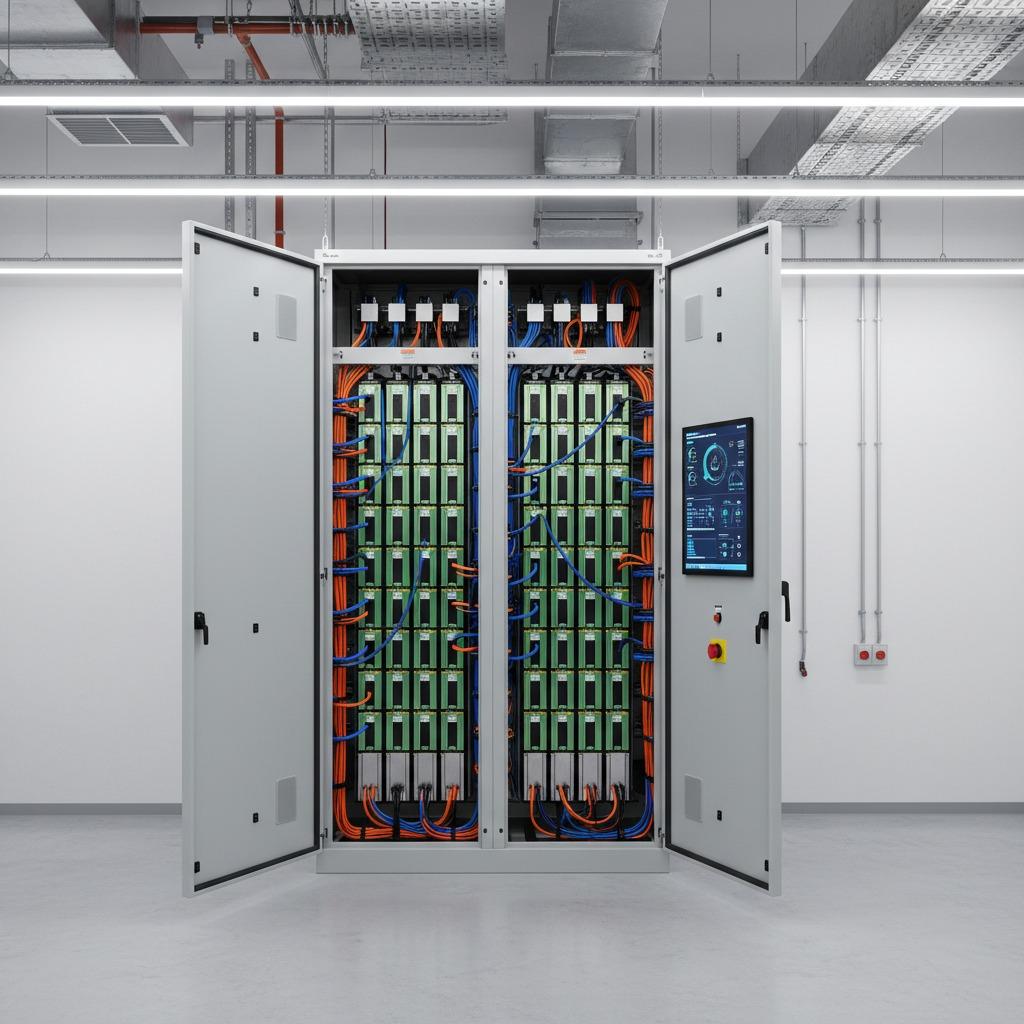
The visible orange and blue cabling in the example suggests a system where routing has been considered. That is encouraging. Clean cable management is not cosmetic. It affects serviceability, reduces the chance of avoidable abrasion or confusion during maintenance, and makes troubleshooting less painful. In a dense electrical cabinet, messy wiring becomes expensive later.
3. Monitoring and controls
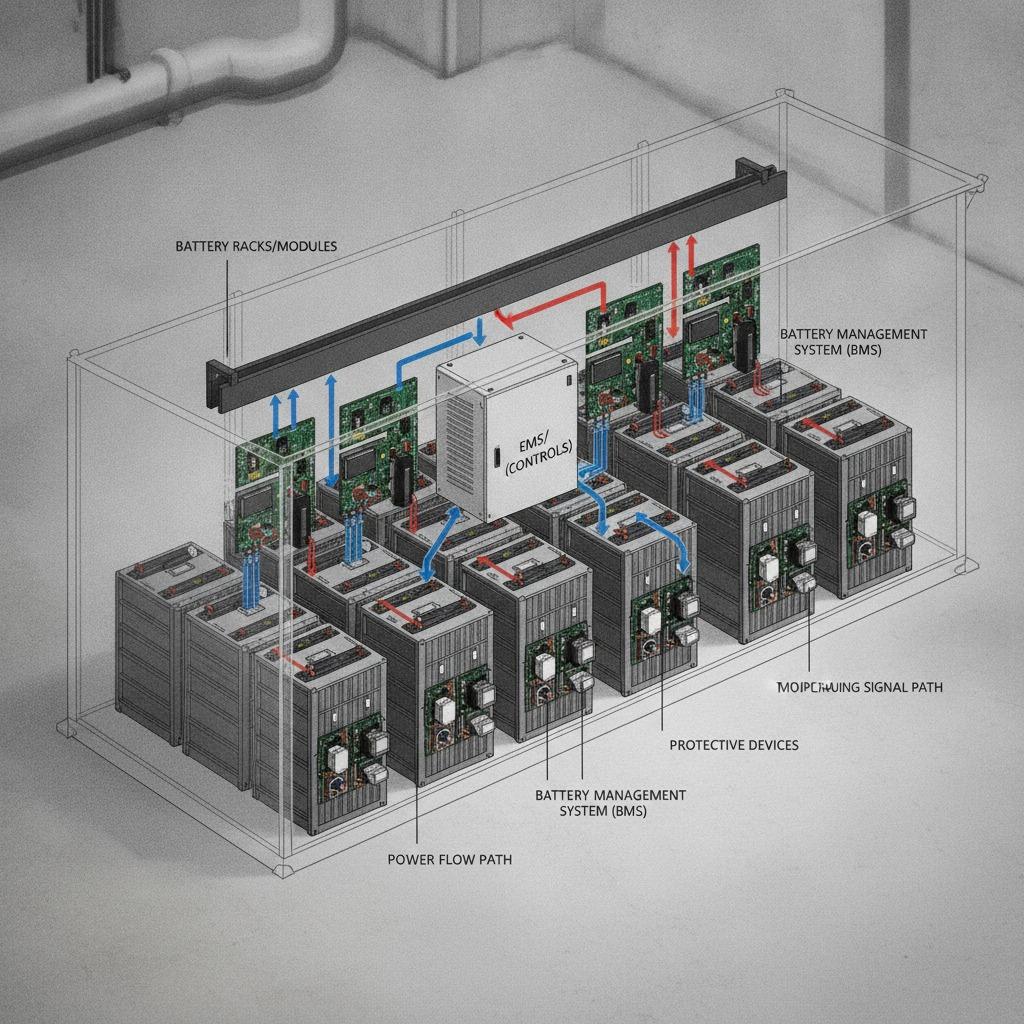
Built-in screens are a useful sign, assuming they are tied to real system data. In storage applications, operators want quick access to battery status, energy flow, alarms, and diagnostic information. A BESS company worth considering should be able to explain what the displays show, how the data is accessed, and how the cabinet integrates with the wider control environment.
4. Thermal management approach
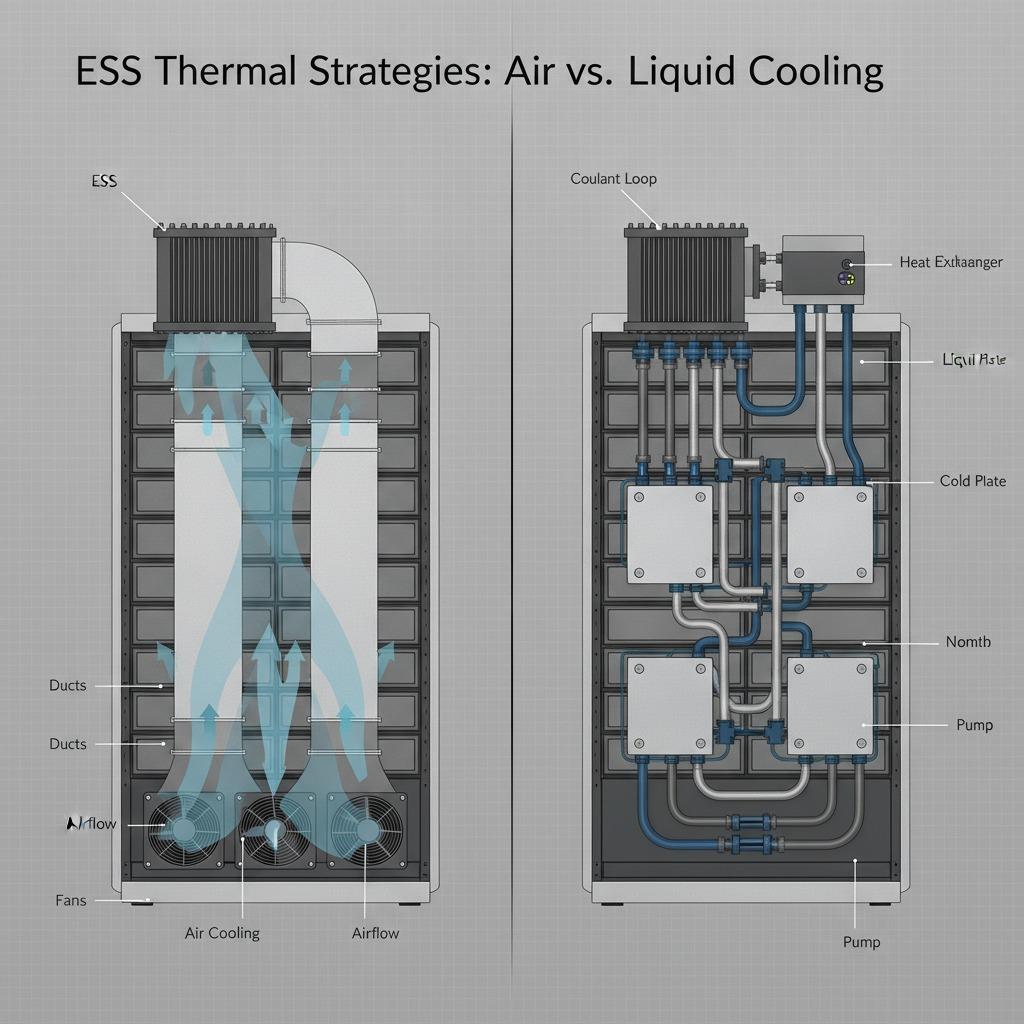
The perforated panels and vented sections suggest the cabinet is designed with airflow in mind, though the exact cooling method is not visible. That is one of those areas where buyers should ask directly instead of assuming. Heat management is not a side note in lithium battery storage. It affects reliability, performance, and service life.
5. Assembly depth
Some suppliers only assemble modules. Others handle a fuller package, including metal fabrication, electrical wiring harness assembly, control-panel installation, and final system integration. For many industrial buyers, the second type is more useful because it shortens the number of interfaces in the project.
Cabinet BESS versus more open rack approaches
A cabinet-style system is not the answer for every project, but it solves a common problem: how to package a fairly complex power system in a form that is easier to deploy and manage.
An open rack can be simpler to inspect and sometimes easier to modify, but it usually leaves more of the installation burden to the site team. A closed cabinet, by contrast, gives a neater footprint and often better protection for the internal assembly. That can be useful in industrial environments where operators want a self-contained unit rather than a spread-out arrangement of modules, inverters, and controls.
Still, buyers should be cautious. A cabinet form factor does not automatically mean better protection, better cooling, or better safety. Those details depend on how the system is actually built. This is why it is a mistake to choose a battery energy storage system company based only on the appearance of the enclosure.
Common buyer mistakes with energy storage solutions
One frequent error is treating all lithium battery storage systems as interchangeable. They are not. Two cabinets can look similar on the outside and behave very differently once installed. The chemistry, control logic, monitoring architecture, and enclosure design all influence the result.
Another mistake is underestimating access needs. A cabinet with impressive internal density may still be a poor choice if the maintenance path is awkward or the control section is buried behind other components. Field technicians remember those details long after the quotation has been approved.
A third issue is asking for “capacity” without clarifying the operating profile. Peak shaving, backup power, and renewable buffering may all use similar language in sales discussions, but the design priorities are not identical. A credible BESS company should be willing to talk through the use case rather than pushing a one-size-fits-all answer.
Questions to ask before you shortlist a supplier
Before you move from interest to RFQ, ask the supplier how the cabinet is assembled, how the battery modules are mounted, how cable routing is handled, and what kind of monitoring interface is included. Also ask what service access looks like in practice. If the answer is vague, that is a warning sign.
You should also clarify what is not visible in a product image. Capacity, battery chemistry, ingress protection, cooling method, and certification status are all important, but they cannot be guessed from a photo. A responsible supplier will separate what is known from what still needs confirmation.
For many buyers, the real decision is whether the supplier can deliver a repeatable system rather than a one-off build. That distinction matters especially when the project may need more than one cabinet or when the buyer expects follow-on orders.
FAQ: practical questions buyers usually ask
Is a cabinet-style BESS always better than a rack system?
Not always. A cabinet can be cleaner and easier to deploy, but the right choice depends on service access, thermal design, site conditions, and the level of integration you want.
What makes a BESS company credible?
Look for evidence of real electrical and mechanical integration, not just assembly. Good cabling, sensible module placement, a usable display or control interface, and a clear answer on thermal management all help.
Can I judge performance from the enclosure alone?
No. The enclosure gives clues about build quality and integration philosophy, but not the full electrical picture. Battery chemistry, controller design, and system testing still need to be verified.
What should I be careful about when sourcing lithium battery storage?
Do not assume the visible cabinet tells the whole story. Ask about operating profile, maintenance access, cooling, and the exact scope of supply. That extra round of questions saves time later.
A practical next step for engineering and sourcing teams
If you are evaluating a battery energy storage system company, start by separating the visual impression from the technical evidence. A well-organized cabinet with modular battery stacking, integrated screens, and disciplined cable routing is a good sign. It suggests the supplier understands system assembly, not just component placement. But the final decision still depends on the details that sit behind the door.
For buyers of energy storage solutions, the best move is to request a full technical package: electrical architecture, enclosure details, monitoring functions, thermal approach, and the applicable compliance documentation. If the supplier can speak clearly about those items, you are probably dealing with a BESS company that understands industrial expectations. If not, the shiny cabinet may be doing more work than the engineering behind it.