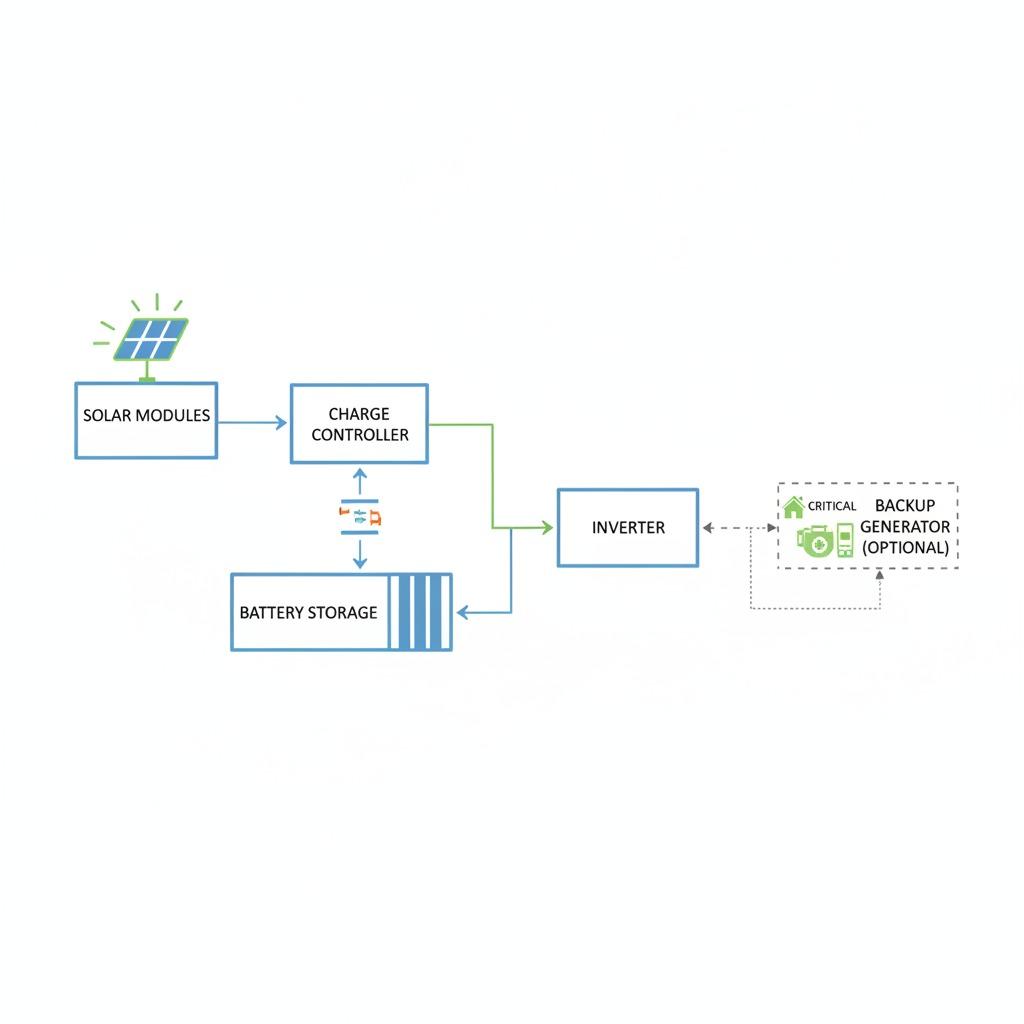

Battery Energy Storage System Design Is More Than Packing Cells into a Cabinet
Battery energy storage system design is often treated as a component-selection exercise, but that misses the harder part of the job. The real work is balancing electrical performance, thermal behavior, service access, enclosure layout, controls, and safety in one system that has to operate reliably in the field. For engineers and sourcing teams, that means the question is not simply which battery modules to buy; it is how the entire system will be arranged, cooled, protected, monitored, and maintained over time.
That distinction matters because a BESS can look straightforward from the outside and still fail a project on the inside. Poor airflow, awkward cable routing, cramped service clearances, or a cabinet that was not designed with front-access maintenance in mind can turn into downtime later. In industrial and critical-load applications, downtime is usually more expensive than the hardware itself.
What a Well-Designed BESS Cabinet Is Trying to Solve
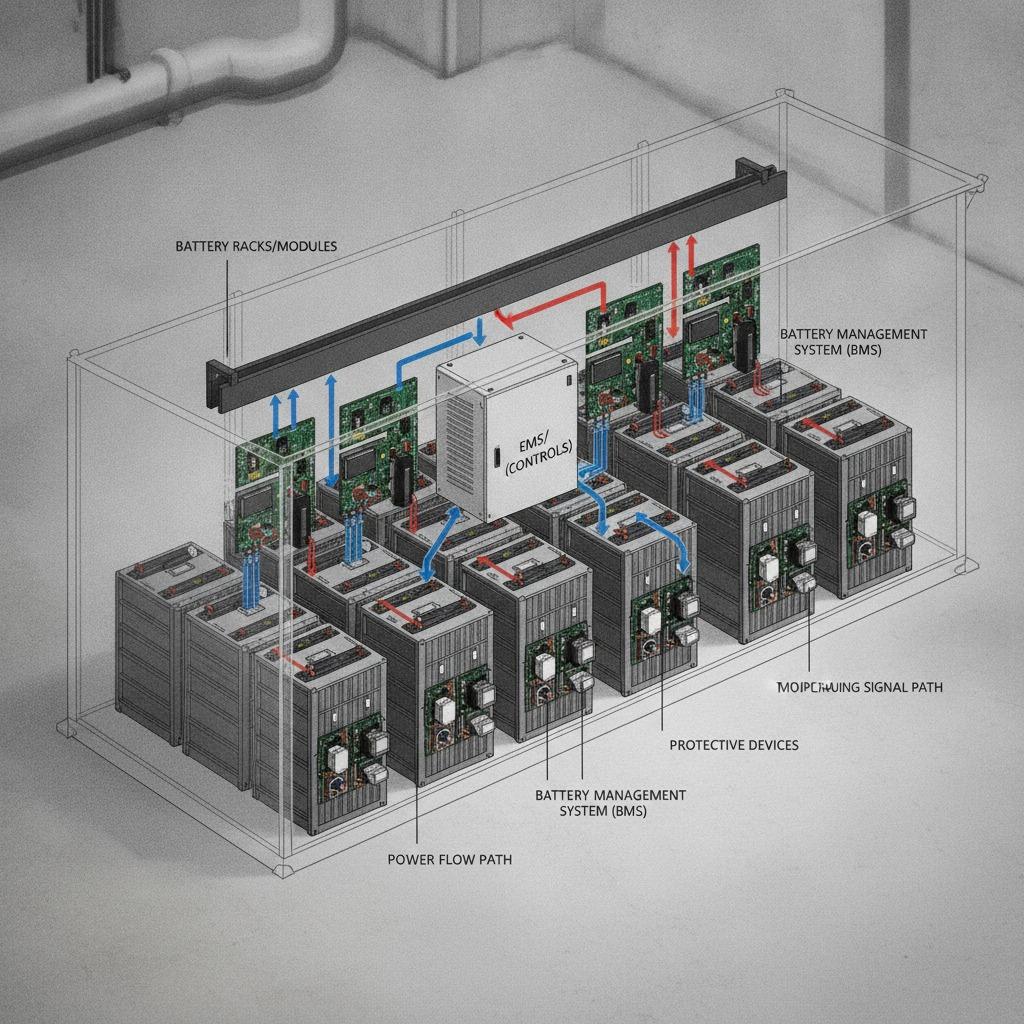
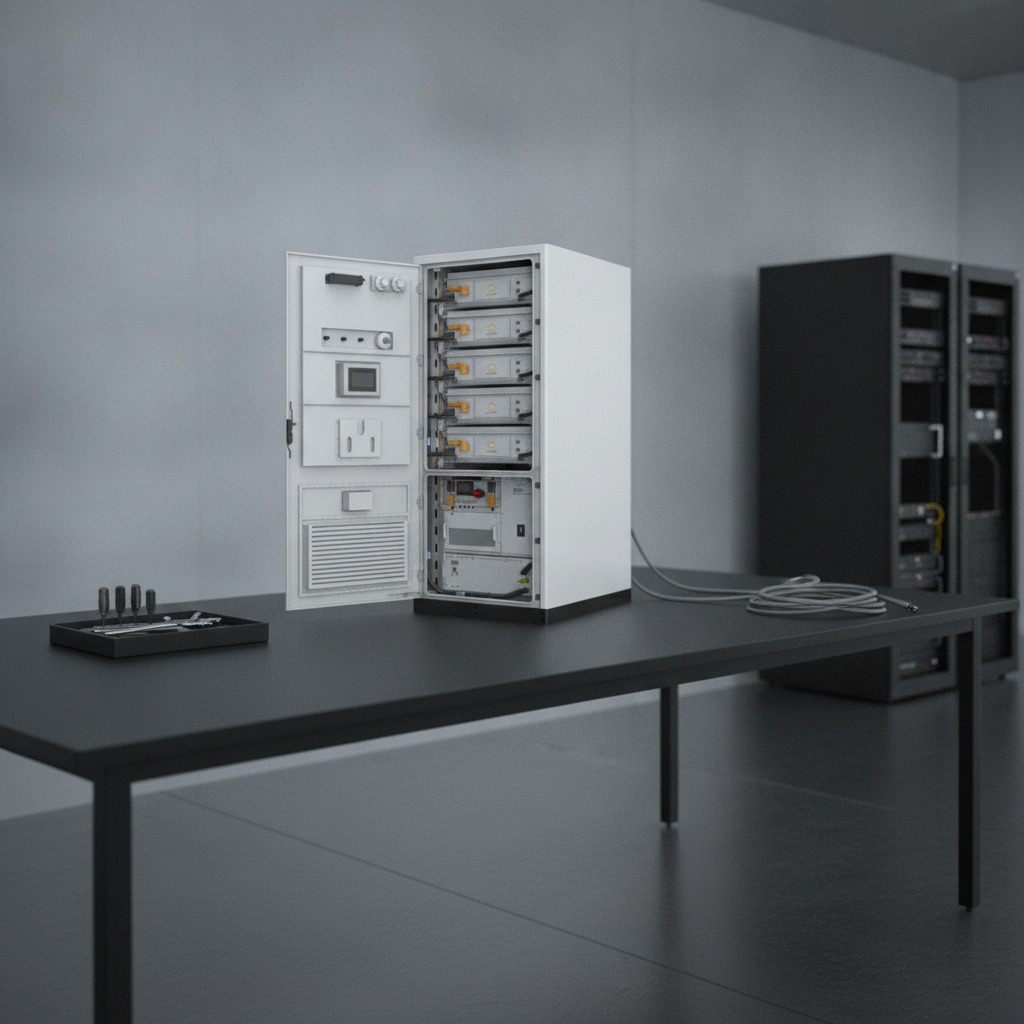
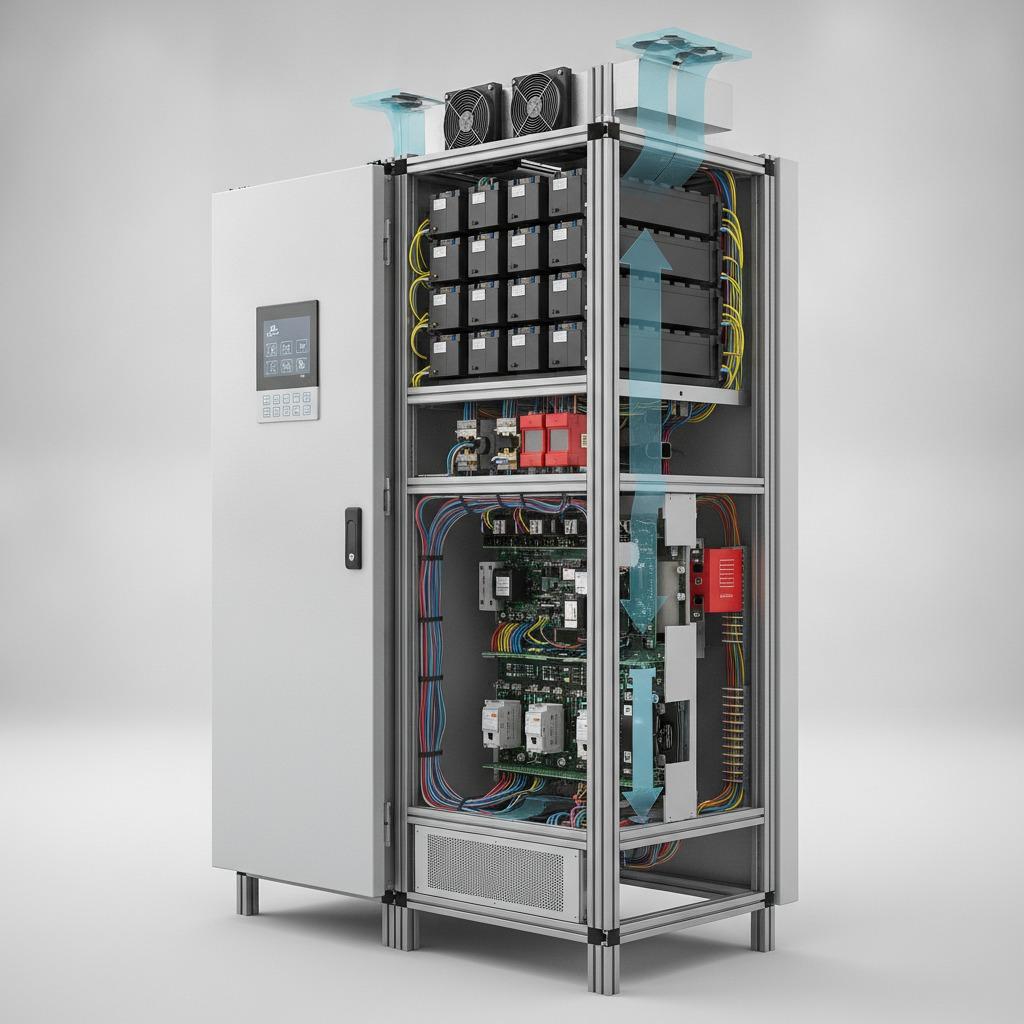
A practical energy storage enclosure usually has to do several jobs at once. It needs to house modular power or battery sections, keep control electronics separated enough to avoid unnecessary heat and interference, provide access for inspection and replacement, and support safe cable routing. In the cabinet description provided here, the visible layout suggests a floor-standing metal enclosure with vertically stacked modules, a lower control section, internal rails, brackets, and a front door with an HMI, connectors, and ventilation features.
That layout is not unusual. In many industrial systems, modularity is the only sane way to keep the enclosure serviceable. If a technician has to disassemble half the cabinet to reach one failed module, the design may still work on paper but it will not please the maintenance team.
For buyers, the key decision is whether the cabinet architecture fits the site’s operating reality: indoor or protected installation, frequent inspection needs, limited footprint, or integration into backup, renewable buffering, telecom support, or plant power management.
Quick Takeaways for Buyers and Engineers
If you are evaluating battery energy storage system design, the cabinet should be judged on the system around the storage medium, not just the storage medium itself.
The most useful questions are usually these: Can the modules be accessed from the front without major disassembly? Is airflow controlled rather than improvised? Are controls and indicators visible at the cabinet door? Is the internal layout clean enough to support repeatable assembly and troubleshooting? Does the enclosure leave enough room for wiring, grounding, and protective devices without crowding the power section?
Those are small questions until they are not. In field service, small questions become site visits.
Cabinet Architecture: Why the Physical Layout Matters
The provided product description points to a sheet-metal enclosure with internal mounting rails and assembled electrical subcomponents. That kind of build is common in industrial energy storage system engineering because steel cabinets offer a familiar combination of rigidity, protectiveness, and manufacturability. They also make it easier to separate modules into functional zones.
Front-access serviceability
A front-opening cabinet is often the most practical format for indoor industrial deployment. It allows technicians to inspect modules, read indicators, and replace parts without pulling the entire enclosure apart. That is especially useful when the cabinet is installed against a wall or in a row with other equipment.
Modular vertical stacking
Stacked modules can save floor space, but they also make thermal management more delicate. Heat rises, cable bundles accumulate, and service access can become awkward if the spacing was optimized only for volume efficiency. A good layout leaves room for wiring bends, connectors, and the kind of hand access that real technicians need, not just the access that looks good in a CAD rendering.
Separate lower electronics section
The lower compartment in the described enclosure appears to house control or power electronics. That is a sensible arrangement when the upper section carries heavier modules and the lower section handles switching, monitoring, or auxiliary functions. Even without knowing whether the lower area contains an inverter, controller, BMS hardware, or another subsystem, the separation itself suggests an attempt to organize heat, weight, and maintainability.
Thermal Design Is Usually the Hidden Constraint
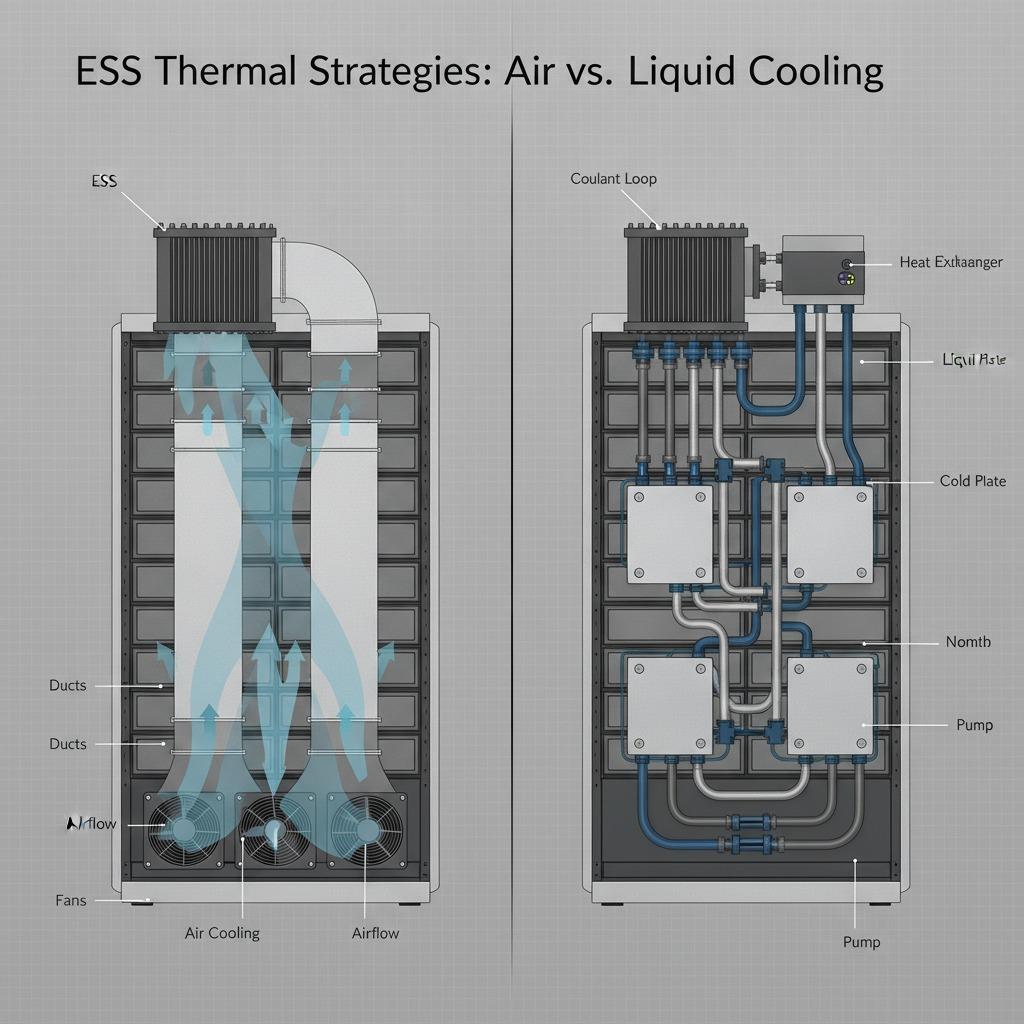
In battery energy storage system design, thermal management is often the quiet reason a project succeeds or struggles. The image description notes a lower ventilation grille or filtered intake/exhaust panel, which signals that airflow is part of the cabinet strategy. That is encouraging, but ventilation alone does not guarantee good thermal performance.
Designers need to think about how air enters, where it travels, what it cools first, and where it exits. A cabinet can have vents and still trap heat if internal partitions or cable bundles block circulation. Likewise, a powerful fan may move air effectively while also pulling dust into sensitive areas if filtration and maintenance access were ignored.
For industrial users, the practical question is not whether the cabinet “has cooling.” It is whether the cooling concept matches the duty cycle, ambient conditions, and service expectations of the site.
Electrical Organization and Cable Discipline
One of the quiet virtues of a well-made energy storage cabinet is tidy cable discipline. In the described product, internal mounting rails, brackets, latches, and access panels suggest an assembled system with defined routing paths. That matters because electrical cabinet reliability is often reduced by very ordinary problems: loose leads, poor strain relief, crowded terminal areas, or maintenance work that leaves cables bent too tightly.
For procurement teams, this is one of those details that is easy to miss in a spec sheet and obvious in a factory review. Ask how power and signal wiring are separated, how service loops are handled, and how replacement modules are meant to be disconnected. If the answer sounds improvised, the installation may become improvised too.
Selection Criteria That Actually Help
When comparing BESS design options, it is tempting to focus first on capacity, chemistry, or brand. Those matter, but the cabinet and system architecture often decide whether the storage asset is easy to live with.
A practical review should cover the following:
Maintainability
Can technicians reach common failure points quickly? Are displays, switches, and ports on the door where they should be? Are filter elements or access panels likely to be serviceable on schedule rather than after a nuisance alarm?
Scalability and modularity
Can the system support multiple modules without becoming awkwardly dense? Modular arrangements help when the project is expected to evolve, though only if the enclosure and wiring strategy were planned with some margin.
Environmental fit
Indoor industrial deployment is not the same as a clean lab. Dust, vibration, temperature swings, and ordinary human behavior all influence design. A cabinet that looks compact and elegant on a presentation slide may be a poor choice if maintenance staff cannot comfortably work around it.
Safety and controls integration
Even without specific certification data, buyers should expect a serious system to include visible controls, indication, and a logical compartment structure. The door-mounted display/HMI in the described cabinet is a useful sign because it supports operator awareness at the point of access.
Common Mistakes in Energy Storage System Engineering
A few mistakes keep showing up in storage projects. One is overestimating how much room a system really needs once wiring, ventilation, and service clearances are added. Another is assuming that a tidy cabinet in the factory will remain tidy after installation, especially if field modifications are allowed without discipline.
A third mistake is treating the enclosure as a commodity shell. In reality, the cabinet is part of the thermal and maintenance design. If it is too shallow, too cramped, or awkwardly partitioned, the rest of the system has to work harder to compensate.
There is also a procurement trap: asking only for headline electrical ratings while neglecting the physical service model. That is how projects end up with technically capable systems that are a nuisance to operate.
What This Kind of Enclosure Suits Best
Based on the provided description, this type of floor-standing energy storage or power conversion cabinet appears well suited to backup power, renewable energy buffering, site power management, telecom support, and critical-load applications. The compact enclosed footprint and front-access configuration make it attractive where indoor space is limited and equipment must remain protected.
It may also fit industrial control environments where the storage or conversion function needs to live beside distribution or automation gear. The caveat, of course, is that the exact service category is not fully identifiable from the image alone. That uncertainty is normal and should be respected rather than guessed away.
Buyer Advice Before You Specify a System
Before finalizing a battery energy storage system design, ask for enough information to confirm the cabinet’s real operating logic. Do not stop at a product photo. Request the internal arrangement, airflow path, access method, and service procedure. If possible, review how the modules are installed and how the lower electronics section is isolated from the upper storage area.
If the supplier cannot explain how the system is maintained, that is worth paying attention to. Field service is not an afterthought; it is part of the product.
You should also be cautious about assuming chemistry, total capacity, voltage, power rating, or ingress protection based only on appearance. Those are essential specifications, but they were not supplied here and should be verified directly from the manufacturer or engineering package.
FAQ
Is a modular cabinet always better than a fixed internal layout?
Not always, but modular layouts are usually easier to service and adapt. The tradeoff is that they demand good thermal and cable planning.
Why does front access matter so much?
Because many installations do not offer much rear or side clearance. Front access improves maintainability and can reduce downtime.
Does ventilation mean the design is already well-cooled?
No. Ventilation is only one part of thermal design. Air path, filtration, component placement, and maintenance all matter.
What should sourcing teams request first?
Ask for internal layout information, service approach, electrical architecture, and any site constraints that affect installation.
Where Good Design Pays Off
The best battery energy storage system design is often the one that looks boring after installation. No drama, no repeated access problems, no mystery hot spots, no awkward wiring improvisation. The cabinet described here suggests several positive design instincts: modular internal organization, visible operator controls, a service-oriented front door, and integrated ventilation features.
That does not tell us everything, and it should not. But it does point to the right kind of conversation for engineers and buyers: less about the cabinet as a box, more about how the box supports safe operation, maintenance, and long-term usefulness.
If you are comparing BESS design options for a project, start with the enclosure layout, service path, and thermal concept, then work outward to the electrical details. In practice, that order saves time.