
Why a battery energy storage system diagram matters before anyone buys hardware
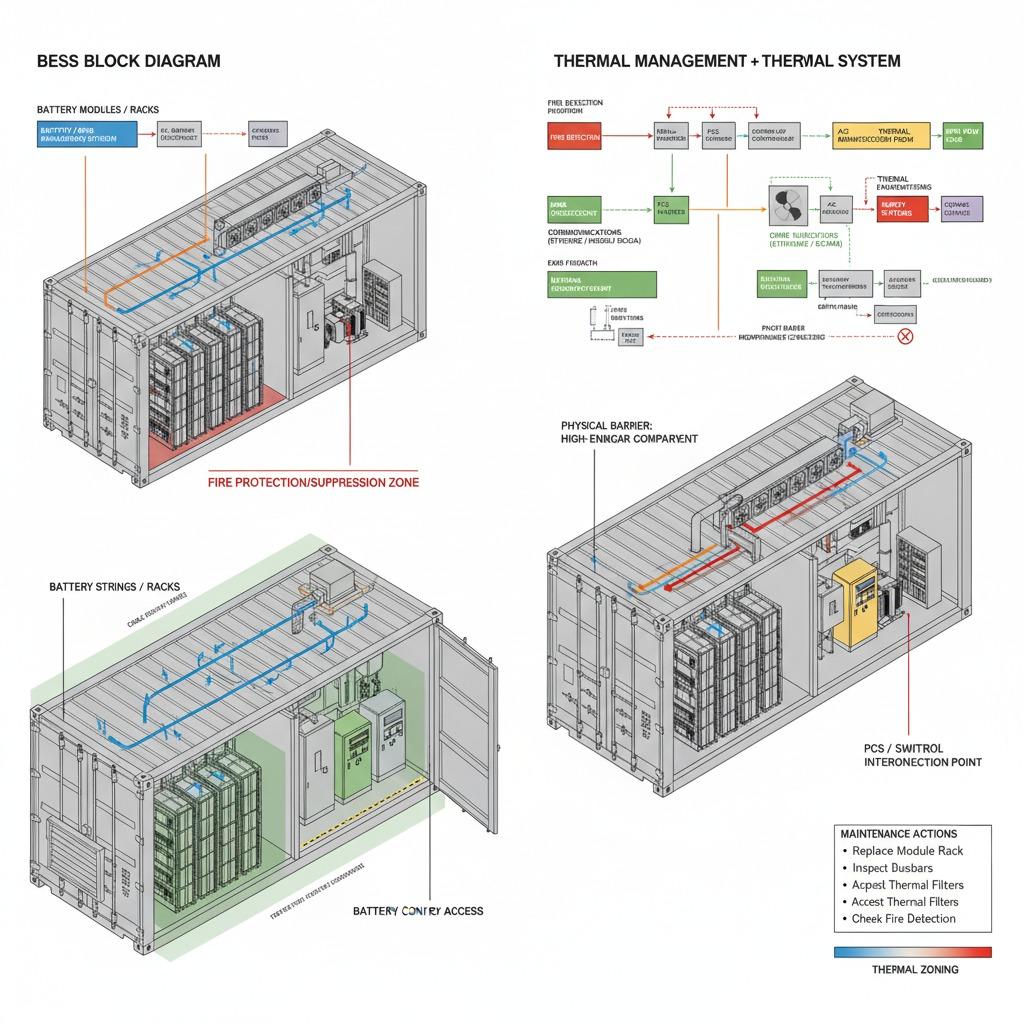
A battery energy storage system diagram is more than a neat drawing for a slide deck. For engineers, sourcing managers, and project teams, it is the quickest way to see how the container, battery racks, power conversion gear, controls, cooling, and safety devices fit together before a box ever arrives on site. That matters because BESS projects fail in mundane ways first: a cabinet is specified with the wrong service clearance, a control compartment is undersized, a ventilation path gets overlooked, or the integration team assumes one architecture while the supplier built another.
If you are reviewing a BESS diagram, you are really checking three things at once: how the system works, how it will be installed, and how it can be maintained without turning routine service into a shutdown event. That is the practical value of a clear battery energy storage system block diagram. It helps the buyer decide whether the proposal is a complete system or just a collection of parts dressed up as one.
What a typical BESS diagram should show
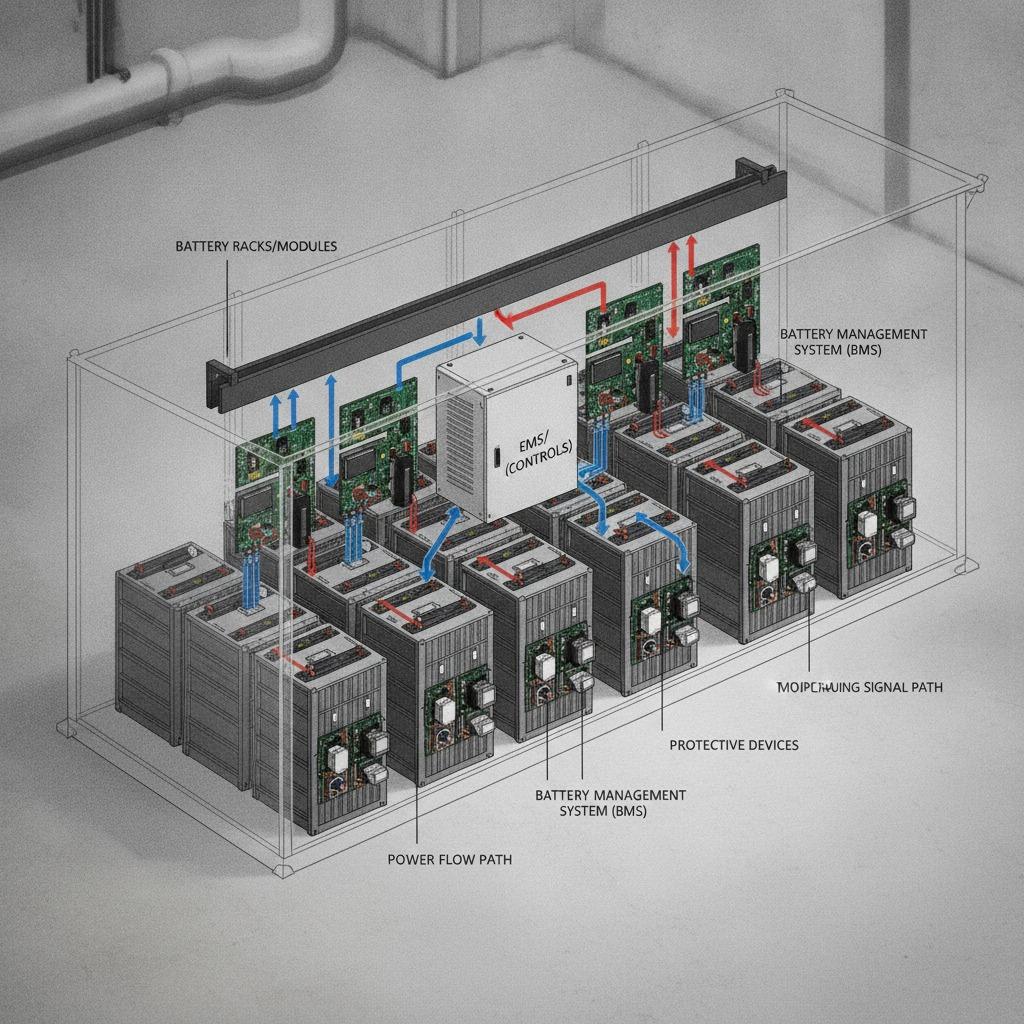
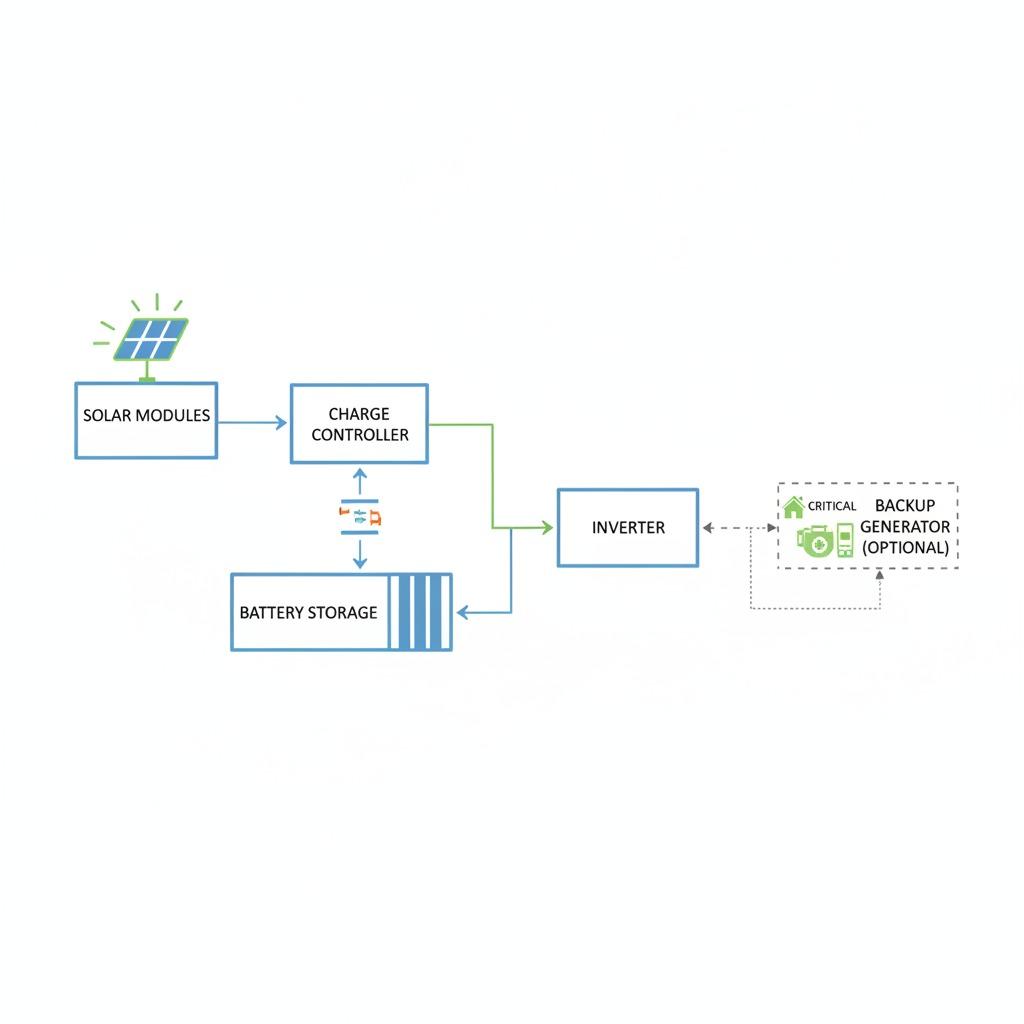
A useful diagram should not stop at a glossy rectangle labeled “battery system.” It should show the major functional blocks and the direction of energy flow. In a containerized unit, that usually means the battery modules or racks, the battery management system, the power conversion system, the DC and AC interfaces, protection devices, controls, thermal management, and communications.
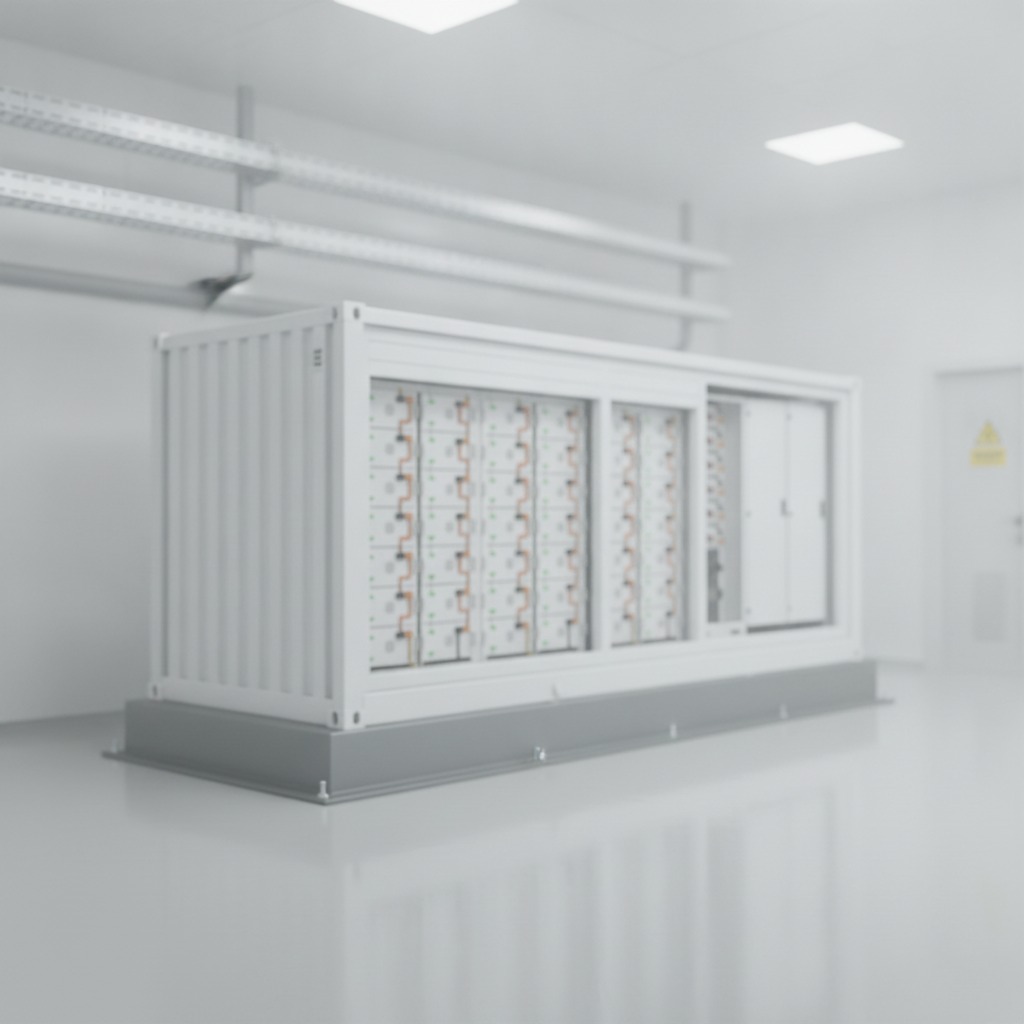
In the enclosure style visible in many containerized systems, the physical layout often mirrors the schematic. Battery rack bays are grouped on one side, while control and power electronics occupy a separate compartment. That arrangement is not decorative. It reflects a real engineering decision about service access, heat isolation, cable routing, and safety separation. A buyer looking at the BESS diagram should be able to match those blocks to the actual cabinet or container layout.
At a minimum, look for these blocks
Battery modules or strings
Battery management system, often at module, rack, and system levels
Power conversion system or inverter interface
DC disconnects, fuses, breakers, and contactors
AC switchgear or grid interconnection point
Thermal management and ventilation path
Fire detection or suppression provisions, if included in the scope
Supervisory controls, communications, and monitoring
That list may vary by vendor and project scale, but if too many of those functions are missing from the drawing, the buyer should ask why.
Reading the containerized layout, not just the symbols
There is a difference between a neat electrical schematic and a working battery energy storage system diagram. The first can make a proposal look complete; the second tells you how the system will actually be assembled inside a steel enclosure.
The containerized form factor visible in many BESS products is designed for outdoor deployment and transportability. That creates useful advantages: faster site prep, easier logistics, and a more standardized package for commercial and grid projects. But it also creates constraints. Internal space is finite, cables must be routed carefully, airflow has to be managed, and service doors need enough clearance to open safely. If a diagram makes the internal compartments look roomy, the real unit may still be tightly packed once busbars, conduits, and access clearances are added.
A good buyer will compare the schematic with the physical arrangement. If the battery racks are on the left and the control electronics are on the right, does the diagram respect that separation? Is there a partition between high-energy storage and the service/control section? Are the cooling openings placed where they can actually move air, rather than where they merely look symmetric on a page? Those are small questions that often reveal whether the supplier has integrated similar systems before.
BESS diagram, block diagram, and line diagram: what each one is good for
These terms get used loosely, which causes trouble in procurement.
A BESS diagram is the broad umbrella term. It can refer to a single-line electrical drawing, a functional diagram, or a physical layout.
A battery energy storage system block diagram usually focuses on functional relationships. It is useful early in the buying process because it shows how energy travels from the battery to the load or grid and where control and protection logic sit in the chain.
A single-line or one-line drawing is more electrical and is often used for interconnection, protection review, and utility coordination.
A physical layout drawing shows the container, rack arrangement, access paths, and cabinet placement. For outdoor containerized systems, this may be the most valuable document for installation planning.
The mistake is to treat one of these as a substitute for the others. A procurement team may approve a block diagram and later discover that the actual enclosure needs more space, different cable entries, or a different cooling strategy.
What the diagram tells you about manufacturability
From a manufacturing standpoint, a containerized BESS cabinet or enclosure is a hybrid product. It usually combines fabricated metalwork with electrical assembly and system integration. That means the diagram can hint at how complex the build will be.
For example, a design with multiple rack bays, a distinct power electronics compartment, exterior ventilation, and double access doors suggests more than simple cabinet assembly. It implies sheet metal fabrication, structural framing, coating or painting, internal mounting systems, wiring harnesses, cable management, and commissioning. In other words, the drawing is a clue to both cost and risk.
Buyers often focus on battery modules and forget the enclosure itself. That is a mistake. The steel container, doors, grilles, partitions, mounts, and service access points are not packaging. They are part of the system’s performance. If the enclosure is flimsy, poorly ventilated, or awkward to service, the whole BESS becomes harder to own, not just harder to buy.
Selection criteria buyers should apply to any BESS proposal
A procurement decision should not rest on a rendered image or a polished brochure. It should rest on whether the BESS diagram answers the questions a site will eventually ask.
First, check system boundaries. What is included in the supplier’s scope: battery racks only, full container, power conversion, controls, thermal management, or the whole package? Some proposals blur these lines.
Second, review access and maintenance logic. Can technicians reach the battery racks without interfering with the power electronics section? Are there clear service doors and safe inspection paths? Containerized systems are supposed to simplify deployment, not make maintenance awkward.
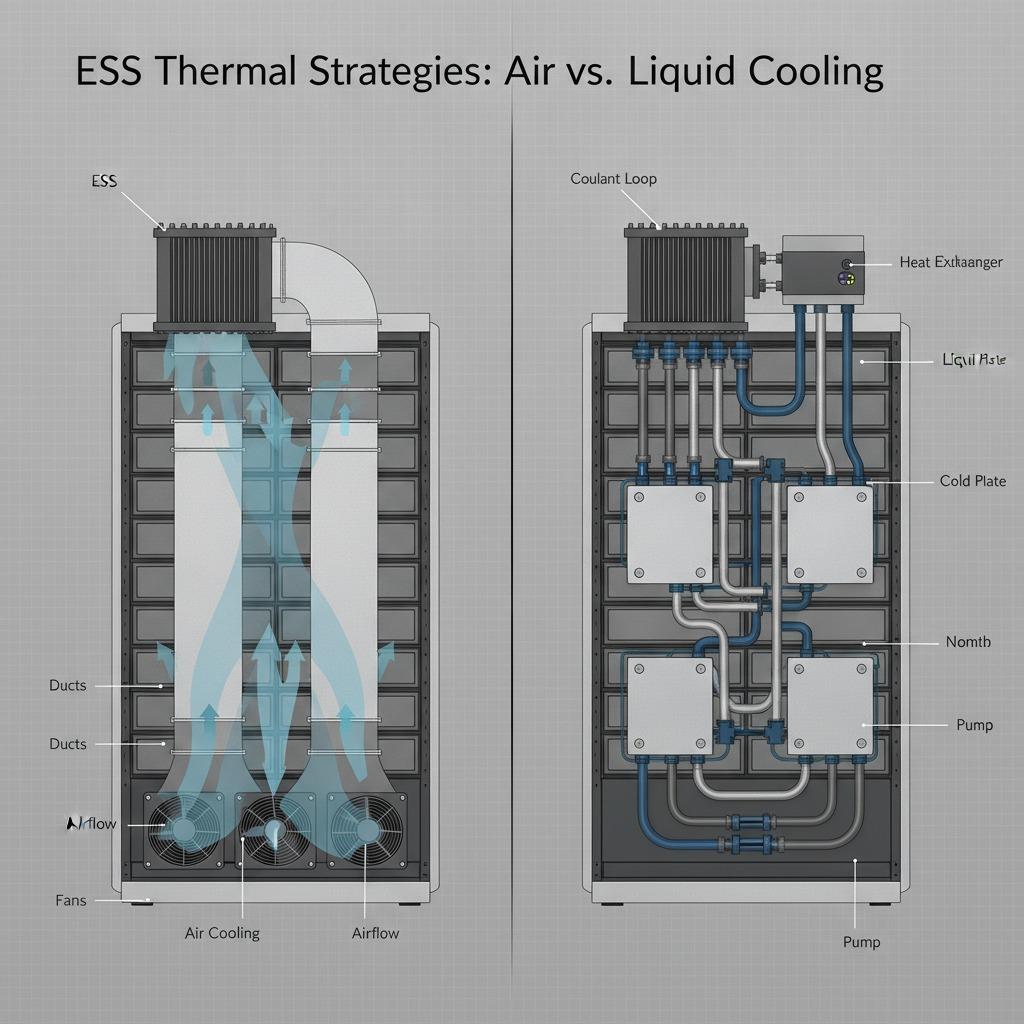
Third, review thermal assumptions. The diagram should show how heat is removed or managed. Even when the cooling type is not fully disclosed, the buyer should expect some evidence of airflow or thermal zoning. An exterior louver panel or ventilation opening is not enough by itself; it has to make sense inside the overall architecture.
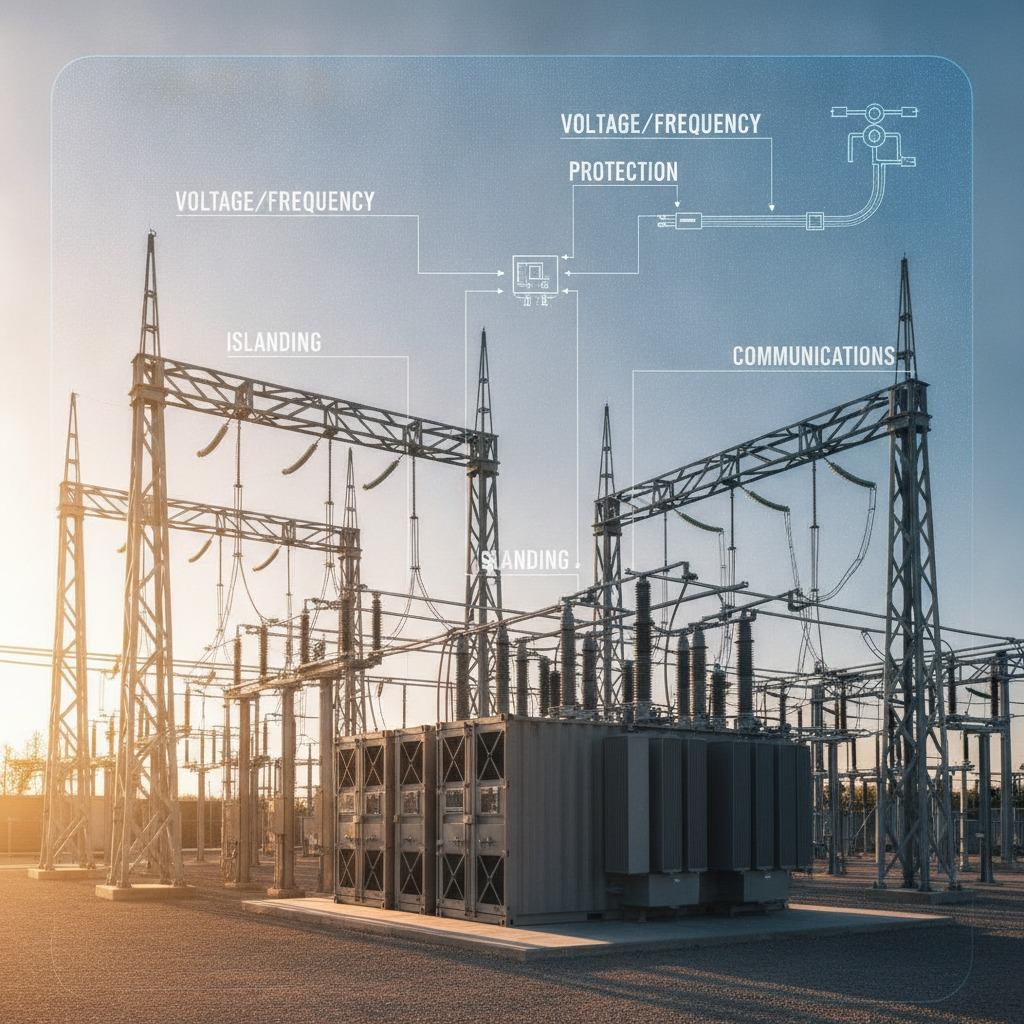
Fourth, confirm protection and controls. A BESS is not just storage. It is a managed electrical asset. The diagram should make clear how the batteries talk to the BMS, how the PCS behaves, and how alarms, shutdowns, and communication paths are arranged.
Fifth, check transport and site integration. For outdoor or containerized systems, the physical envelope matters. Does the design suit crane handling, trailer delivery, and site positioning? A good diagram will not answer every logistics question, but it should not create obvious conflicts either.
Common mistakes when reviewing storage-system diagrams
One common mistake is assuming every battery module in a drawing represents usable capacity at the site. It does not. The diagram is an architecture guide, not a capacity guarantee.
Another is ignoring the control compartment. In many systems, the power and control side determines whether the project can be monitored, protected, and serviced properly. A cramped electronics section can become the first maintenance headache.
A third mistake is asking only for a product image and treating it as documentation. A clean image can show modular battery racks, interconnects, and a containerized frame, but it will not show voltage, chemistry, cooling method, or compliance scope. Those details have to come from the technical package.
There is also the issue of over-reading an illustration. Sometimes the drawing is a concept, not a final build. That is fine if everyone understands the stage of the project. It becomes a problem when buyers assume the concept is already engineering-locked.
Practical questions to send a supplier
If you are evaluating a supplier’s BESS diagram, ask direct questions.
What blocks are included in the scope, and what is excluded?
How are battery racks isolated from power electronics and service access paths?
What thermal management approach is used, and how does it appear in the layout?
How are cables routed through the containerized enclosure?
What monitoring and alarm functions are built into the control architecture?
How does the design support field service, replacement, and commissioning?
Those questions tend to separate mature integrators from those who are still assembling parts into a proposal.
What the visible product format suggests
Based on the type of enclosure commonly shown in this class of product, the visible design points to a modular, containerized BESS built for outdoor use. The repeated rack arrangement suggests scalable battery organization, while the separate control and power section hints at a more disciplined internal partitioning. The exterior ventilation feature also suggests that thermal management is not an afterthought, though the exact cooling method is not visible and should not be assumed.
For buyers, that format is attractive because it aligns with real deployment needs: grid support, peak shaving, renewable buffering, backup power, microgrids, and site power management. But the enclosure format alone does not make the system ready. The diagram still has to prove the engineering.
FAQ
Is a BESS diagram the same as a battery energy storage system block diagram?
Not always. A BESS diagram is a broad term. A block diagram usually focuses on system functions and energy flow, while a physical layout drawing shows how components sit inside the container or cabinet.
Why does the container layout matter so much?
Because it affects installation, thermal behavior, safety separation, and maintenance. A good layout saves time over the life of the asset, not just during commissioning.
What should I do if the diagram looks vague?
Ask for the detailed electrical drawing, the physical layout, and the scope of supply. If the supplier cannot explain the block relationships clearly, the design may not be mature enough for purchase.
A sensible next step
Before you approve a BESS purchase, ask for the diagram set and compare it against the actual enclosure concept, service requirements, and site constraints. If you are sourcing a containerized battery system, the right drawing should help you see more than just equipment blocks; it should help you spot installation risk, maintenance burden, and scope gaps before they become expensive field changes.
If the battery energy storage system diagram is clear, consistent, and tied to the physical build, you are likely dealing with a supplier that understands integration. If it is vague, that is not a small paperwork issue. It is usually the first warning sign.