

Battery Technology Is No Longer Just About Capacity
Battery technology sits at the center of more product decisions now than it did even five years ago. Engineers are not only asking how much energy a cell can store, but how fast it can charge, how it behaves under heat, how safely it can be packed, and what it will cost the program over its full life. For sourcing teams, that means the comparison is rarely just one chemistry versus another. It is usually a trade-off between performance, manufacturability, compliance burden, and supply stability.
That is why the most useful way to evaluate battery technology is by comparison. A battery that looks attractive on a datasheet can become a poor fit once you factor in enclosure space, thermal design, cycle life, transport restrictions, or field service expectations. The buyer’s job is not to find the “best” battery in the abstract. It is to choose the battery architecture that matches the product’s duty cycle and commercial reality.
Why the Comparison Matters for Buyers and Engineers
The wrong choice can show up in different ways depending on the application. In portable electronics, it may mean a device that feels sluggish after a year in the field. In industrial equipment, it may mean a pack that overheats during fast charge or loses usable capacity faster than planned. In backup systems, it may be the opposite problem: a battery that is technically efficient but too expensive or too demanding to maintain.
This is where battery technology comparisons become practical rather than academic. A program team often has to choose between higher energy density and higher safety margin, or between faster charging and longer cycle life. Sometimes the trade is obvious. Sometimes it is not, and that is where mistakes happen.
Common Battery Families, Compared
Lithium-ion: High Energy, Broad Adoption
Lithium-ion remains the default reference point for many modern products. It offers strong energy density, relatively low weight, and good performance in compact designs. That combination explains why it dominates consumer devices, mobility platforms, cordless tools, and many industrial electronics.
The drawback is that lithium-ion is not one thing. Cell format, cathode chemistry, pack design, and battery management all change the outcome. Some lithium-ion variants favor energy density; others favor safety or cycle life. For buyers, that means the supply chain conversation should not stop at “lithium-ion.” The exact chemistry and pack architecture matter as much as the label.
A practical caution: lithium-ion can be the best choice and still be a poor fit if the design has weak thermal control. Many field failures are not caused by the chemistry itself, but by pack integration that assumes the cell will tolerate more heat than it should.
Lithium Iron Phosphate: Safety and Durability First
Lithium iron phosphate, often shortened to LFP, is frequently compared with conventional lithium-ion chemistries because it trades some energy density for a more stable profile and long cycle life. That makes it attractive in stationary storage, fleet systems, and equipment where longevity matters more than compactness.
Compared with higher-energy lithium chemistries, LFP can be less stressful from a safety and thermal standpoint. It is not a magic shield, and it still needs proper design, but many engineering teams view it as a more forgiving option in applications where abuse tolerance and service life are priorities.
The downside is straightforward: lower energy density means more volume and sometimes more weight for the same stored energy. In a compact handheld product, that can be a deal-breaker. In a warehouse forklift or solar backup cabinet, it may be a perfectly rational trade.
Lead-Acid: Mature, Heavy, and Still Relevant
Lead-acid remains in use because it is mature, relatively familiar to service teams, and often easier to source in some markets. For backup power and some industrial equipment, it still plays a role where cost and established maintenance practices matter more than density.
Against lithium-based options, lead-acid is usually heavier, bulkier, and less efficient in many modern applications. Its usable life can also be quite dependent on how deeply it is discharged and how consistently it is maintained. That matters in installations that are not closely monitored.
In fairness, lead-acid can still be the sensible answer when the product is built around it, the duty cycle is modest, and the economics favor a lower initial purchase price. But the comparison should be honest: it is typically a system decision, not a performance winner.
What Battery Technology Really Means in a Product Decision
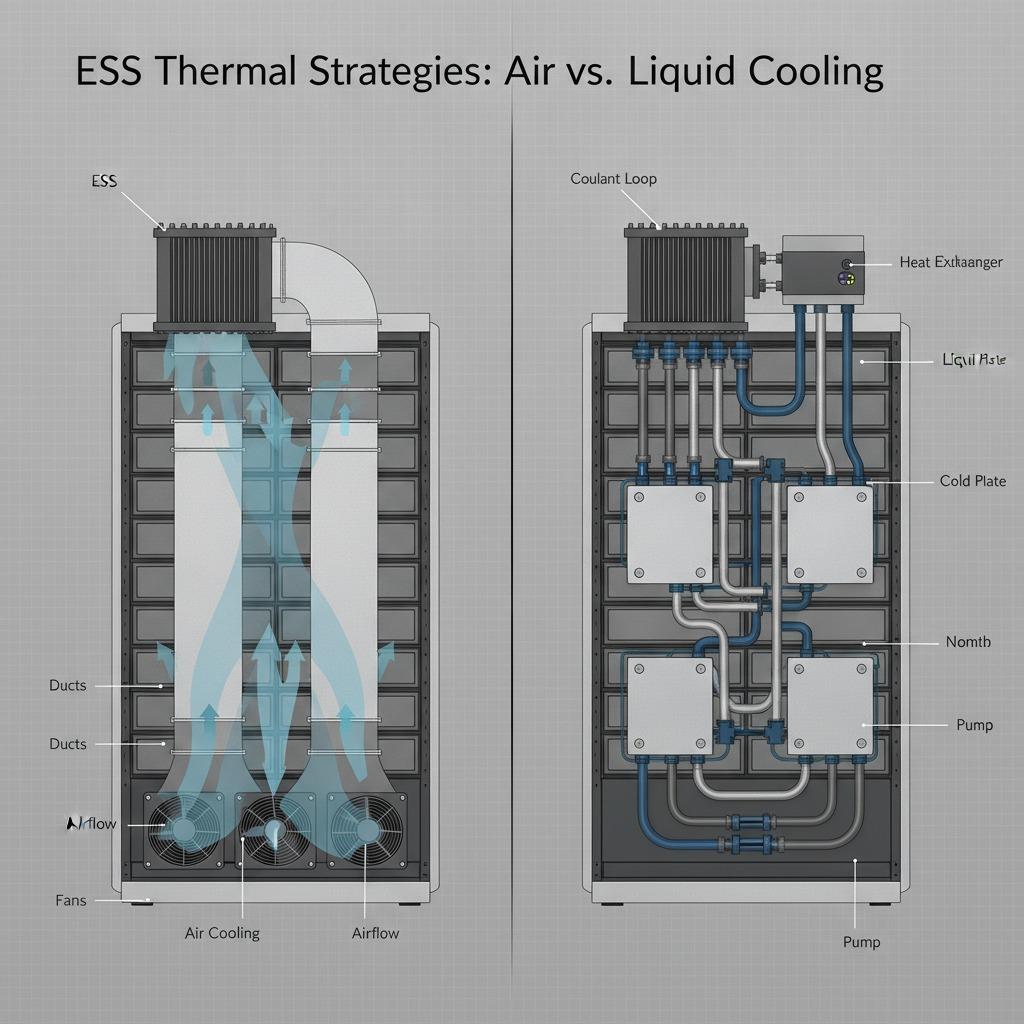
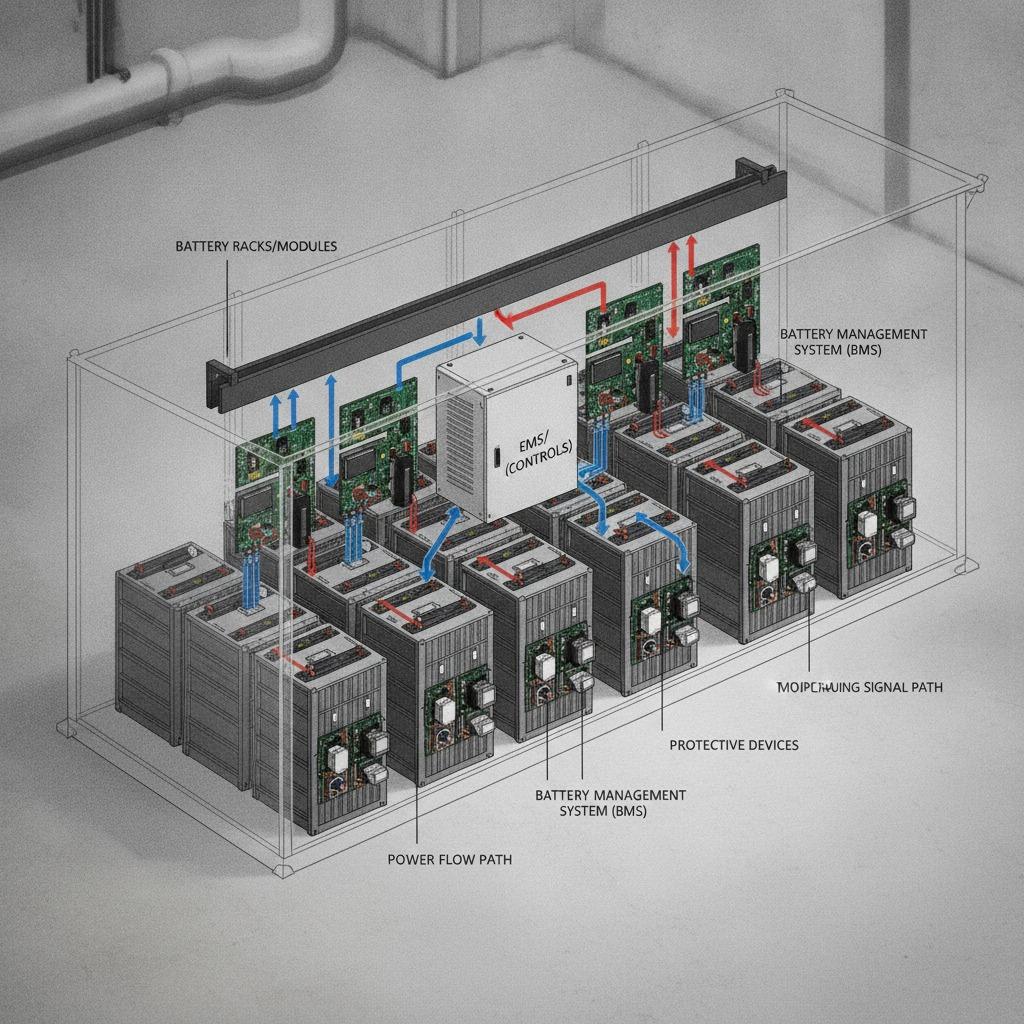
Many teams think of battery technology as a cell choice, but the cell is only one layer. The real decision includes pack design, battery management system behavior, thermal paths, enclosure geometry, charge protocol, and the logistics side of shipping and storage.
That broader view often changes the ranking. A chemistry with excellent raw performance may be more expensive to manage in production. Another may be easier to assemble but harder to certify or ship. For procurement, those indirect costs can matter as much as the battery’s per-unit price.
A quick way to frame the comparison is this:
- If the product needs compact size and low weight, energy density rises to the top of the list.
- If uptime and service life matter more, cycle life and thermal stability become more important.
- If the application is stationary or semi-stationary, footprint and maintenance can matter more than grams per watt-hour.
- If the product is consumer-facing, safety and failure behavior deserve extra attention, even when they do not show up directly in marketing claims.
Selection Criteria That Separate a Good Choice from a Risky One
Two batteries can look similar on paper and behave very differently in a finished product. That is why engineers and sourcing managers should compare more than nominal voltage and capacity.
Start with the duty cycle. A battery that sees shallow daily cycles is not being used the same way as a pack that is drained heavily and recharged fast. Then look at temperature exposure. Cold weather, enclosure heat, or both can cut into usable performance. After that, consider charge time expectations and whether the customer will accept a slower replenishment window.
Service model matters too. If the battery will be replaced in the field, the pack design should be simple enough for that reality. If it is sealed into the product, the team needs a stronger case for long-life chemistry and a design that will not drift out of spec too quickly.
There is also a supply-side issue that gets overlooked: availability consistency. A battery program that depends on one highly specific cell type can be exposed if sourcing shifts. Buyers often discover this only after qualification work has already consumed time and budget.
Common Mistakes in Battery Comparisons
One common mistake is comparing only headline capacity. Another is treating cycle life claims as if they apply under every condition. They do not. Real-world performance depends on depth of discharge, charge rates, temperature, and pack management.
A second mistake is ignoring system integration. Some teams choose a chemistry because it looks efficient, then discover they need more thermal protection, more enclosure volume, or a more sophisticated control strategy than they planned.
A third mistake is underestimating the difference between lab performance and production repeatability. A battery that behaves well in a pilot build can still become difficult when you scale assembly, test, and logistics. That gap is where many sourcing headaches begin.
Which Battery Technology Fits Which Application?
For portable electronics, conventional lithium-ion often remains attractive because it balances size and performance well. For industrial mobility or stationary storage, LFP can offer a more durable profile. For established backup systems and lower-complexity installations, lead-acid may still make commercial sense, especially where the design and service network already support it.
The best choice is rarely the most advanced chemistry available. It is the one that fits the product’s actual operating profile without creating hidden costs elsewhere.
That is the comparison manufacturers should be making: not technology versus technology in a vacuum, but system requirement versus system requirement. A well-matched battery usually looks a little less dramatic on a spec sheet and a lot better over the product’s life.
Buyer-Facing Questions to Ask Before You Commit
Before locking in a design, ask what matters more: energy density, cycle life, safety margin, charge speed, or low upfront cost. Then ask what the battery will experience in the field, not just in the lab. Temperature swings, idle periods, and repeated partial charging can all change the picture.
It is also worth asking how the battery will be packaged, shipped, serviced, and eventually replaced. Those are not side issues. They are part of the technology choice whether the datasheet says so or not.
Practical Next Step
If you are comparing battery technology for a new product or a redesign, start by defining the operating profile in plain language: how often it cycles, where it sits thermally, how much room it has, and how the customer will maintain it. Then compare chemistries and pack approaches against that real use case rather than against generic market claims.
That approach tends to save time. More importantly, it saves programs from choosing a battery that performs well in a brochure but poorly in the field.