


Why the battery cluster, not just the battery, is becoming the real unit of decision
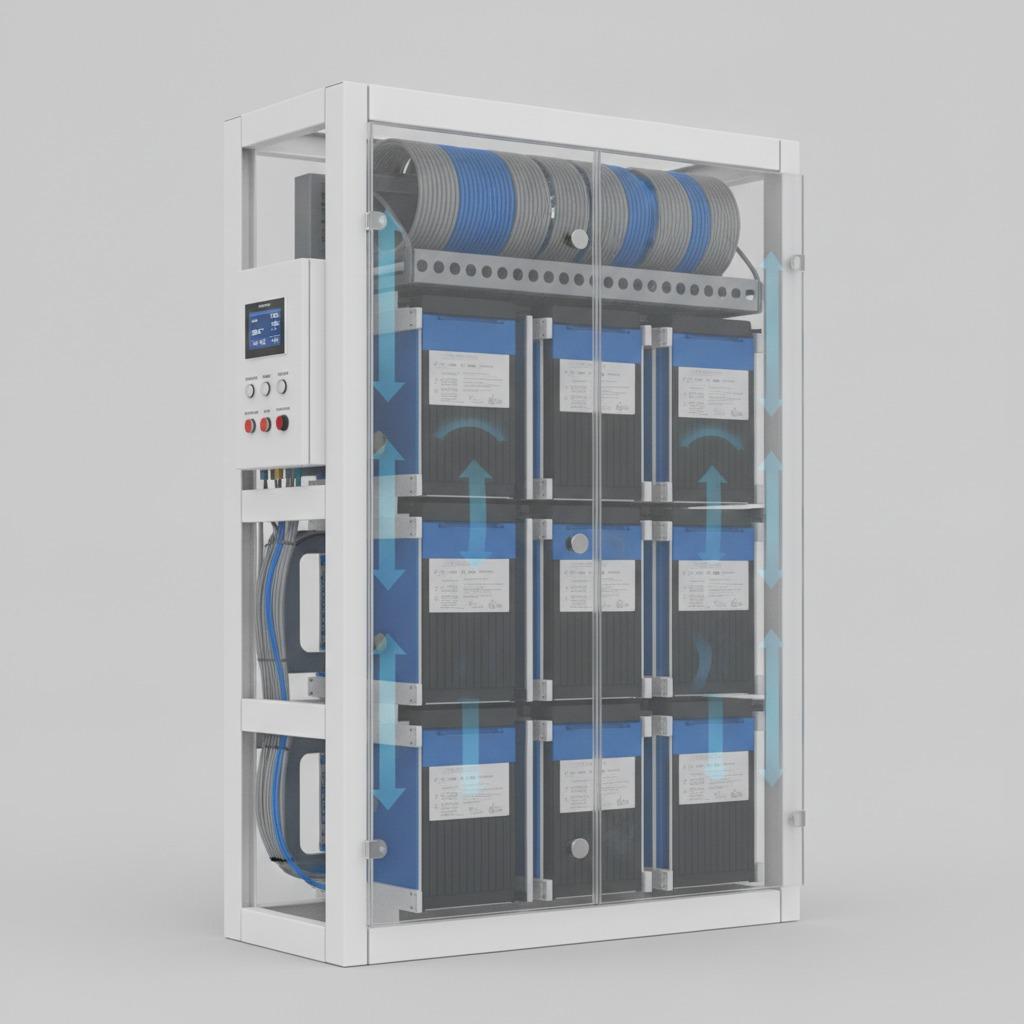
An Energy Storage System battery cluster is one of those terms that sounds more technical than it first appears. In practice, it points to a very important buying decision: not simply which cells or modules to use, but how multiple battery units are grouped, protected, monitored, and tied into a larger storage architecture. For engineers, sourcing teams, and product managers, that distinction matters. A cluster can determine safety behavior, serviceability, footprint, thermal performance, and even how painful future expansion will be.
If you are comparing storage options for a plant, a commercial building, a microgrid, or a utility-scale project, the battery cluster is often where the system either becomes manageable or turns into a maintenance problem. A good design keeps voltage, current, and temperature under control while allowing the system to scale. A weak design can make testing harder, fault isolation slower, and field service more expensive than it should be.
What a battery cluster actually does in an Energy Storage System
At a basic level, a battery cluster is a grouped set of battery cells, modules, or racks arranged to work as one functional block inside the storage system. The cluster is usually paired with controls, protection devices, and monitoring hardware. Depending on the application, it may sit inside a cabinet, a rack, or a containerized enclosure.
The cluster is not just a physical grouping exercise. It is the part of the system that helps translate chemistry into usable electrical performance. It needs to deliver the required voltage window, support the intended charge and discharge profile, and remain stable through repeated cycling. That sounds straightforward until the real-world variables show up: uneven cell aging, ambient temperature swings, partial-state-of-charge operation, shipping constraints, or a site layout that leaves poor airflow.
For this reason, buyers should think of the cluster as a system-level component, not a commodity bundle.
Key design questions buyers should ask early
Before comparing quotes or drawings, it helps to answer a few practical questions. These determine whether one configuration is truly better than another, or just looks cleaner on paper.
What is the intended duty cycle?
A cluster used for peak shaving has different demands from one used for frequency regulation, backup power, or renewable smoothing. High-cycling applications tend to expose weak thermal design and poor cell balancing faster. Backup systems may tolerate lower utilization but still need long calendar life and dependable state-of-charge retention.
How will the cluster be monitored?
A serious Energy Storage System battery cluster should be visible to the control layer. Temperature, voltage, current, insulation status, and fault reporting are not nice-to-have features. They are the basis for safe operation and meaningful maintenance. If the cluster can only be inspected manually, operational risk goes up, especially in larger installations.
How much service access is built in?
This is one of those items that gets ignored until the first maintenance visit. Can a technician replace a module without disassembling half the rack? Is there space to route cables cleanly? Are fuses and disconnects accessible without awkward contortions? Easy service access tends to be overlooked during procurement and remembered forever in the field.
Common cluster architectures and why they matter
Different projects call for different physical and electrical arrangements. The most common approach is a rack-based cluster made up of repeated modules. This structure is popular because it is modular, easier to assemble, and simpler to expand. Containerized systems often use multiple clusters inside a standardized enclosure, which can streamline installation but introduces tighter thermal and layout constraints.
Some systems place more emphasis on high-density packaging, especially when footprint is expensive. That can be practical, but density usually brings tradeoffs. Thermal management becomes more demanding, cable routing gets tighter, and access for inspection narrows. On paper, a compact cluster can look efficient. In the field, it can become unforgiving if the enclosure design does not support the heat load.
There is also a difference between a cluster optimized for stationary storage and one adapted from another use case. Battery systems designed for mobility, for example, are not automatically ideal for long-duration stationary duty. Stationary systems usually need more attention to cooling strategy, fire separation, and long-term maintainability.
Selection criteria that actually affect project outcomes
When buyers compare suppliers or system integrators, the conversation can get crowded with specification sheets. A more useful approach is to focus on the handful of factors that truly change total cost and operational reliability.
Thermal behavior
Heat is the quiet enemy of battery life. A cluster that runs hot may still function, but it will usually age faster and become less predictable. Pay attention to cooling method, airflow path, and how temperature is measured across the cluster. One sensor in a convenient place is not enough for a demanding installation.
Electrical protection
The cluster should include clear protection philosophy: overcurrent protection, isolation strategy, and fault containment. If a fault occurs, the goal is to limit the impact to a local section rather than take down the entire installation. This is especially important when multiple clusters are linked into a larger Energy Storage System battery cluster network.
Scalability
Many projects begin with a modest installation and later expand. If expansion is likely, the cluster architecture should allow added capacity without reworking the entire control scheme. Expansion sounds easy in a sales presentation. In engineering terms, it means compatibility, cable capacity, control logic, and floor loading all need to remain reasonable.
Maintenance and replacement logic
The best cluster is not always the densest or the cheapest. It is often the one that lets a site team isolate problems quickly and replace only what is necessary. That matters for uptime and spare-parts planning. In procurement terms, a slightly more expensive design can be easier to justify if it reduces service disruption later.
Typical mistakes that create avoidable cost
One of the most common mistakes is treating the battery cluster as a downstream detail after the inverter or EMS has already been chosen. In reality, the cluster layout affects system integration from the start. If voltage ranges, communication protocols, or physical dimensions do not align early, the project can stall.
Another frequent issue is overestimating how much useful capacity can be packed into a given space. Nameplate energy is not the same as operationally available energy. Thermal limits, depth-of-discharge strategy, and reserve margins all reduce practical output. Buyers who only compare headline numbers often discover the difference late.
A third problem is weak documentation. Drawings, wiring maps, access clearances, and maintenance instructions may seem secondary during purchasing, but they are central once the system is on site. In larger projects, poor documentation slows commissioning and creates confusion when operators change shifts or contractors rotate out.
What engineers and sourcing managers should compare in a quote
A useful quote should make the cluster architecture visible. If the proposal is vague, ask for clarification. You want to know how the battery units are arranged, what protections are included, how communication is handled, and what the service path looks like.
It also helps to compare the surrounding details, not just the battery itself. Enclosure design, cable management, cooling method, monitoring interface, and installation requirements all influence project effort. A lower-priced cluster may become the more expensive option if it requires custom integration or repeated field adjustments.
For sourcing managers, one practical caution: do not evaluate the cluster only by initial purchase price. Consider delivery risk, installation complexity, replacement logistics, and how many specialists the site will need to keep it running. Those costs are easy to underestimate because they do not sit in the same line item.
FAQ: quick answers buyers usually need
Is a battery cluster the same as a battery pack?
Not exactly. A battery pack is usually a more general term for a grouped battery assembly. A cluster often implies a larger, system-level grouping used within storage infrastructure.
Does a larger cluster always mean better performance?
No. Larger can mean more capacity, but it can also mean more complexity, more heat, and more difficult fault management. Performance depends on how well the cluster is designed and integrated.
Can clusters be expanded later?
Sometimes, yes. But expansion depends on the original electrical design, controls, footprint, and protective scheme. It is better to plan for growth before the first shipment than after the site is already commissioned.
What matters most for long-term reliability?
Stable thermal control, robust protection, and practical maintenance access are usually the biggest factors. The chemistry matters too, of course, but the cluster design often decides whether that chemistry performs as intended.
A practical next step for project teams
If you are evaluating an Energy Storage System battery cluster for a new project, start with the system use case rather than the battery label. Define the duty cycle, expected expansion, service model, and enclosure constraints first. Then compare cluster designs against those realities.
That approach may sound slower than collecting quotes and comparing capacity numbers, but it usually saves time later. The best storage projects are rarely the ones with the most impressive headline specification. They are the ones whose battery cluster fits the operating environment, the maintenance plan, and the business case without forcing too many compromises.
For anyone sourcing at scale, that is the real test.





