
LiFePO4 vs Lead-Acid Batteries: what buyers are really deciding
When engineers and purchasing teams compare LiFePO4 vs Lead-Acid Batteries, the real question is not just which chemistry is “better.” It is which one fits the application, the duty cycle, the charging infrastructure, the maintenance model, and the cost structure over time. That is why this comparison keeps coming up in warehouses, backup power systems, mobile equipment, marine installs, and off-grid energy projects. On paper, one technology often looks cheaper; in operation, the picture can change quickly.
For sourcing managers, the decision affects total cost of ownership, replacement schedules, and support burden. For product teams, it can shape enclosure design, charging electronics, thermal behavior, and warranty exposure. And for engineers, the practical question is usually simple: which battery chemistry will behave predictably under real load, not just on a spec sheet?
Quick comparison: where each chemistry tends to fit
Lead-acid batteries remain common because they are familiar, widely available, and relatively low in upfront cost. They have been used for decades in starting, lighting, ignition, backup power, and standby applications. Many buyers still choose them when initial purchase price matters more than lifecycle performance, or when the system already has a lead-acid charging profile and space is not a major constraint.
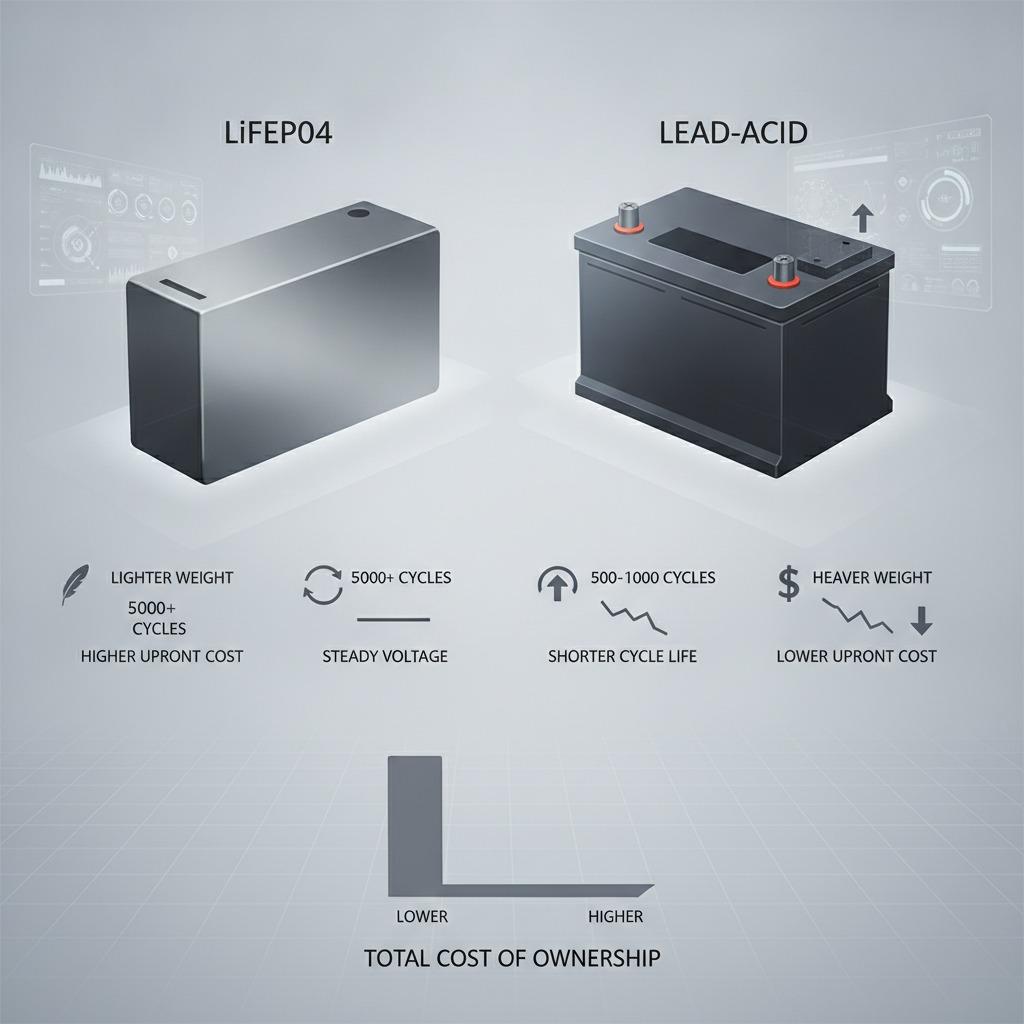
LiFePO4 batteries, a lithium iron phosphate chemistry, are typically favored where longer cycle life, lighter weight, and better usable capacity matter. They often suit applications with frequent charging and discharging, such as mobile power systems, solar storage, industrial carts, marine auxiliary power, and equipment that cycles daily rather than occasionally.
The practical difference is not subtle. Lead-acid batteries usually tolerate lower cost entry, but they also suffer from deeper performance losses as they age and from reduced usable depth of discharge if long service life is the goal. LiFePO4 batteries generally support deeper discharge without the same degree of damage, and they maintain voltage more steadily during use. That steadier voltage can matter in electronics-heavy systems where drop-off under load causes nuisance shutdowns or reduced output.
Why the chemistry matters in real use
Battery selection often gets reduced to amp-hours and price, but the chemistry determines how those numbers behave in operation. A battery that looks affordable at purchase can become expensive if it needs replacement more often, demands more maintenance, or limits system uptime.
Cycle life and replacement planning
One of the biggest differences between LiFePO4 and lead-acid batteries is cycle life. In general industry use, LiFePO4 is known for much longer cycle potential than traditional flooded or sealed lead-acid options. That does not make every lithium battery automatically better, but it does mean replacement intervals can stretch considerably in applications with regular cycling. For a fleet manager or OEM, that can reduce labor, downtime, and spare-part inventory.
Lead-acid batteries can still be the practical answer in standby systems where they are mostly floated and rarely discharged deeply. In those cases, their lower upfront cost may outweigh their shorter cycle advantage. The caution is straightforward: once the battery starts seeing frequent deep discharge, the economics can shift faster than expected.
Usable capacity and voltage behavior
In many cases, a lead-acid battery should not be routinely discharged to the same depth as a LiFePO4 battery if long service life is the objective. That means the nameplate capacity can be misleading unless the designer translates it into usable capacity. Two batteries with similar amp-hour ratings may deliver very different practical output once depth of discharge is considered.
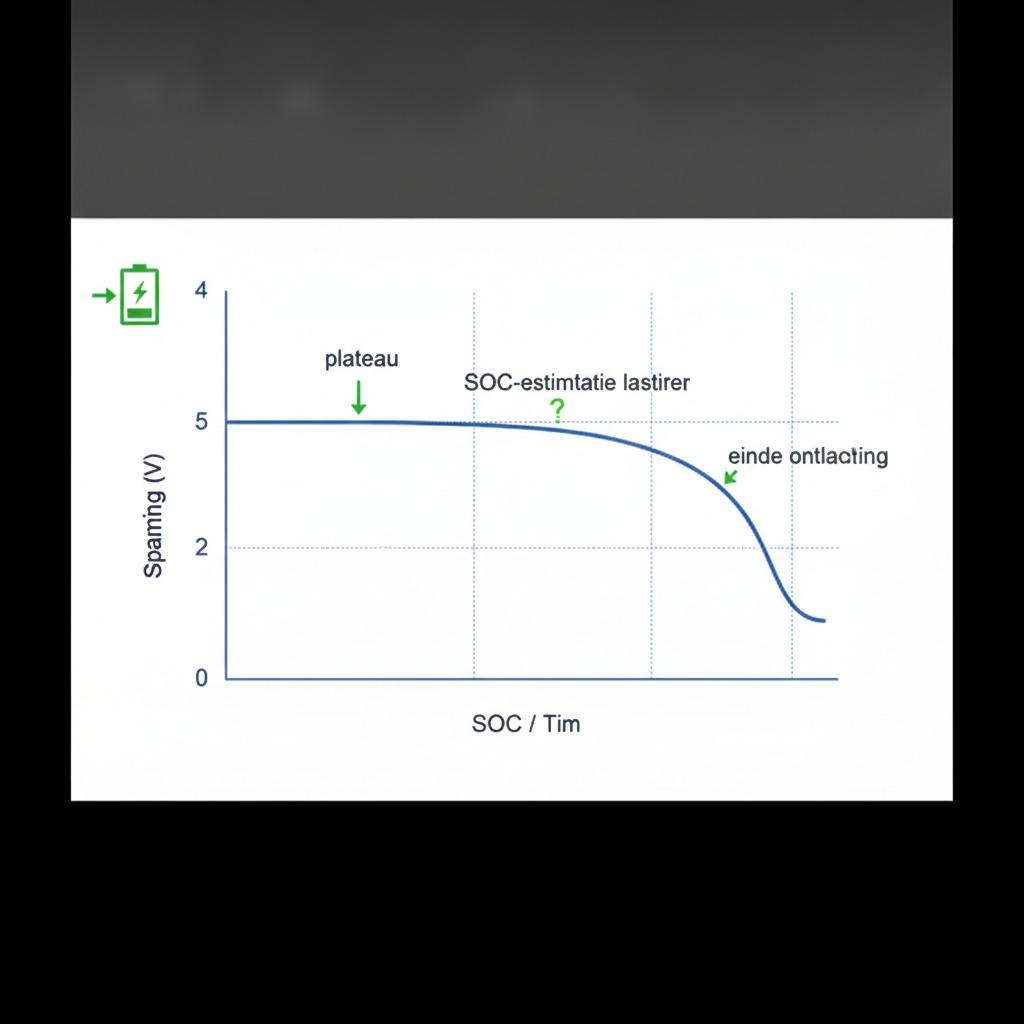
LiFePO4 also tends to hold voltage more consistently across the discharge curve. That can help devices run more predictably, especially where voltage sag under load is a problem. Lead-acid voltage typically falls more noticeably as the battery empties, which can make systems shut down earlier than users expect even though some capacity remains on paper.
Weight, space, and integration
For mobile or space-constrained applications, weight can be decisive. LiFePO4 batteries are generally lighter for the same usable energy. In practical terms, that can simplify installation, improve portability, and reduce load on mounts, frames, or vehicle platforms. Lead-acid remains heavier, which is not always a disadvantage—some stationary systems simply do not care—but it can become a liability when product ergonomics or shipping efficiency matter.
Charging, maintenance, and operating discipline
Charging behavior is where many battery mistakes are made. Lead-acid technology is forgiving in some ways because it is deeply familiar to the market, but it still has clear requirements around charge profile, temperature, and periodic maintenance depending on the type. Flooded lead-acid, for instance, typically requires more attention than sealed variants. If maintenance is neglected, performance drops and life shortens.
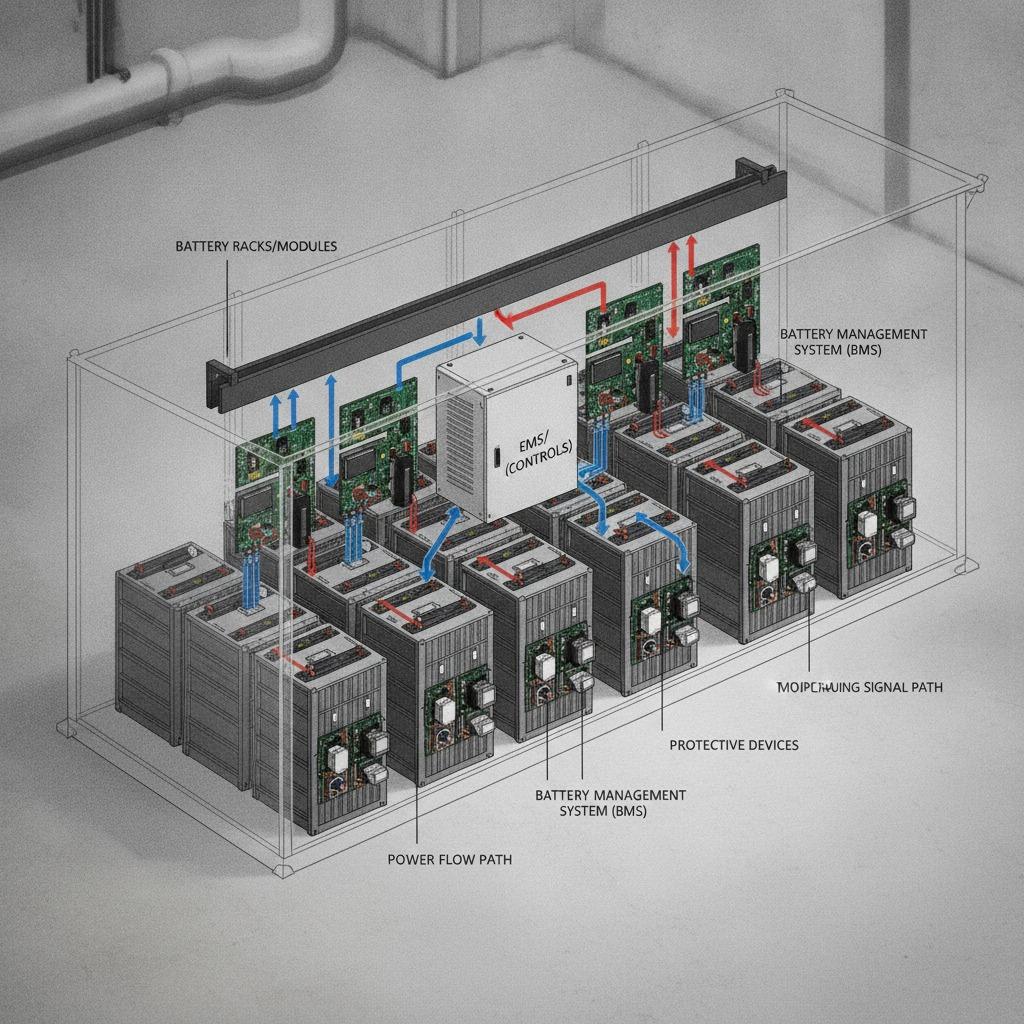
LiFePO4 batteries usually require a different charging approach and, depending on the pack design, battery management electronics to help protect against overcharge, over-discharge, and temperature-related stress. That does not make them difficult, but it does mean a buyer should not assume a drop-in replacement will behave correctly without checking charger compatibility and system settings.
There is a common trap here: a team buys a battery based on the chemistry alone, then discovers the charger, low-voltage cutoff, or alternator profile was built for a different battery type. The result is often avoidable field issues. The safest path is to review the entire power chain, not just the battery.
Cost: upfront price versus lifecycle cost
Lead-acid batteries usually win on initial purchase price. That is the headline most buyers see first, and sometimes it is the right criterion. If the equipment is low utilization, the run time requirements are modest, and replacement labor is cheap, lead-acid can be perfectly rational.
LiFePO4 often costs more at the point of purchase, but lifecycle economics can favor it in systems that cycle often. Fewer replacements, lower maintenance, less downtime, and higher usable capacity can offset the higher entry cost. This is especially relevant when battery access is difficult, service interruptions are expensive, or the system is deployed in the field rather than in a controlled facility.
Still, buyers should resist oversimplified “savings” claims. A battery chemistry only becomes economical when the rest of the system supports it. If a charger must be replaced, housing dimensions changed, or control logic updated, those integration costs belong in the decision.
Selection criteria engineers and sourcing teams should use
The best choice depends on the application, but a few criteria usually separate a sound procurement decision from a costly one.
Use pattern
If the battery is cycled daily or frequently, LiFePO4 often deserves serious consideration. If it is mostly a standby reserve with infrequent discharge, lead-acid may remain attractive.
System constraints
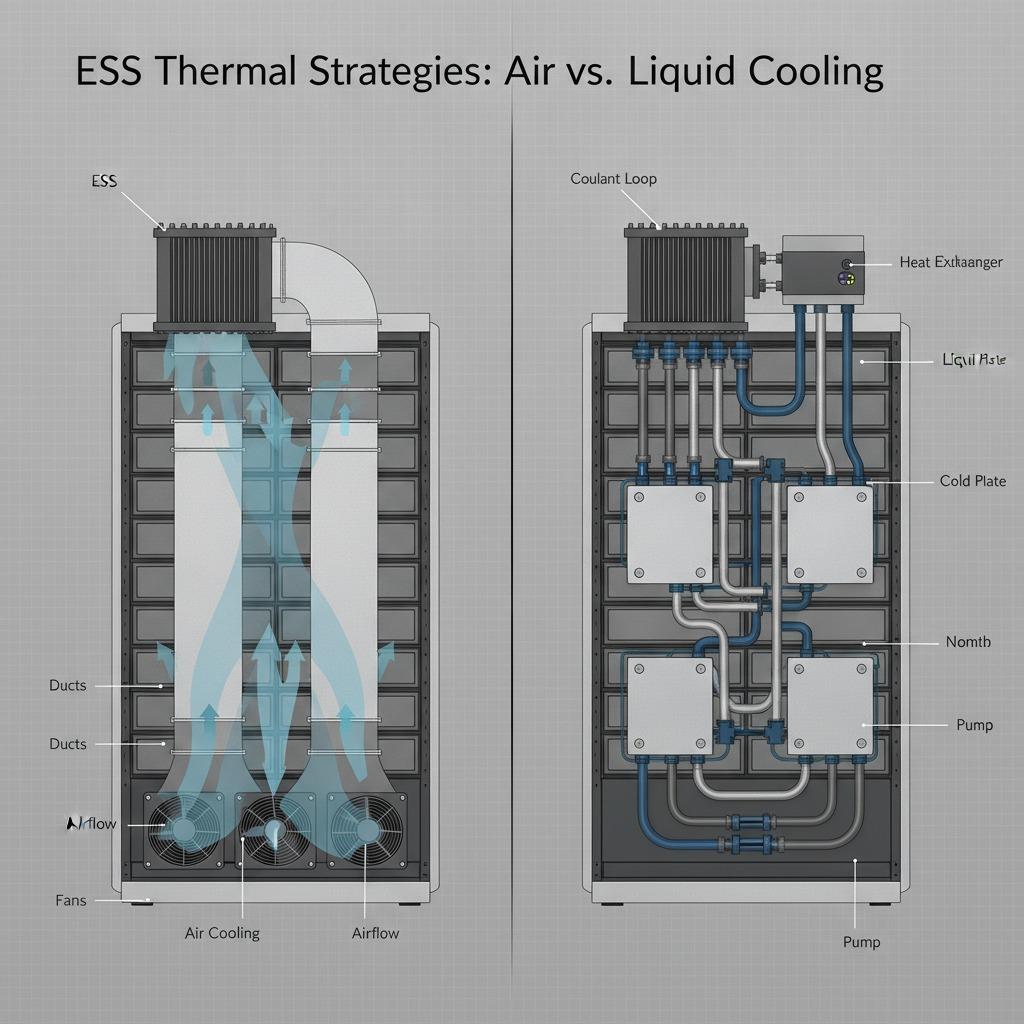
Check space, weight, and thermal conditions. A compact enclosure or mobile platform often favors LiFePO4. A large stationary cabinet may have more flexibility.
Charging compatibility
Verify charger settings, voltage limits, and any battery management requirements before committing. This is especially important in retrofits.
Maintenance expectations
If the site cannot support routine battery checks, topping off, or periodic replacement planning, a lower-maintenance chemistry may be worth the higher upfront spend.
Total cost of ownership
Compare not only the battery price, but also replacement frequency, labor, downtime, shipping, and disposal considerations. That broader view often changes the answer.
Common mistakes buyers make
One frequent error is comparing nameplate amp-hours without adjusting for usable depth of discharge. Another is assuming all lithium batteries are interchangeable. LiFePO4 is a distinct chemistry with its own performance profile, and system compatibility still matters. Buyers also sometimes underweight operating temperature. Both chemistries have limits, but cold-weather charging behavior and high-heat exposure should be reviewed carefully before deployment.
There is also a habit, especially in cost-driven projects, of looking only at unit price. That approach can work for a one-off backup battery in a low-demand setting, but it becomes risky in fleet, telecom, solar, and industrial environments where labor and uptime dominate the economics.
Practical buyer advice
If the application is mission-critical, ask for the complete battery system assumptions: charge method, protection strategy, maintenance interval, operating temperature range, and what the seller expects regarding end-of-life behavior. If you are comparing suppliers, ask them to explain the assumptions behind the quoted capacity rather than just the capacity figure itself. In battery procurement, the hidden details are often the expensive ones.
For product teams, it helps to decide early whether the design should be optimized for low acquisition cost or lower lifecycle burden. That choice influences electrical architecture, enclosure volume, weight targets, and after-sales support. Changing chemistry late in the design cycle usually costs more than teams expect.
FAQ: short answers buyers usually need
Is LiFePO4 always better than lead-acid?
No. It is often better for cycling, weight, and usable capacity, but lead-acid can still make sense for standby use or when upfront budget is the main constraint.
Can LiFePO4 replace lead-acid directly?
Sometimes, but not always. The charger, controls, and cutoff settings need to be checked. A direct swap can work in some systems and fail in others.
Which one is easier to maintain?
In general, LiFePO4 requires less routine attention than flooded lead-acid, though the full system still needs to be designed correctly.
What to do next
If you are evaluating LiFePO4 vs Lead-Acid Batteries for an OEM product, a retrofit, or a sourcing decision, start by mapping the actual duty cycle and the real cost of downtime. Then compare usable capacity, charging compatibility, and replacement intervals—not just sticker price. That is usually where the right answer becomes obvious.
For engineering and procurement teams, the best battery choice is the one that fits the system without forcing avoidable compromises elsewhere. The chemistry matters, but the operating profile matters more.