

New Battery Technology: What Engineers and Product Teams Should Evaluate

New battery technology is attracting attention across transportation, industrial equipment, consumer electronics, energy storage, and backup power. The interest is understandable: batteries increasingly determine product size, operating range, charging behavior, safety requirements, and total cost. Yet a promising cell chemistry is not automatically a better choice for a commercial product. The practical question is narrower and more useful: which battery technology solves the application's limiting problem without creating unacceptable manufacturing, certification, supply-chain, or service complications?
That decision requires more than comparing energy-density figures. Engineers must examine the complete battery system, including cells, module construction, battery-management electronics, thermal control, enclosure, charging equipment, and end-of-life handling. Sourcing teams must also look at material availability, qualified suppliers, production maturity, and the risk of depending on a process that has not reached stable volume manufacturing.
What decision does new battery technology actually help you make?
Battery development usually involves a trade-off among several performance requirements:
- Energy density: how much energy the battery stores for a given mass or volume.
- Power capability: how quickly the battery can deliver or accept energy.
- Cycle life: how many charge and discharge cycles the battery can complete before capacity or power falls below the application's limit.
- Safety: the risk and consequences of overheating, internal failure, mechanical damage, or misuse.
- Charging behavior: the time, temperature range, and infrastructure required to recharge the pack.
- Cost and manufacturability: whether the battery can be produced consistently at the required volume.
No cell chemistry leads every category. A battery with higher energy density may require tighter thermal controls or more demanding production processes. A chemistry known for long service life may occupy more space. A material system that reduces dependence on one scarce raw material may introduce different packaging or voltage characteristics. The right selection depends on which constraint is most expensive or most difficult to change later.
Major directions in battery development
Lithium-ion improvements
Lithium-ion remains the dominant platform for many portable, mobility, and stationary applications because its supply chain, manufacturing base, and engineering knowledge are comparatively mature. Much of the work described as new battery technology is an improvement to an existing lithium-ion architecture rather than a complete replacement.
Development can involve the cathode, anode, electrolyte, separator, current collectors, cell format, or manufacturing process. Silicon-containing anodes, for example, are studied because silicon can store more lithium than conventional graphite. The engineering challenge is that silicon expands and contracts during cycling, which can affect durability and manufacturing control. Commercial designs therefore often use blended materials or carefully managed proportions rather than treating silicon as a simple drop-in substitute.
Cathode development also aims to balance energy, power, cost, safety, and material availability. Nickel-rich chemistries can support high energy storage, while other lithium-ion chemistries may emphasize thermal stability, cycle life, or reduced reliance on certain raw materials. Buyers should ask for the actual cell configuration and operating limits rather than relying on a broad chemistry label.
Solid-state batteries
Solid-state batteries replace some or all of the liquid electrolyte with a solid material. The potential benefits include improved resistance to leakage and the possibility of using different electrode designs, including lithium-metal concepts. In theory, these features could support higher energy density and improved safety.
The manufacturing reality is more complicated. Solid electrolytes must maintain reliable contact with the electrodes, and interfaces can develop mechanical or electrical problems during repeated cycling. Some designs also require pressure control, specialized coating, dry-room processing, or new assembly methods. For product teams, the important question is not whether a solid-state cell has an impressive laboratory result. It is whether the cell can be made with repeatable quality, integrated into a pack, and supported over the expected production life.
Sodium-ion systems
Sodium-ion batteries use sodium rather than lithium as the primary charge-carrying ion. Sodium is widely available, and this chemistry may offer a useful path for applications where material cost, supply diversification, or low-temperature behavior matters more than maximum energy density.
The trade-off is that sodium-ion cells generally need careful evaluation against lithium-ion alternatives for weight and volume. They may be attractive for stationary storage, lower-range mobility, backup systems, and other applications where pack size is less restrictive. They are not automatically suitable for every application simply because the raw material is abundant.
Flow batteries and other stationary-storage approaches
Flow batteries store energy in liquid electrolytes held in external tanks. Their power and energy capacity can be scaled somewhat independently by changing the cell stack and tank volume. That characteristic can be valuable for long-duration stationary storage, where a battery may need to deliver energy for many hours rather than provide a compact burst of power.
These systems are less suited to products that demand low mass and small volume. Pumps, tanks, plumbing, sensors, and maintenance access become part of the system design. For a factory, utility, or commercial facility, however, those considerations may be manageable if long operating duration and serviceability are the main objectives.
Cell chemistry is only one part of the system
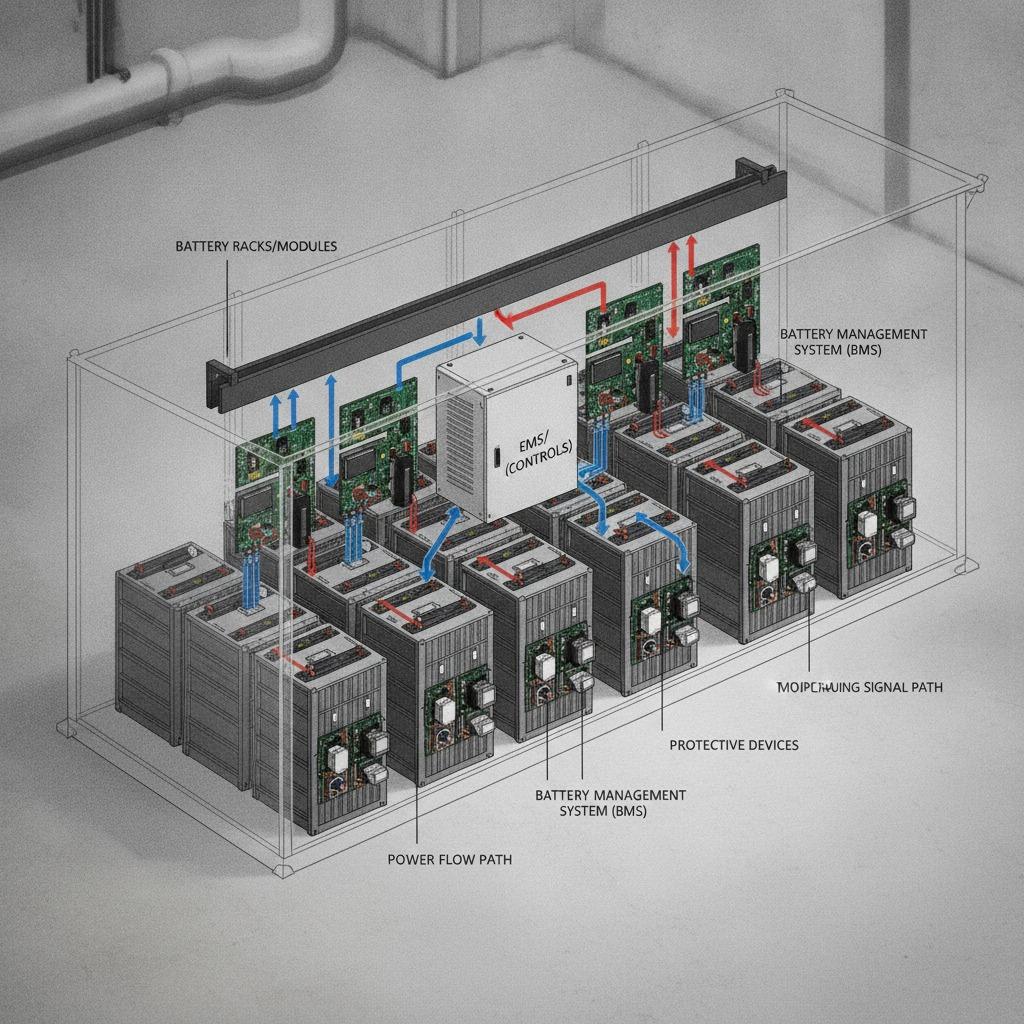
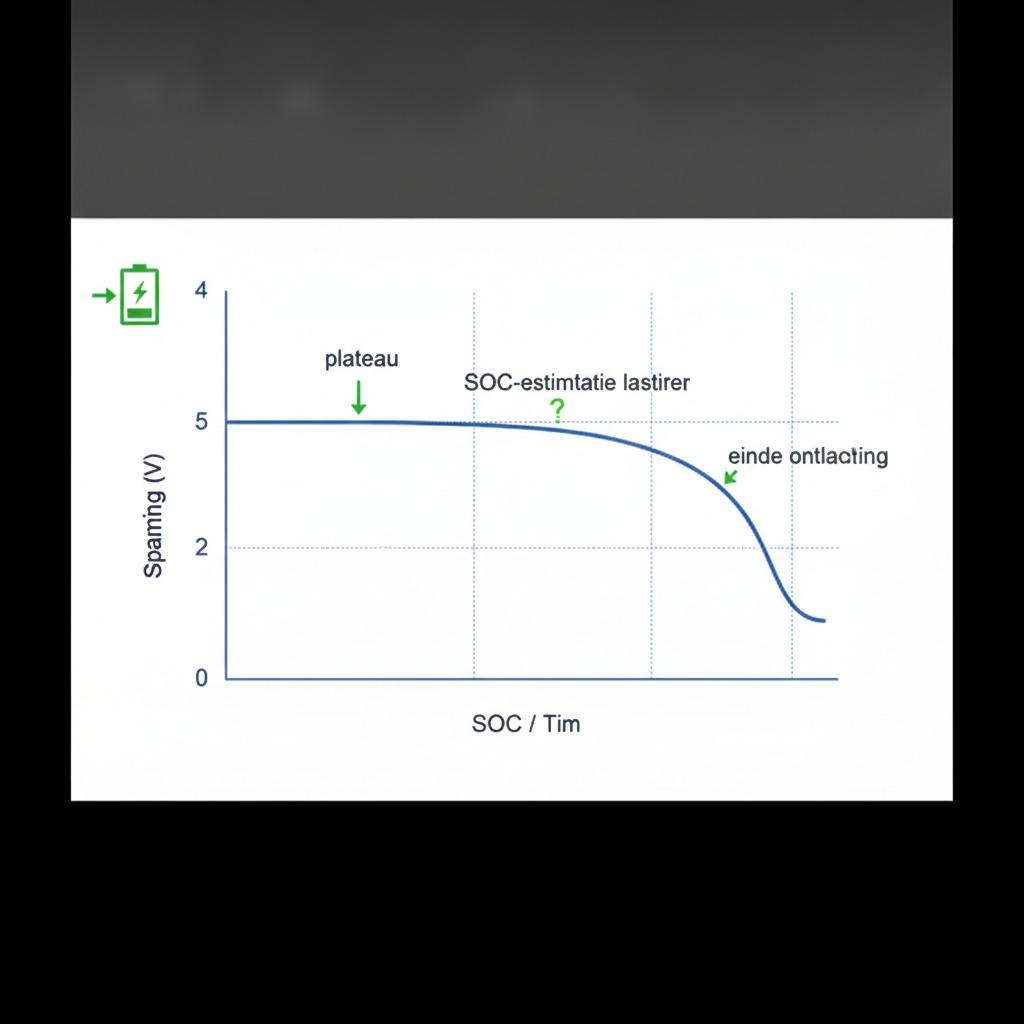
A battery pack can fail to meet its specification even when the individual cells perform well. Module layout, busbars, welds, seals, cooling plates, sensors, and enclosure design all influence performance. The battery-management system must monitor cell voltage, temperature, current, and state of charge while controlling charging and discharging within safe limits.
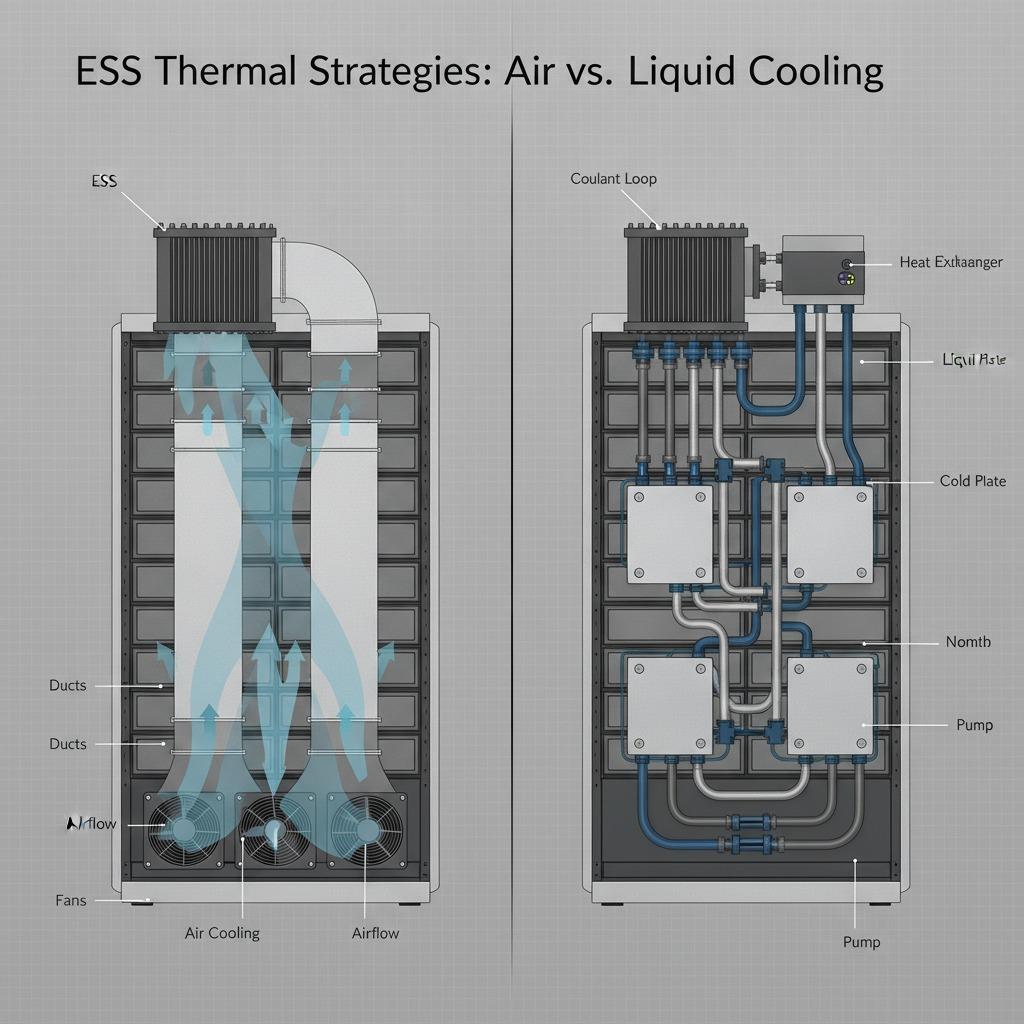
Thermal management deserves early attention. Heat is generated during both charging and discharge, with the amount depending on current, internal resistance, temperature, and operating conditions. Uneven temperatures can cause cells in the same pack to age at different rates. A compact design that looks efficient on a drawing may be difficult to cool, inspect, repair, or manufacture consistently.
Mechanical conditions matter as well. Vibration, shock, swelling, compression, moisture, and collision loads can change the risk profile. The battery should be evaluated in the actual enclosure and mounting arrangement, not only as a loose laboratory cell.
How to compare battery options
Start with the duty cycle. Record the required power, average energy use, peak loads, charge windows, ambient temperatures, storage periods, and expected service life. A battery used for short high-power events should not be evaluated by the same criteria as one used for daily deep cycling.
Next, define system-level limits. These may include maximum pack mass, available installation volume, allowable surface temperature, charging infrastructure, noise, maintenance access, or shipping restrictions. If the product operates in a cold or hot environment, request performance data across that range. Room-temperature capacity figures are useful, but they do not describe the whole operating envelope.
For procurement, ask potential suppliers for more than a nominal capacity value. Useful questions include:
- Which cell format and chemistry are being proposed?
- What operating limits apply to voltage, current, temperature, and state of charge?
- How does performance change over the expected duty cycle?
- What protection and monitoring functions are included in the battery-management system?
- Which parts of the design are production-proven, and which remain under development?
- Can the supplier provide traceability for cells, modules, and critical materials?
- What testing, shipping, installation, and service documentation will accompany the product?
Be cautious with a supplier that presents only best-case laboratory data. Ask how the result was measured, at what temperature, with what charging protocol, and after how many cycles. Results from a small test cell may not translate directly to a large-format production cell or a complete pack.
Common mistakes in battery selection
The first mistake is choosing the highest advertised energy density without checking power demand, cooling, safety controls, and service life. A second is treating the battery as a replaceable component after the mechanical and electrical architecture has already been fixed. Pack dimensions, connectors, cooling paths, and control software can become expensive to change.
Another mistake is overlooking manufacturing yield. A technology may work technically but still be difficult to produce at consistent quality. That affects cost, availability, warranty exposure, and launch timing. Product teams should distinguish between a demonstrated cell, a pilot-line product, and a qualified volume-production component.
Finally, do not leave end-of-life planning until the final design review. Disassembly, transport, recycling, replacement, and damaged-battery handling influence enclosure design and service procedures. They also affect the product's practical lifecycle cost.
A disciplined path from concept to purchase
A sensible evaluation usually begins with a requirements document and a short list of technically plausible chemistries. Teams can then compare cells under a common test plan, build or review representative modules, and assess thermal and electrical behavior at pack level. Supplier audits, sample inspections, manufacturing documentation, and controlled qualification testing should follow before a production commitment.
The best battery is rarely the newest one in the headlines. It is the option that meets the duty cycle, fits the product, can be manufactured repeatedly, and gives the organization a credible plan for safety, service, supply, and retirement. New battery technology is worth investigating, but disciplined qualification is what turns a promising chemistry into a dependable industrial component.
Frequently asked questions
Is higher energy density always better?
No. Higher energy density can reduce mass or volume, but it may come with greater thermal-management demands, different safety controls, or more difficult sourcing. The application determines whether the benefit is worth the trade-off.
Should a company wait for solid-state batteries?
That depends on the product schedule and requirements. Solid-state designs may offer important advantages, but their readiness varies by supplier and architecture. A current technology with a qualified supply chain may be the lower-risk choice for a near-term product.
What should buyers request first?
Request a complete technical data package covering cell chemistry, format, electrical limits, thermal behavior, cycle testing, safety controls, production status, and documentation. Then compare suppliers using the same duty cycle and acceptance criteria.
Next step for engineering and sourcing teams
Convert the product's real operating profile into measurable battery requirements before discussing specific chemistries. Once those requirements are clear, suppliers can be compared on system performance, manufacturing maturity, documentation, and lifecycle risk—not just a single capacity or energy-density number. That approach produces a more defensible purchasing decision and reduces the chance that a battery innovation creates a new problem elsewhere in the product.