

Illuminating the Future with Solar Street Lights
In the quest for sustainable urban development, the solar street light stands out as a revolutionary innovation that combines environmental responsibility with practical functionality. This technology harnesses the power of the sun to provide reliable outdoor illumination, reducing dependency on traditional grid systems. As cities worldwide strive to lower their carbon footprints, solar street lights offer an eco-friendly alternative that enhances safety and visibility without compromising on efficiency.
Solar street lights are designed to capture sunlight during the day and convert it into electricity stored in integrated batteries, powering LED bulbs at night. This self-sustaining mechanism not only cuts down on energy costs but also minimizes the need for extensive wiring and maintenance. Whether installed in bustling urban avenues or quiet rural paths, these lights ensure consistent performance, adapting seamlessly to varying weather conditions.
The Power of Solar Powered Street Lights
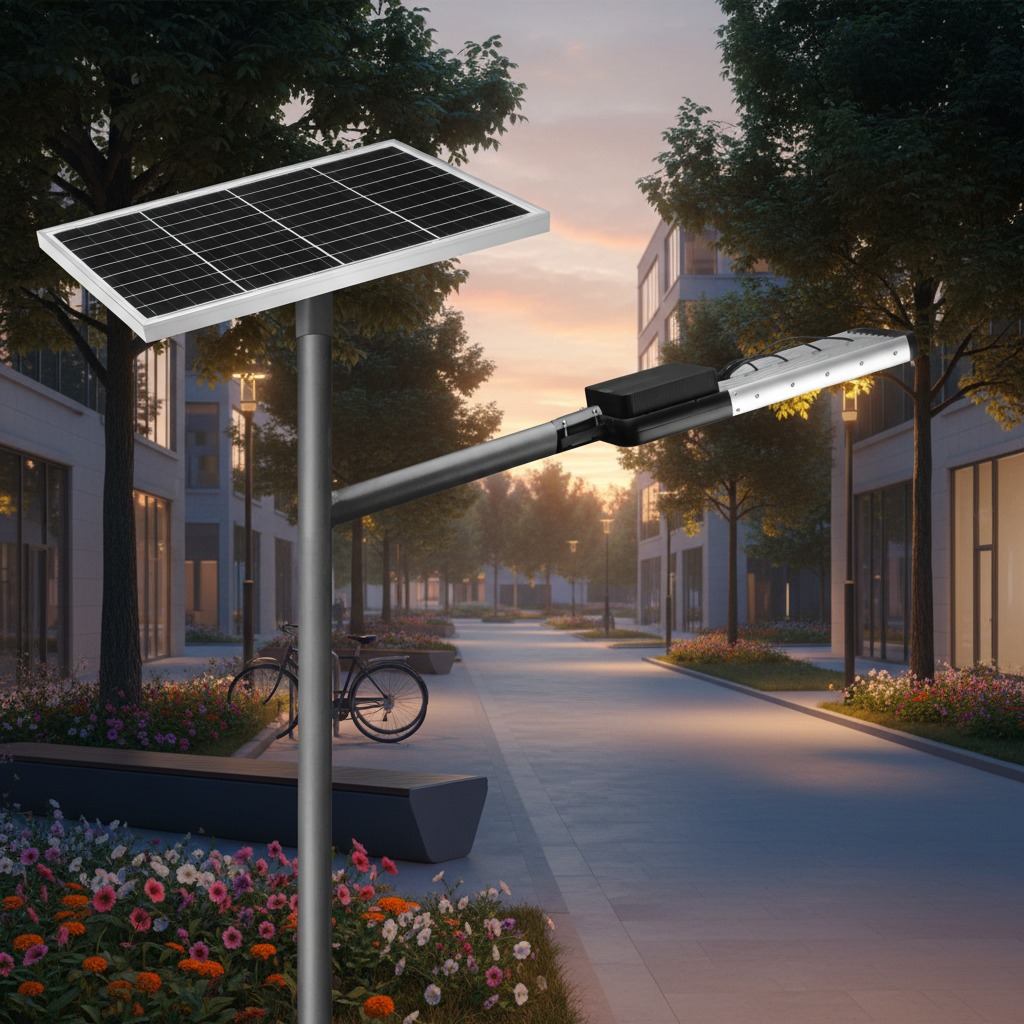
Delving deeper, solar powered street lights represent the pinnacle of renewable energy integration in public infrastructure. These systems feature high-efficiency solar panels that maximize energy absorption, even on cloudy days, ensuring uninterrupted service. The ZC-100W120W-3000-3 model exemplifies this technology with its adjustable wattage options of 100W or 120W, allowing customization for different lighting requirements while promoting energy conservation.
One of the standout aspects of solar powered street lights is their robust construction. Built to endure harsh environmental factors like rain, wind, and extreme temperatures, these lights boast a lifespan that far exceeds conventional alternatives. The sleek design of the ZC-100W120W-3000-3 not only blends aesthetically with modern landscapes but also optimizes light distribution for broader coverage, making it ideal for streets, parks, and commercial zones.
Moreover, the integration of advanced LED technology in solar powered street lights ensures bright, uniform illumination that enhances nighttime safety. By eliminating the need for external power sources, these lights reduce installation complexities and long-term operational expenses, appealing to municipalities and businesses aiming for sustainable upgrades.
Embracing Energy Efficient Street Lighting Solutions
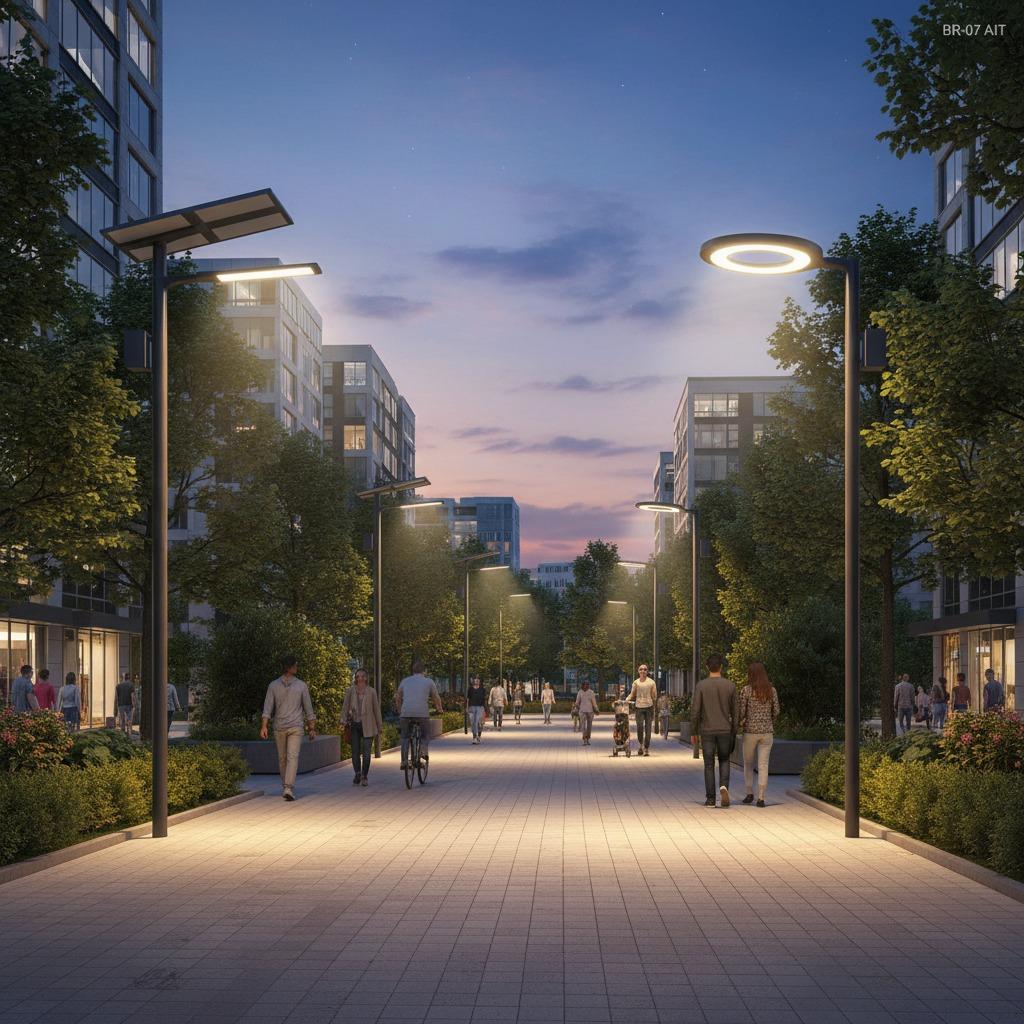
Energy efficient street lighting is more than a trend; it's a necessity in today's energy-conscious world. Solar street lights lead this charge by utilizing renewable resources to deliver powerful yet low-consumption lighting. The BR-07 AIT model, for instance, incorporates an intelligent light control system that automatically adjusts based on ambient conditions, further amplifying its energy-saving potential.
These solutions contribute significantly to reducing urban energy demands. Traditional street lights often account for a substantial portion of municipal electricity usage, but energy efficient street lighting powered by solar technology can slash these figures dramatically. The high-efficiency panels and durable LED components in models like the ZC-100W120W-3000 ensure that every watt is used optimally, minimizing waste and maximizing output.
In practical applications, energy efficient street lighting enhances community well-being by providing safer pathways and reducing light pollution through directed beams. Cities adopting these systems report lower maintenance costs and faster ROI, as the initial investment is quickly offset by savings on electricity bills and reduced infrastructure upkeep.
Advancements in LED Solar Street Lights
LED solar street lights mark a significant evolution in outdoor lighting, merging the longevity of LED bulbs with the sustainability of solar power. These lights offer superior brightness and color rendering compared to older technologies, ensuring clear visibility for pedestrians and drivers alike. The ZC-100W120W-3000-3, with its streamlined structure and weather-resistant materials, exemplifies how LED solar street lights can withstand diverse climates while maintaining peak performance.
The appeal of LED solar street lights lies in their versatility. Adjustable settings allow for tailored illumination levels, from dimmed modes in low-traffic areas to full brightness in high-use zones. This adaptability not only conserves energy but also extends battery life, making these lights a smart choice for remote or off-grid locations where reliability is paramount.
Furthermore, the minimalist design of models like the BR-07 AIT integrates seamlessly into various settings, from urban parks to rural roadways. Their automatic operation—turning on at dusk and off at dawn—eliminates manual intervention, streamlining management for large-scale deployments.
Benefits and Implementation of Solar Street Lights
Implementing solar street lights brings a host of benefits that extend beyond mere illumination. Environmentally, they play a crucial role in curbing greenhouse gas emissions, supporting global efforts to combat climate change. Economically, the absence of utility bills and minimal maintenance translate to substantial savings over time, particularly in expansive installations.
Solar powered street lights like the ZC-100W120W-3000-3 are easy to install, requiring no complex trenching or electrical connections, which speeds up deployment and reduces disruption to daily activities. Their scalability makes them suitable for everything from small community projects to city-wide retrofits, fostering greener urban planning.
On the safety front, energy efficient street lighting via LED solar street lights improves visibility, deterring crime and accidents. Studies show that well-lit areas experience up to 20% fewer incidents, underscoring the social value of these innovations. Additionally, their low heat emission and shatter-resistant designs enhance overall durability and safety.
Choosing the Right Solar Street Light for Your Needs
Selecting the ideal solar street light involves considering factors like location, expected foot traffic, and budget. For high-demand areas, the 120W option in the ZC-100W120W-3000-3 provides ample coverage, while the 100W variant suits less intensive needs. Similarly, the BR-07 AIT's smart controls offer flexibility for dynamic environments.
When evaluating options, prioritize features such as panel efficiency, battery capacity, and warranty duration. High-quality LED solar street lights typically come with protections against overcharging and short-circuiting, ensuring longevity. Consulting with experts can help tailor solutions that align with specific sustainability goals.
In conclusion, solar street lights are transforming how we light our world, offering a blend of innovation, efficiency, and eco-friendliness. By adopting solar powered street lights, energy efficient street lighting, and LED solar street lights, communities can pave the way for a brighter, more sustainable future. With models like the ZC-100W120W-3000-3 and BR-07 AIT leading the way, the transition to renewable lighting has never been more accessible or impactful.






