
Solar street lights and the real question buyers should be asking
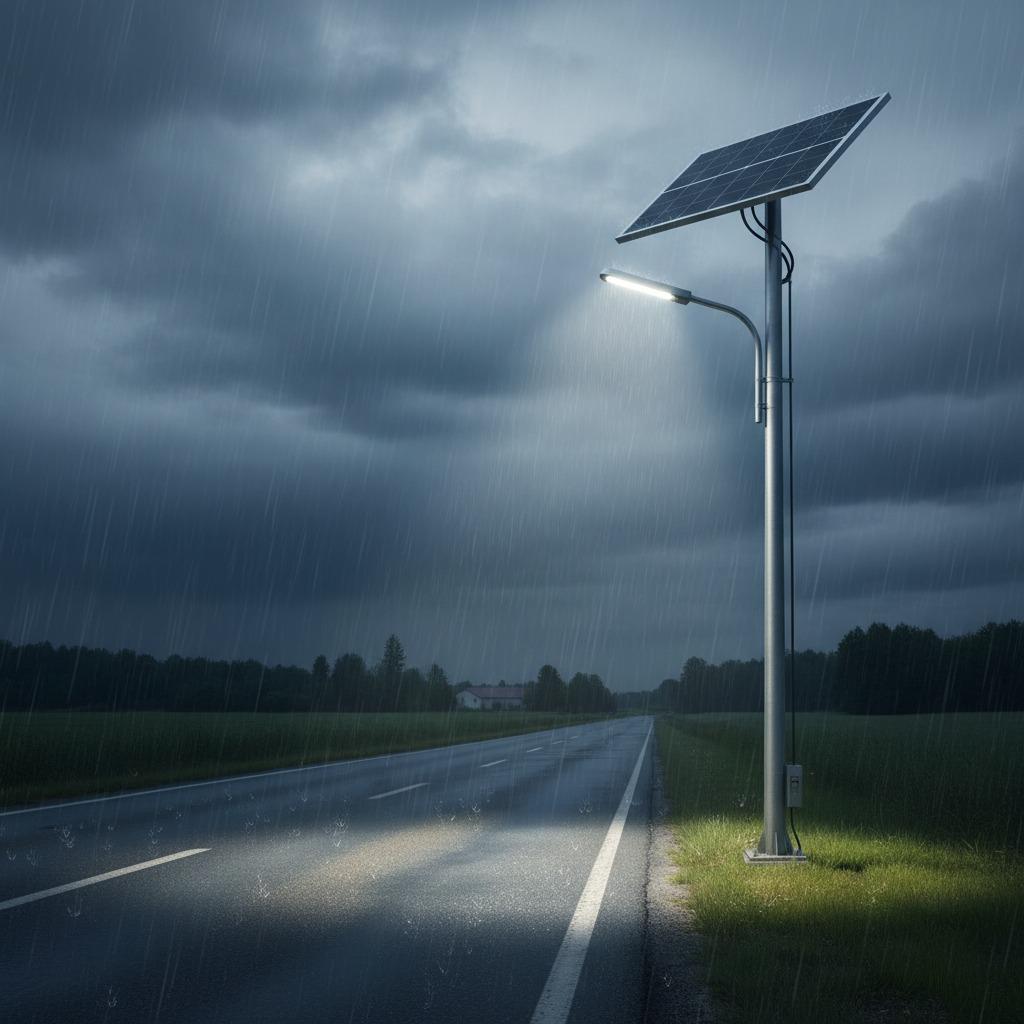
Solar street lights are often sold as a simple swap for conventional roadway or site lighting, but the buying decision is usually more complicated than the sales brochure suggests. For engineers, sourcing managers, and project teams, the real issue is not whether the fixture can turn on at night. It is whether the system will keep a road, campus, parking area, or industrial yard acceptably lit when weather turns poor, usage patterns change, or the battery ages. That is where details such as rainy day endurance, 5-7 days backup claims, and the promise of long-lasting solar lighting start to matter.
If you are comparing options, the right question is not “Is it solar?” It is “How much light do we need, for how many hours, under what weather conditions, and with what margin for degradation over time?” That framing helps separate genuinely robust systems from the ones that look fine in ideal conditions but struggle once installed in the field.
What solar street lights are expected to do in the field
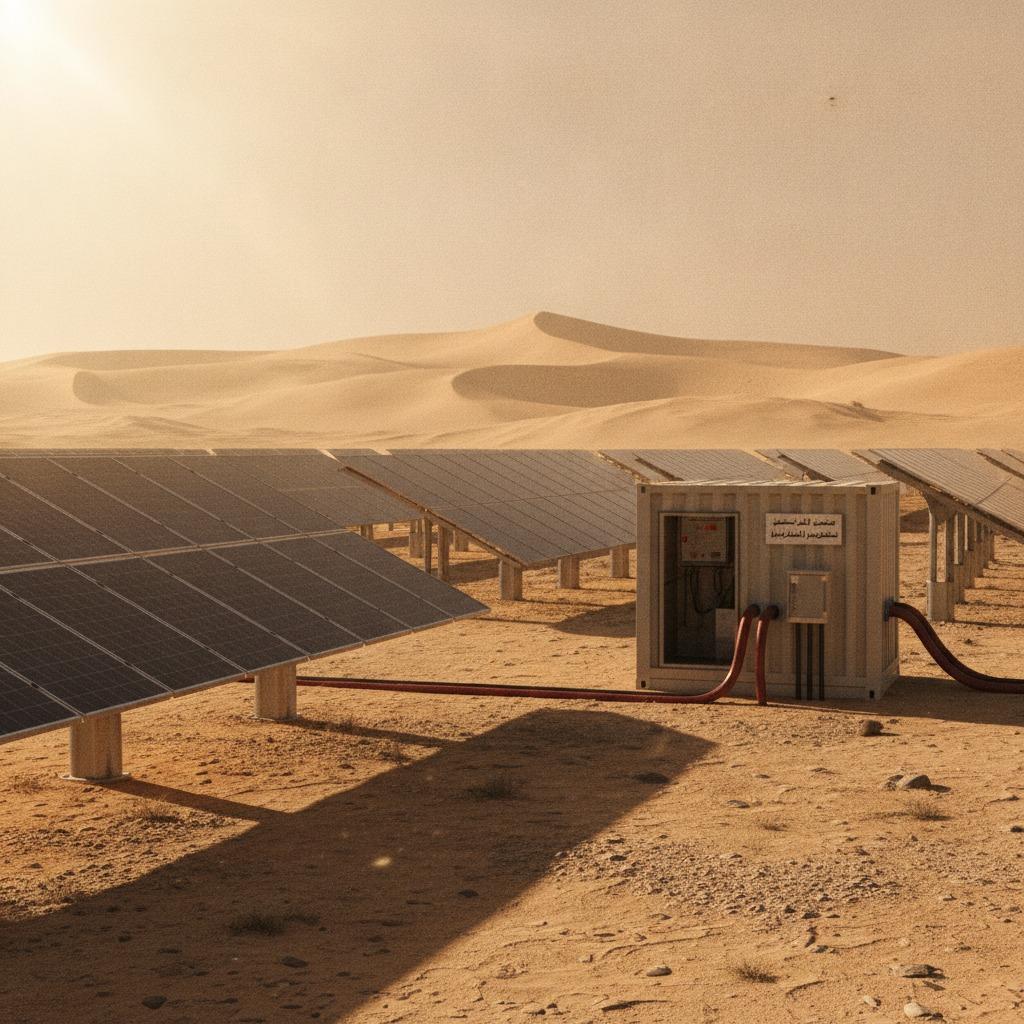
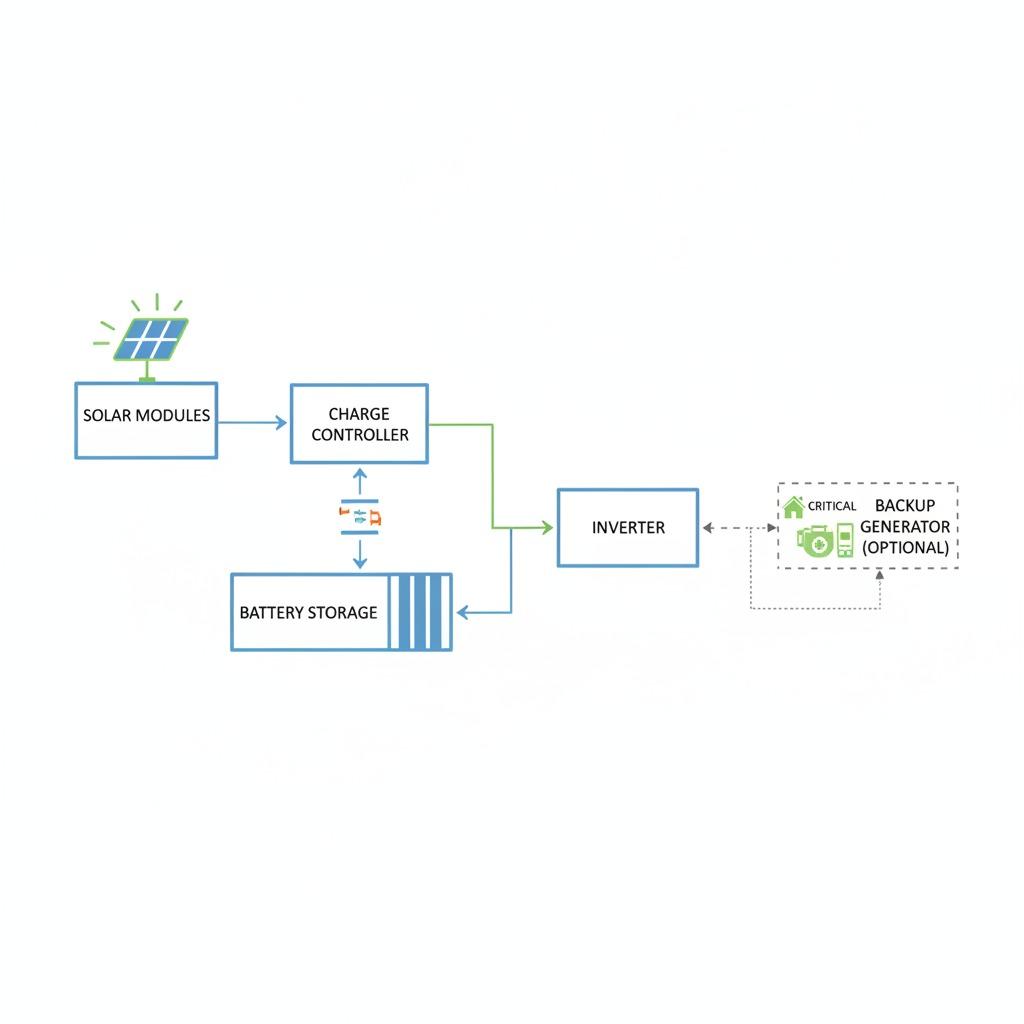
At a basic level, a solar street light captures sunlight through a photovoltaic panel, stores the energy in a battery, and uses that energy to power an LED luminaire after dark. In practice, the system is a small power plant with a lighting load attached. Panel size, battery chemistry, controller logic, mounting angle, LED efficiency, and local weather all influence performance.
That matters because lighting buyers are rarely shopping for a single product. They are purchasing uptime, visibility, safety, and reduced maintenance. If the site is remote, manual intervention is expensive. If the location is a public road or a logistics yard, weak nighttime performance can affect traffic flow and security. In that sense, the “product” is really a service outcome delivered by hardware.
Why rainy weather changes the buying conversation
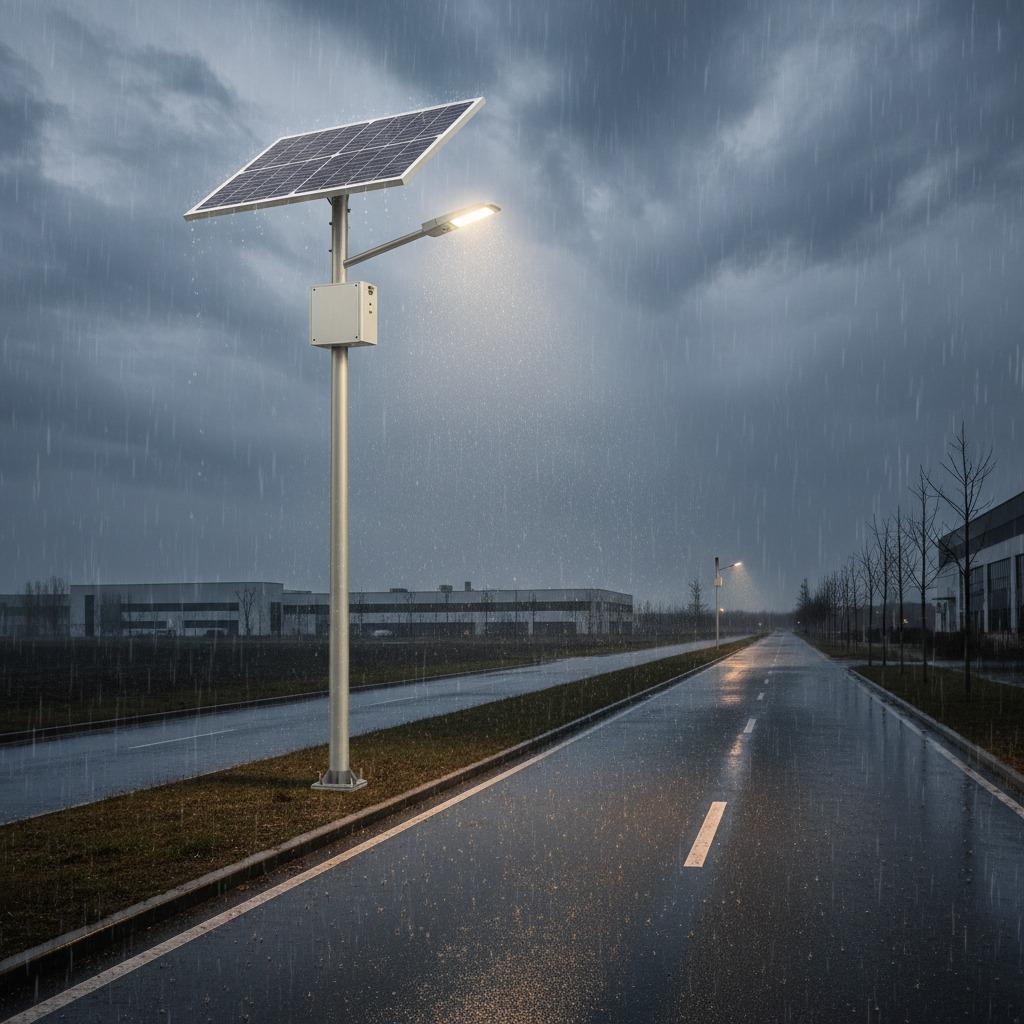
Rainy weather is where many solar lighting projects reveal their weak points. A few cloudy days are not the problem by themselves; the problem is cumulative energy deficit. If panels harvest less energy for several days in a row, the battery must carry the load, and once the reserve drops, light output is often reduced or operating hours are shortened.
This is why rainy day endurance is a more useful spec than a glossy panel wattage figure on its own. Endurance depends on the whole system design: panel oversizing, battery capacity, driver efficiency, and control strategy. A well-balanced unit can ride through a short stretch of poor weather without visibly compromising performance. A marginal one can begin dimming earlier than buyers expect, even if it looked strong during a one-night demo.
For projects in monsoon regions, coastal climates, or areas with long seasonal cloud cover, the weather profile should be part of the technical review from the beginning. Treat it like a load calculation, not an afterthought.
How to read backup claims without getting misled
Backup language in solar lighting can be slippery. A claim such as 5-7 days backup may refer to autonomy under a specific lighting schedule, a reduced wattage mode, or a system designed to preserve minimum illumination rather than full output. That is not necessarily a problem, but buyers should ask exactly what the figure means.
Useful questions include: Is the backup period based on full brightness or an adaptive dimming profile? What daily operating hours were assumed? What battery reserve remains at the end of the backup window? Does the system continue at constant output, or does it step down to extend runtime? These details change the real-world meaning of the number more than most brochures admit.
If a supplier cannot explain the backup logic in plain language, that is worth treating as a warning sign. A long autonomy claim can be genuine, but only when the underlying assumptions are transparent and suited to the site.
Core system elements that determine long-term performance
Solar panel sizing
The panel must generate enough energy not only for a typical day, but also for less favorable conditions. In many projects, undersized panels are the first cause of underperformance. The module should be matched to the load profile, local irradiation, and expected seasonal variation. More panel area is not always better, but too little area quickly becomes a maintenance headache disguised as a cost saving.
Battery capacity and chemistry
The battery is often the most consequential part of the system. It determines how much reserve is available after a cloudy spell and how many years the installation can keep operating before replacement becomes necessary. Buyers should think about usable capacity, not just nameplate capacity. Temperature swings, depth of discharge, and charge-discharge cycling all influence practical service life.
LED efficiency and optics
Long-lasting solar lighting is not only about energy storage; it also depends on how efficiently the luminaire turns stored power into usable illumination. Good optical design spreads light where people and vehicles actually need it, rather than throwing it into trees, medians, or open sky. Overlit fixtures waste energy, while poorly aimed ones create dark patches and glare.
Controller logic
Smart controllers can help the system adapt to weather and occupancy conditions. Dimming schedules, motion response, and low-voltage protection can stretch battery reserves without turning the site into a dark zone. Still, controls should be simple enough to maintain. In the field, complexity can become a liability if the programming is opaque or locked behind proprietary settings.
Quick comparison: what separates a reliable system from a risky one
For buyers reviewing multiple solar street lights, the differences often show up in four areas: reserve capacity, weather resilience, optical quality, and serviceability. A stronger design usually has a sensible balance rather than a single impressive number. For example, a unit with a very large battery but weak panel input may still struggle after extended overcast periods. A system with excellent LEDs but poor sealing or fragile mounting hardware may look efficient on paper and become costly in the field.
Another practical difference is maintainability. Can the battery be accessed without dismantling the whole pole head? Are replacement parts standardized? Is the controller protected from moisture and heat? These are not glamorous questions, but they matter more than a marketing image once the project is installed.
Common mistakes buyers make
The most common error is buying for average weather instead of worst-case weather. If the site experiences periodic low-sun periods, the system should be sized for those conditions, not just for a sunny brochure scenario. A second mistake is assuming every application needs the same light level. A residential lane, warehouse perimeter, and arterial access road do not have identical visibility requirements.
Another recurring problem is treating backup duration as a fixed promise instead of an operating mode. A claim of 5-7 days backup may be useful, but only when tied to the actual lumen output the site can accept during those days. If the project depends on full brightness every night without exception, the design margins need to be stricter.
Finally, some buyers focus too heavily on initial cost. Solar lighting can reduce trenching and grid connection expenses, but a cheap unit that underperforms after the first cloudy season is not a bargain. It is a deferred problem.
Buyer-facing checklist before issuing a purchase order
Before signing off on a project, it helps to confirm a few points in writing: the expected nightly runtime, the autonomy strategy during extended low-sun periods, the lighting distribution pattern, the battery replacement approach, and the installation assumptions for local weather and pole height. If the supplier provides performance data, ask for the test conditions behind it. If the answer is vague, treat the figure as indicative rather than guaranteed.
For large deployments, pilot testing on site is often worth the extra time. A short field trial can reveal whether the control mode is appropriate and whether the illumination feels right at the actual mounting height. That is especially useful where the landscape, tree canopy, or seasonal rainfall can change the operating profile.
FAQ for practical project teams
Are solar street lights suitable for cloudy regions?
Yes, if the system is designed with enough reserve and the site expectations are realistic. The panel and battery sizing must reflect local conditions rather than best-case assumptions.
Is 5-7 days backup always better?
Not automatically. It is useful only if the backup period is defined clearly and the light level remains acceptable for the application. Ask what output is maintained during that window.
Do all solar street lights offer the same long-term performance?
No. The phrase long-lasting solar lighting can describe very different designs. Battery quality, controller behavior, environmental sealing, and maintenance access all influence service life.
What a good sourcing decision looks like
A sensible purchase decision balances weather resilience, runtime, light quality, and maintenance burden. The best solar street lights are not simply the brightest or the cheapest; they are the ones sized for the site, supported by clear performance assumptions, and built with enough reserve to handle real weather instead of ideal test conditions.
If you are comparing suppliers, ask for the operating logic behind the autonomy claim, not just the headline number. Clarify how the system behaves during rain-heavy periods, what happens as the battery ages, and how the fixture is serviced after installation. Those answers usually reveal more than a polished brochure.
For teams planning a new lighting rollout, the next step is straightforward: define the site’s worst-weather operating requirement first, then match the system design to that requirement. That order prevents a lot of expensive surprises later.