

Quick answer: IP55 and IP65 both protect against dust, but they differ on water. IP55 resists dust ingress and water jets from any direction; IP65 resists dust ingress and low-pressure water jets (a stronger water test) but the two are close. What usually decides the choice for outdoor C&I storage is the corrosion grade (C4 versus C5) and the salt, chemical or coastal exposure at the site — not the IP digit alone. The BR-261 ships IP55 with C4 corrosion protection; the BR-233 is IP65.

What the two IP digits actually test
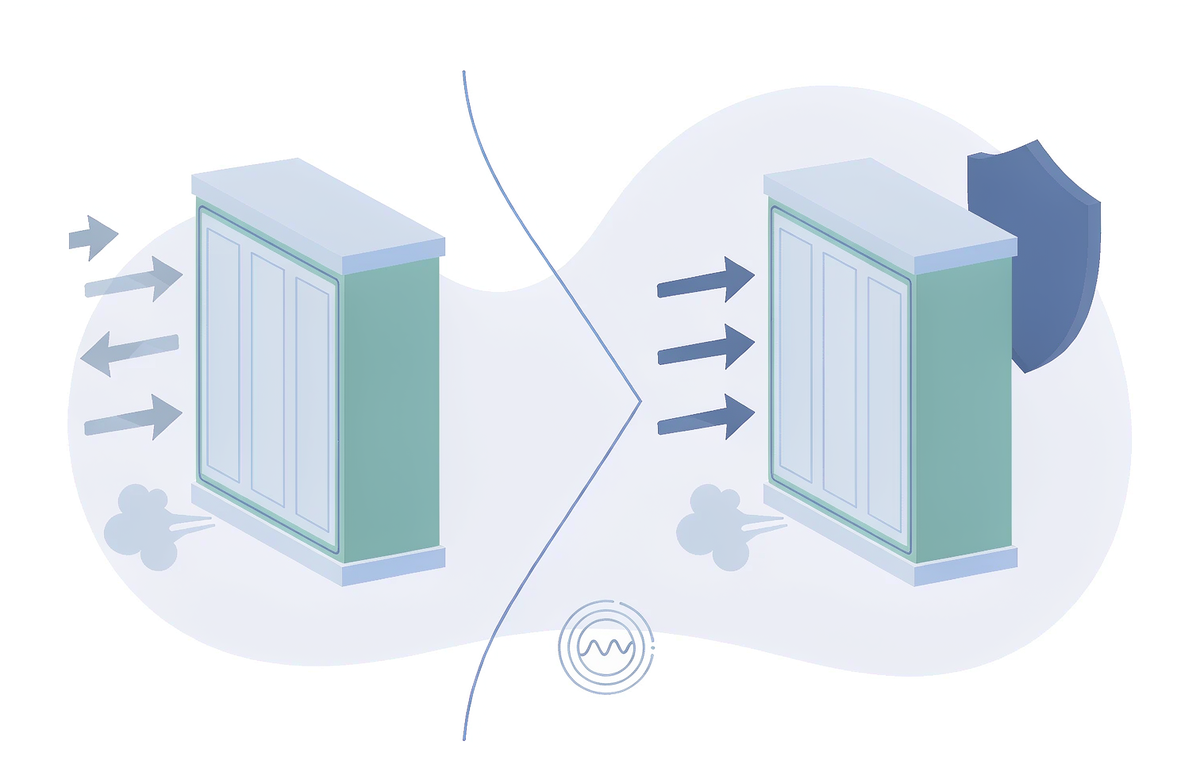
The IP code has two digits. The first is solids (dust) and the second is liquids (water). Both IP55 and IP65 share a first digit of 5, meaning dust is not fully excluded but the enclosure is protected against a quantity of dust that would interfere with operation. The difference is the second digit: 5 means protection against water jets from any direction; 6 means protection against powerful water jets, which is a stricter test. In practice, both ratings are designed for outdoor duty — the meaningful difference for a storage cabinet usually lies elsewhere.
Why corrosion grade matters more than the second digit
A cabinet outdoors faces dust and rain, but on a coastal or industrial site it also faces salt-laden air or chemical vapours. That is what the C-grade corrosion classification addresses. C4 covers most industrial and coastal-adjacent environments; C5 is specified for harsh marine or industrially aggressive exposure. The BR-261 carries C4 as standard, with the 5.01 MWh container offering C4 with an optional C5 upgrade. If your site is a coastal terminal, an island, or near heavy chemical processes, ask about the corrosion grade before you compare IP digits — an IP65 cabinet with the wrong corrosion grade will still fail in salt air.
Matching the enclosure to the site
- Inland industrial parks and factory yards. IP55 with C4 corrosion protection is a sound fit for dust, rain and ordinary industrial atmosphere; this is the BR-261 specification.
- Rooftops and exposed urban sites. An IP65 enclosure such as the BR-233 suits roofs and urban courtyards where vertical splash and washdown are more likely.
- Coastal terminals and islands. Prioritise C5 corrosion protection and confirm the electrical enclosure's sealing detail, not only the IP number.
- Very dusty sites such as mining or cold-chain yards. Combine the enclosure rating with the thermal design — a sealed cabinet needs liquid cooling to hold cell temperatures, as discussed in our guide to off-grid microgrids for mining and remote industry.
A practical enclosure checklist
- IP rating for solids and liquids, plus the test standard referenced.
- Corrosion grade (C4 or C5) and the atmosphere it assumes.
- Operating temperature range and whether the enclosure derates in heat.
- Cooling method — airflow through the enclosure, or sealed liquid cooling.
- Base and mounting design against standing water and flooding.
- Cable entries and their sealing detail.
- Fire-suppression and detection equipment inside the enclosure.
- Maintenance access without compromising the seal.
FAQ
Is IP65 always better than IP55 for outdoor storage?
Not automatically. IP65 has a stronger water-jet test, but a properly designed IP55 cabinet with the correct corrosion grade can be the better fit for inland industrial sites. Match the rating to the actual exposure rather than choosing the highest number.
Can an IP55 cabinet be installed on a rooftop?
It can be installed outdoors, but rooftops often combine wind-driven rain, standing water and higher ambient heat. If the site is a rooftop, weigh an IP65 enclosure and confirm the thermal design; the BR-233 is an IP65 platform suited to tighter urban footprints.
What is the difference between IP and corrosion grades?
IP rates how well the enclosure keeps out solids and water; the C-grade rates how well its materials resist corrosive atmospheres. They answer different questions, and a good specification states both.
Does a higher IP rating reduce cooling performance?
A more tightly sealed enclosure has less opportunity for passive airflow, so sealed designs lean on liquid cooling to move heat out of the cells. The BR-261 uses liquid cooling to hold maximum battery temperature at or below 38°C with a 3°C cell-to-cell difference.
How do I specify the enclosure in a tender document?
State the IP rating, the corrosion grade, the operating temperature range, the cooling method and the fire-safety provisions as separate line items. That prevents a low bid that meets the IP number while cutting the corrosion or thermal specification.
Next step
Tell us your site's atmosphere — inland, rooftop, coastal or chemical — and we will confirm the right IP rating, corrosion grade and cooling approach for your location. Request an enclosure recommendation from BR Solar.
Continue reading
- How to Choose a Liquid-Cooled C&I Battery Cabinet
- Battery Fire Safety in Commercial Energy Storage
- How to Size a 100 kW 261 kWh BESS for Peak Shaving
- Solar Plus Storage for Factories
Talk to a BR Solar storage engineer about your site enclosure





