

Quick answer: You do not need to buy megawatt-hours on day one. Start with a single 100 kW / 261 kWh liquid-cooled cabinet and scale by paralleling: the BR-261 platform supports up to 8 units in parallel on one 380/400 V three-phase network, reaching roughly 800 kW / 2.1 MWh from identical cabinets before you consider container-scale assets like the 5.01 MWh liquid-cooled container. Plan the foundation, electrical room, communication architecture and grid connection for the final size from the beginning, and expansion becomes a plug-and-play delivery rather than a redesign.
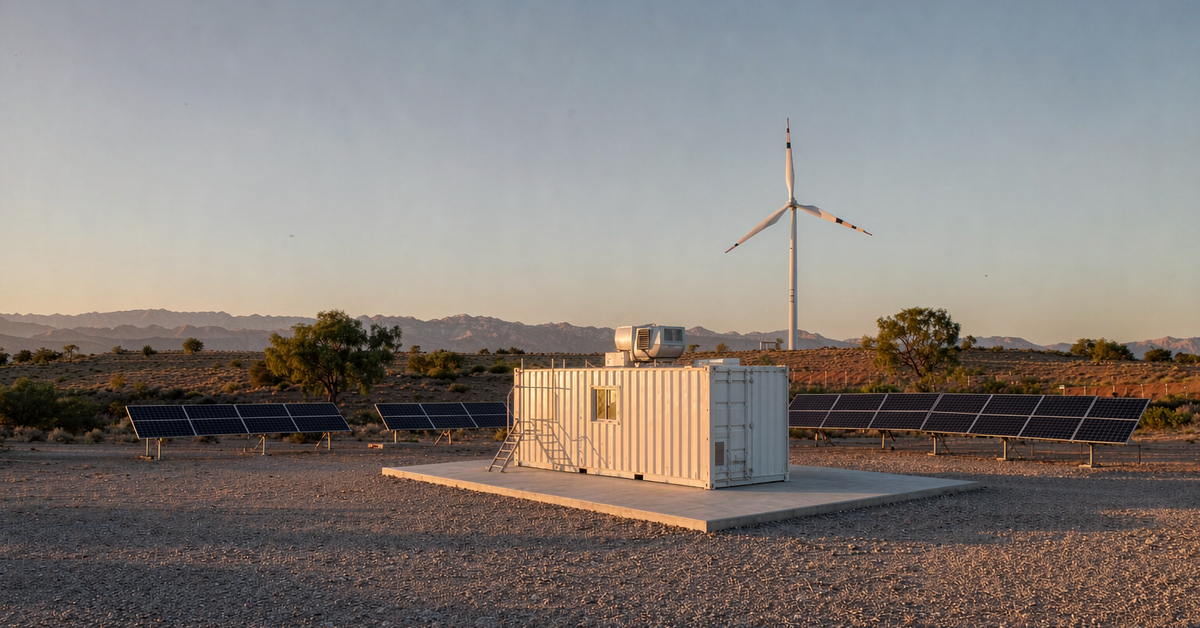
Why parallel-first scaling beats buying big
Storage demand rarely arrives all at once. A factory adds shifts, an industrial park signs new tenants, a hotel expands; the load that justified 261 kWh this year may justify a megawatt-hour in three. Buying a large container on day one means paying interest on capacity that idles for years. Scaling by adding identical cabinets in parallel matches capital to demand growth:
- Capital follows demand. Each additional 261 kWh step is purchased when the revenue to justify it exists.
- Redundancy is inherent. Multiple small units degrade gracefully: one cabinet offline for service reduces capacity slightly instead of zeroing it, unlike a single large asset.
- Logistics stay light. A BR-261 cabinet weighs at most 3000 kg and fits standard lifting, versus container-scale plant requiring heavy transport and cranes.
- Technology risk is spread. Later units can adopt improved cells without stranding the first investment.
The trade-off is per-unit overhead: more enclosures, more protection devices and more space than one container of equal energy. Past roughly a megawatt-hour on one site, the container comparison becomes worth running — see container versus cabinet economics.
How parallel operation actually works
AC-side coupling
Each cabinet contains its own power conversion system, so paralleling happens on the AC side: every unit connects to the site's 380/400 V three-phase, five-wire network through its own protection, and the rated output current of a single BR-261 is 144 A. Eight units in parallel present up to about 800 kW of charge-discharge capability and roughly 2.1 MWh of storage to the site. Because each unit is self-contained — EMS, PCS and BMS integrated in one enclosure — adding a cabinet does not require re-engineering the existing ones.
Coordination across units
Parallel cabinets need a dispatch layer so they act as one resource rather than eight independents. Typical coordination assigns one master (or an external controller) that broadcasts setpoints — total site power target, charge windows, demand ceiling — while each unit's local BMS protects its own cells. The BR-261 communicates over ETH, 4G, CAN, RS485 and LAN, giving integrators several transport options for the coordination network. Ask any supplier explicitly: who arbitrates state of charge across units, how a new unit joins the fleet, and what happens if the coordination link fails. Our article on what the EMS does in C&I storage covers this control layer in depth.
State-of-charge balancing
Units with different histories start each morning at different states of charge. The dispatch logic should allocate charge and discharge so the fleet arrives at the operating window aligned — usually by letting fuller units discharge first and emptier units charge first. This is software behaviour, so it belongs in the acceptance test before final payment.
Design the site for the final size, build for the first
The most expensive expansion mistake is civil and electrical: a site built for one cabinet that must close down for weeks when cabinet five arrives. Avoid it with forward planning:
- Reserve footprint. Lay out plinths and clearances for the maximum cabinet count now; a BR-261 occupies 1100 × 1400 mm of plan area per unit, so eight units plus service aisles fit in a modest compound.
- Size the connection once. Apply for grid connection, transformer capacity and protection settings for the final power level, not the first cabinet. Retrofitting the utility agreement is slower than any hardware step — see grid connection and permitting.
- Provision cabling and comms. Pull spare cable ways and an empty communication backbone during the first installation; incremental cabinets then terminate onto existing infrastructure.
- Plan fire separation. Keep the compound layout compatible with local fire-separation distances as cabinet count grows, consistent with the principles in battery fire safety.
- Keep one spare-parts kit. Identical units share filters, contactors and service tools across the whole fleet.
Two scaling paths compared
Path A — parallel cabinets. Suited to loads up to roughly 800 kW where redundancy, phased capital and standard lifting matter. Each step is a scheduled one-day delivery and commissioning. Demand charges fall from the first cabinet onward, and each added unit starts earning immediately.
Path B — container-scale. When a single site needs multi-megawatt discharge continuously, a 5.01 MWh liquid-cooled container with 1331.2 V rated voltage, IP55 construction, C4/C5 corrosion options, multi-layer fire protection (temperature, smoke, combustible-gas detection with deflagration venting, gas suppression and water sprinkler) and −30 to 50°C operation compresses a megawatt-hour site into one delivery. The crossover is project-specific; our container-versus-cabinet article benchmarks footprint, lead time and interconnection cost.
Many real programmes combine both: cabinets serve the first years and early demand-charge savings, then containers arrive when a load expansion makes megawatt-hour scale economic. The electrical design that anticipated the growth makes that transition routine.
What changes when the fleet grows
- Protection coordination. More parallel current means the site's breaker settings and utility interface must be reviewed at each step — budget a small engineering task per expansion, not a redesign.
- Monitoring consolidation. Move from per-cabinet screens to a single fleet dashboard so operators see one state of charge and one power number; the cloud-edge collaboration architecture of an integrated platform supports this.
- Warranty alignment. Confirm parallel operation is warranty-covered for the whole fleet — up to eight units in parallel is a stated BR-261 capability — and that new units inherit consistent terms.
- Maintenance scheduling. Stagger annual service across cabinets so the fleet always retains most of its capacity.
FAQ
How many BR-261 cabinets can run in parallel?
Up to 8 units on the BR-261 platform, delivering roughly 800 kW of power and about 2.1 MWh of energy on a 380/400 V three-phase network, with each cabinet's 144 A rated output contributing to the site total.
Can I mix old and new cabinets in one parallel fleet?
Same-platform units are designed to operate together, but large state-of-health differences make dispatch less efficient. The practical rule is to expand within the same product generation and let the EMS balance across units; confirm compatibility with the supplier when adding units years after the first delivery.
When should I switch from cabinets to a container?
When continuous power demand clearly exceeds what a parallel cabinet group serves economically, or when site constraints favour one large asset over several small ones. As an illustrative threshold, projects trending beyond roughly a megawatt of sustained discharge should run the container comparison from day one.
Does adding a cabinet require a new grid application?
If the site connection was sized for the final fleet, adding a cabinet is an internal change with a notification to the utility at most. If the connection was sized for one cabinet, expect a new review. This asymmetry is why the connection should be designed for the end state; see grid connection and permitting for C&I storage projects.
What redundancy does a parallel fleet give me?
Meaningful partial redundancy: with eight cabinets, one unit out for service still leaves 87.5% of power and energy available. A single-container site of the same size loses 100% during service events unless a second asset exists.
Next step
Send us your current load, your three-year expansion plan and the site layout sketch. We will design the compound for the final cabinet count, specify the grid connection for the end state, and quote the first 100 kW / 261 kWh step so expansion later means another identical cabinet — not a new project. Request a scalable configuration from BR Solar.
Continue reading
- 5.01MWh Container vs 261kWh Cabinet: Choosing the Right C&I Storage Scale
- EMS Explained: What the Energy Management System Does
- How to Choose a Liquid-Cooled C&I Battery Cabinet
- Grid Connection and Permitting for C&I Battery Storage Projects
Talk to a BR Solar storage engineer about your expansion plan






