

Quick answer: Grid connection and permitting decide the timeline of a C&I storage project more often than the hardware does. The typical path runs: feasibility and tariff review, utility interconnection application, utility study and agreement, electrical design and permits, installation, inspection and commissioning, then energization and monitoring. Start the interconnection conversation early, size the application for your final fleet (up to eight BR-261 cabinets in parallel, not just the first 100 kW / 261 kWh unit), and keep the documentation set — single-line diagrams, protection settings, fire-safety plan — consistent across every submission to avoid re-review loops.
Why the process matters as much as the product
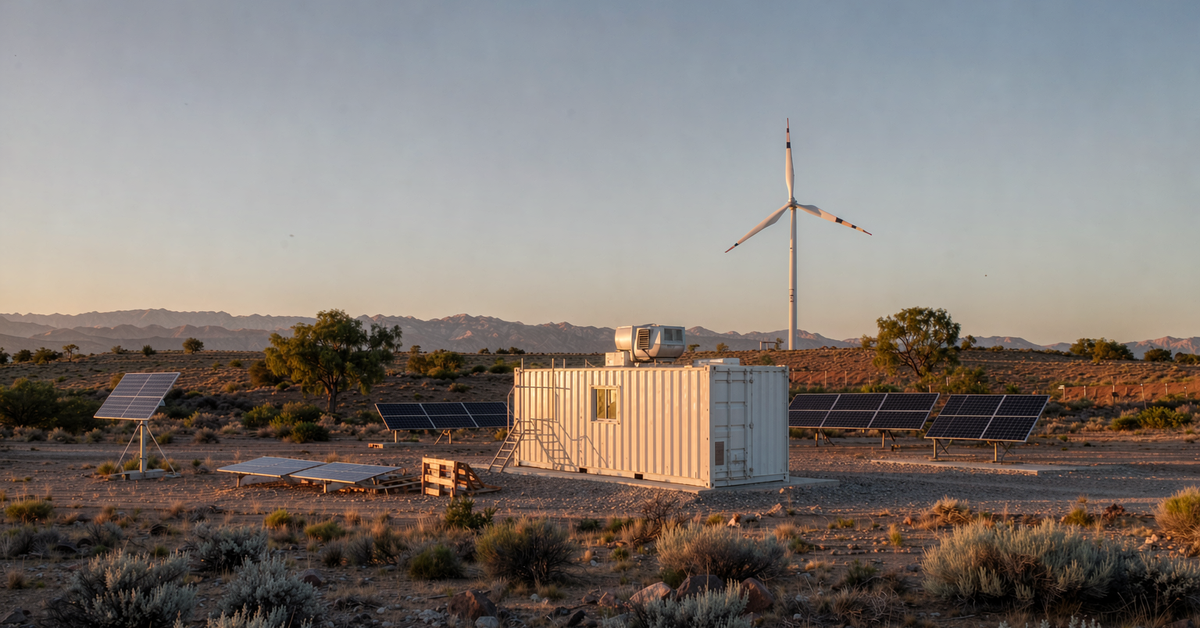
A storage cabinet ships in weeks; a grid connection involves institutions. Utilities must confirm that a bidirectional 100 kW asset on their feeder behaves correctly under every condition — normal operation, faults, islanding risk, maintenance switching — before allowing energization. Local authorities must confirm the installation meets fire, building and electrical codes. Neither step is optional, and both run on review calendars rather than manufacturing schedules. Projects that treat permitting as an afterthought discover the mismatch only when the cabinet is already on site; projects that parallel-track paperwork with procurement go live weeks or months earlier.
The seven stages of a C&I storage project
1. Feasibility and tariff review
Before any application, confirm the economics with real data: interval load profile, tariff structure, candidate site location for the cabinet, and the strategy mix (demand clipping, load shifting, solar self-consumption). This stage costs little and prevents the most expensive mistake — an approved project that cannot earn. The analysis framework is in ROI, payback and value stacking.
2. Interconnection application
Submit to the utility with a single-line diagram showing the connection point, the cabinet's characteristics (100 kW power, 380/400 V three-phase, five-wire, 144 A rated output, power factor range −0.99 to +0.99) and site electrical data. Apply for the final configuration: if expansion to four or eight parallel cabinets is plausible within the connection's life, size the application now — re-applications take longer than initial ones. The scaling logic is in parallel cabinet expansion.
3. Utility study and agreement
The utility reviews feeder capacity, protection coordination and any export or power-quality conditions, then issues an interconnection agreement. Requirements vary by market and capacity tier; smaller BTM systems on established feeders typically move through standard review tracks, while larger or export-capable configurations may trigger detailed studies. Respond to information requests within days, not weeks — study queues are first-in-first-out.
4. Detailed design and permits
With the agreement in draft, finalize: foundation and siting plan respecting fire-separation distances (per battery fire safety practice), cable routes and protection settings, communications (ETH, 4G, CAN, RS485, LAN) and the fire-safety documentation covering the cabinet's suppression stack — pack- and system-level aerosol suppression, explosion-proof construction, 50 mm rock wool, at least one hour fire resistance. Building, electrical and fire permits are filed with this package.
5. Procurement and delivery
Hardware lead times are predictable — around 15 working days after advance payment for BR Solar cabinets — so ordering can proceed once permits are tracking to approval. The cabinet arrives as one integrated unit (EMS + PCS + BMS), which shortens on-site electrical work substantially compared with assembling separate components.
6. Installation, inspection and commissioning
Installation covers foundation, lifting (a BR-261 weighs at most 3000 kg), AC termination, metering and communications. Third-party or utility inspection typically verifies protection settings and safety compliance. Commissioning then tests the full control chain: demand-ceiling response, tariff schedule execution, alarm paths, and — where backup is part of the design — transfer tests against the real critical loads as described for hospitals and critical facilities.
7. Energization and monitoring
After utility sign-off, the system energizes and begins its daily schedule. Remote monitoring via cloud-edge collaboration reports performance from day one; keep the commissioning report, as-built diagrams and protection records together — they are the reference set for future expansions and utility audits.
The document set that prevents delays
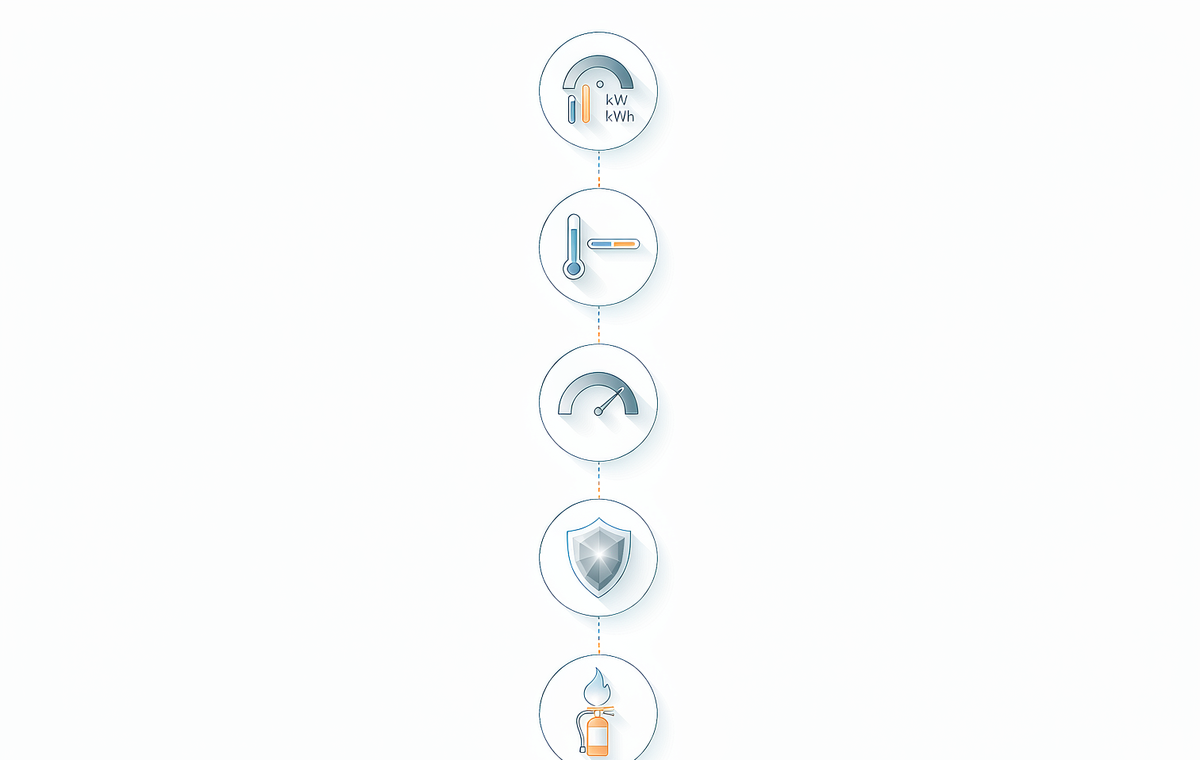
Most review loops come from inconsistent or missing documents. Assemble one package and reuse it everywhere:
- Single-line diagram showing connection point, protection devices, metering and the cabinet interface — identical in the utility application, permit filings and as-built records.
- Equipment datasheets with the full specification: power, energy, efficiency (≥98.2% maximum DC round-trip on the BR-261), operating envelope (−20 to 55°C, IP55, C4), and the safety features in itemised form.
- Protection and control narrative explaining how the system behaves during faults, how anti-islanding is ensured by the PCS, and what the demand-control logic does — written for a utility reviewer, not a brochure.
- Fire-safety plan mapping the suppression stack, siting distances, access routes and emergency-response contacts to the local fire authority's requirements.
- Expansion intent — a one-page statement that the site may add parallel cabinets up to a stated final size, so the utility studies the endpoint once.
Regional differences worth knowing
Permitting depth varies by jurisdiction. Some markets run fast-track interconnection for behind-the-meter systems below a capacity threshold; others require engineering studies for anything above tens of kilowatts. Export rules differ too — some utilities prohibit export from BTM systems entirely, which shapes EMS configuration but not the core economics, since BTM savings come from displacing purchases (see behind-the-meter storage economics). Where your project sits on a weak grid or plans islanded operation, earlier coordination with the utility is essential — the microgrid and weak-grid storage guide covers the technical interface questions to raise.
The practical advice is universal: call the utility early, ask for the storage-specific interconnection track by name, size the application for the end state, and keep every reviewer working from the same document set.
FAQ
How long does grid connection take for a C&I storage system?
It varies by market and capacity tier — from weeks on fast-track BTM tracks to several months where detailed utility studies apply. Hardware lead time (about 15 working days after advance payment for BR Solar cabinets) is rarely the bottleneck; the review calendar is. Early application and complete documentation compress the timeline most.
Do I need a new application if I add parallel cabinets later?
If the original application and connection were sized for the final fleet, adding cabinets is usually an internal change with notification at most. If the original covered only the first unit, expect a fresh review. This asymmetry is why expansion intent belongs in the first application.
Can the battery export power to the grid?
Depends on the utility's rules for your tariff and connection class. Many BTM projects operate with export limitation or prohibition, and economics still work because savings come from demand clipping and shifting, not export. Configure the EMS to enforce the utility's export condition during commissioning.
What safety documentation will the utility and fire authority ask for?
Typically the equipment datasheets, the suppression and construction features itemised (aerosol suppression at pack and system level, explosion-proof cabinet, fire-resistant rock wool, fire-resistance duration), the siting plan with separation distances, and the emergency-response procedure. Our fire-safety article organises these into a submittable package.
Who handles the interconnection process?
Usually the installer or engineering contractor files on the owner's behalf, with the owner as signatory. Choose a partner who has completed storage interconnections in your utility's territory before — familiarity with the local reviewer's expectations is worth more than any checklist.
Next step
Send us your site location, utility name and target capacity. We will outline the interconnection path for your jurisdiction, provide the complete technical document set for the BR-261 — datasheets, protection narrative, fire-safety package — and coordinate commissioning to the utility's requirements. Request project support from BR Solar.
Continue reading
- Scaling with Parallel Cabinets: From 261 kWh to Megawatt-Hour Sites
- Behind-the-Meter Storage: How C&I Sites Cut Electricity Bills
- Battery Fire Safety in Commercial Energy Storage
- C&I Energy Storage ROI: Payback, LCOS and Value Stacking
Talk to a BR Solar storage engineer about your project timeline






