

Quick answer: Hospitals cannot tolerate power interruptions, and their demand profile — continuous base load plus HVAC, imaging and sterilization spikes — makes battery storage both an economic and a resilience investment. A properly engineered system does three jobs at once: cuts demand charges by clipping peaks, shifts energy across tariff periods to cut energy bills, and provides an engineered power bridge for critical circuits the instant the grid falters. A liquid-cooled cabinet like the BR-261 — 100 kW / 261 kWh, IP55, with pack- and system-level fire suppression and ≥98.2% maximum DC round-trip efficiency — is designed to serve facilities where the cost of failure is measured in patient safety, not money alone.
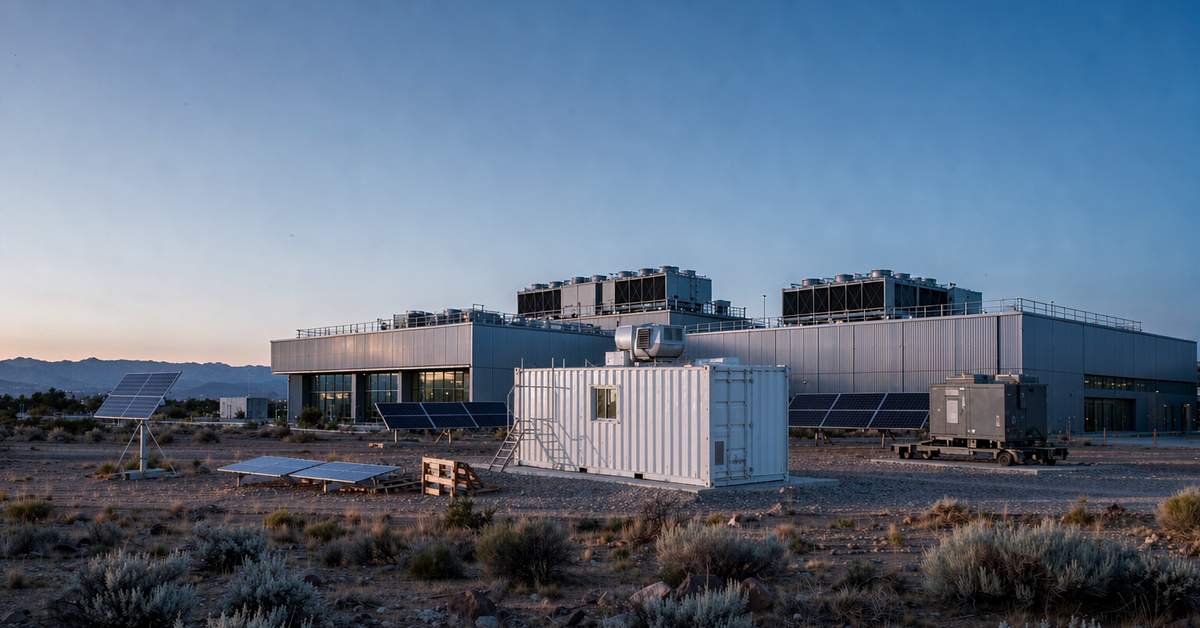
The hospital power problem, precisely stated
Critical facilities face a stricter reliability standard than any commercial building. Life-safety systems, operating theatres, intensive care, laboratory refrigeration and medical imaging must ride through grid events without exception. Conventional practice leans on generators plus UPS systems: generators provide long-duration backup but take tens of seconds to start and accept load; UPS units bridge that gap but are sized, cycled and maintained purely for emergencies, spending most of their life as idle insurance.
Modern battery storage reframes that economics. The same electrochemical asset that rides through emergencies can work every day in normal operation — shaving demand peaks and shifting tariff energy — while retaining an engineered reserve for power events. The insurance policy starts earning its own premiums.
Three jobs, one engineered system
1. Peak shaving and demand-charge control
Hospital demand is high around the clock, with clinical and building peaks layered on top. The EMS enforces a demand ceiling in real time, dispatching the battery whenever total draw approaches the target — the same mechanics described in demand-charge management with battery storage. A single BR-261 clips peaks up to 100 kW; parallel units extend the ceiling for larger campuses, with up to eight cabinets operating together.
2. Energy-cost management
Continuous 24-hour loads make hospitals substantial energy buyers in every tariff period. Scheduled shifting moves consumption from peak-priced to valley-priced hours, and where rooftop PV exists, the battery raises self-consumption of midday surplus into evening load — the pattern in solar plus storage for factories, applied to a healthcare estate. High round-trip efficiency matters here: at ≥98.2% maximum DC efficiency, little purchased value is lost per cycle.
3. The power bridge for critical loads
When the grid event arrives, the storage system's fastest value appears: an immediate power response that carries critical circuits until generators assume the load — or for the full event duration if energy suffices. Design it as a defined tier:
- Define the critical bundle. Emergency and egress lighting, medical gas systems, selected clinical circuits, IT and communications, laboratory refrigeration. List and sum their power; this defines the backup tier's rating.
- Set the reserve floor. The EMS holds a state-of-charge floor corresponding to the required ride-through duration; daily savings operate only on energy above the floor.
- Coordinate with existing infrastructure. The cabinet integrates with generators and UPS through standard interfaces (ETH, 4G, CAN, RS485, LAN), taking over the ride-through role for the seconds the UPS once covered and reducing battery-stress cycling on legacy UPS units.
Engineering requirements unique to healthcare sites
Critical facilities raise the specification bar in four areas, and buyers should verify each explicitly:
- Response and transfer behaviour. The system must detect abnormal supply and assume load within the window the facility's clinical risk assessment allows. Confirm transfer logic and test it during commissioning against the actual critical bundle, not a dummy load.
- Fire safety with occupied buildings nearby. The stack should include stable LFP chemistry, aerosol suppression at both pack and system level, leakage detection, an explosion-proof cabinet, 50 mm fire-resistant rock wool and at least one hour of fire resistance — the BR-261 configuration — plus siting per the separation principles in battery fire safety in commercial energy storage, integrated with the facility's fire alarm and response plan.
- Thermal reliability year-round. Liquid cooling that holds battery temperature at or below 38°C at full load with cell-to-cell difference within 3°C keeps capacity and response consistent in every season; low-temperature heating maintains readiness down to −20°C ambient, and the −20 to 55°C operating range covers plant-room-adjacent outdoor siting without conditioning.
- Certification, documentation and maintenance access. Healthcare procurement requires traceable specifications, maintenance plans that never take the backup tier offline during clinical hours, and remote diagnostics that flag degradation before it matters. The BR-261's cycle rating — ≥6,000 cycles at 0.5C/0.5C, 25°C ±2°C, to 70% end of life — should be tracked against actual duty through the cloud monitoring platform.
Sizing a hospital storage system
Run two sizing exercises and take the larger result:
- The savings exercise. From a year of interval data, find the demand-peak depth above candidate ceilings and the energy per shifting window. This typically lands near the 100 kW / 261 kWh scale for mid-size facilities, with parallel expansion for larger campuses — the scaling mechanics are in parallel cabinet expansion from 261 kWh to megawatt-hour sites.
- The resilience exercise. Sum the critical bundle's power and multiply by the required bridge duration. Where the result exceeds one cabinet, add units in parallel and document the fleet's combined ride-through in the facility's emergency plan.
Then verify the economics with the standard framework in ROI, payback, LCOS and value stacking, including the non-billed resilience value that healthcare boards weigh alongside payback.
FAQ
Can battery storage replace the hospital's generators?
Usually it complements them rather than replacing them. The battery provides instant response and carries short events entirely; generators remain for long-duration outages. The combination reduces generator starts, fuel consumption and maintenance while improving the response time the facility can document.
How fast does the battery respond to a grid event?
Within the control loop's sub-second to seconds range, the PCS converts stored DC power to site AC and the critical bundle transitions with minimal disturbance — the exact transfer time depends on the facility's detection scheme and must be validated in commissioning tests.
Does daily peak-shaving use up the backup capability?
No, if the EMS enforces a reserve floor. Daily savings draw only on energy above the floor; the reserve for critical loads stays untouched except during real events, and recharge logic restores the floor promptly after any use.
Where should the cabinet be installed on a hospital campus?
Outdoors, close to the main electrical intake, on a foundation that satisfies fire-separation distances from occupied buildings and access routes — the IP55, C4-rated enclosure is built for exactly that. Final siting follows the facility's fire-risk assessment and the guidance in our fire-safety article.
What maintenance does the system need?
Routine remote monitoring with scheduled preventive service — coolant checks on the liquid loop, firmware updates through the cloud platform, and periodic transfer tests against the critical bundle. Maintenance windows are planned so the backup tier is never simultaneously unavailable with the grid supply.
Next step
Bring the facility's single-line diagram, critical-circuit schedule and twelve months of interval data. Our engineering team will size the savings tier and the resilience tier separately, propose the parallel configuration that satisfies both, and document transfer behaviour for your emergency plan. Request a critical-facility storage assessment from BR Solar.
Continue reading
- Data Center Backup Power with BESS: Sizing, Power Quality and Fire Safety
- Battery Fire Safety in Commercial Energy Storage
- Battery Storage for Hotels and Resorts: Backup Plus Peak Management
- Demand Charge Management with Battery Storage for Factories






