
What buyers are really looking at when they search for a BESS energy storage system
A bess energy storage system is no longer a niche piece of utility hardware. For many engineering teams, it is the practical answer to a familiar problem: how to hold surplus power when it is cheap or abundant, then release it when the site needs support, whether that means peak shaving, backup power, renewable energy buffering, or grid support. The appeal is not abstract. It is about using a transportable, factory-built package to solve a very physical issue on site: power reliability, demand charges, and the limits of the existing electrical infrastructure.
If you are evaluating a battery energy storage system for a plant, substation, microgrid, or commercial campus, the real decision is usually not “Do we need storage?” but “What format, integration level, and deployment model will actually work?” That is where containerized systems have become important. They compress a lot of electrical equipment into a shipping-container-style enclosure, which can shorten installation time and reduce site fabrication. That does not make them universally right, but it does make them worth serious attention.
Why containerized BESS formats have become so common
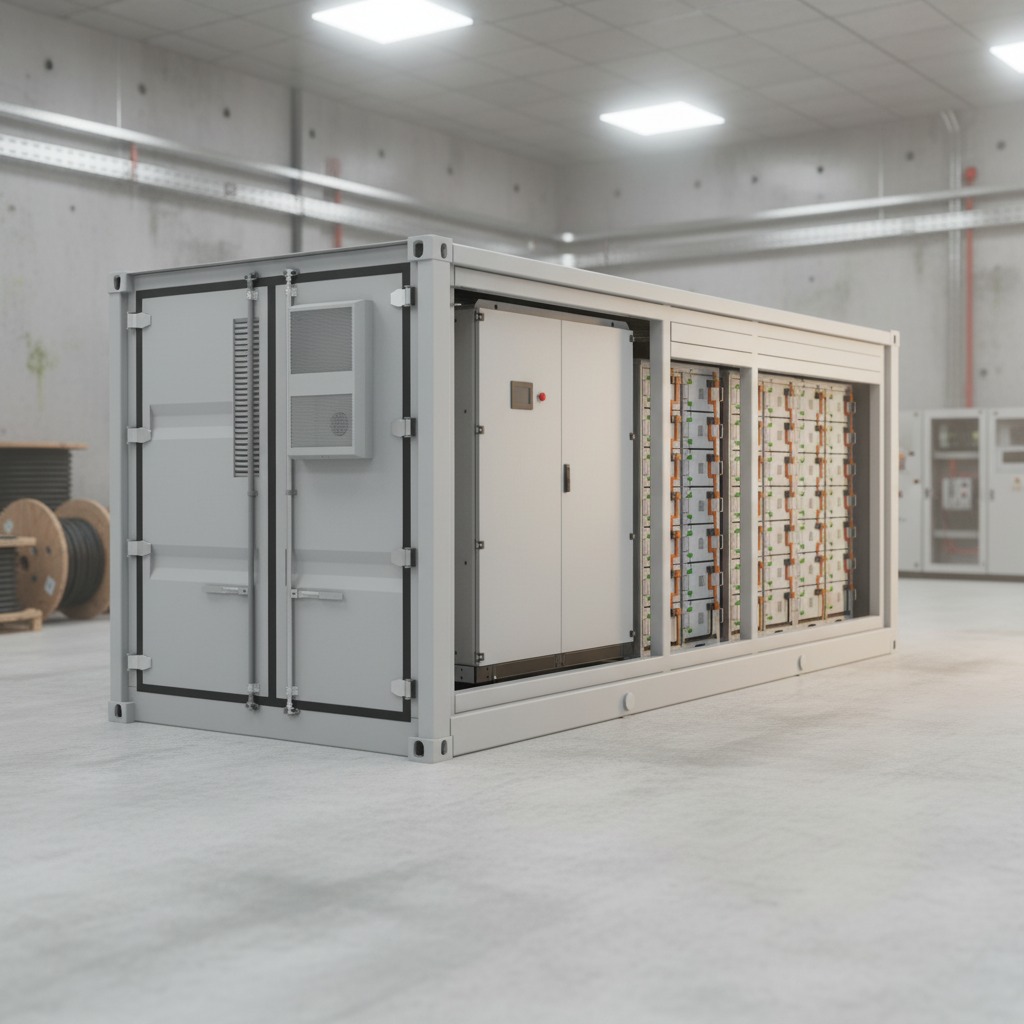
The visible product category here is a containerized electrical equipment enclosure, likely housing battery racks and a control cabinet. That format has become popular for a simple reason: manufacturers can preassemble and test a large part of the system in the factory before it ever reaches the site. For buyers, that can mean fewer trades on the ground, less field wiring, and a cleaner path from delivery to commissioning.
A containerized BESS solution also fits the reality of modern projects. Sites are often constrained on space, timelines are tighter than they used to be, and many owners want a storage asset that can be installed with minimal interruption to existing operations. A modular enclosure with double doors, service access, and internal equipment racks is easier to handle than a fully custom-built room in many cases. Not every project wants a container, of course. Some sites still prefer purpose-built buildings or indoor electrical rooms. But for utility-scale or commercial deployments, the container approach has obvious logistical advantages.
What the product layout tells a buyer
The enclosure described here shows several practical features that matter in the field. The white or light-gray painted metal body suggests a prefabricated industrial enclosure rather than a one-off fabrication. Reinforced corner castings point to transportability. Front double doors and a side access opening indicate that maintenance teams are expected to reach the equipment without dismantling the structure. Inside, the visible layout includes a large control cabinet and multiple vertical battery rack modules arranged in rows.
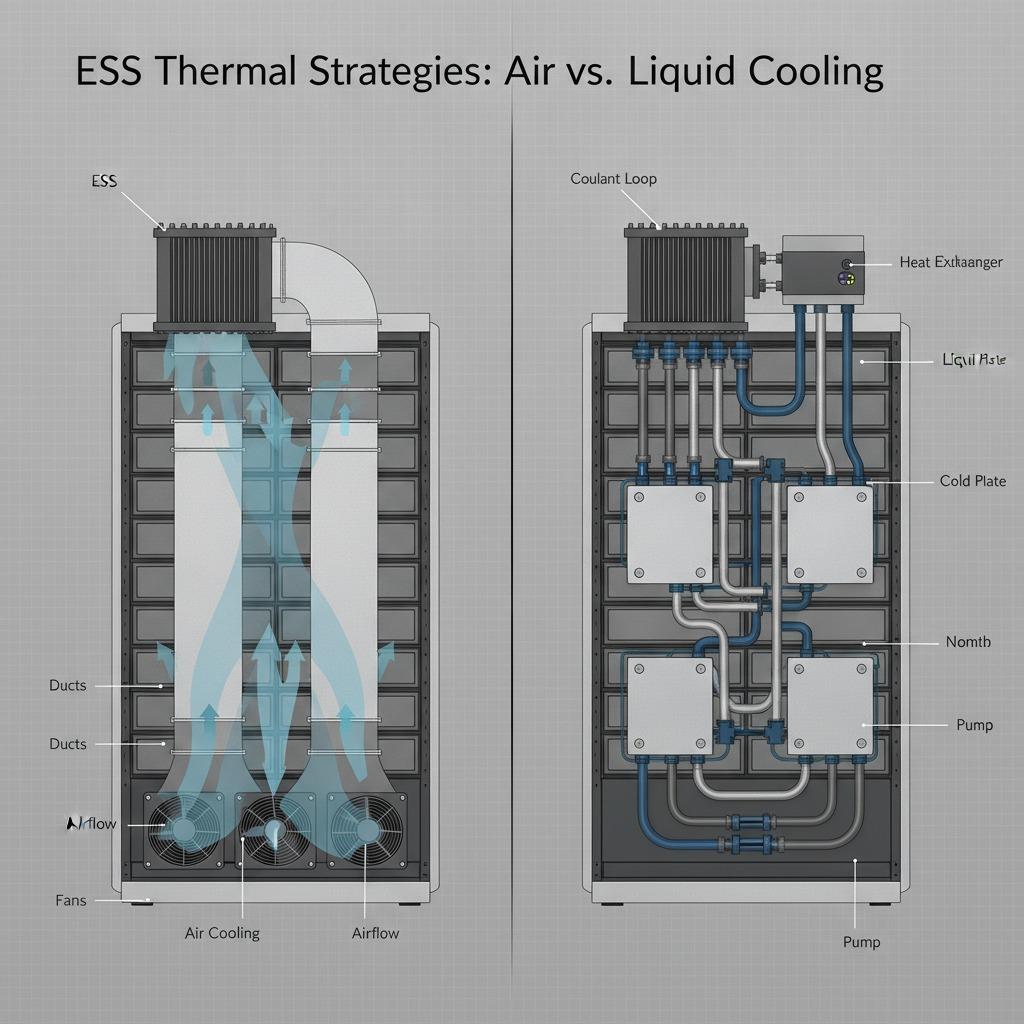
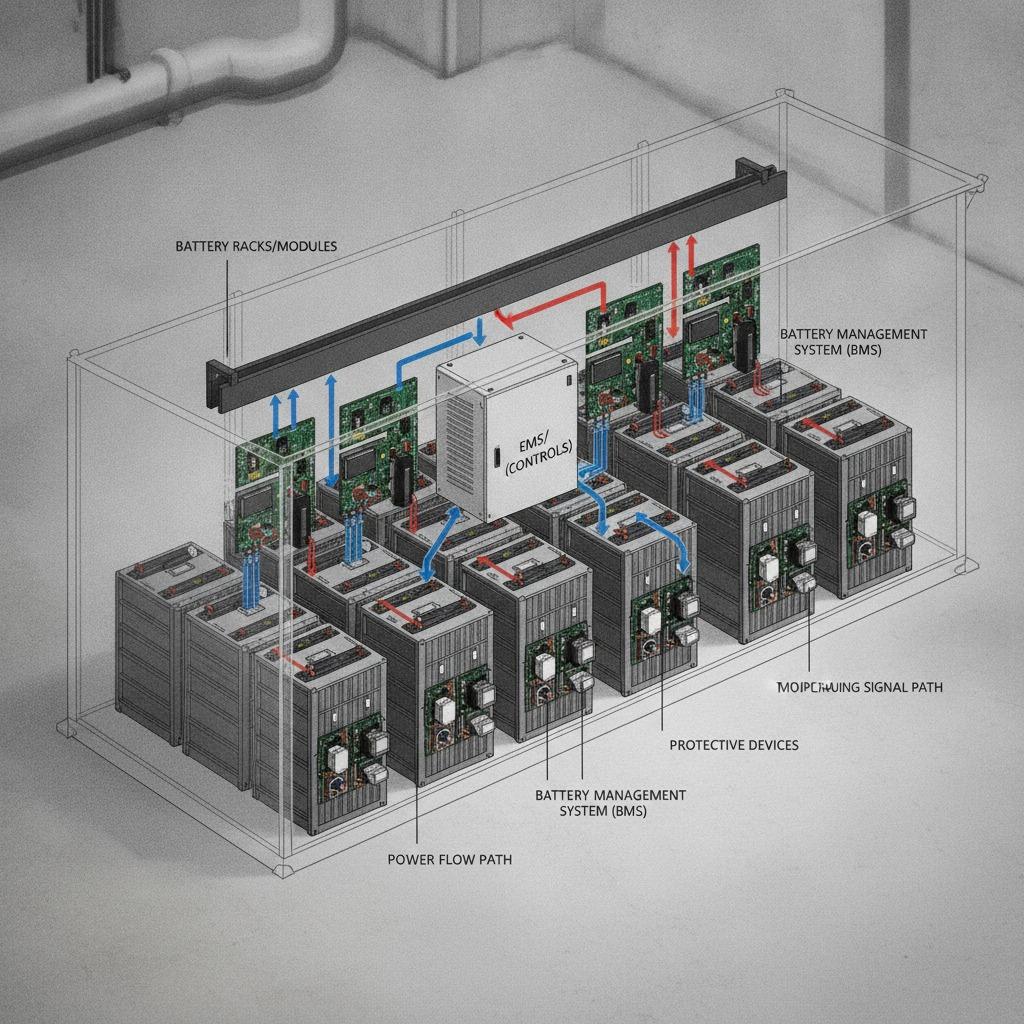
That arrangement is not decorative. It tells you the system is built around organized electrical integration, not just battery storage in the abstract. A control cabinet usually acts as the nervous system of the installation, coordinating monitoring, protection, and communication functions. The battery racks hold the energy capacity itself. Ventilation hardware on the front side panel suggests that thermal management is part of the design, although the exact cooling method is not visible and should never be assumed from a photo alone.
For sourcing teams, these details matter because they help separate a serious factory-built unit from a loosely assembled container with equipment dropped inside. The difference shows up later in alignment, service access, cable routing, and how confidently the system can be deployed at scale.
Key functions a BESS installation may serve
A battery energy storage system is usually selected for one or more of the following jobs:
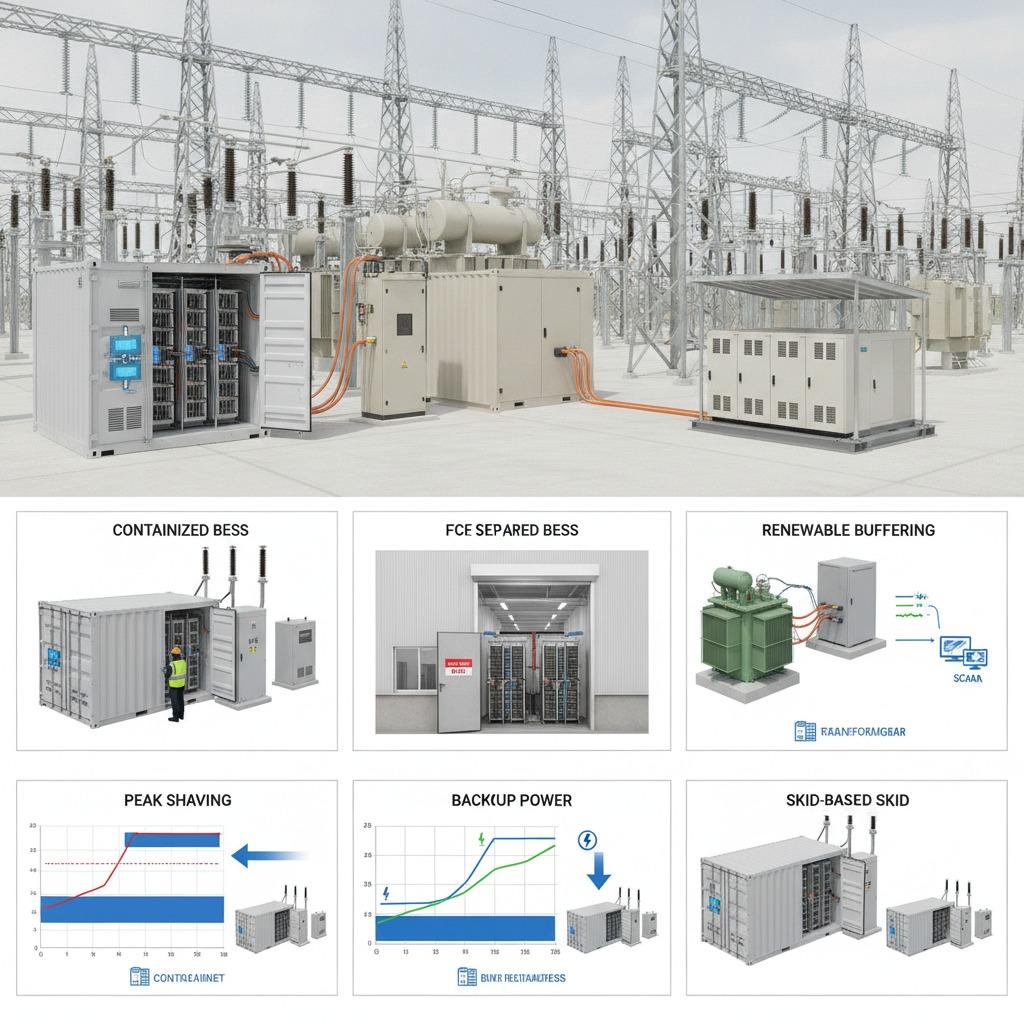
Peak shaving to reduce demand charges during high-load periods
Load shifting to store energy off-peak and use it later
Backup power for critical loads during outages or voltage disturbances
Renewable energy buffering, especially where solar or wind output fluctuates
Grid energy storage support for frequency response, smoothing, or broader system balancing
Microgrid support where local generation and storage need to operate together
The same containerized platform can support different operating strategies, but the economics and control logic change a lot from one use case to another. A project intended for short-duration peak shaving is not automatically a good fit for long-duration backup service. That sounds obvious, yet it is one of the most common planning mistakes in practice.
Selection criteria that deserve attention early
Buyers often start with nameplate capacity, but the real shortlist usually comes from operational questions. How much energy do we need to shift? How often will the system cycle? What environmental conditions will the enclosure face? How much maintenance access is required? Is the project tied to a grid interconnection study, or is it mainly an internal plant asset?
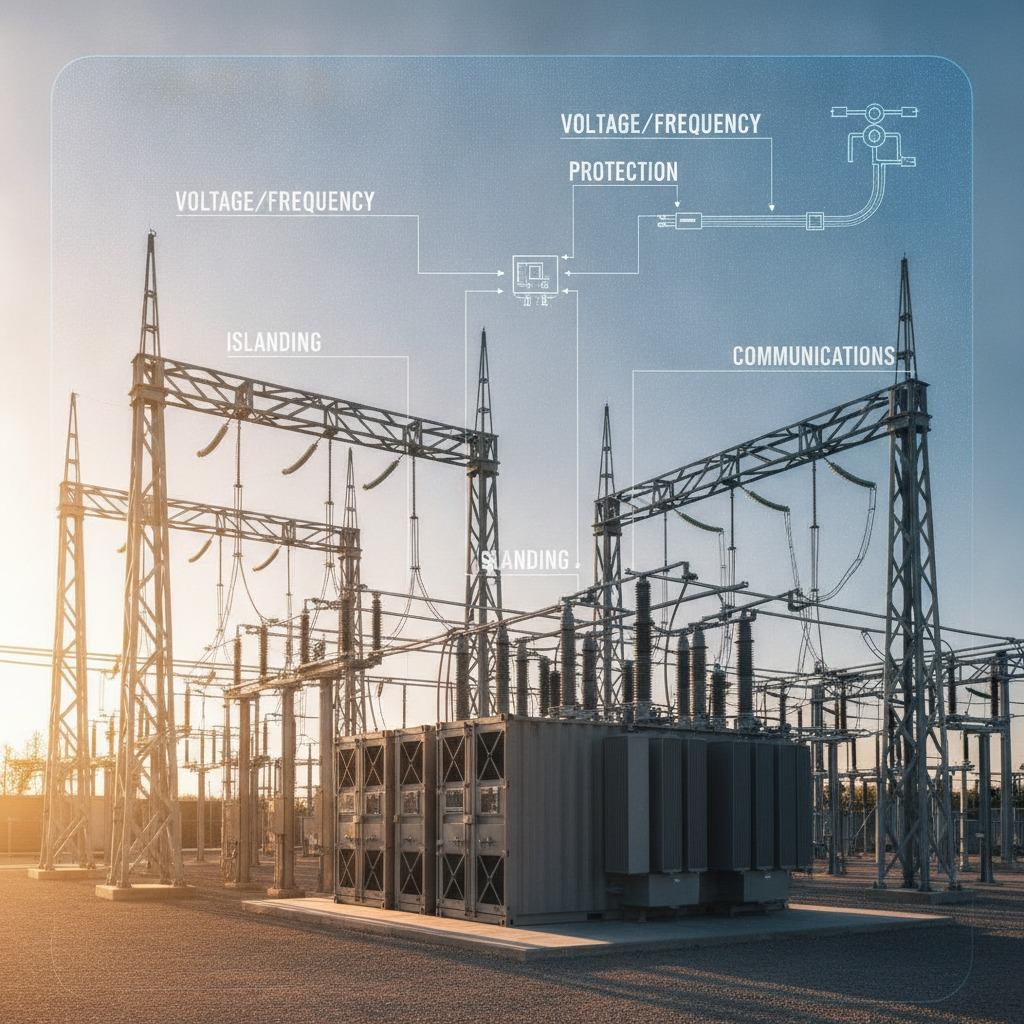
The visible container format suggests a modular, transportable product, which is attractive for staged deployment. Still, a serious review should include electrical interface requirements, protection architecture, cooling strategy, service clearances, and the expected maintenance plan. It is also worth checking how the container integrates with upstream and downstream equipment, such as switchgear, inverters, transformers, and monitoring systems. In the field, integration issues cause more headaches than the battery racks themselves.
A practical buyer should also ask whether the system is intended for indoor-like conditions, outdoor exposure, or a harsher industrial environment. The photo shows a ventilated, enclosed structure, but not the full environmental rating. That is not a small detail. Site conditions can be the difference between a clean installation and a maintenance burden.
Containerized BESS vs. other deployment formats
For teams comparing options, the main trade-off is usually between speed and customization.
A containerized battery energy storage system is typically faster to deploy and easier to ship. It suits projects that need repeatability, scalable rollout, or a compact site footprint.
A building-based installation can offer more flexibility for layout, fire separation, and larger service rooms, but it generally takes longer to design and construct.
A skid-based or open-frame system may be appropriate for some industrial settings, yet it often requires more site-level work and may need additional protection from weather and access risks.
None of these is automatically better. The right choice depends on site constraints, local code requirements, and the owner’s appetite for long-term maintenance complexity.
Common mistakes teams make when buying grid energy storage
The most expensive mistake is assuming the storage system is just a battery purchase. It is not. It is an integrated electrical asset. That means the mechanical enclosure, ventilation, control cabinet, cable routing, safety approach, and serviceability all influence operating performance.
Another common error is underestimating the need for access. If the system has full-size doors and internal rack rows, that is a clue that routine inspections and component replacement were considered during design. Buyers should still verify that maintenance tasks can be performed without awkward disassembly or unsafe clearances.
A third mistake is treating all use cases as interchangeable. A BESS solution for backup power may require different controls and operational priorities than one used for load shifting or renewable smoothing. The hardware may look similar from the outside, but the system behavior can be very different.
What the manufacturing approach suggests
From a manufacturing standpoint, this kind of enclosure points to sheet-metal fabrication plus electrical integration and assembly. That matters because the value is not only in making a box; it is in building a stable platform that supports heavy electrical equipment, allows safe access, and can survive transport.
The reinforced corners, framed door openings, and integrated ventilation hardware all suggest a modular industrial design. In a good factory-built system, the enclosure, internal mounting structure, and electrical components are not treated as separate afterthoughts. They are coordinated as a single product. Buyers should look for that kind of discipline even if the exact battery chemistry, capacity, or control architecture is not disclosed in an image or short listing.
Practical buyer questions to ask before RFQ or spec finalization
Before you send a request for quotation, it helps to pin down a few points:
What exact operating duty will the system support: backup, peak shaving, load shifting, or grid support?
What are the site constraints for footprint, access, and delivery?
How will the system connect to the rest of the electrical infrastructure?
What maintenance activities must be performed from the front, side, or rear?
What cooling and ventilation approach is used, and how is it maintained?
What monitoring and control functions are included in the cabinet?
These questions are basic, but they prevent a lot of wasted time later. A supplier can only quote accurately when the operating picture is clear.
FAQ: quick answers for sourcing and engineering teams
Is a containerized BESS always the best choice?
No. It is often a strong choice for transportable, standardized, or space-conscious projects, but building-based systems can be better for some sites.
Can you tell battery chemistry from the enclosure photo?
No. Not reliably. The image shows a modular containerized system with racks and a control cabinet, but battery chemistry is not visible and should not be guessed.
Is ventilation the same as full thermal management?
Not necessarily. A visible grille or fan unit suggests airflow management, but the actual cooling design may be more complex. Buyers should confirm the full approach in the technical documents.
What should I prioritize first?
Start with use case, site constraints, and electrical integration. Then review enclosure design, service access, and maintenance planning.
A sensible next step
If your team is comparing a bess energy storage system for a utility, commercial facility, or microgrid project, begin by matching the deployment format to the operating duty. A containerized design like the one described here is attractive because it packages batteries, controls, and ventilation into a transportable enclosure. That can save time and simplify installation, but only if the electrical and environmental details line up with the site.
The best purchase decision is usually not the one with the longest feature list. It is the one that fits the load profile, the installation constraints, and the maintenance plan without forcing the project team to improvise later.