

Canadian Solar EP Cube review: what buyers actually need to know before they spec one
The Canadian Solar EP Cube review most engineers and sourcing teams want is not a marketing recap. They want to know whether the EP Cube energy storage system makes practical sense for backup power, load shifting, or renewable buffering, and where the hidden trade-offs sit. That is the right question. In stationary storage, the shiny part is rarely the hard part. Integration, service access, controls, and how the cabinet behaves once it is wired into a real site matter more than brochure language.
Canadian Solar sits in a crowded field where battery storage products often look similar on paper and differ a lot in the field. The name on the front matters less than the engineering behind the enclosure, the controls, and the installation path. If you are comparing options for a facility, telecom room, or small commercial energy project, the useful decision is not “is this product good?” but “is this the right architecture for my load profile, my footprint, and my maintenance model?”
What the cabinet tells you at a glance
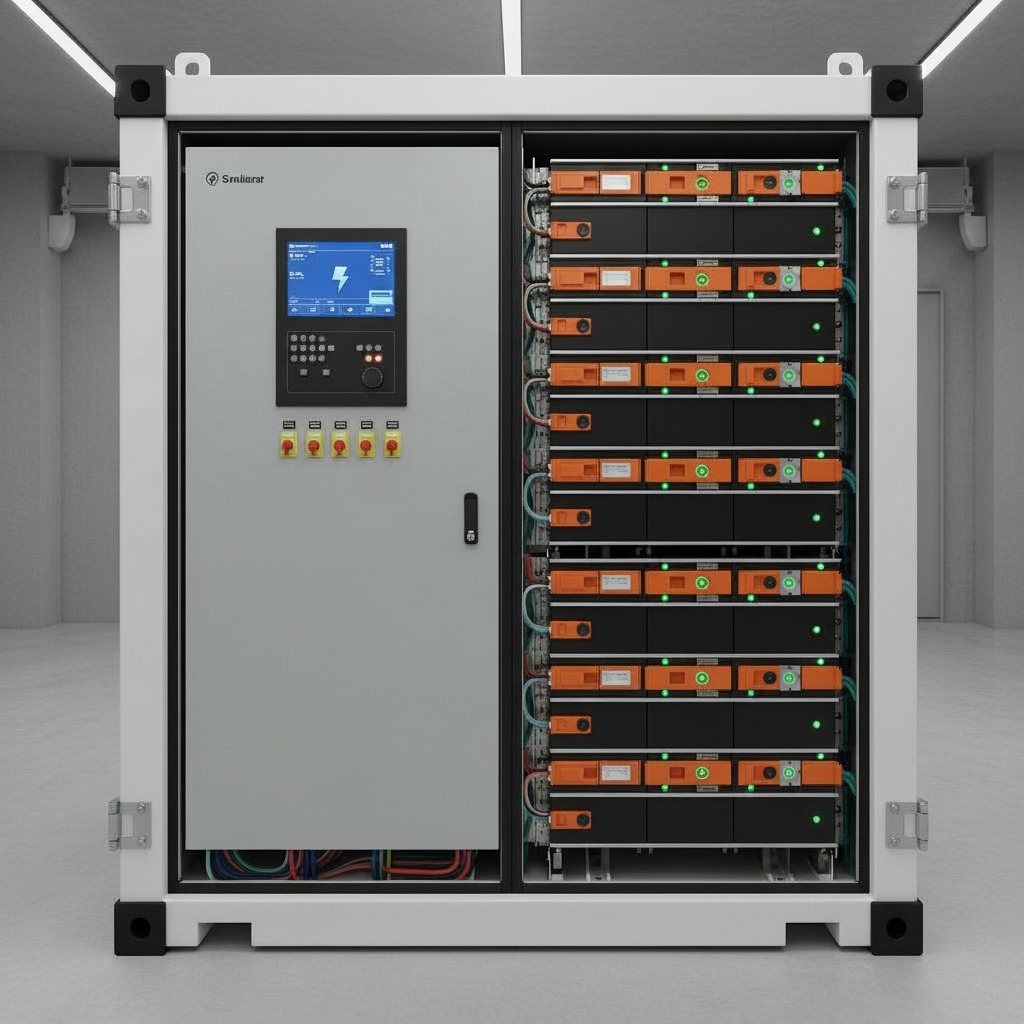
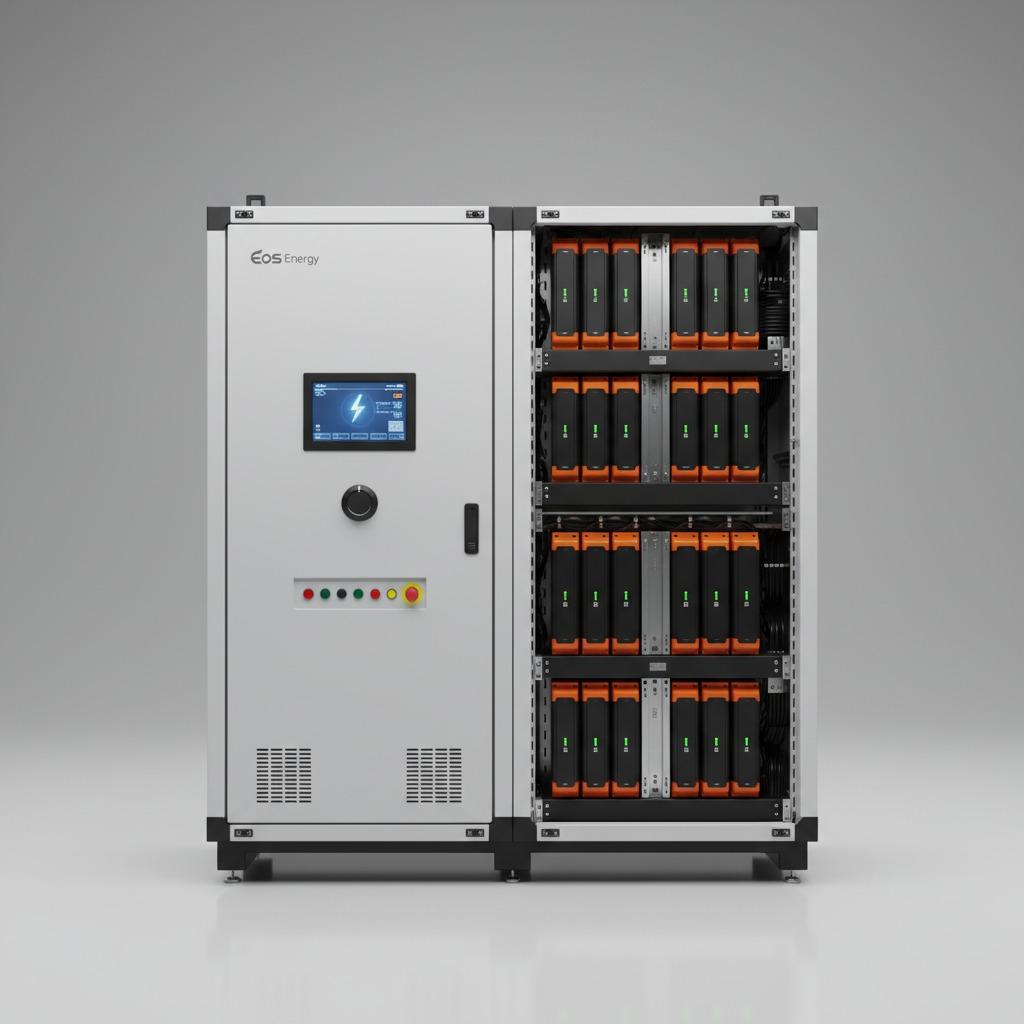
The product image points to an assembled electrical cabinet rather than a loose collection of components. On the left, there is an integrated control section with a touchscreen HMI, keypad or buttons, and several red/yellow push controls that appear to serve as emergency-stop or breaker-style functions. On the right, a stacked battery module rack is visible, with multiple horizontal black modules, orange terminal/end sections, wiring, and small status LEDs. That layout matters because it suggests a serviceable, modular system built around cabinet integration rather than a field-made bundle of parts.
For buyers, this kind of layout usually means easier commissioning and a cleaner maintenance story. It also means you should pay attention to the cabinet’s internal access plan. If a technician has to reach through layered wiring and module rows for routine checks, the system may be fine on day one and annoying in year three. That is a real-world issue, not a theoretical one.
Why this kind of storage system exists
Stationary battery storage solves a few recurring problems. It can provide site backup power when the grid drops, buffer output from solar or other renewables, help with peak shaving, and support critical loads in industrial or facility settings. In some cases, it also helps reduce demand charges or smooth intermittent generation. The exact value depends on the use case, but the basic motivation is consistent: make electrical supply more predictable and more controllable.
A cabinet-style system like the one associated with Canadian Solar battery storage is attractive when space is limited and the buyer wants a packaged system instead of a fully custom build. That convenience has value. The downside is that packaged systems can lock you into a particular service approach, a particular footprint, and sometimes a particular upgrade path. If your project will evolve, that deserves a close look early.
Quick buyer takeaway
If you are evaluating the Canadian Solar EP Cube as a project option, the main question is whether you need a compact, integrated storage cabinet with visible module-level architecture and built-in control hardware. If you do, the concept fits well. If you need deep customization, unusual voltage architecture, or broad third-party integration, you will want to check the system boundaries carefully before going too far.
In plain terms: this looks like the kind of product that may reduce engineering effort at the front end, but buyers still need to verify serviceability, electrical compatibility, and whether the internal architecture aligns with site standards. That is especially true in commercial and industrial installations, where a tidy enclosure is not the same thing as a universally flexible design.
What to evaluate in the EP Cube energy storage system
1. Cabinet architecture
The visible enclosure is a rectangular metal cabinet with painted gray panels, black internal framing, hinged doors, and corner protectors or blocks. That is a fairly practical construction for stationary equipment. The cabinet form helps protect components and gives installers a defined interface for handling and placement. Still, buyers should not assume all cabinet systems are equal. The important issue is how the cabinet is organized internally and whether the layout supports safe service access.
2. Module arrangement
The stacked battery module rack suggests a modular multi-battery layout. That is usually a good sign for maintainability and incremental assembly, though the real value depends on how modules are monitored and isolated. Modular systems can be easier to install and potentially easier to replace, but only if the internal wiring, connectors, and diagnostic logic are built with service in mind.
3. Controls and monitoring
The touchscreen display and local controls are important because they tell you the product is not just passive storage. It has an active control layer, and that layer will shape commissioning, fault handling, and operator visibility. Small green indicator LEDs on the module side suggest status feedback at the rack level. That is helpful during maintenance, but the buyer still needs to ask what alarms are available, how faults are logged, and whether remote monitoring is standard or optional.
4. Integration with the rest of the electrical system
The cabinet appears suited for DC power management, backup support, or renewable energy buffering, but the image does not prove inverter, charger, or protection details. That uncertainty matters. In storage projects, the visible cabinet is only one part of the chain. Engineers still need to confirm system voltage, current limits, protection coordination, communications, and the balance between battery rack, power electronics, and site distribution.
Where this product class fits best
For many buyers, the strongest case for an EP Cube-style product is not the highest possible capacity or the most exotic chemistry. It is the middle ground between a small consumer-style battery and a large, highly customized containerized BESS. A cabinet system can suit facilities that need reliable backup or localized energy shifting without the complexity of a full utility-scale installation.
Typical applications include site backup power, renewable buffering, industrial load leveling, telecom support, and facility power support. Those are broad categories, but they cover a lot of procurement decisions. The common thread is that the load is stationary, the footprint matters, and operations want something serviceable rather than experimental.
Practical selection criteria for sourcing teams
When buyers compare the Canadian Solar EP Cube review against other storage options, they should focus on a few unglamorous but decisive points:
First, confirm the electrical interface. A battery cabinet can look well engineered and still be a poor fit if the system architecture does not match the site’s distribution, protection, or controls philosophy.
Second, ask how maintenance is performed. Can a technician isolate a module or section without opening up the entire system? Are replacement parts accessible? Is the layout service-friendly, or merely compact?
Third, look at monitoring and operator experience. Touchscreen control is useful, but only if alarms, trends, and fault history are clear enough for plant staff to act on them without calling support every time.
Fourth, verify enclosure suitability for the environment. The image shows an enclosed cabinet, but it does not tell you the exact ingress rating, thermal management method, or any site-specific environmental certification. Those details have to be confirmed in the actual product documentation.
Common mistakes buyers make with battery storage cabinets
One of the most common mistakes is buying for capacity alone. A storage system is not just a number on a datasheet. It has to fit physically, install cleanly, and run safely in the conditions on site. Another mistake is treating the cabinet as if it were the entire solution. It is only one piece of a larger electrical and operational system.
A second trap is underestimating service access. Many teams notice that a system is modular and assume that means easy maintenance. Not always. A dense internal layout can still be difficult to work on if cables, bus paths, or control hardware are crowded into the wrong places. In a plant setting, that can become a nuisance fast.
And one more caution: do not assume visible status LEDs and a touchscreen mean comprehensive diagnostics. Some systems provide excellent local visibility but limited exportable data. If your facility wants integration into a broader monitoring platform, verify communications early.
How to compare this against other Canadian Solar battery storage options
If the EP Cube is one option among several, compare it on the basis of system architecture rather than brand reputation alone. Ask whether the cabinet supports the project size, whether it can be maintained by your staff or only by specialist technicians, and whether the control interface aligns with your existing operating procedures. You are not simply buying storage; you are buying an operating model.
In some projects, a straightforward enclosed system is exactly right. In others, especially where expansion is likely, a different architecture may be easier to live with over time. That is where experienced buyers separate nice-looking product literature from the realities of a maintenance budget.
FAQ
Is the Canadian Solar EP Cube only for residential use?
Not necessarily based on the cabinet style shown. The visible architecture suggests a stationary storage system that could fit backup or facility power applications, but final suitability depends on the specific product configuration and electrical ratings.
Does the image show inverter details?
No. The image shows a cabinet with control hardware and battery modules, but it does not confirm whether inverter or charger electronics are included.
Can buyers assume the battery chemistry from the image?
No. The battery chemistry is not visible, and it should not be guessed from appearance alone.
What is the most useful first step before specifying this product?
Request the full electrical and mechanical documentation, then compare the site’s load profile, footprint, service plan, and control requirements against that documentation.
Next step for engineers and sourcing managers
If you are seriously considering the Canadian Solar EP Cube review as part of a procurement shortlist, start with the system architecture and service questions, not the marketing summary. Make the supplier show you how the cabinet is configured, how alarms are handled, how the modules are accessed, and what assumptions the product makes about installation and monitoring. That will tell you much more than a glossy spec sheet.
For teams comparing energy storage systems, the right move is usually to map the product against your real load, your available space, and your maintenance capability. If those three line up, the EP Cube energy storage system may be worth a deeper technical review. If they do not, it is better to find that out now than after the enclosure is already on site.






