

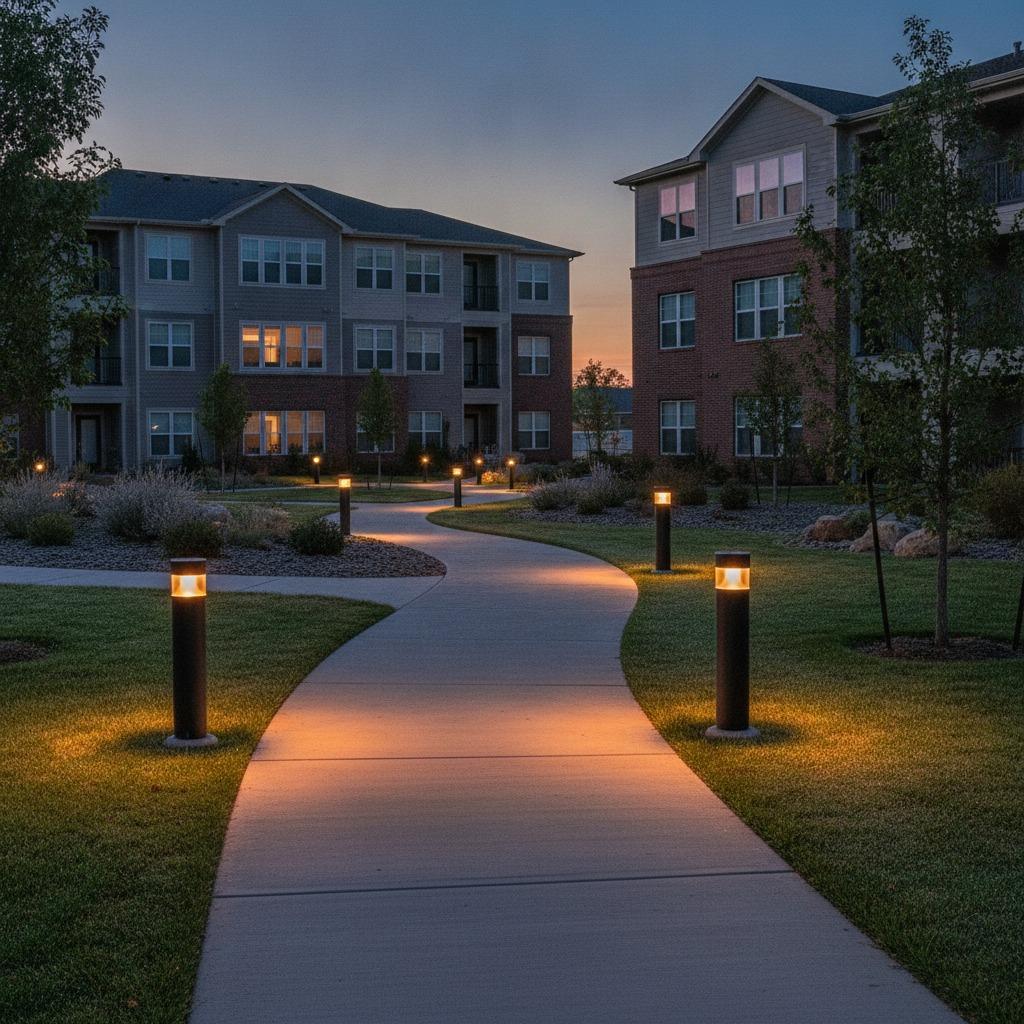
Why community common area solar lights are getting more attention
Community common area solar lights have moved from a niche sustainability upgrade to a practical lighting option for many residential complexes, homeowner associations, campuses, parks, and shared commercial sites. The appeal is straightforward: these fixtures can reduce trenching, simplify installation in remote or hard-to-wire zones, and provide light where running mains power would be expensive or disruptive. For sourcing managers and facility teams, that combination changes the buying decision. You are no longer just picking a lamp. You are deciding how a shared space will be lit, maintained, and paid for over years, not months.
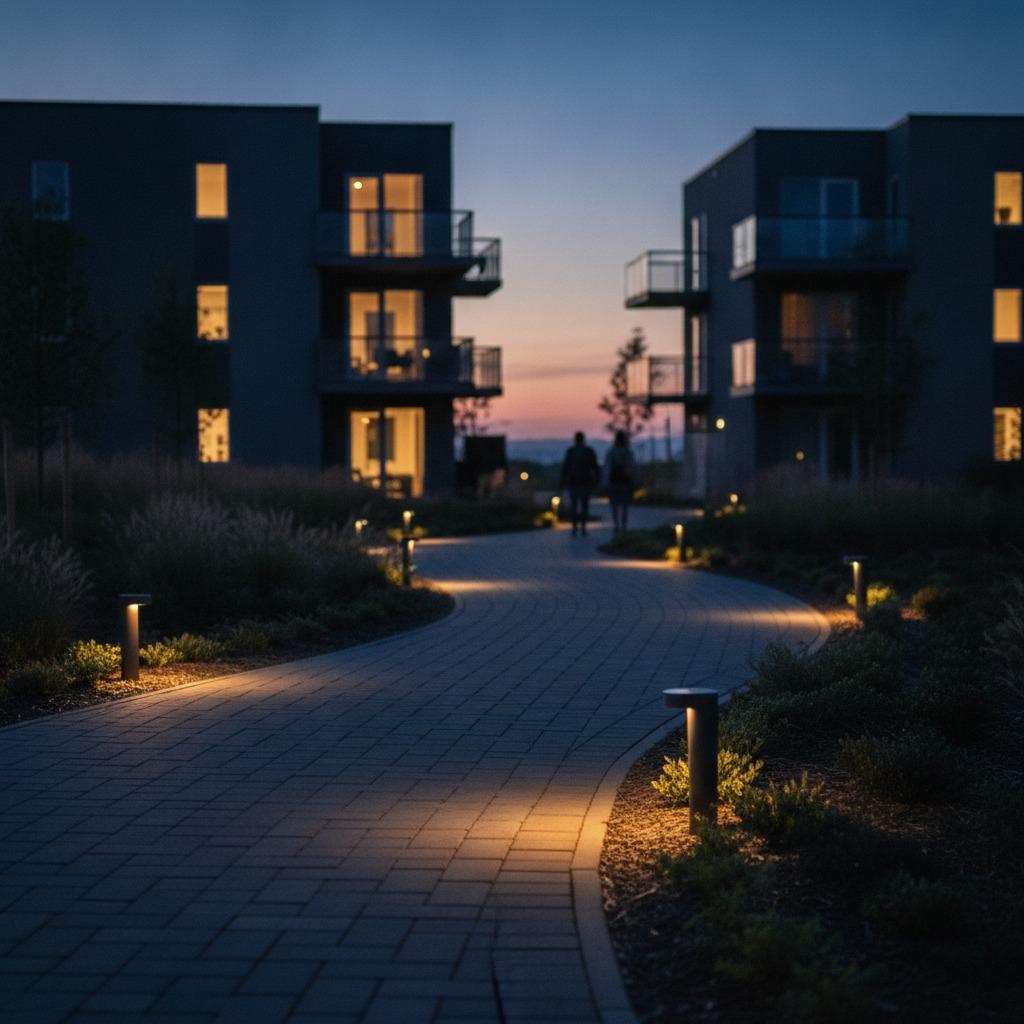
The topic matters because common areas are not decorative. Pathways, parking edges, courtyards, playground approaches, bike racks, and amenity zones all carry safety, liability, and user-experience implications. A dim walkway invites complaints. An overlit space can waste energy and annoy residents. A poorly chosen fixture can look fine in a brochure and then fail in winter, under tree cover, or after the first long stretch of bad weather. That is why the best procurement approach starts with the site, not the catalog.
What buyers are really trying to solve
When teams evaluate community common area solar lights, they are usually working through a few practical constraints at once. Is grid power already available? If so, is it worth trenching and electrical labor for every pole or bollard? If not, can the area still be lit to a usable level without a utility tie-in? How much maintenance will the community accept? And who will own the routine checks when a fixture is partly mechanical, partly electrical, and partly dependent on weather?
Those are the right questions. Solar lighting often makes sense where the site is spread out, where access is difficult, or where the goal is to add light without opening up pavement. But it is not a universal substitute for wired lighting. In heavily shaded locations, in places with long periods of poor sunlight, or where very high output is required all night, expectations need to be adjusted. A careful buyer reads the site conditions before reading the marketing copy.
Quick comparison: where solar lighting tends to fit best
In simple terms, community common area solar lights tend to work best in these situations: pathways that need modest, reliable illumination; landscaped zones where trenching would damage mature plantings; overflow parking or perimeter areas; and communities that want to phase improvements one section at a time. They are also attractive for temporary or expandable layouts, because adding another light does not always mean extending a new circuit.
They tend to be less attractive where the site is deeply shaded, where snow cover or storm debris routinely blocks panels, or where the lighting goal is closer to high-intensity security lighting than general wayfinding. That does not rule solar out entirely, but it does mean the sourcing team should ask harder questions about battery behavior, panel placement, and the expected runtime during low-sun periods.
How the system works, in practical terms
Most community solar lighting systems follow the same basic sequence: a photovoltaic panel charges a battery during daylight, a controller manages the charge/discharge cycle, and the light turns on after dusk based on a sensor or programmed schedule. The quality of the system often depends less on the visible fixture and more on the hidden components. A decent housing can still underperform if the battery is undersized or the controller is too crude for the site conditions.
Panel placement and exposure
Panel orientation matters more than many nontechnical buyers expect. A fixture installed under tree canopies, next to tall walls, or in the shadow of a roof edge may harvest far less energy than the spec sheet assumes. If the community has changing foliage, seasonal shade, or nearby future construction, that should be considered during layout. I have seen more than one well-intentioned installation fail because the sample unit was tested in a sunny open area while the real location was not.
Battery and runtime expectations
The battery is often the quiet deciding factor. Buyers should ask how many nights of operation the system is designed to support under typical conditions, and what happens during stretches of poor weather. Some fixtures will reduce output to stretch runtime; others may shut down earlier than expected. Neither behavior is wrong if it is understood in advance. It becomes a problem only when the community assumes every evening will look like the demo night.
Selection criteria that actually matter
For engineers and product teams, the useful shortlist is not “brightest, cheapest, newest.” It is closer to this: illumination need, mounting height, available sun, run-time target, maintenance access, and the community’s tolerance for occasional performance variation. That last item is important. Solar systems live with the weather. A buyer looking for absolute consistency may still prefer wired lighting in critical locations.
Color temperature also deserves a note. In shared residential areas, overly cool light can feel harsh, especially near seating areas or landscaped courtyards. Warmer light is often easier on the eye, though the right choice depends on local design standards and the surrounding environment. Uniformity matters too. A row of lights that all perform a little differently creates a patchy feel, which residents notice quickly even if they cannot explain why.
Durability and enclosure quality
Common areas take abuse. Weather, sprinklers, cleaning equipment, vibration, and occasional impact all add up. Buyers should look closely at housing design, sealing, mounting hardware, and how easily the fixture can be serviced without disturbing the whole area. If a product is difficult to open, inspect, or replace part by part, maintenance costs usually rise later. This is one of those quiet sourcing lessons that looks minor in the buying stage and becomes very real after the first service call.
Common mistakes communities make
The most common mistake is treating solar lighting as a plug-and-play substitute for grid lighting. It is not. Site conditions drive results. Another mistake is focusing on initial cost alone. A low purchase price can look good until the community discovers it needs more fixtures than expected, more frequent cleaning, or periodic battery replacement sooner than planned.
A second frequent error is mixing performance classes in the same area without a clear plan. For example, putting high-output units in one section and lower-output units in another can create uneven visual coverage, which often leads to complaints about “dark spots” even when the average illumination is acceptable. A more disciplined approach is to define the lighting purpose first and then standardize the fixture type where possible.
Buyer-facing questions to ask before purchase
Before committing to community common area solar lights, ask a few direct questions: How long will the light operate under typical and low-sun conditions? What maintenance is required, and how often? Can the fixture be installed without trenching? How will shade, seasonal weather, and local climate affect output? Is the system designed for wayfinding, ambience, or security support?
It is also worth asking how the supplier handles parts availability. For communal properties, replacement simplicity is not a minor issue. A light that cannot be repaired efficiently may be fine on a remote trail, but it is frustrating in an occupied neighborhood where residents expect quick fixes. The buying team should think in terms of lifecycle, not just delivery.
When solar is the smarter choice, and when it is not
Solar is often the smarter choice when the site is distributed, the wiring path is expensive, or the community wants a phased rollout with minimal civil work. It is also useful where sustainability goals and lower utility dependence are part of the brief. In those settings, solar can solve more than one problem at once.
It is less compelling when the area is heavily shaded, when light quality must remain highly consistent every night, or when the application is critical enough that even short performance dips are unacceptable. In those cases, a hybrid approach or a conventional wired solution may be the more defensible choice. That answer is sometimes less exciting, but it is often the one that ages better.
A practical next step for sourcing and facility teams
If your team is evaluating community common area solar lights, start with a site walk and a simple lighting map. Identify sun exposure, shade patterns, mounting points, and the spots where residents actually need visibility. Then compare fixture options against those real conditions rather than against headline wattage or brochure claims. A short pilot in one or two representative locations can reveal more than a stack of spec sheets.
That approach usually leads to better decisions: fewer surprises, clearer expectations, and a lighting plan that fits the community instead of forcing the community to adapt to the product.






