

Energy storage system enclosures: why the cabinet matters as much as the batteries
An energy storage system is often discussed in terms of batteries, inverters, and controls, but the outdoor enclosure is what keeps the whole arrangement usable in the field. In utility yards, campuses, industrial sites, and telecom compounds, the cabinet is not just a box around sensitive equipment. It is part of the thermal design, the security strategy, the maintenance plan, and—if the site is outdoors—the first line of defense against weather and casual damage.
That matters because buyers tend to focus on electrical performance and then discover, a little late, that the enclosure governs service access, cable routing, ventilation, and how cleanly the system can be installed on a pad. In practice, the cabinet can speed up a project or create recurring headaches. The difference usually comes down to the details: door layout, louver placement, conduit entry, finish quality, and how well the enclosure fits the site’s physical constraints.
What the visible hardware tells you about the application
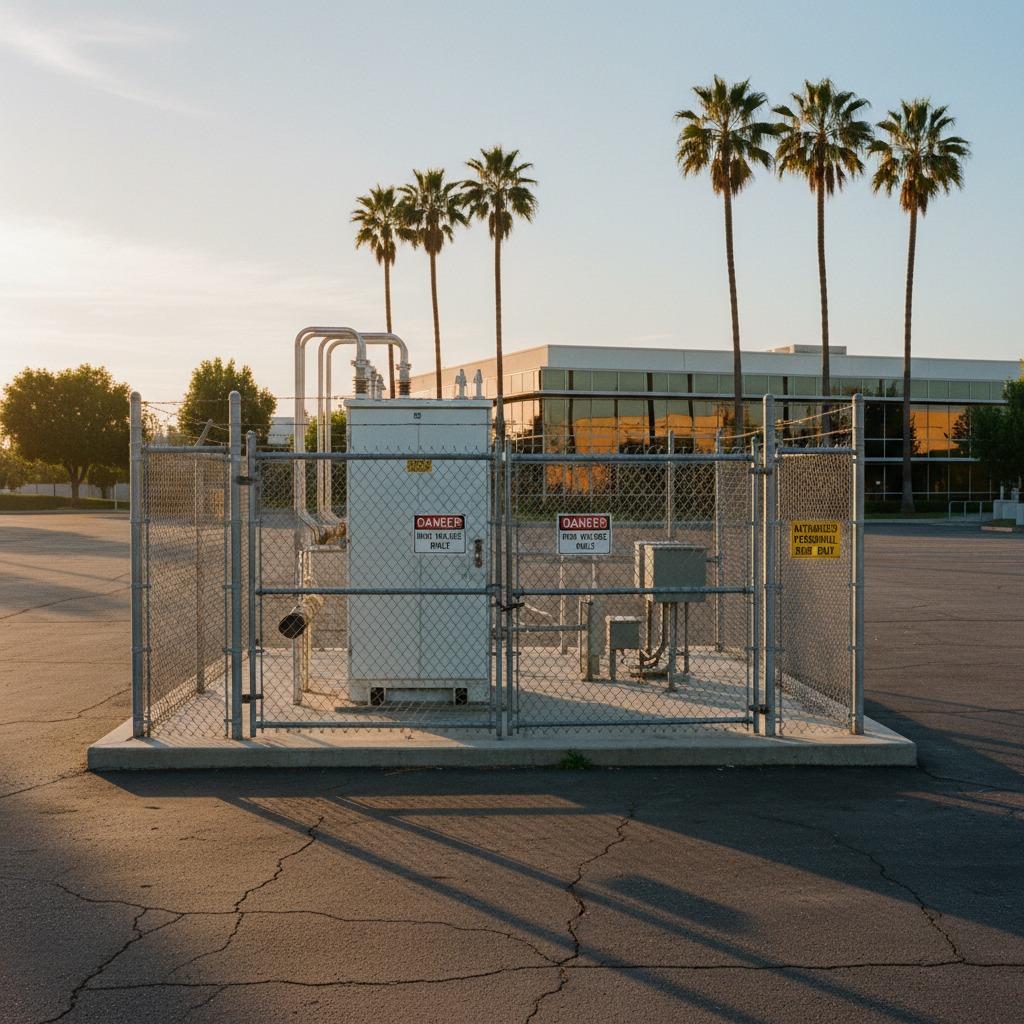
The product image shows a light-gray metal utility cabinet installed in a fenced compound on a concrete pad. It has double front access doors, vertical pull handles, side ventilation louvers, and overhead conduit entry through bent metal piping. That combination points to a fabricated sheet-metal electrical enclosure built for outdoor use, likely for power distribution, control, metering, or switching rather than for general storage.
The exact internal function is not visible, so it would be careless to label it as a battery cabinet or a transformer enclosure without evidence. Still, the physical design is familiar to engineers who work around substations and distributed power assets. A cabinet like this is usually selected when equipment needs weather protection, controlled access, and organized cable management in a confined footprint.
Why the enclosure format matters
Outdoor electrical gear is often judged by what is inside the cabinet, but the cabinet itself is a manufacturing decision with downstream consequences. A vertical rectangular enclosure is compact and simple to place on a pad. Double doors improve access to internal components that may need inspection, termination checks, or periodic replacement. Vent slots can help manage heat, though they also make ingress protection and contamination control more sensitive to design quality. That is where buyers should slow down and ask questions instead of assuming all gray cabinets are alike.
What is energy storage, from a buyer’s point of view
If you are still asking what is energy storage in practical terms, the short version is that it is the capture of electrical energy for later use. For industrial and utility projects, that can mean shifting load, improving backup resilience, smoothing renewable output, or supporting grid services. The core value is flexibility: energy is stored when conditions are favorable and released when the site needs it.
But an energy storage system is rarely a single piece of equipment. It is a packaged arrangement that can include batteries, power conversion equipment, protective devices, monitoring electronics, HVAC or ventilation, and a control interface. The enclosure, therefore, is not a cosmetic outer shell. It is part of the system architecture, and poor enclosure choices can reduce reliability even when the electrical components themselves are well specified.
Key enclosure features buyers should evaluate
When sourcing an outdoor cabinet for energy storage or related utility functions, the first job is not to compare brochure language. It is to decide whether the enclosure suits the operating environment and maintenance model. The following features deserve close attention.
Weather exposure and corrosion resistance
The enclosure in the image appears to have a painted metal finish, likely industrial paint or powder coat, but the exact specification is unknown. That uncertainty is normal from a photo, yet it is also a reminder that finish quality is not decorative. For outdoor projects, coating performance affects service life, especially around coastal air, chemical exposure, or repeated wet-dry cycles. Buyers should ask how the substrate is prepared, what coating system is used, and how field damage will be repaired.
Access and serviceability
Double doors are a practical advantage when internal equipment is dense or when technicians need clear access for cable work. Vertical pull handles suggest frequent opening by trained personnel rather than once-a-year access. If the cabinet will house energized equipment, serviceability becomes a safety issue too. Tight access leads to rushed maintenance, which is never a good trade in electrical infrastructure.
Ventilation and thermal management
Side louvers are visible on the cabinet, which indicates some level of ventilation strategy. That can be useful, but it also raises the usual tradeoff: airflow versus environmental sealing. Energy storage assets generate heat, and utility electronics often dislike stagnant hot air. At the same time, an open vent approach is not the answer everywhere. In dusty or corrosive sites, buyers should confirm how airflow is managed and whether filtration, baffling, or other protective measures are used.
Cable entry and site integration
The overhead conduit entry in the image is a small detail with outsized importance. Top entry can simplify site routing and reduce floor penetrations, especially where the cabinet sits on a concrete pad inside a fenced compound. It also helps keep cable management tidy, which matters for both maintenance and appearance. A poorly planned entry point, by contrast, often becomes the place where water management, bend radius, and installer frustration all collide.
How this type of cabinet fits energy storage projects
In an energy storage system, enclosures may serve as housing for power distribution equipment, control gear, metering, switchgear, or auxiliary electrical hardware. The image does not confirm which of those functions this specific cabinet serves, so the safest reading is that it belongs to the broader utility electrical infrastructure category. That still makes it relevant to energy storage buyers, because many storage projects rely on adjacent electrical cabinets for interconnection and control.
For example, a site may use one enclosure for protective switching and another for control or metering. In telecom and campus power applications, an outdoor utility cabinet can support backup power infrastructure without putting sensitive equipment inside a building. The key buying question is always the same: does the enclosure reduce the complexity of the project, or does it add hidden field work?
Common mistakes when sourcing outdoor electrical cabinets
One common mistake is treating the cabinet as a commodity shell. It is not. Sheet thickness, door stiffness, gasket design, latching hardware, grounding arrangement, and finish quality all influence long-term performance. If the cabinet is part of a critical energy storage or utility system, even small mechanical weaknesses can create service problems later.
Another mistake is over-specifying features that do not match the site. A heavy-duty enclosure with every possible option may look reassuring on paper, but if it complicates installation or maintenance, the buyer pays for that complexity every year. The better approach is to match the cabinet to the actual environment: outdoor exposure, security needs, thermal load, access frequency, and the type of equipment inside.
There is also a habit, especially on fast-moving projects, of assuming that a fenced compound solves all security concerns. The fence helps, of course, and the image shows that kind of controlled installation, but lockable doors, warning signage, and practical access control still matter. An enclosure is not a substitute for site planning.
Selection criteria that help engineers and sourcing teams compare options
If you are evaluating outdoor cabinets for an energy storage system or a related utility application, start with the installed environment and work backward. Ask whether the enclosure will sit in a dusty industrial yard, a coastal utility compound, a campus substation, or a telecom facility. That answer influences nearly every design choice.
Then review the enclosure in this order:
First, structural strength and stability on the concrete base. Second, access logic: one door, two doors, internal partitioning, removable panels, or service clearances. Third, cable entry and how the conduit ties into the top or bottom of the cabinet. Fourth, ventilation strategy and how it aligns with the internal heat load. Fifth, finish and corrosion resistance. Last, look at the practicalities: lockability, labeling, and whether the cabinet can be maintained without a forklift of special tools.
This sequence sounds mundane, but it prevents a familiar mistake: buying to a drawing instead of buying to a site.
Practical buyer advice before you issue an RFQ
When preparing an RFQ, resist the urge to describe only the electrical system. Include enclosure requirements in plain language. State whether the cabinet is for outdoor use, whether it will be mounted on a pad, whether top-entry conduits are preferred, and whether the site has special exposure conditions. If the internal function is sensitive, say so, but do not force the supplier to guess what you forgot to specify.
Also ask for details on panel fabrication and finish process, even if the final answer is only approximate until the design is fixed. That is more useful than an optimistic promise. And if the application is energy storage, make sure thermal management is discussed early. A cabinet that looks clean in a rendering can behave very differently once real heat loads are involved.
FAQ
Is every outdoor electrical cabinet an energy storage system enclosure?
No. Many cabinets in utility compounds house switchgear, metering, control systems, or distribution equipment. The visible enclosure in the image could serve several functions, so it should be described carefully rather than assumed to be battery-related.
What makes a cabinet suitable for outdoor electrical use?
In general, buyers look for a weather-resistant construction, secure door hardware, appropriate ventilation, controlled cable entry, and a finish that can handle the site environment. The exact requirements vary by project.
Why are double doors useful?
They usually make maintenance easier by giving technicians wider access to internal equipment and cable terminations. That is especially helpful in dense utility enclosures.
A sensible next step for project teams
If you are working on an energy storage system or adjacent utility electrical project, treat the enclosure as a specification item, not a generic housing. Review the site conditions, define access and cooling needs, and confirm how the cabinet will be fabricated, coated, sealed, and mounted. A clean, well-integrated enclosure may not be the most glamorous part of the project, but it is often the part that determines whether the installation behaves well after commissioning.
For sourcing teams, the next move is to align engineering, operations, and installation requirements before supplier comparison starts. That single step cuts down on field improvisation later, and in this segment of the industry, fewer surprises is usually the best outcome.






