
Why ESS core safety design is now a first-order engineering issue
ESS core safety design is no longer a niche topic reserved for battery specialists. As stationary energy storage systems move into factories, warehouses, substations, microgrids, and commercial buildings, the question has shifted from “Can we store the energy?” to “Can we do it safely, repeatedly, and in a way that facility teams can live with?” That is a different standard entirely.
For engineers and sourcing managers, the stakes are practical. A battery container that looks fine on paper can still become difficult to cool, difficult to isolate, or difficult to inspect once it is installed. Safety is not one feature sitting at the end of the BOM. It is a design approach that cuts across chemistry selection, enclosure layout, thermal management ESS planning, controls, venting, detection, wiring protection, and the way the system behaves under fault conditions.
This article focuses on the decision buyers actually need to make: what “good” safety design looks like in an ESS, where weak points usually appear, and how to review a supplier’s claims without getting lost in brochure language.
What core safety design really covers
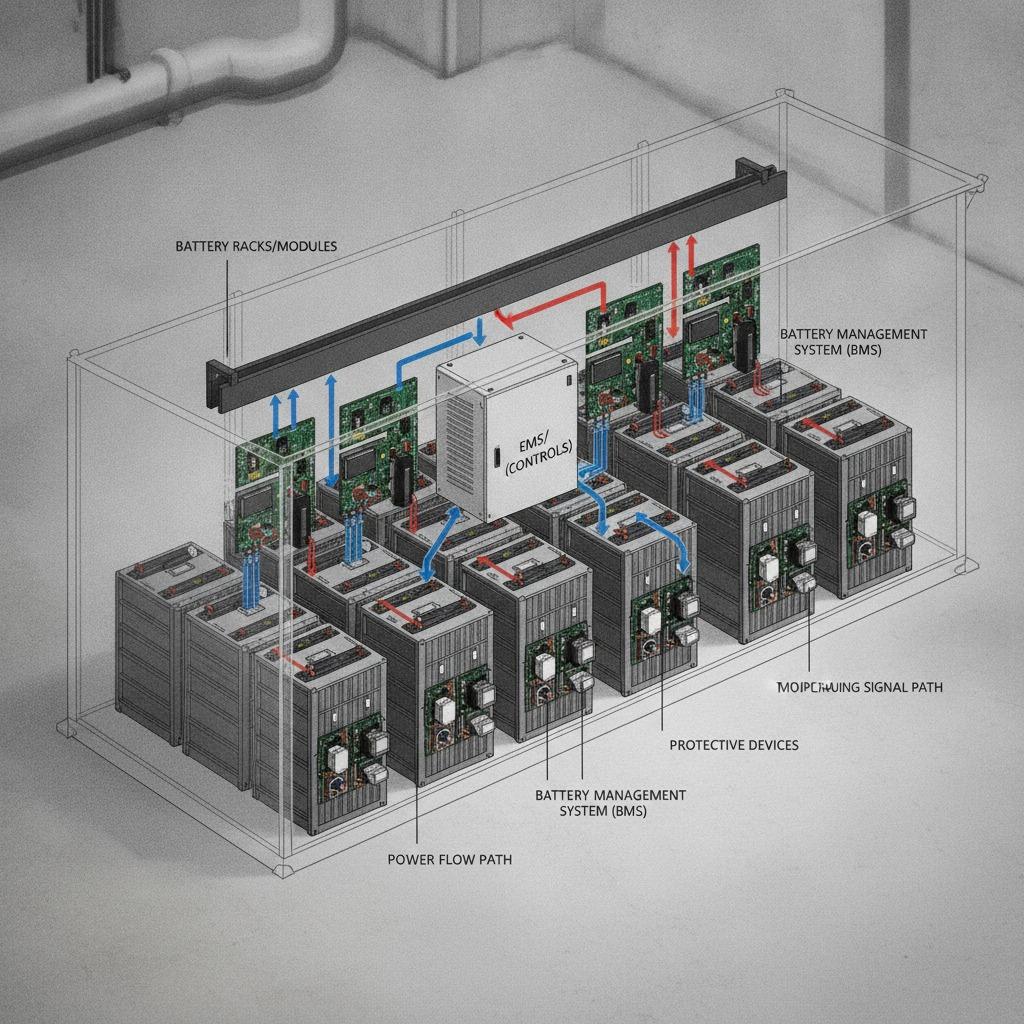
At a practical level, ESS core safety design is the combination of features that prevent a normal operating issue from becoming a fire, electrical incident, or prolonged outage. In storage systems, the risks do not come from one source alone. Heat, cell imbalance, overcurrent, insulation failure, poor airflow, mechanical damage, and software faults can all interact. That is why safety design has to be layered.
A solid system typically addresses four questions: how heat is controlled, how faults are detected, how a problem is isolated, and how the system behaves if isolation fails. Those questions sound obvious, but they are where many projects become expensive later.
A quick-reference view of the main safety layers
When evaluating systems, it helps to think in layers rather than checkboxes.
1. Cell and module level protection
At the lowest level, the system should monitor voltage, current, and temperature closely enough to catch abnormal drift before it escalates. Cell balancing matters here because uneven cells age unevenly, and that unevenness can create local hot spots or nuisance trips. None of this is glamorous, but it is the foundation.
2. Pack and rack isolation
Faults should be contained at the smallest practical level. If one rack behaves badly, the entire installation should not have to shut down unless the fault demands it. Effective isolation devices, contactors, fusing, and control logic help limit the spread of an event.
3. Thermal control
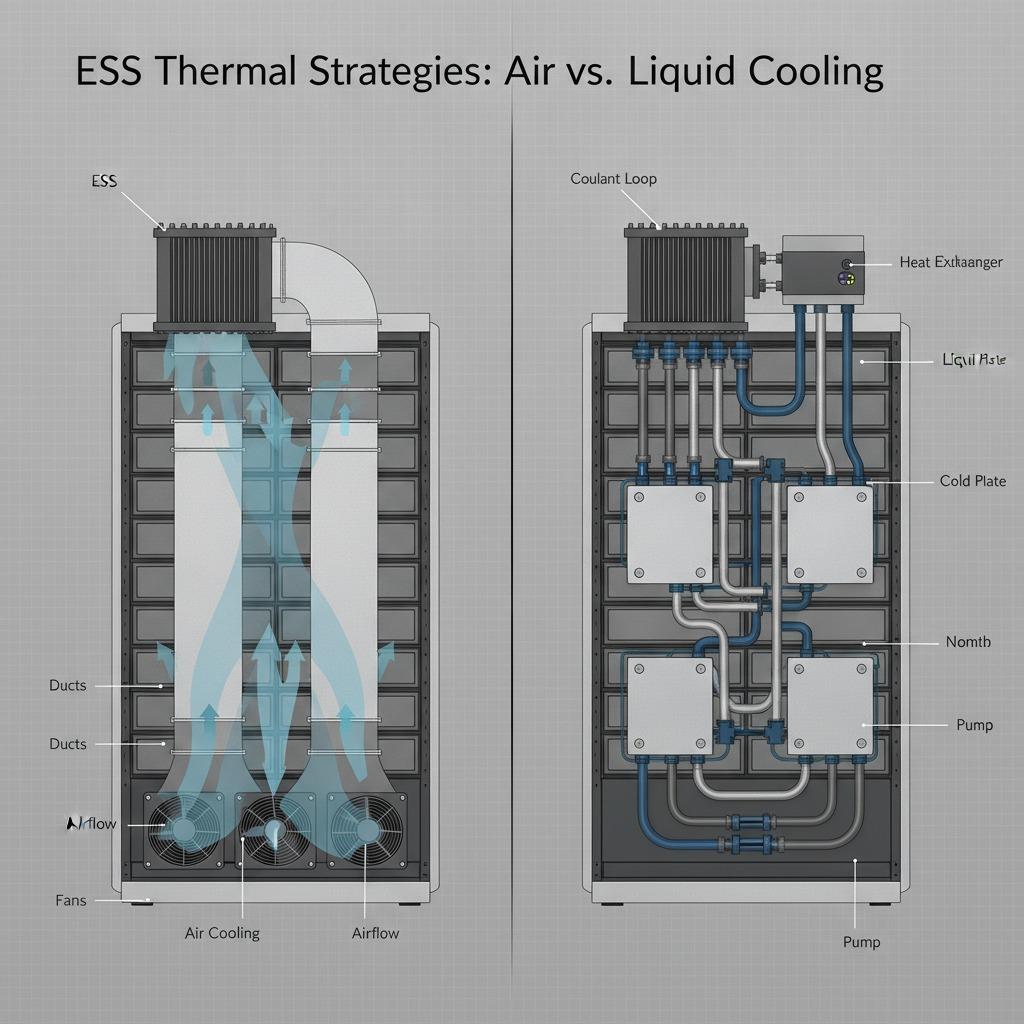
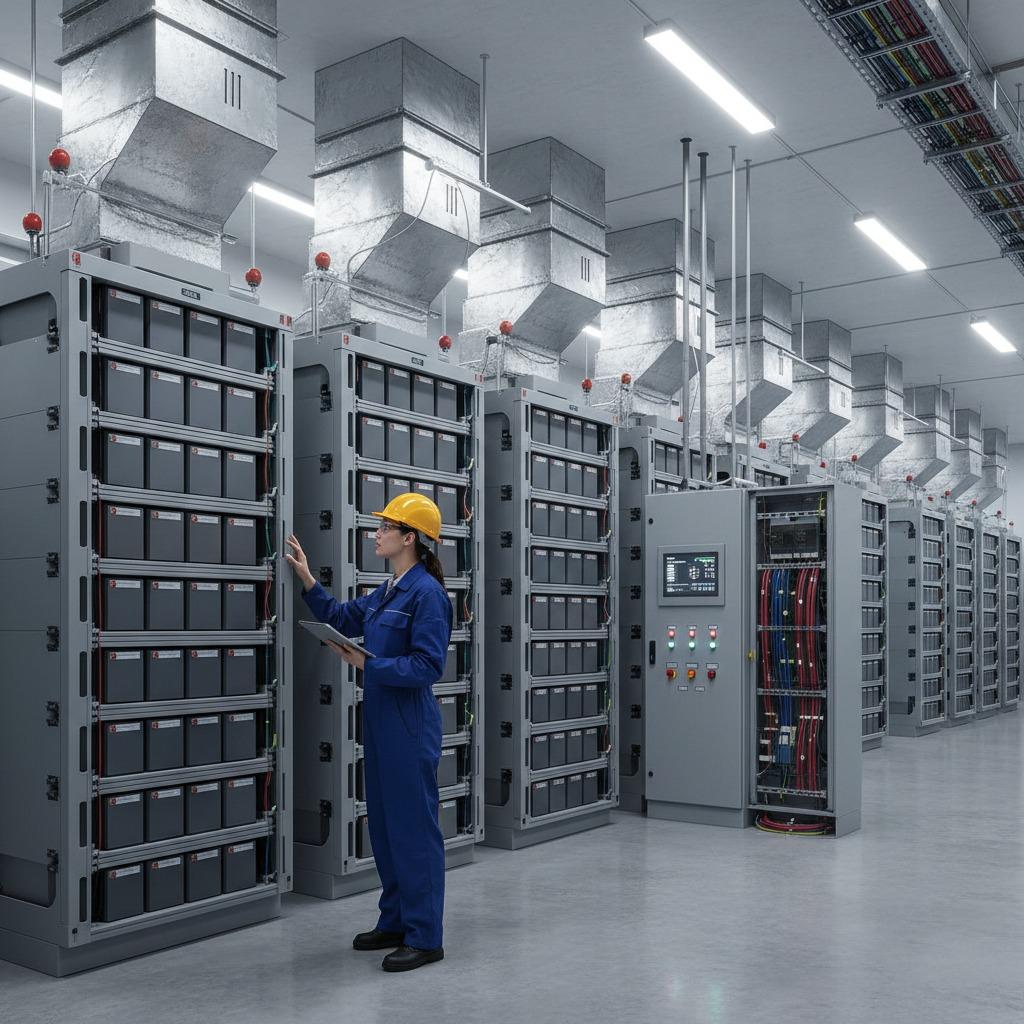
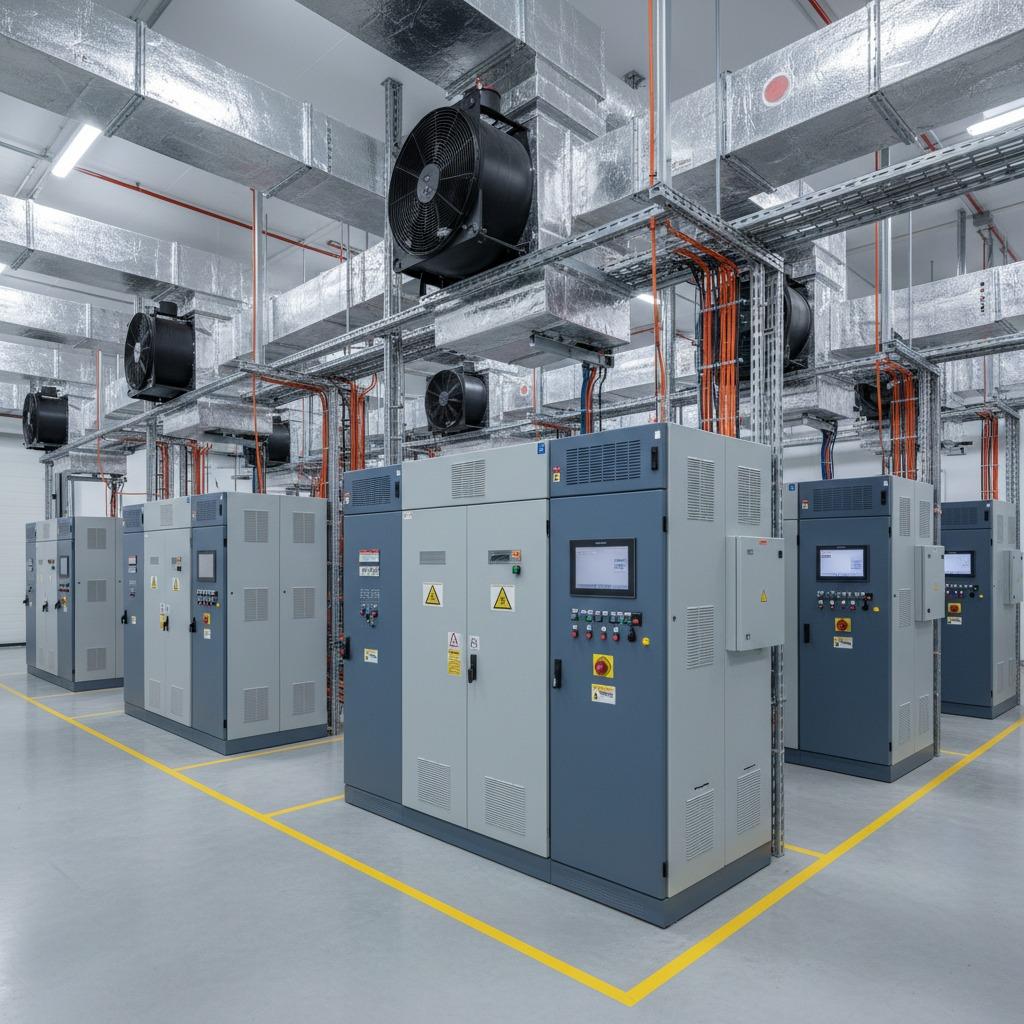
Thermal management ESS strategies are often the difference between a stable operating profile and a system that slowly cooks itself in a hot enclosure or under a heavy duty cycle. Cooling can be air-based, liquid-based, or a hybrid approach depending on the chemistry, power density, ambient conditions, and enclosure design. The right answer is not universal. What matters is whether the design keeps cell temperatures within a narrow, predictable band under real site conditions.
4. Fire and gas response
Detection and mitigation are not the same thing. Detection tells you that a problem has started; mitigation tries to keep it from spreading. Good designs integrate smoke, heat, or off-gas monitoring with alarms, shutdown logic, and, where appropriate, suppression or venting strategies. Buyers should be careful here: a long list of detectors does not automatically mean the overall design is better.
Where ESS safety failures usually start
The uncomfortable truth is that many storage incidents are not caused by one dramatic mistake. They begin with small design compromises that accumulate. A cramped enclosure makes airflow uneven. A control cabinet sits too close to a heat source. Cable routing creates a pinch point. Sensors are placed where they are easy to install rather than where they are most representative. Each issue alone may seem minor. Together, they erode margin.
Another recurring problem is treating safety as a lab condition instead of a site condition. Systems are often tested at ideal ambient temperatures, with clean airflow and predictable loading. Real sites are less polite. Summer heat, dust, maintenance gaps, and changing load profiles matter. A dependable ESS core safety design should be built for that reality, not just for commissioning day.
Thermal management is not just a cooling choice
Because thermal issues sit at the center of most ESS risk discussions, thermal management ESS deserves a closer look. People often think of it as a sizing exercise: add more fans, add more liquid flow, or increase the cabinet volume. In practice, thermal design is a balance among heat generation, heat removal, monitoring density, and failure behavior.
For high power-density systems, the challenge is not only removing heat during normal operation. It is also about handling uneven loading, environmental heat waves, blocked vents, degraded fans, or partial cooling failures without letting one weak area dominate the whole rack. If the system’s thermal margin disappears too quickly, the system may spend too much time throttling or tripping, which reduces availability and can create maintenance headaches.
Buyers should ask suppliers how thermal gradients are managed across the enclosure. A design that keeps average temperature acceptable but allows local hotspots may still age cells unevenly. That is a slow problem, not a dramatic one, which is why it gets missed.
Selection criteria that matter to engineers and procurement teams
When reviewing ESS options, the safest approach is to ask how the design behaves under stress, not just what components are included.
Operating envelope
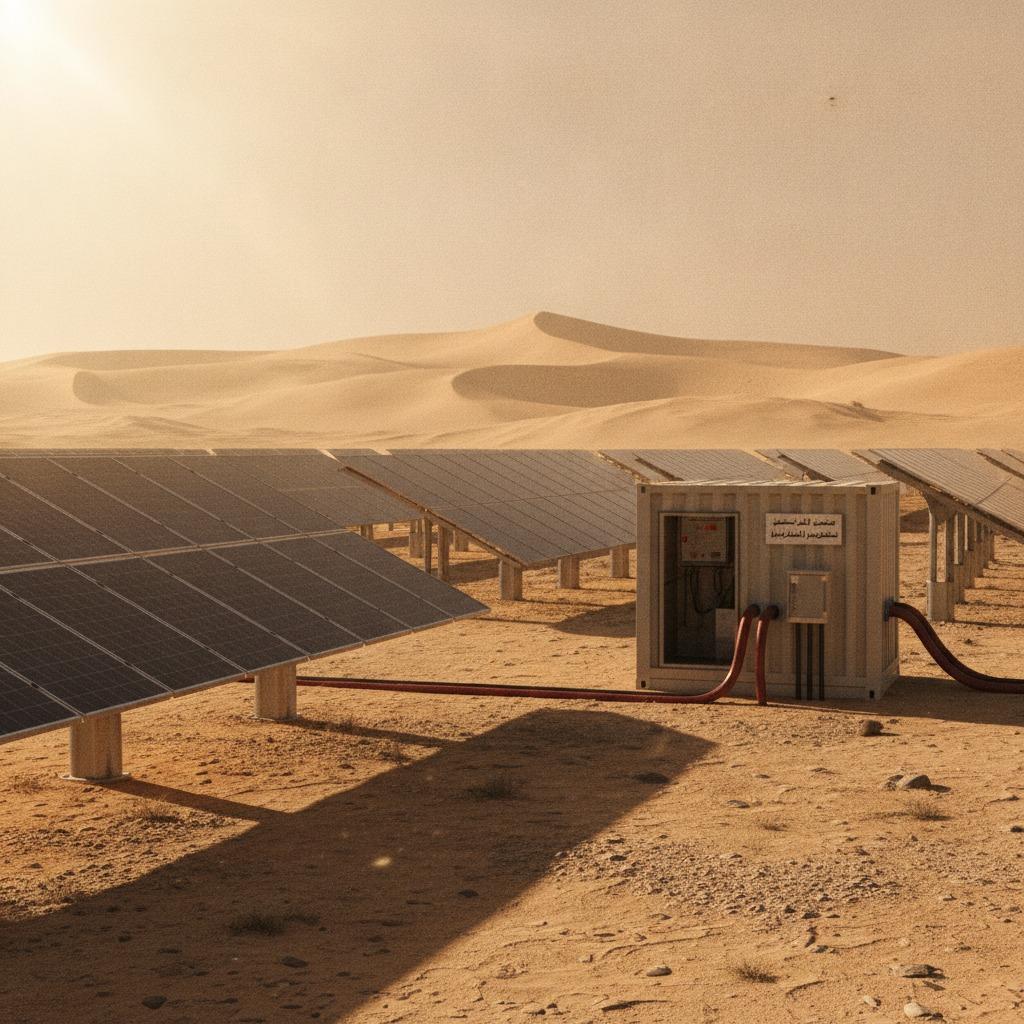
Check the intended ambient temperature range, humidity assumptions, and altitude if relevant. A system that performs well in one climate may need different thermal or enclosure choices elsewhere. This is especially important for outdoor installations and containerized systems.
Fault containment philosophy
Ask what happens when a single cell, module, rack, or cabinet develops an abnormal condition. Does the system isolate locally? Does it alert operators early enough? Does it shut down in stages? A clear containment philosophy often says more about engineering maturity than a long feature list.
Maintainability
Safety design should not make routine maintenance impossible. If filters, sensors, fans, or inspection points are difficult to reach, they are less likely to be checked on schedule. That creates a quiet maintenance gap, which is one of the most common sources of field trouble.
Controls and visibility
Operators need meaningful alarms, not noise. A good monitoring system prioritizes actionable signals, trends, and fault histories. If every event becomes a critical alarm, the site team may start treating alarms as background chatter, which is exactly what no one wants.
Common buyer mistakes
One frequent mistake is assuming that a more complex system is automatically safer. Complexity can help if it is carefully integrated, but it can also create more failure points and more software dependence. Simpler architectures are often easier to maintain, provided they still meet the site’s performance needs.
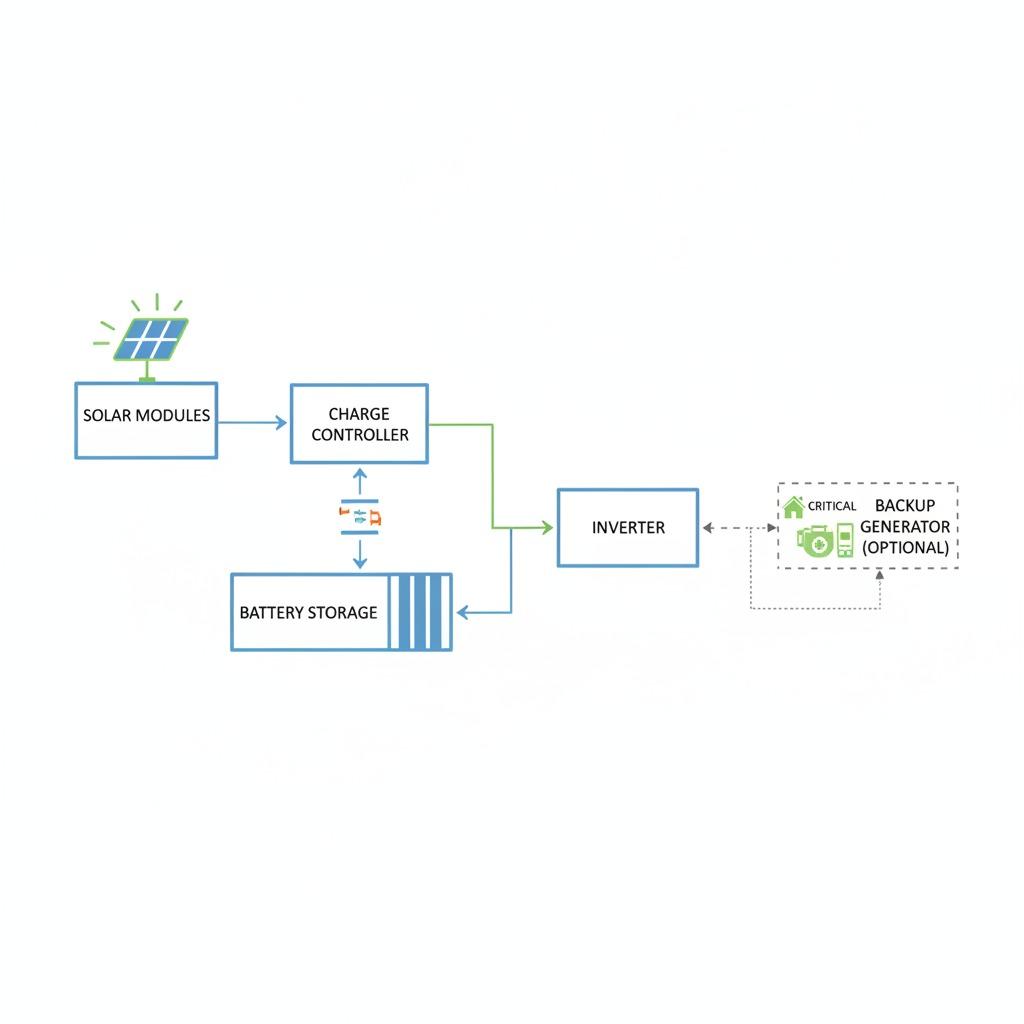
Another mistake is focusing on the enclosure and ignoring interfaces. Many ESS issues occur where subsystems meet: battery to power conversion, enclosure to HVAC, rack to busbar, controller to site management. Interfaces deserve as much attention as core hardware.
A third mistake is buying to the brochure rather than to the operating profile. If a facility has heavy daily cycling, high ambient temperature, or limited maintenance access, those conditions should shape the design review from the start. A system that is technically suitable but operationally awkward is still a bad fit.
What to ask a supplier before you place an order
Most procurement teams do not need a dissertation. They need a short, pointed conversation that reveals whether the design is coherent.
Useful questions include:
How is heat managed across the full operating range?
What is isolated first when a fault appears?
How are sensors positioned, and what do they monitor continuously?
What maintenance tasks are expected in the field, and how often?
How does the system respond to degraded cooling or partial loss of function?
What parts of the safety strategy depend on software, and how are those controls validated over time?
Those questions are simple on purpose. A good supplier should be able to answer them without drifting into vague language.
A practical note on standards and documentation
Standards matter, but they should not be used as a substitute for design review. Documentation can show that a system was tested against certain requirements, yet the buyer still needs to understand whether those requirements match the actual use case. There is a difference between compliance and suitability. In storage projects, that difference can be costly if it is ignored.
It is also worth checking whether the supplier provides enough documentation for installation, commissioning, alarm response, and maintenance. Safety is partly a product issue and partly a handoff issue. If the installer or operator does not understand the intended safeguards, some of that safety margin disappears in the field.
FAQ: common questions about ESS safety
Is thermal management ESS the same as fire protection?
No. Thermal management is about keeping temperatures under control and preserving operating stability. Fire protection deals with detection, isolation, suppression, venting, and response after abnormal conditions occur. They work together, but they are not interchangeable.
Does more monitoring always mean safer operation?
Not necessarily. Better monitoring helps only if the data is accurate, the alarms are sensible, and the operator can act on them. Too much low-value alarm traffic can make a system harder to manage.
Should buyers prioritize the battery chemistry or the enclosure design?
Both matter. Chemistry affects the risk profile, while enclosure and controls determine how that risk is managed in the field. It is a systems question, not a single-component question.
What a good next step looks like
If you are comparing ESS platforms, start with the safety architecture rather than the headline power rating. Ask how the system handles heat, fault containment, visibility, and maintenance access. Then compare those answers against your site conditions, not against a generic spec sheet.
That approach is slower at the beginning, but it tends to prevent expensive surprises later. For engineers, it improves design fit. For sourcing teams, it reduces the risk of buying hardware that looks acceptable but proves awkward in operation. And for product teams, it creates a cleaner path from concept to field deployment, which is usually where the real test begins.