

Understanding Thermal Energy Storage
Thermal energy storage represents a pivotal advancement in energy management, allowing us to capture and utilize heat for various applications. This technology harnesses excess thermal energy generated from sources like solar power or industrial processes, storing it for later use when demand arises. By integrating thermal energy storage into our daily energy frameworks, we can significantly reduce waste and enhance efficiency, making it an essential component in the transition to sustainable energy practices.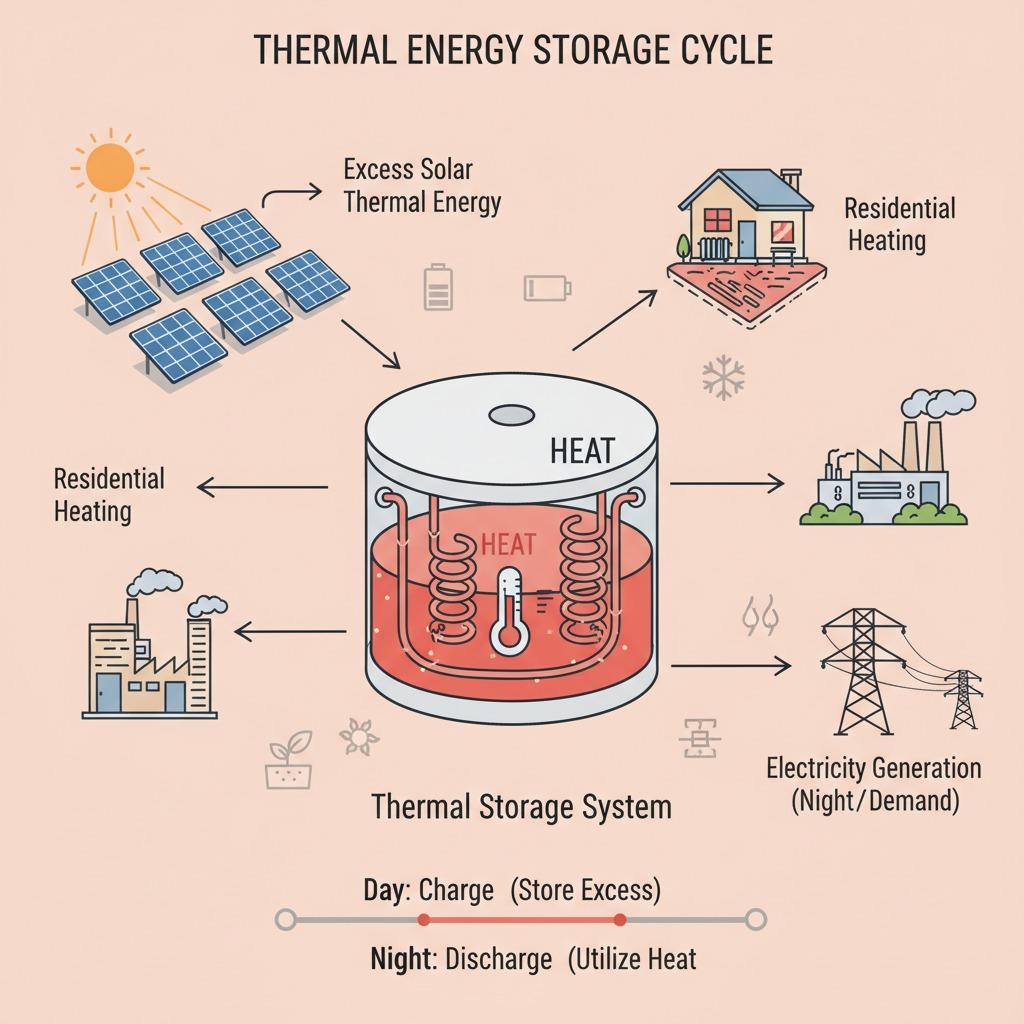
The Role of Energy Storage Systems
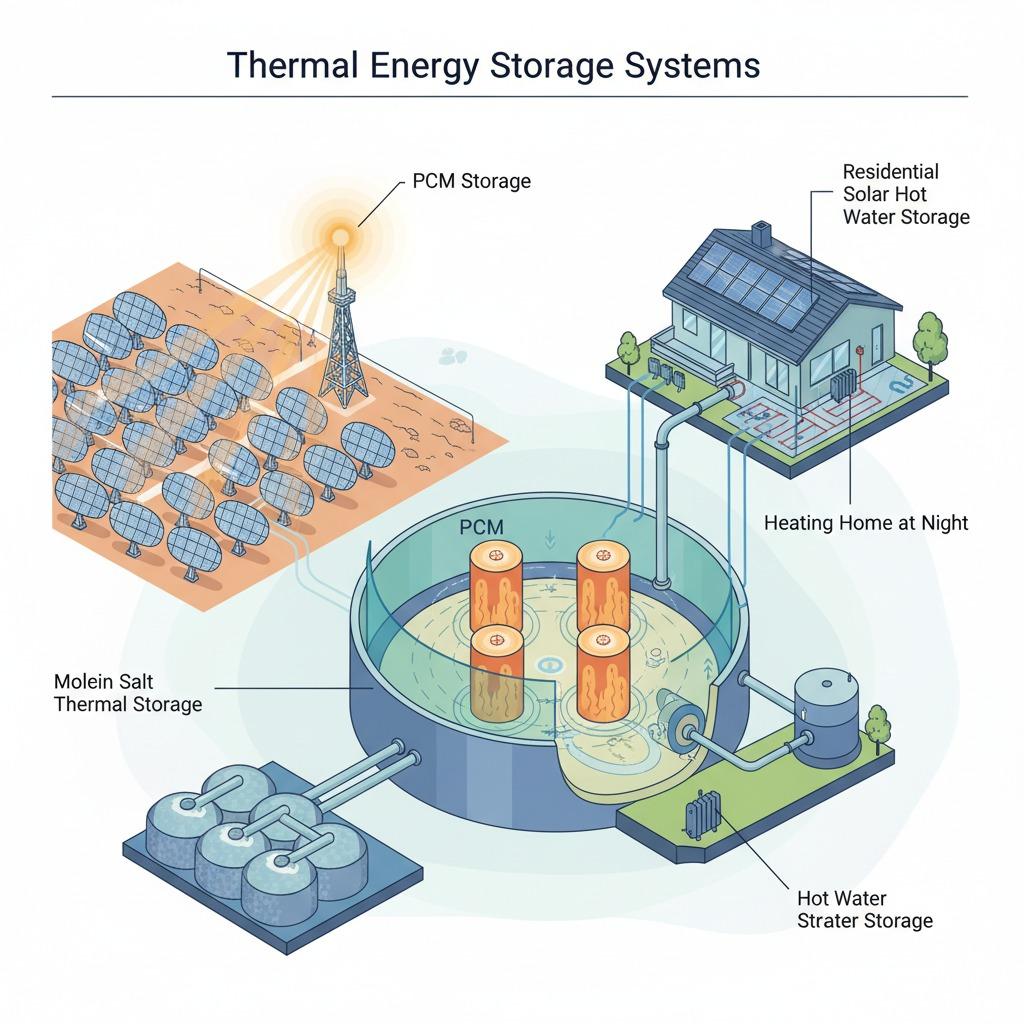
Energy storage systems form the backbone of modern renewable energy integration, and thermal energy storage plays a starring role within this ecosystem. These systems are designed to balance supply and demand, ensuring that energy is available precisely when needed. Unlike traditional battery-based solutions, energy storage systems that incorporate thermal methods offer unique benefits, such as lower costs for large-scale applications and minimal environmental impact. For instance, in residential settings, these systems can store heat from daytime solar collection to warm homes at night, promoting energy independence and cost savings.
Exploring Thermal Storage Solutions
Thermal storage solutions have evolved to address diverse needs across industries, from power generation to district heating. One popular approach involves using phase-change materials that absorb and release heat during phase transitions, providing consistent temperature control. These solutions are particularly effective in solar thermal plants, where mirrors concentrate sunlight to heat a fluid, which is then stored in insulated tanks. This method not only maximizes the output of renewable sources but also stabilizes the grid by smoothing out fluctuations in energy production. As global demand for clean energy rises, thermal storage solutions are becoming indispensable for achieving carbon neutrality goals.
Advancements in Heat Storage Technology
Heat storage technology continues to innovate, with recent developments focusing on improving efficiency and scalability. Researchers are exploring advanced materials like molten salts and thermochemical storages that can retain heat for extended periods, even at high temperatures exceeding 500 degrees Celsius. Such technologies are crucial for concentrated solar power facilities, where heat storage technology enables round-the-clock electricity generation. Moreover, in the industrial sector, this tech helps recover waste heat from manufacturing processes, redirecting it to preheat materials or generate steam, thereby slashing operational costs and emissions.
Benefits of Integrating Thermal Energy Storage
The advantages of thermal energy storage extend far beyond mere conservation; they encompass economic, environmental, and practical dimensions. Economically, it lowers reliance on fossil fuels, reducing energy bills and protecting against price volatility. Environmentally, it supports a greener planet by enabling higher penetration of renewables, cutting down greenhouse gas emissions. Practically, thermal energy storage systems offer reliability in off-grid scenarios, such as remote communities or during peak demand periods. For example, in agriculture, these systems can store solar heat to maintain greenhouse temperatures, boosting crop yields year-round.
Applications in Renewable Energy Grids
In renewable energy grids, energy storage systems enhanced by thermal storage solutions are transforming how we handle intermittent sources like wind and solar. By storing surplus energy as heat during peak production, grids can dispatch it efficiently during low-generation times. This capability is vital for large-scale projects, where heat storage technology ensures consistent power supply without the need for constant backups from non-renewable sources. Countries leading in this area, such as those in Europe and the Middle East, have seen dramatic improvements in energy security and sustainability metrics thanks to widespread adoption.
Challenges and Future Prospects
Despite its promise, thermal energy storage faces challenges like material degradation over time and the initial investment required for infrastructure. However, ongoing research into durable, cost-effective materials is addressing these issues, paving the way for broader implementation. Looking ahead, heat storage technology is poised for exponential growth, driven by policy incentives and technological breakthroughs. Experts predict that by 2030, thermal storage solutions could account for a significant portion of global energy storage capacity, revolutionizing how societies manage resources.
Real-World Case Studies
Consider the Crescent Dunes Solar Energy Project in Nevada, which utilizes thermal energy storage to produce electricity after sunset, demonstrating the technology's viability on a commercial scale. Similarly, in Denmark, district heating networks employ energy storage systems to distribute stored heat from biomass plants, serving thousands of households efficiently. These case studies highlight how thermal storage solutions can be tailored to local needs, fostering resilient energy infrastructures worldwide.
Conclusion: Embracing a Thermal Future
As we move toward a more sustainable world, thermal energy storage stands out as a cornerstone technology. By leveraging energy storage systems, thermal storage solutions, and cutting-edge heat storage technology, we can optimize energy use, mitigate climate change, and build a resilient future. Whether in homes, industries, or national grids, the integration of these innovations promises a balanced, efficient, and eco-friendly energy landscape.






