
How Long Do Batteries Last in Energy Storage? The Practical Answer Buyers Need
When people ask how long do batteries last in energy storage, they are usually trying to make a buying decision, not collect trivia. A plant manager wants to know when a system will start losing usable capacity. A procurement team wants to understand replacement planning. An engineer wants to know whether the battery choice fits the duty cycle, temperature range, and financial model. That is the real question: not whether a battery can work, but how long it will keep working in the way the system actually needs.
The short answer is that battery life in energy storage depends on chemistry, operating conditions, cycling frequency, depth of discharge, temperature, and how the system is controlled. Some battery systems are designed for roughly a decade of service, while others can last longer under moderate use. But “last” can mean different things. A battery may still operate after many years while providing less usable capacity than when it was new. For energy storage buyers, the useful metric is usually not absolute survival. It is retained performance.
The Two Life Measures That Matter Most
Battery life is often discussed in two ways, and mixing them up causes a lot of confusion. One is calendar life, which is the passage of time. The other is cycle life, which is the number of charge-discharge cycles a battery can complete before its capacity falls below an acceptable level. Both matter in energy storage, but not in the same way.
A system that sits idle most of the time may age mainly from calendar effects. A battery used for daily peak shaving or renewable smoothing may age from cycling. Many industrial users care about both at once, because a battery installed in a warehouse, factory, utility cabinet, or microgrid often sees a blend of standby time and active service. The mistake is assuming a long warranty automatically means long practical life. It may, but only if the operating profile matches the assumptions behind it.
What Usually Drives Battery Life Down
Temperature
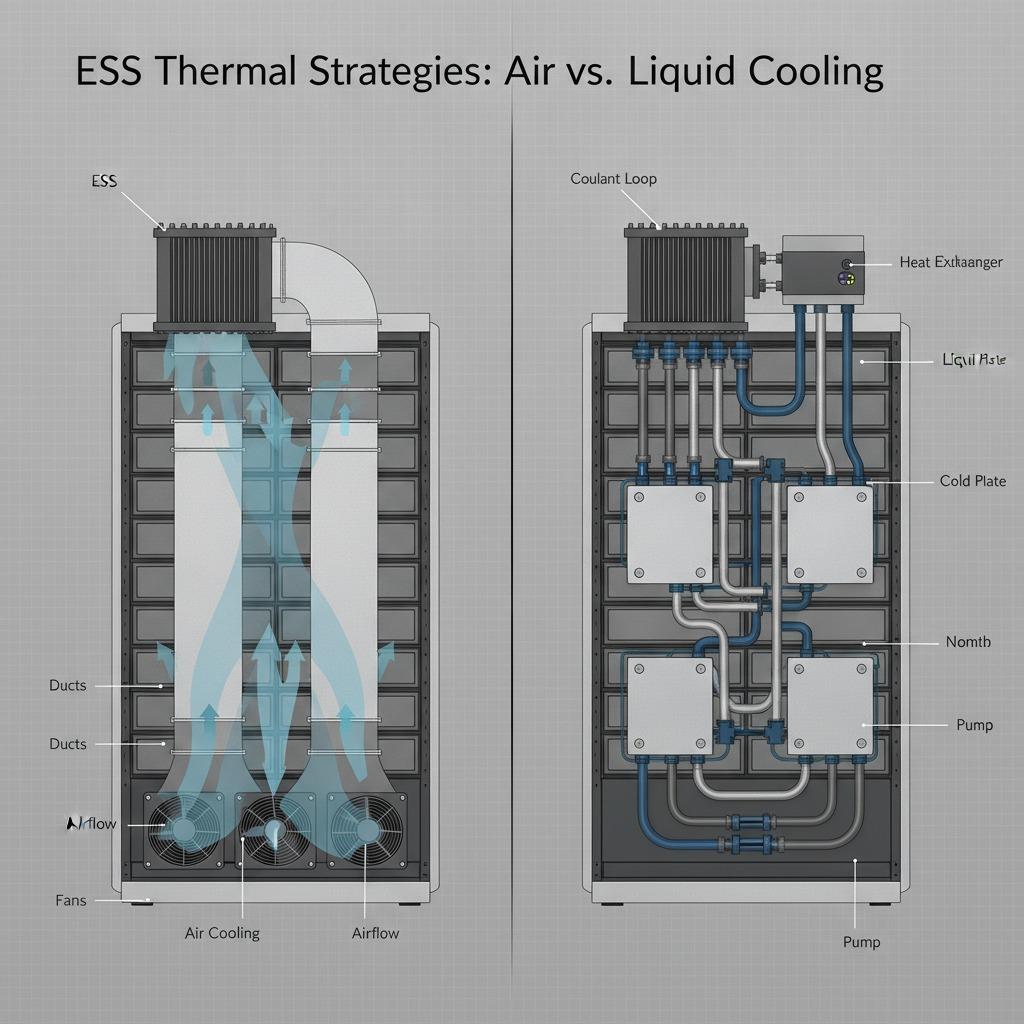
Heat is one of the fastest ways to shorten battery service life. Elevated temperature accelerates chemical aging, and that aging does not always show up immediately. A battery may look fine for a period, then lose capacity more quickly than expected. Cold conditions are different: they usually do not age the battery as fast, but they can reduce performance and usable output. For energy storage projects, thermal management is not a nice-to-have detail. It is part of the life model.
Depth of discharge
Using more of the battery on each cycle generally increases wear. A battery that is repeatedly driven deep into discharge tends to age faster than one operated in a shallower range. This is why energy storage systems are often managed with reserve margins. The control strategy matters as much as the chemistry. In real projects, the user may want maximum usable energy, but the system may need to trade a little capacity today for longer service life tomorrow.
Charge and discharge rate
Fast charging and high-power discharge can stress batteries, especially if the system was not designed for that duty. A battery that performs well in a steady daily cycle may not behave the same way in short bursts, frequent ramping, or irregular load profiles. Buyers sometimes focus on nameplate capacity and overlook power profile. That is a common source of disappointment.
State of charge management
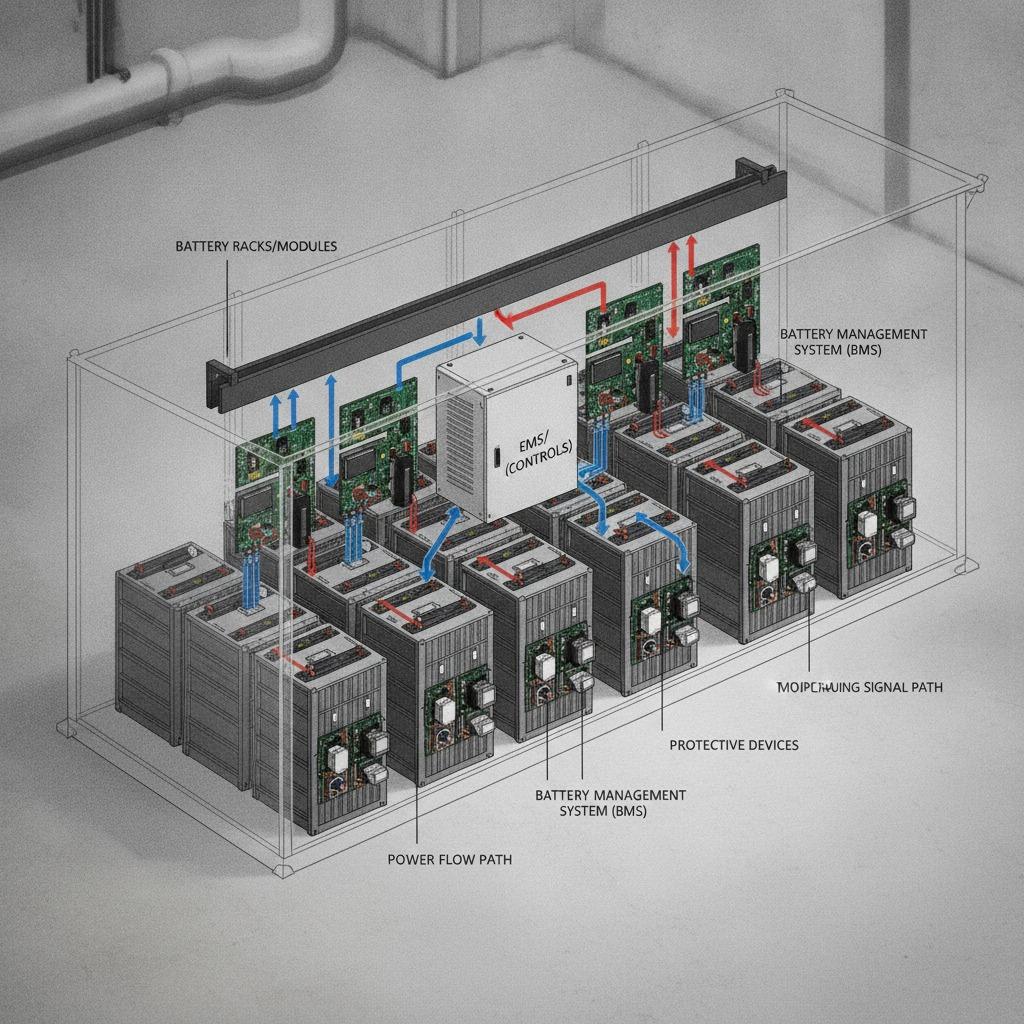
Letting batteries sit at very high or very low states of charge for extended periods can also affect longevity. For many storage applications, battery management systems help reduce this risk by balancing cells and controlling operating windows. The battery management system is not just electronics around the edges. It is part of the life-extension strategy.
Why Chemistry Changes the Answer
Not all storage batteries age the same way. Different chemistries have different strengths, weaknesses, and typical service profiles. In the market, lithium-ion is widely used for many energy storage applications because of its energy density, efficiency, and strong cycle performance. Within lithium-ion, different formulations behave differently, so even the same broad chemistry can have different life expectations.
Other battery types may still be selected for specific industrial needs where cost, temperature tolerance, safety philosophy, or long-duration stationary operation matter more than compact size. The point is not that one chemistry is always best. The point is that life expectancy should be read in the context of the application. A battery that looks economical on paper may be a poor choice if the duty cycle is aggressive. Conversely, a higher-cost system can be sensible if it avoids frequent replacement and downtime.
A Quick Buyer’s View: What to Ask Before You Spec the System
If you are evaluating storage batteries, ask questions that connect life to actual usage. The right comparison is not only capacity and initial price. It is expected usable life under your operating conditions.
Key questions include:
How many cycles per day will the system see?
What depth of discharge will be typical, not just possible?
What ambient temperature range will the battery experience?
Will the system spend long periods at full charge or near empty?
How is the battery management system handling balancing and protection?
What performance is guaranteed over time, and under what assumptions?
Those questions sound simple, but they quickly separate a genuine engineering discussion from a sales pitch. If the supplier cannot explain the operating assumptions behind the life estimate, treat the estimate cautiously.
Common Misunderstandings That Lead to Bad Purchases
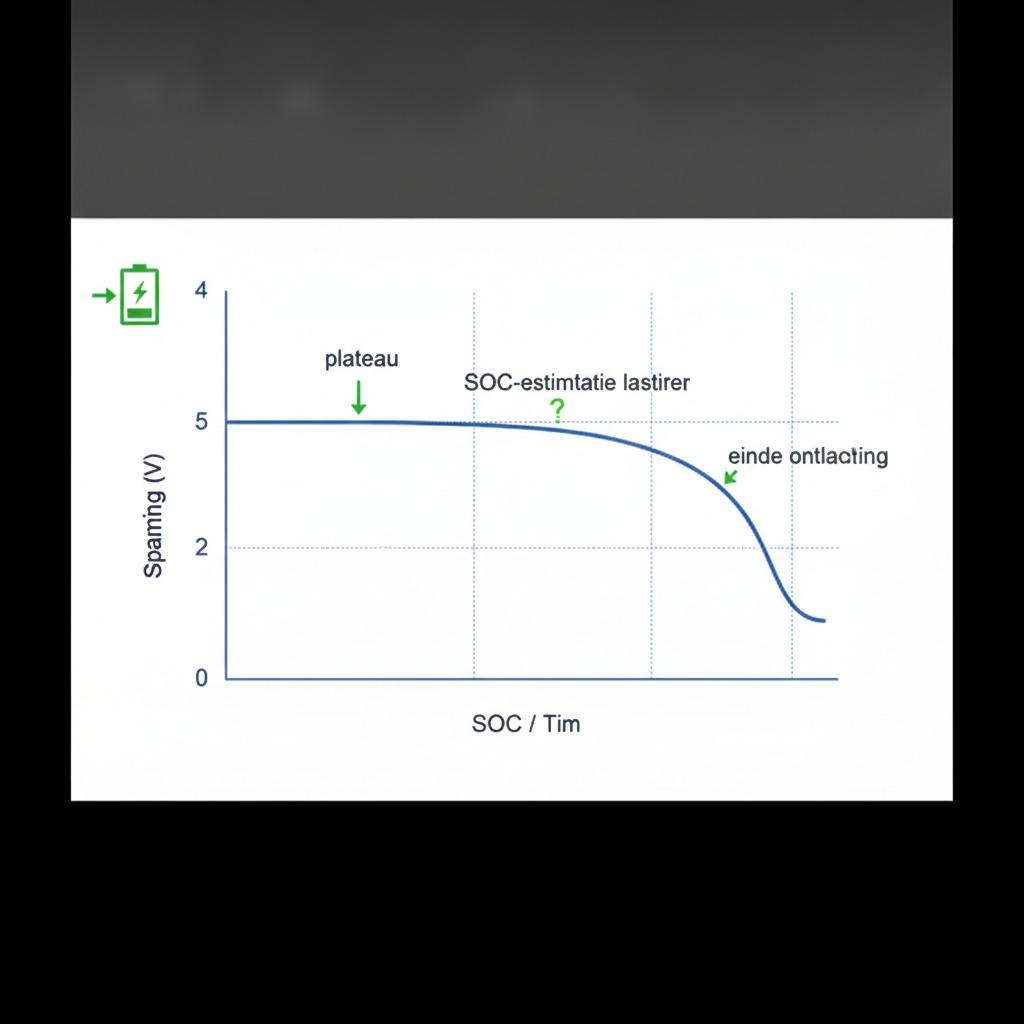
One common mistake is to read “years of life” as if it were fixed. In reality, battery aging is a curve, not a cliff. A system may remain serviceable well before it reaches end-of-life by one definition, and it may already be below target performance for demanding use cases. Another mistake is comparing only the headline cycle count. Cycle counts are useful, but they do not mean much without the test conditions: discharge level, temperature, and charge rate all shape the result.
A second mistake is assuming all stationary storage applications are similar. They are not. Backup power, peak shaving, load shifting, renewable integration, and frequency support all place different stresses on batteries. A battery optimized for rare backup events may not be the best fit for daily cycling. That sounds obvious, but it is overlooked more often than most suppliers will admit.
How Battery Life Is Usually Planned in Energy Storage Projects
In practice, engineers and sourcing teams often treat battery life as part of a system-level asset plan. They look at expected degradation, replacement windows, and the financial consequences of capacity fade. The question is not only whether the battery can run for a number of years, but whether it will still meet the project’s load profile at year five, year eight, or year ten.
This is where practical caution matters. A battery may still be physically operational after its economic life has passed. For some buyers, that means the system is retired early. For others, it means the battery is repurposed or used in a less demanding role. Either way, the project team should distinguish between technical life, usable life, and financial life. Those are related, but they are not identical.
What Shortens Life the Fastest in the Real World?
If you had to reduce the issue to a few factors, these are usually the biggest offenders: heat, heavy cycling, poor charge control, and weak system integration. Age alone matters, of course, but poor operating conditions usually do more damage than time passing quietly in storage. That is why a well-managed battery in a moderate environment can outperform a theoretically superior battery installed in a poorly controlled site.
There is also a maintenance angle. Even in systems marketed as low-maintenance, periodic inspection, software review, and thermal monitoring are worth the effort. Small problems become expensive when they are ignored in a battery room, a containerized storage unit, or an industrial backup installation.
FAQ
How long do batteries last in energy storage on average?
There is no single average that fits every project. Life varies widely by chemistry, cycling profile, temperature, and control strategy. In stationary applications, buyers commonly evaluate life over several years to a decade or more, but the real answer depends on how the system is used.
Does a higher cycle count always mean longer life?
Not necessarily. Cycle count is only meaningful when you know the testing conditions. A battery rated for many cycles under gentle conditions may age differently in a hot site or under deep discharge.
Can battery life be extended?
Yes, often. Better thermal management, smarter state-of-charge limits, controlled depth of discharge, and a suitable chemistry all help. The battery management system plays a major role here.
Should buyers focus more on warranty or performance data?
Both matter, but performance assumptions should come first. A warranty is only as useful as the operating conditions behind it. If the project profile does not match those conditions, the warranty may not tell you much about real-world life.
The Decision That Matters Most
If you are asking how long batteries last in energy storage, the decision you are really making is whether a battery can deliver stable, useful capacity long enough to justify the installation. That means looking past the brochure language and into the operating profile. Chemistry, thermal conditions, cycling behavior, and battery management are the main levers. Get those right, and battery life becomes a planning item. Get them wrong, and it becomes a replacement problem.
For sourcing and engineering teams, the next step is straightforward: define the actual duty cycle, ask suppliers to explain their life assumptions, and compare systems on retained performance rather than headline capacity alone. That approach takes a little more effort up front, but it usually saves time, budget, and a good deal of frustration later.