

Why a hybrid energy storage system has become a serious engineering decision
A hybrid energy storage system is no longer a niche option for labs or demonstration sites. For many buyers, it is becoming the practical answer to a familiar problem: how do you handle fast power swings, short-duration peaks, renewable intermittency, and backup requirements without overbuilding a single storage technology? In plain terms, a system that combines batteries with another storage element can often do the job more cleanly than a battery-only package, especially where load response and cycle behavior are both under pressure.
That matters because energy storage projects are rarely judged on one metric alone. Engineers look at response time, usable capacity, cycle life, thermal behavior, footprint, and the cost of ownership over years, not months. Sourcing managers have to weigh integration risk, maintenance burden, and shipping logistics. Product teams need to know whether the system fits the application or simply looks efficient on paper. A hybrid approach can improve the balance, but only if the architecture matches the use case.
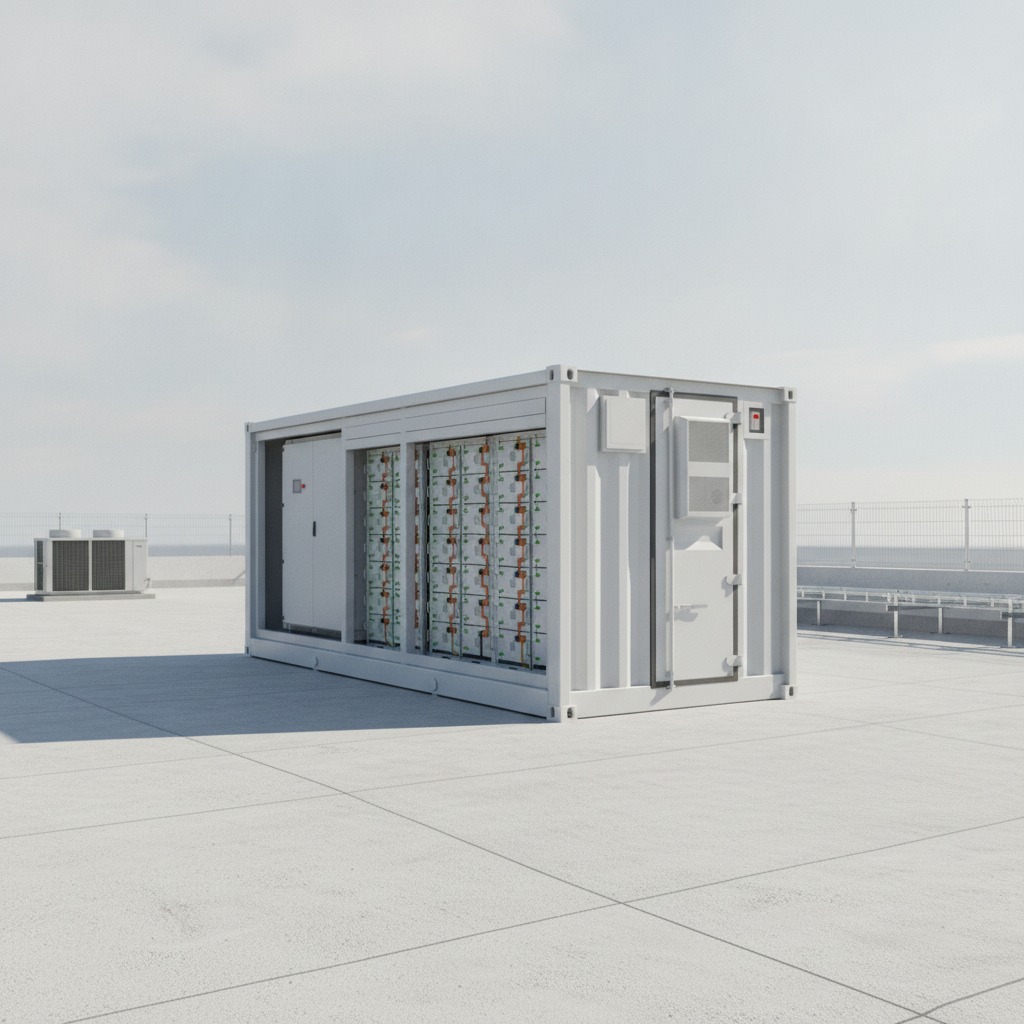
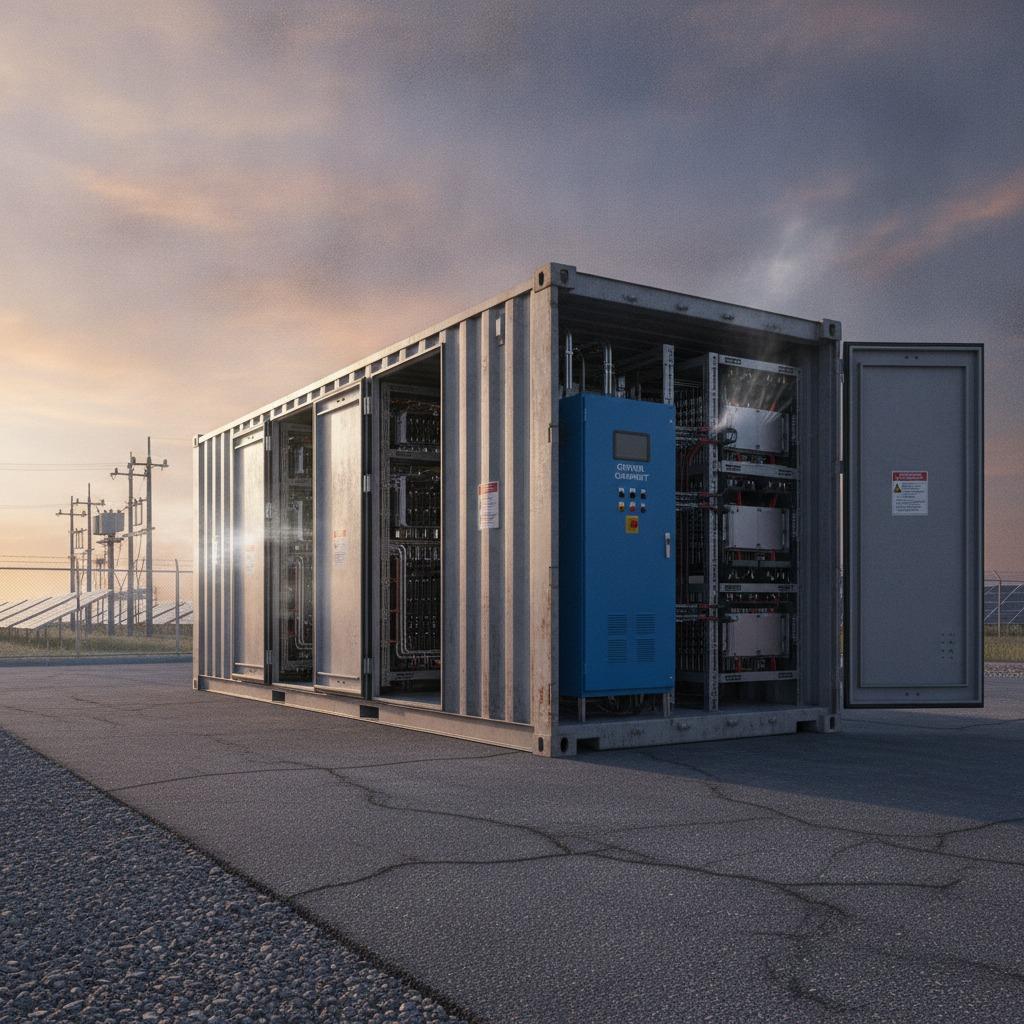
The containerized battery energy storage system shown in the product data is a good example of how this market is evolving. The enclosure appears transportable, modular, and designed for site installation, with visible internal rack structure, access doors, and a service compartment. That kind of package is typical of utility-scale or commercial deployments where the storage asset must be moved, installed, and serviced with less drama than a custom-built room full of cabinets.
What the term usually means in practice
The phrase hybrid battery energy storage system is used in more than one way, so it is worth being careful. Sometimes it refers to a battery system paired with a supercapacitor bank. Sometimes it means batteries integrated with generation assets, such as solar plus storage or diesel plus storage. In the stricter engineering sense, hybrid energy storage usually describes two complementary storage technologies working together so each handles the part of the duty cycle it is best at.
That is where the hybrid supercapacitor battery system comes in. Batteries are strong on energy density and sustained discharge, but they are not always the best tool for repeated, high-power bursts. Supercapacitors respond quickly and tolerate many shallow cycles, which makes them useful for smoothing transients, absorbing spikes, and protecting the battery from the harshest parts of the load profile. The battery then carries the longer-duration energy requirement. It is a sensible division of labor, though not every site needs it.
Why buyers consider hybrid storage instead of a battery-only system
The main attraction is not novelty. It is duty-cycle management.
If a facility sees sharp load steps, regenerative energy pulses, or repeated short-duration peaks, a battery-only system may be forced to do too much of the dirty work. Over time, that can mean more thermal stress, faster degradation, and a system that looks undersized even if its nameplate capacity seemed adequate at procurement stage. A hybrid architecture can reduce that stress by letting the faster storage element handle transients.
For renewable integration, the logic is similar. Solar and wind do not fail in the same way every day, but they do produce variability. Hybrid storage can help stabilize output, support ramp control, and improve the quality of delivered power. For backup and microgrid applications, the benefit is often resilience: fast response when the grid drops, followed by sustained support from the battery side of the system.
There is also a practical procurement reason. In some projects, the real issue is not simply how much energy must be stored, but how that energy must be delivered over time. A hybrid energy storage system can be a better fit when the profile is uneven. Buyers who focus only on kilowatt-hours sometimes miss that point.
Reading the product form: what a containerized BESS tells you
The visible enclosure matters. A container-style package usually signals a system intended for standardized logistics and relatively fast deployment. The rectangular steel shell, corrugated outer structure, corner castings, and service access points all suggest a fabricated integration approach rather than a loose assembly of parts.
That has several implications.
First, transport and handling are simplified. Standardized geometry helps with loading, lifting, and site placement. Second, the enclosure can support modular internal architecture, which is useful when the system contains multiple racks or battery strings. Third, maintenance access tends to be more disciplined in a containerized layout, because the service openings, control compartment, and ventilation features must all be planned around the enclosure itself.
Of course, there is a caution here. A well-designed enclosure does not guarantee good system design inside it. Thermal management, electrical protection, battery management integration, and safety architecture are where the real work lives. The outside steel shell is only the beginning.
How to compare hybrid options without getting lost in brochures
When engineers and buyers evaluate a hybrid storage proposal, a few questions are more useful than broad claims about efficiency or intelligence.
1. What duty cycle is the system actually built for?
Ask whether the system is meant for fast frequency support, peak shaving, renewable smoothing, backup power, or a mix of those tasks. A hybrid battery energy storage system optimized for one duty profile may be awkward in another. The wrong match often shows up later as cycling problems or disappointing runtime.
2. What does the fast storage element do?
If the design includes supercapacitors, find out whether they are handling transients only or a larger share of the power profile. If the answer is vague, that is a warning sign. The value of a hybrid supercapacitor battery system depends on clear task separation.
3. How is thermal behavior managed?
The image shows ventilation or cooling features, which is encouraging, but cooling strategy is not visible from the outside. Buyers should ask how heat is removed, monitored, and controlled across racks and cabinets. Battery performance and service life are tied tightly to temperature consistency, and hybrid systems are not immune to thermal drift.
4. How serviceable is the enclosure?
A visible access door and service compartment are useful, but the real question is whether routine inspection can happen without major disassembly. In field equipment, easy access is not a luxury. It affects downtime, safety, and labor cost.
Common mistakes buyers make
One mistake is assuming hybrid always means better. It does not. If the application is mainly long-duration energy shifting with smooth loads, a simpler battery storage package may be easier to justify and easier to maintain.
Another is over-specifying power electronics while under-specifying system controls. The control layer is where hybrid systems either become useful or become complicated. Without good coordination between storage elements, the system may simply add cost and failure points.
A third mistake is ignoring site logistics. Containerized systems look straightforward on a drawing, but the real installation still involves foundation planning, access paths, lifting equipment, clearances, and local compliance work. Standardized containers help, but they do not erase site constraints.
Finally, some teams focus too much on chemistry labels and not enough on the actual load profile. LFP, NMC, and other chemistries may all appear in market discussions, but unless the buyer knows the application window, the discussion stays abstract. The same caution applies to supercapacitors: useful technology, yes, but only when the duty cycle justifies it.
Where a hybrid system makes the most sense
The strongest use cases are usually the ones with mixed demands:
- renewable plants that need smoothing and short-term buffering
- industrial sites with frequent starts, stops, or short spikes
- microgrids that require both fast ride-through and longer backup
- EV charging sites where load can jump quickly
- remote facilities where generator support and storage need to work together
In those environments, a containerized energy storage package can provide a neat deployment path. The modular enclosure is easier to ship and site than many custom arrangements, and the internal rack layout makes it more practical for expansion or service planning. Again, the actual electrical architecture will determine whether the package is elegant or merely large.
Practical buyer advice before you issue an RFQ
If you are preparing a request for quotation or engineering review, define the load profile first. Not just average power, but peak events, ramp rates, duration, and how often those events occur. Then decide what the storage system must protect: the battery itself, the process load, the grid connection point, or all three.
Ask suppliers to separate energy function from power function. If the proposal is hybrid, make them explain which component handles the bursts and which handles sustained discharge. A credible supplier should be able to describe the division without hiding behind diagrams.
Also ask about enclosure integration. For a containerized BESS, the value is not only the cells or modules inside it, but the way the enclosure supports transport, cooling, access, and field installation. Since the product shown appears to include a service cabinet and visible control elements, buyers should probe how monitoring, isolation, and maintenance are arranged at the system level.
Questions worth asking in the first technical meeting
What is the intended operating profile?
How does the hybrid storage architecture reduce battery stress?
What thermal strategy is used inside the container?
How are the battery racks arranged and isolated?
What maintenance tasks can be done from the access side shown in the enclosure?
How is the system prepared for site logistics and container handling?
These are not glamorous questions, but they save time. They also separate a real integrated product from a container full of claims.
FAQ: short answers buyers usually want
Is a hybrid energy storage system always more efficient?
No. It can be more effective for certain profiles, but it also adds complexity. The right question is whether it improves the economics and durability of your specific load.
Is a hybrid battery energy storage system only for utilities?
No. Utilities use them, but so do commercial plants, microgrids, EV charging projects, and industrial facilities with unstable demand.
Does the containerized format matter?
Yes. It affects transport, installation, service access, and scalability. For many buyers, the enclosure is a major part of the value.
Can you tell battery chemistry from the enclosure image?
Not reliably. The visible product data does not confirm chemistry, and it would be unsafe to guess.
What to do next
If your project involves intermittent generation, load spikes, backup requirements, or a site where deployment speed matters, a hybrid energy storage system deserves a proper look. Start with the load profile, then match the architecture to the duty cycle. If the project demands both fast response and sustained discharge, a hybrid supercapacitor battery system may be worth the added complexity. If not, a simpler containerized battery platform may be the cleaner answer.
The useful decision is not whether hybrid sounds advanced. It is whether the system solves the actual operating problem with less wear, less downtime, and fewer compromises than the alternatives.






