
Why “most popular energy storage” is not the same as “best for your job”
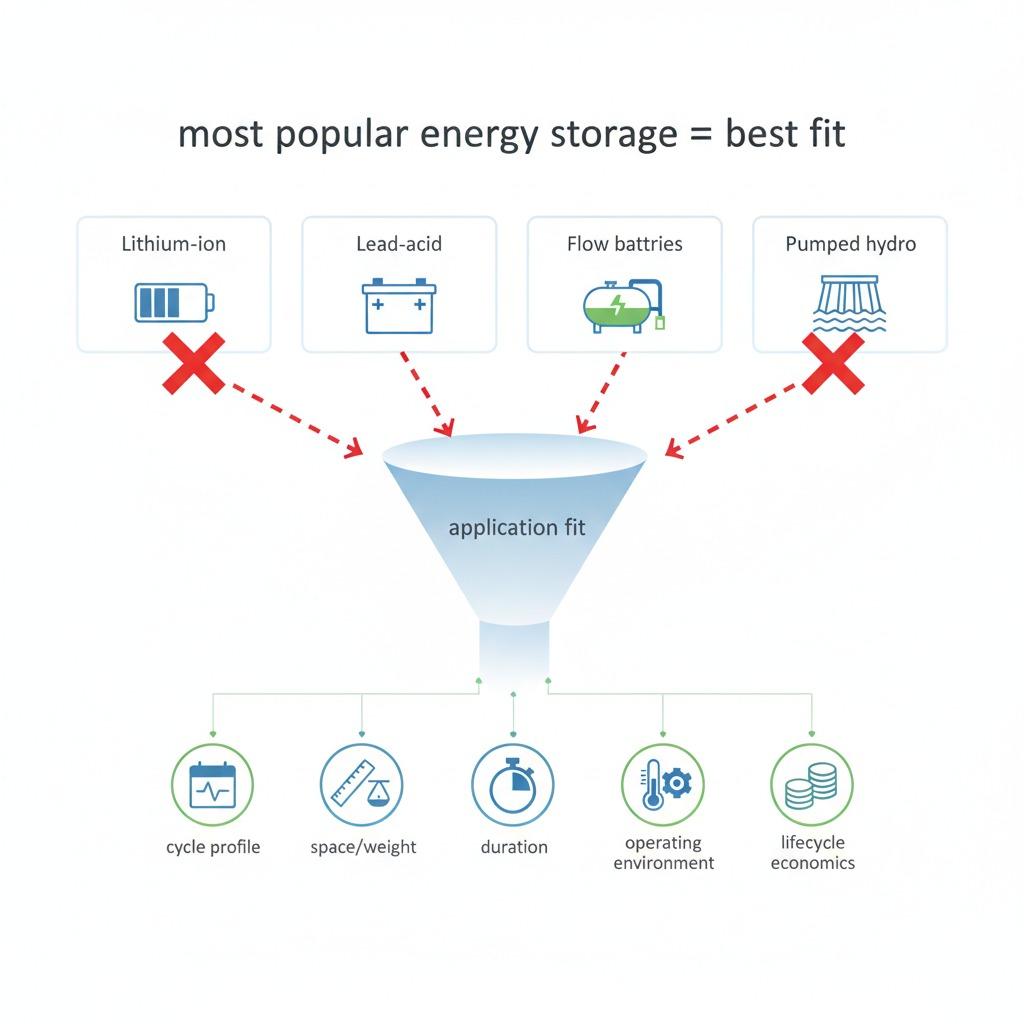
When engineers, sourcing managers, or product teams start comparing the most popular energy storage options, the real question is rarely about popularity alone. A battery chemistry can dominate headlines, win procurement attention, or show up in nearly every utility-scale discussion, yet still be a poor fit for a specific duty cycle, footprint, or operating environment. What matters is the match between the storage technology and the application: peak shaving, backup power, grid balancing, renewable integration, or daily cycling in a harsh industrial setting.
That distinction matters because energy storage is no longer a single-category decision. It is a system decision. Chemistry, thermal behavior, response time, safety profile, available footprint, recycling pathway, and lifecycle economics all pull in different directions. A buyer who only asks which technology is most common can miss the more useful question: which one is common because it is broadly practical, and which one is right for my use case because it solves the operational problem with the least risk?
Quick reference: the storage types buyers see most often
In commercial and industrial procurement, the most frequently discussed storage families are lithium-ion batteries, lead-acid batteries, flow batteries, and pumped hydro at the grid level. Each has a different place in the market, and the “popular” label depends on whether you mean installed capacity, shipped units, utility projects, or backup systems.
Lithium-ion batteries
Lithium-ion is the most visible choice in modern energy storage discussions because it offers high energy density, fast response, and relatively mature supply chains. It is widely used in EVs, electronics, and increasingly in stationary storage. Within stationary systems, lithium-ion is often selected for its compact footprint and strong round-trip efficiency. For many buyers, that footprint advantage alone can decide the conversation.
Lead-acid batteries
Lead-acid remains common in UPS systems, emergency backup, and lower-cost stationary applications. It is a familiar technology, supported by long-established manufacturing and recycling infrastructure. But it carries tradeoffs: lower energy density, heavier systems, and shorter cycle life compared with lithium-ion in many cycling applications.
Flow batteries
Flow batteries are less common overall, but they matter in projects that need long duration, high cycle life, or easier scaling of energy capacity. Their popularity is narrower, not absent. Buyers often consider them when runtime matters more than compactness.
Pumped hydro storage
Pumped hydro is one of the oldest and largest forms of energy storage, especially for grid-scale balancing. It is not a typical factory-floor or commercial building purchase, but in the broader energy market it remains a major storage asset. Its popularity comes from scale, not portability.
Why lithium-ion dominates so many conversations
If someone asks about the most popular energy storage technology in current commercial language, lithium-ion usually comes up first. That is not just marketing noise. It reflects a real convergence of performance and manufacturing maturity.
Lithium-ion batteries deliver strong energy density, which means more stored energy in less space. For systems installed in warehouses, telecom cabinets, modular enclosures, or building mechanical rooms, this is often decisive. They also respond quickly, which helps in power quality applications and grid services where milliseconds matter more than raw duration.
Another reason for their popularity is that lithium-ion has benefited from large-scale manufacturing investment. When a technology scales, supply chains tend to improve, component ecosystems grow, and integration knowledge spreads. That does not make every lithium-ion system interchangeable, of course. Cell format, battery management strategy, thermal design, and enclosure architecture still vary widely. But the overall market has learned how to build around it.
There is a practical caution here: popularity can hide complexity. Lithium-ion is not a single chemistry. Different variants bring different strengths, and the wrong choice can create unnecessary cost or thermal risk. Buyers should not stop at the chemistry label.
The decision factors that matter more than market share
A better procurement framework starts with application needs rather than technology reputation.
1. Cycle profile
A system that charges and discharges once a day has very different requirements from one that sits idle for months and then discharges during an outage. Daily cycling emphasizes cycle life and efficiency. Standby applications emphasize shelf life, maintenance discipline, and reliability when called on unexpectedly.
2. Space and weight
If floor space is limited, battery energy density becomes a major factor. This is one reason lithium-ion often wins in commercial retrofits. Lead-acid can still make sense where weight and footprint are less constrained, but it is harder to justify when cabinet real estate is expensive.
3. Duration requirement
Short-duration support and long-duration storage are not the same problem. Some of the most popular energy storage solutions in today’s market are popular because they do short-duration work very well. If you need extended discharge windows, a different technology may be more economical over the system life.
4. Operating environment
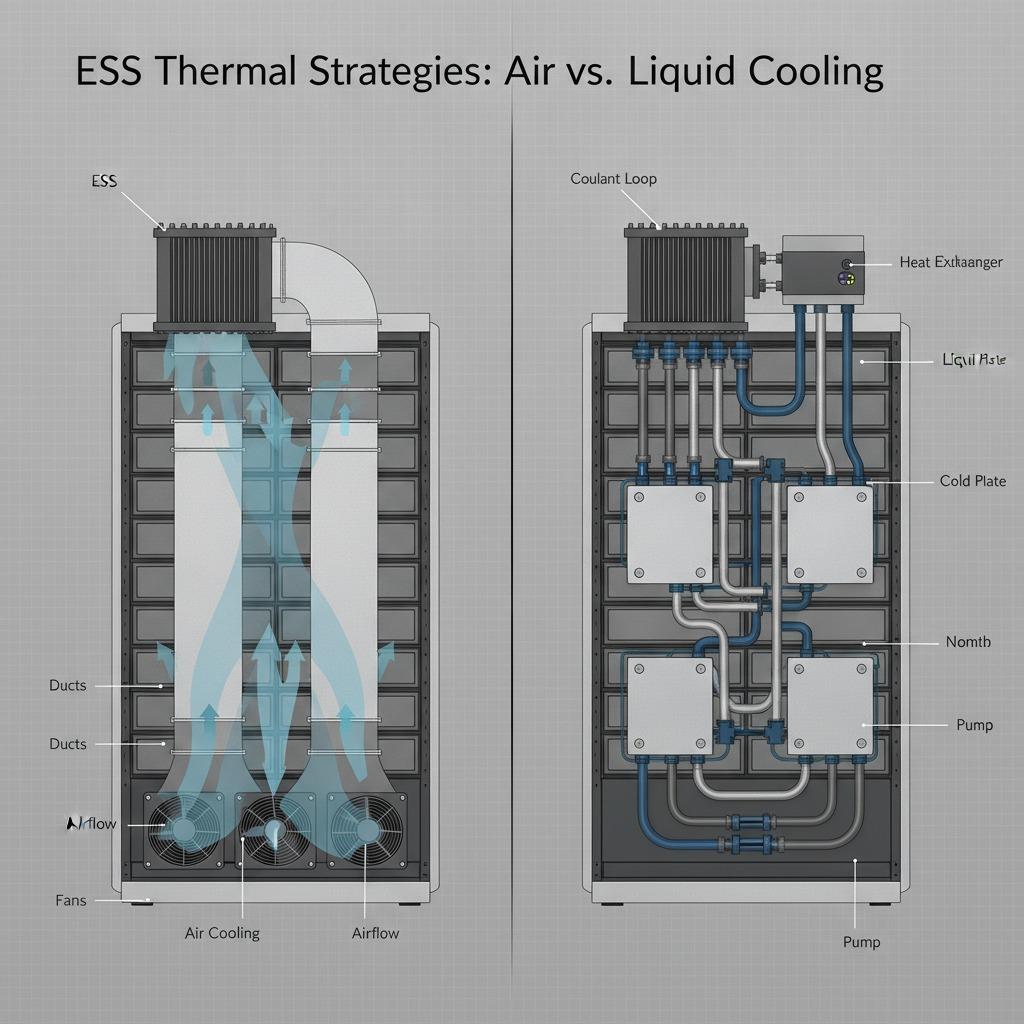
Temperature swings, vibration, dust, and access limitations all matter. An industrial site with inconsistent HVAC is a different environment from a climate-controlled telecom room. A buyer should always ask how the system behaves outside ideal lab conditions. That is where projects become expensive.
5. Lifecycle economics
Purchase price is only the opening line. Replacement intervals, maintenance labor, thermal management, downtime risk, and end-of-life handling can shift the economics substantially. A lower-cost system can become the more expensive choice if it needs frequent attention or has a shorter usable life.
What manufacturers and integrators usually optimize for
In real projects, manufacturers and integrators tend to optimize around a few predictable goals: higher usable capacity, stable thermal performance, simpler installation, and compliance with local grid or safety requirements. The details change by market, but the logic stays the same.
For example, a modular battery system may be designed to simplify staging and expansion. A utility project may prioritize dispatchability and control integration. An industrial backup system may favor proven maintenance routines and straightforward service access. These are not abstract preferences; they shape cabinet design, enclosure choice, wiring layout, and monitoring architecture.
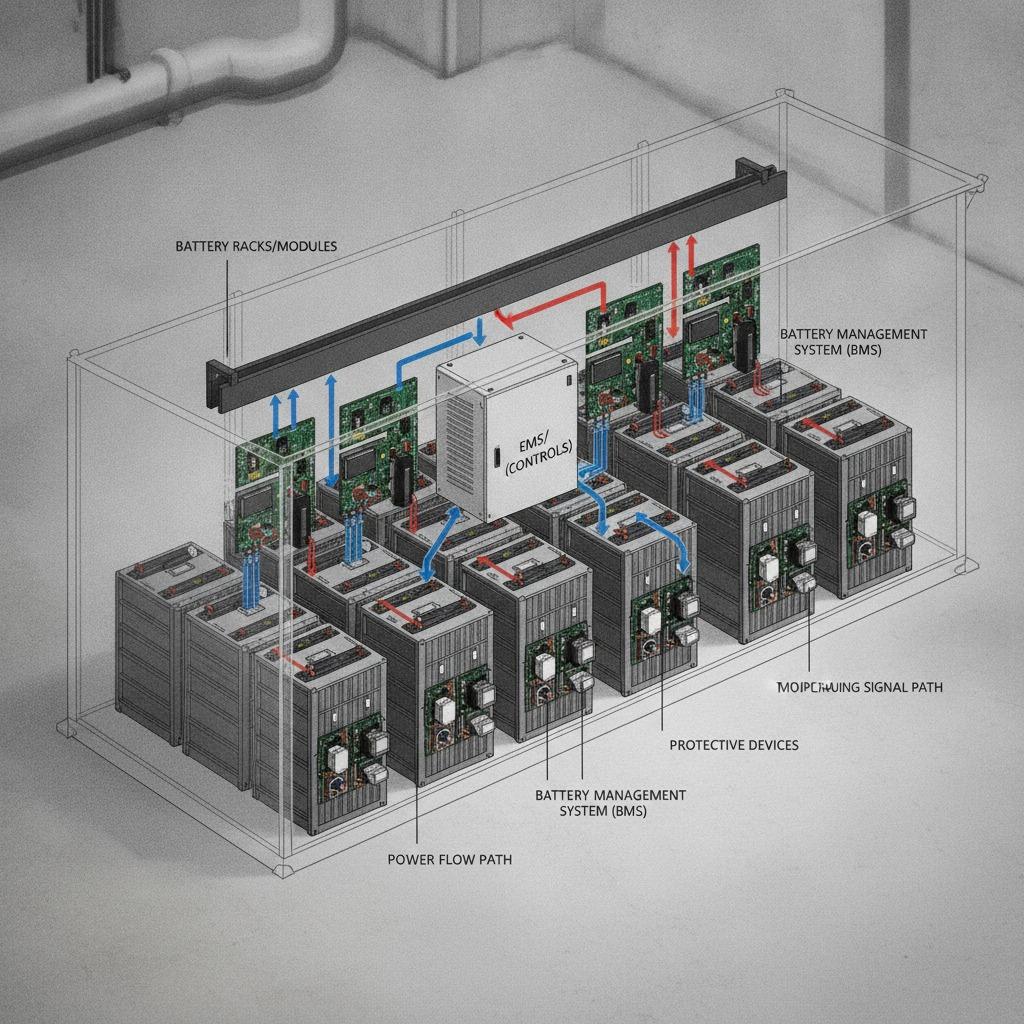
That is why the most popular energy storage option is not automatically the best engineered system. Engineers should ask how the product behaves as part of a larger installation. A battery is only one part of the energy stack. Inverters, controls, thermal systems, fire mitigation strategy, and site layout all affect performance.
Common mistakes buyers make
The first mistake is treating storage like a commodity purchase. It is not. Two systems that appear similar on a spec sheet may perform very differently in the field.
The second mistake is overvaluing name recognition. A popular technology can still be a poor fit if the duty cycle is unusual or the installation environment is difficult.
The third mistake is ignoring integration. A system may have strong cell-level performance and still underperform if the controls are weak or if the battery management strategy is too conservative.
The fourth mistake is buying for the first project instead of the second and third. Teams that expect to scale should think about serviceability, repeatability, and spare parts strategy early. That is a small detail until the fleet grows.
How to compare storage options without getting lost in the jargon
A practical comparison should focus on a short list of questions:
Which storage technology fits the load profile?
How much space is available?
How often will the system cycle?
What temperature range will it actually face?
What is the maintenance model?
What happens at end of life?
If a vendor cannot answer those questions in plain language, that is usually a warning sign. The right supplier should be able to connect the technology to the application without hiding behind generic claims.
Where the market is headed
The current market still favors lithium-ion in many stationary and portable applications, but “most popular” can shift by segment. Grid-scale installations, long-duration projects, and specialized industrial systems may continue to diversify as buyers look for better duration economics and resilience. In other words, popularity is useful as a signal of maturity, not a substitute for engineering judgment.
That is especially true for procurement teams under pressure to standardize. Standardization helps with training and spare parts, but it should not flatten every use case into the same battery choice. A one-size-fits-all storage policy is tidy on paper and messy in the field.
FAQ
Is the most popular energy storage always the safest choice?
Not automatically. Safety depends on chemistry, pack design, thermal management, controls, installation quality, and operating discipline. Popularity does not replace engineering review.
Which storage type is most common for commercial backup?
Lead-acid and lithium-ion are both widely used, depending on runtime needs, footprint, and budget. The right answer depends on whether the system is mainly for standby or for frequent cycling.
Is lithium-ion always better than lead-acid?
No. Lithium-ion often offers better energy density and cycle performance, but lead-acid can still be appropriate in simpler backup roles or where upfront cost is a primary constraint.
How should buyers evaluate a storage project?
Start with application requirements, then compare lifetime cost, footprint, reliability, maintenance, and integration. That sequence usually produces a better outcome than starting with the technology everyone else is talking about.
A practical next step for sourcing teams
If your team is comparing storage options, begin with the duty cycle and installation constraints before narrowing to chemistry. Ask vendors for system-level details, not just cell-level claims. Then test the proposal against the real operating environment, including maintenance access, thermal conditions, and expected replacement horizon.
Popularity can point you toward a mature technology, but the best purchasing decision comes from fit. In energy storage, fit is where the savings, reliability, and service life are won.