
Polycrystalline vs Monocrystalline Solar Panels: What Buyers Really Need to Compare
When project teams compare polycrystalline vs monocrystalline solar panels, the real question is usually not which one is “better” in a vacuum. It is which module type fits the site, the budget, the roof or rack layout, and the performance target over time. That matters whether you are sourcing for a commercial rooftop, specifying equipment for a utility-scale build, or just trying to avoid a decision that looks cheap on paper and expensive in the field.
Both panel types convert sunlight into electricity using silicon cells, and both are widely deployed. The differences show up in manufacturing, appearance, efficiency, temperature behavior, and how much area you need to hit a target output. Those differences are not academic. They affect design margins, shipping volume, mounting count, and sometimes even whether a project can be made to fit at all.
Quick comparison: where the real tradeoffs sit
At a practical level, monocrystalline panels are usually chosen when space is tight or when higher efficiency is worth the extra cost. Polycrystalline panels have historically appealed to buyers focused on lower upfront cost and less demanding footprint constraints. That simple summary is still useful, though the market has shifted over time and the gap is not as dramatic as it once was.
A few buyer-facing differences tend to matter most:
- Monocrystalline panels generally offer higher efficiency per square meter.
- Polycrystalline panels often cost less upfront, though pricing can vary with market conditions and procurement volume.
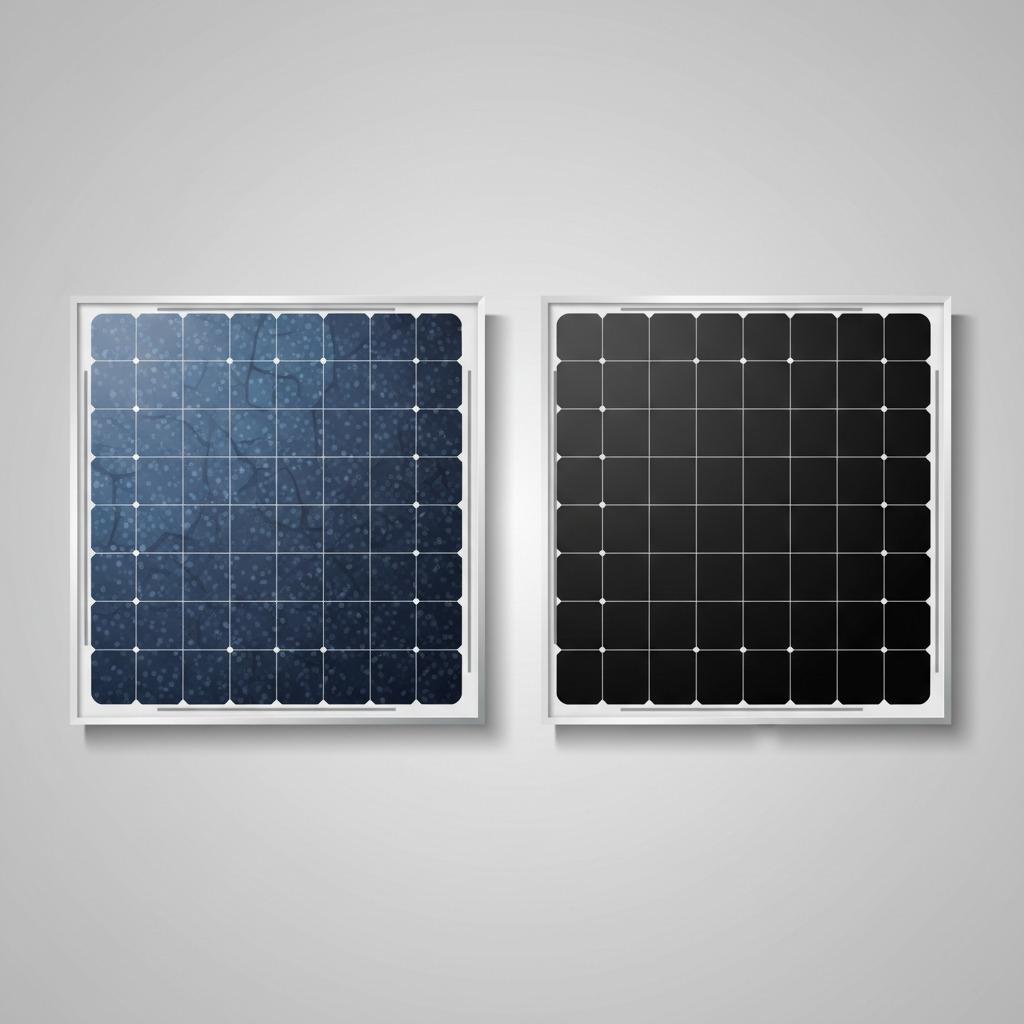
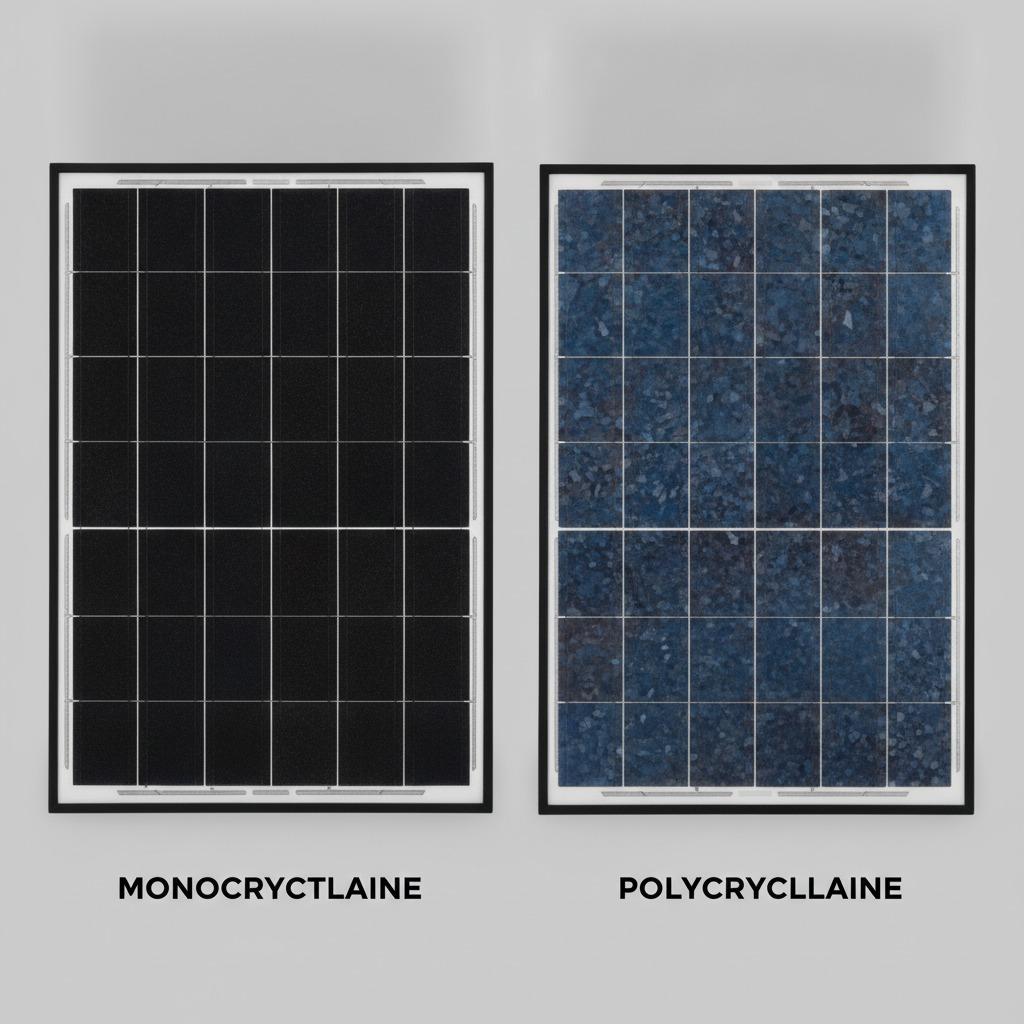
- Monocrystalline modules usually look darker and more uniform, which some architects and rooftop owners prefer.
- Polycrystalline modules often have a bluish, speckled appearance from the crystal structure.
- For the same power rating, a lower-efficiency panel usually occupies more space.
That last point is the one buyers sometimes underestimate. If your array area is constrained, the “cheaper” panel can force you into more racks, more roof loading questions, or a reduced system size. That can erase the apparent savings quickly.
What makes monocrystalline panels different
Monocrystalline cells are made from a single crystal structure of silicon. In manufacturing terms, that uniform structure helps electrons move more efficiently through the cell. The result is typically higher conversion efficiency and a more consistent visual finish.
For engineering and sourcing teams, the appeal is straightforward. If you need to maximize output on a limited surface, monocrystalline modules usually make the design easier. They are common in residential rooftops, constrained commercial roofs, and high-value installations where each square foot has to earn its keep.
There is, however, a tradeoff. Higher efficiency often comes with a higher purchase price, at least in many market segments. That does not automatically make monocrystalline the expensive mistake some buyers fear, but it does mean you should compare total installed value rather than panel price alone.
What makes polycrystalline panels different
Polycrystalline cells are made from multiple silicon crystal fragments melted together. This approach is simpler in a manufacturing sense, and that is part of why polycrystalline panels became popular in price-sensitive projects.
The downside is a lower efficiency ceiling compared with monocrystalline. To produce the same amount of power, you usually need more panel area. On a large open site, that may be acceptable. On a crowded rooftop, it can be a dealbreaker.
A practical caution: buyers sometimes look only at module wattage and miss the footprint difference. Two panels can both be rated at the same power output and still not be interchangeable in a layout. The dimensions, cell architecture, and installation spacing matter just as much as nameplate power.
Selection criteria that actually matter in purchasing
If you are deciding between the two, start with the site, not the catalog.
1. Available space
If roof area, land area, or rack count is constrained, monocrystalline panels usually make more sense. Higher efficiency means you can fit more capacity into the same envelope. For many buyers, that is the decisive issue.
2. Budget structure
If the project is driven by strict upfront capex and the site has plenty of room, polycrystalline panels may still be worth comparing. But it is important to separate module price from installed cost. More panels can mean more mounting hardware, more labor, and more wiring complexity.
3. Aesthetics and stakeholder expectations
This sounds secondary until it is not. For visible rooftop projects, darker and more uniform monocrystalline modules are often easier to sell to building owners, architects, or residential customers. Polycrystalline modules can be perfectly functional, but they are less likely to blend into a premium-looking installation.
4. Heat and field conditions
Solar modules lose some performance as temperatures rise. The exact behavior depends on module design and product specification, so buyers should review datasheets rather than assume all panels behave the same. In hot climates, small differences can matter over the course of a summer.
5. Lifecycle economics
The right comparison is not “what costs less today,” but “what delivers the best energy yield per dollar over the system’s life.” If a more efficient panel avoids expansion of roof structures, lowers racking count, or increases annual generation on a limited site, it may be the better commercial choice even at a higher unit price.
Common mistakes buyers make
One common mistake is treating module efficiency as the only metric. Efficiency is important, but it does not tell the full story. Mechanical dimensions, degradation assumptions, warranty terms, and installation constraints can matter just as much.
Another mistake is assuming polycrystalline is always the low-budget answer. That used to be a cleaner distinction. Today, sourcing teams should check current market availability and compare fully burdened project costs. Supply conditions can move faster than old buying habits.
A third mistake is buying panels before the system layout is settled. That can create annoying redesign work later. If the available area, tilt, setbacks, and inter-row spacing are not finalized, panel selection may need to be revisited anyway.
When polycrystalline still makes sense
Polycrystalline panels can still be a rational choice in open-field projects, large installations with generous space, or cases where the procurement strategy prioritizes lower upfront module cost and the footprint is not critical. They may also fit legacy designs or projects where the engineering team has already accommodated the larger area requirement.
That said, many buyers now land on monocrystalline because it solves more layout problems. The newer market trend has favored higher efficiency and better space utilization, so polycrystalline is less dominant than it once was. It is still relevant, but it deserves a fresh comparison rather than an automatic purchase order.
How to read a solar panel specification sheet
When comparing products, look beyond the headline wattage.
- Check module dimensions and actual roof or ground coverage.
- Review efficiency and temperature-related performance data.
- Look at weight, especially for rooftop retrofits.
- Confirm electrical characteristics match the inverter and string design.
- Review warranty language carefully; do not assume all warranties mean the same thing.
If a supplier cannot clearly explain the performance data, that is a warning sign. Good module selection depends on plain specifications that your engineering team can verify.
FAQ: a few questions buyers ask repeatedly
Are monocrystalline panels always better?
Not always. They are often better when space is limited, but not every project is space limited. The right choice depends on installed cost, footprint, and energy target.
Are polycrystalline panels obsolete?
No. They are less common in some new projects, but they still have a place where space is available and procurement priorities favor lower module cost.
Which panel type lasts longer?
Panel life depends more on manufacturing quality, installation quality, and operating conditions than on crystal type alone. Buyers should compare warranty structure and product data carefully rather than rely on general assumptions.
Which one is better for hot climates?
That depends on the specific module’s temperature behavior and site conditions. Review datasheets and model the annual yield if the climate is demanding.
A practical next step for sourcing and engineering teams
If you are still deciding between polycrystalline vs monocrystalline solar panels, start with a simple internal checklist: site area, target capacity, weight limits, visual requirements, and the installed cost per watt rather than module cost alone. That will usually narrow the field quickly.
The best procurement decisions in solar are rarely made by chasing a label. They come from matching module type to project constraints with enough discipline to avoid unpleasant surprises later. If the roof is cramped, the answer is usually monocrystalline. If the site is open and the economics are tightly controlled, polycrystalline may still deserve a place in the comparison. The key is to compare them on the same system basis, not as isolated product lines.