

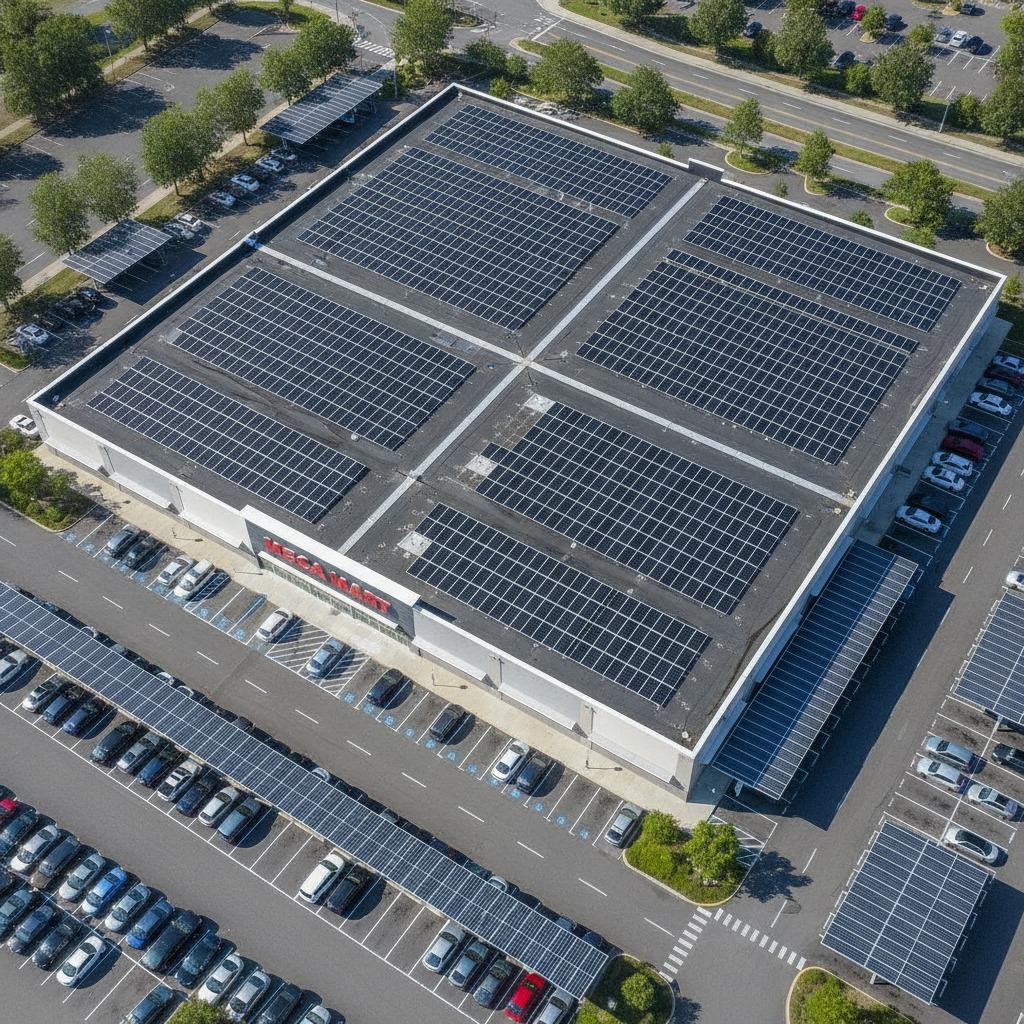
Why PV Systems for Retail Stores Are Becoming a Serious Facilities Decision
PV systems for retail stores are no longer just a sustainability talking point. For many owners and facilities teams, they are now a practical energy asset tied to operating cost control, brand positioning, and site resilience. That matters because retail buildings tend to have predictable daytime load profiles, which can line up reasonably well with solar generation. In plain terms: stores use a lot of electricity when the sun is available, and that makes the economics easier to evaluate than in some other commercial settings.
The decision is not simply whether solar panels fit on the roof. It is whether the building, the utility tariff, the store’s operating hours, and the capital plan all support the investment. A good project can reduce grid demand, offset a meaningful share of daytime consumption, and help a retailer hedge against future energy-price volatility. A poorly scoped one can become an expensive roof accessory with disappointing returns. That is why the early planning stage matters more than the equipment brand on the brochure.
What Retailers Usually Want to Know First
Before a sourcing manager or facilities director gets deep into component selection, the core questions are usually simple: how much roof area is usable, how much electricity the site consumes during business hours, and whether the project can be built without disrupting operations. Those questions are more important than trying to start with panel wattage or inverter architecture.
A retail store is a different kind of energy customer from a factory or office tower. Lighting, HVAC, refrigeration, signage, POS systems, and back-of-house equipment all create a steady daytime load. In many cases, that is helpful for solar self-consumption. The system is most valuable when the electricity it generates is used on-site rather than exported at a low compensation rate. That is one reason PV systems for retail stores often perform best when the design is matched to the store’s actual operating profile, not just the square footage of the roof.
Quick Reference: What Makes a Retail Solar Project Work
These are the main factors buyers usually weigh:
Roof condition and remaining service life
Load profile during daylight hours
Utility interconnection rules and export treatment
Available capital and preferred financing structure
Fire code, access, and maintenance clearances
Brand or ESG objectives, if they are part of the business case
That list looks straightforward, but in practice the order matters. A roof replacement scheduled two years from now can change the whole project timeline. So can a utility that caps backfeed or requires a long review process. Small details like these often decide whether a system moves forward cleanly or gets stuck in engineering limbo.
How Retail PV Systems Are Typically Configured
Most retail installations are rooftop systems, although canopies over parking areas are also common where site layout allows it. Rooftop systems use otherwise idle surface area and can be attractive for stores with large, flat roofs. Parking canopies do something extra: they generate power and provide customer comfort through shade, which can be useful in hot climates or at high-traffic properties.
The core equipment is familiar: photovoltaic modules, inverters, mounting structure, wiring, and monitoring. The engineering challenge is less about novelty and more about integration. Retail buildings often have lightweight roof structures, multiple rooftop penetrations, HVAC units, and strict access requirements. That means the mechanical layout needs to be respectful of the existing building envelope. A solar design that ignores maintenance routes or drainage lines can create headaches long after commissioning.
Rooftop Arrays
Rooftop arrays are usually the simplest route when the roof is structurally sound and the business wants to limit site work. They can be built in phases and are often easier to secure from a permitting perspective than more visible site structures.
Carport or Canopy Systems
Canopies are more involved structurally, but they can create customer-facing value. They also tend to be easier to pair with electric vehicle charging later, which some retailers see as a strategic advantage rather than a separate project.
Selection Criteria That Actually Matter
There is no single “best” solar setup for every store, which is annoying but true. The right choice depends on the roof, the utility rate structure, and the retailer’s ownership model. If the site is lease-controlled, the conversation gets more complicated because landlord consent, roof rights, and cost allocation all enter the picture.
Engineers and sourcing teams usually focus on the following criteria:
System size relative to daytime load: Oversizing can lower self-consumption and lengthen payback.
Roof condition: If the roof is near end of life, coordinate replacement first or bundle the work.
Structural capacity: Retail roofs vary widely, especially across older stores and retrofits.
Maintenance access: Technicians still need safe paths to HVAC and other rooftop equipment.
Monitoring: A store manager needs simple visibility, not a complicated dashboard nobody checks.
One practical caution: a solar proposal that looks attractive on paper can become less compelling once engineering, roof upgrades, utility studies, and downtime controls are included. That does not make the project a bad idea. It just means the final decision should be based on installed economics, not module pricing alone.
Why Daytime Load Profile Is So Important
Retail operations often align fairly well with solar production hours, but the degree of alignment can vary a lot. A grocery store with refrigeration and extended hours may use a larger share of on-site solar than a small specialty shop that closes early. A big-box store with strong HVAC loads during the afternoon may be an even better fit during peak summer months.
This is why project teams should study interval data whenever possible. Monthly utility bills can hide the real shape of demand. Interval data helps reveal whether the store uses power in a way that supports high solar self-consumption. That insight directly affects the size of the system, the expected grid imports, and the project’s financial case.
Common Mistakes Retail Buyers Make
One common mistake is treating every site as if it should host the maximum possible array. Bigger is not always better. If export compensation is weak, extra capacity may not earn its keep.
Another mistake is ignoring roof lifecycle. A store with a roof replacement due soon may need a phased plan instead of a full buildout. Skipping that discussion can lead to dismantling and reinstalling panels later, which nobody wants to pay for twice.
A third issue is underestimating operational disruption. Retailers are rightly sensitive to customer access, parking availability, and store safety. Construction planning should account for delivery schedules, peak shopping periods, and any site-specific security concerns. These are not side notes; they can be the difference between a smooth install and a very unhappy store manager.
What Good Buyers Ask Their EPC or Solar Partner
Buyers do not need to become solar engineers, but they should ask a few disciplined questions. How was the roof area measured and excluded for shading or equipment conflicts? What assumptions were used for annual production? How was degradation handled? What happens if the utility interconnection review takes longer than expected? Which party is responsible for roof penetrations, waterproofing coordination, and post-installation maintenance access?
Those questions help separate an experienced commercial solar team from a sales group relying on broad estimates. They also help establish who owns which risk. In retail, that matters because stores cannot afford open-ended construction surprises.
Operational Value Beyond Energy Savings
Energy savings are the headline, but they are not the only value. Retailers also look at resilience planning, especially where grid reliability is uneven or where a site supports essential community services. Solar alone does not keep a store running during an outage unless it is paired with storage and the right controls, but it can be part of a broader energy strategy.
There is also the customer perception angle. Some retailers use visible solar assets to reinforce sustainability commitments. That can be useful, but it should never be the sole reason for a project. A solar installation still needs to earn its place on the balance sheet.
A Practical Way to Start the Project
The best starting point is a site screening exercise that combines roof data, utility bills, interval load data if available, and any planned capital work on the building. From there, teams can determine which stores deserve deeper engineering review. Not every location will be a fit, and that is normal. The goal is to identify the stores where PV systems for retail stores can deliver a workable combination of production, self-consumption, and installation practicality.
For multi-site retailers, prioritization helps. Start with the locations that have strong daytime usage, healthy roofs, and uncomplicated utility conditions. Those sites usually produce the clearest early wins and give the organization a real-world template for later rollouts. Stores with lease complications or roof replacement needs can be handled in a second wave rather than forced into the first one.
FAQ: Retail Solar Planning Basics
Can every retail store use solar?
No. Some roofs are too small, too shaded, structurally limited, or too close to end-of-life. Some sites also face utility or lease constraints that make the project uneconomic.
Is rooftop solar always better than parking canopy solar?
Not always. Rooftop systems are often simpler and cheaper, but canopies can be valuable where roof space is limited or where shading and customer experience matter.
Should retailers size systems for maximum roof coverage?
Usually not as a first instinct. The better approach is to size around consumption patterns, export rules, and project economics.
What data is most useful at the start?
Utility bills, interval usage data, roof condition information, and any planned maintenance or capital upgrades for the site.
Next Step for Buyers
If your team is evaluating PV systems for retail stores, start with a site-by-site screening rather than a one-size-fits-all rollout plan. That approach saves time, reduces design churn, and gives procurement a clearer basis for comparing options. A careful first pass is usually where the best projects reveal themselves.
For sourcing and facilities teams, the real decision is not whether solar sounds good. It is whether a specific store can support a system that fits the roof, the load profile, the utility rules, and the capital plan. Get those pieces aligned early, and the project becomes much easier to defend later.






