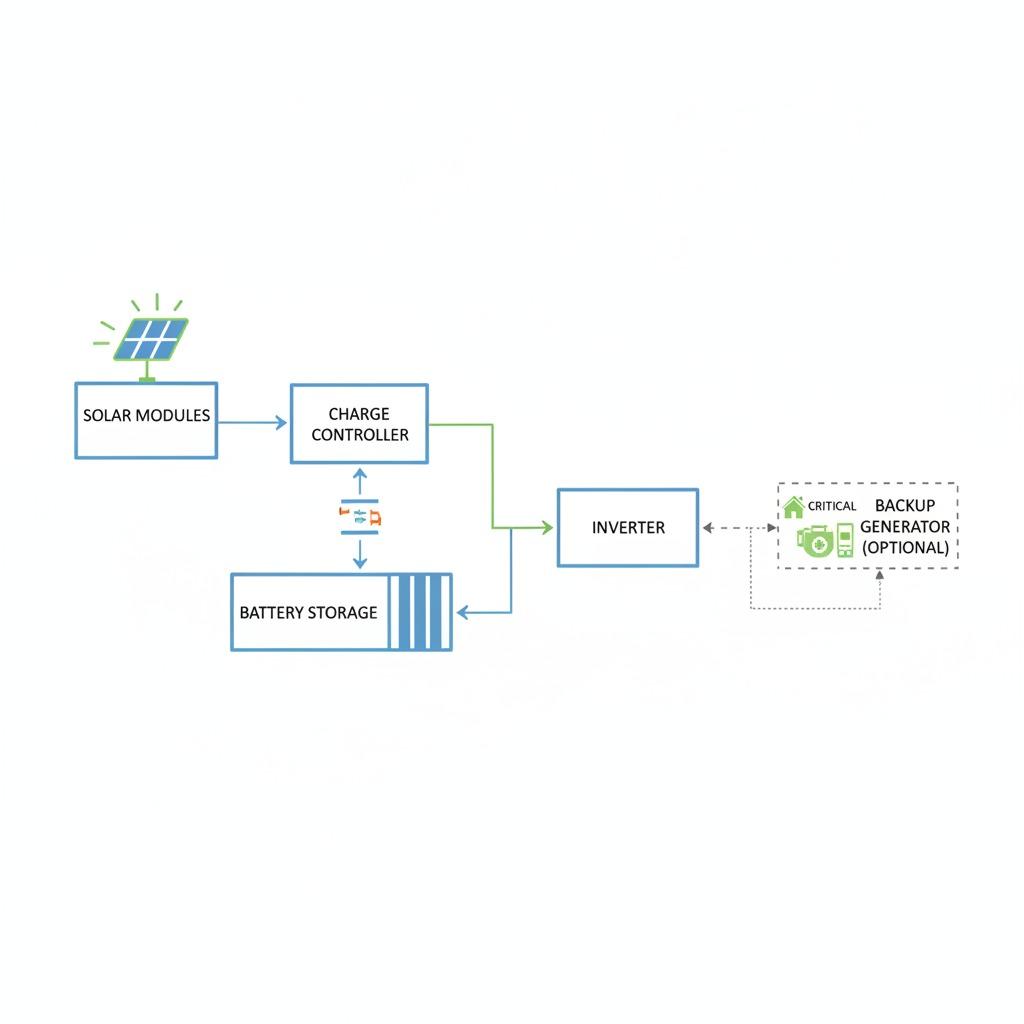

Why the cabinet matters in a residential battery energy storage system
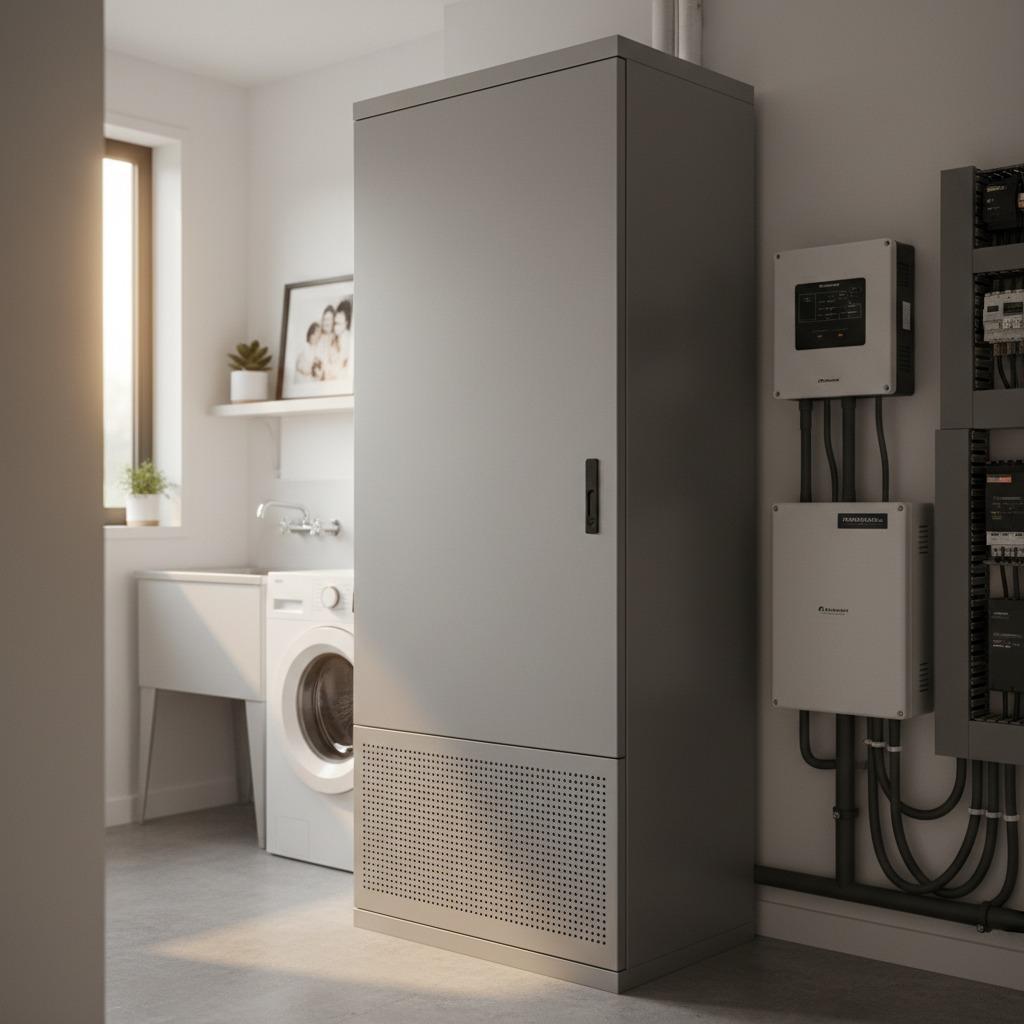
A residential battery energy storage system is often discussed as if it were only about capacity: how many kilowatt-hours, how many hours of backup, how much solar self-consumption. In practice, the cabinet or enclosure is just as important. It is the part that keeps electrical modules organized, shielded, serviceable, and reasonably safe in a tight residential footprint. If the housing is poorly conceived, even a capable battery package becomes harder to install, harder to inspect, and less pleasant to live with.
That is why buyers should look beyond headline storage numbers. Whether the project is a home battery storage system paired with rooftop solar or a broader residential energy storage installation for backup power, the enclosure determines how the system fits into a garage, utility room, or equipment area. It also shapes maintenance access, cable routing, and thermal management. Those are not glamorous details, but they are the details that decide whether the system is easy to own.
What a well-designed enclosure is doing behind the scenes
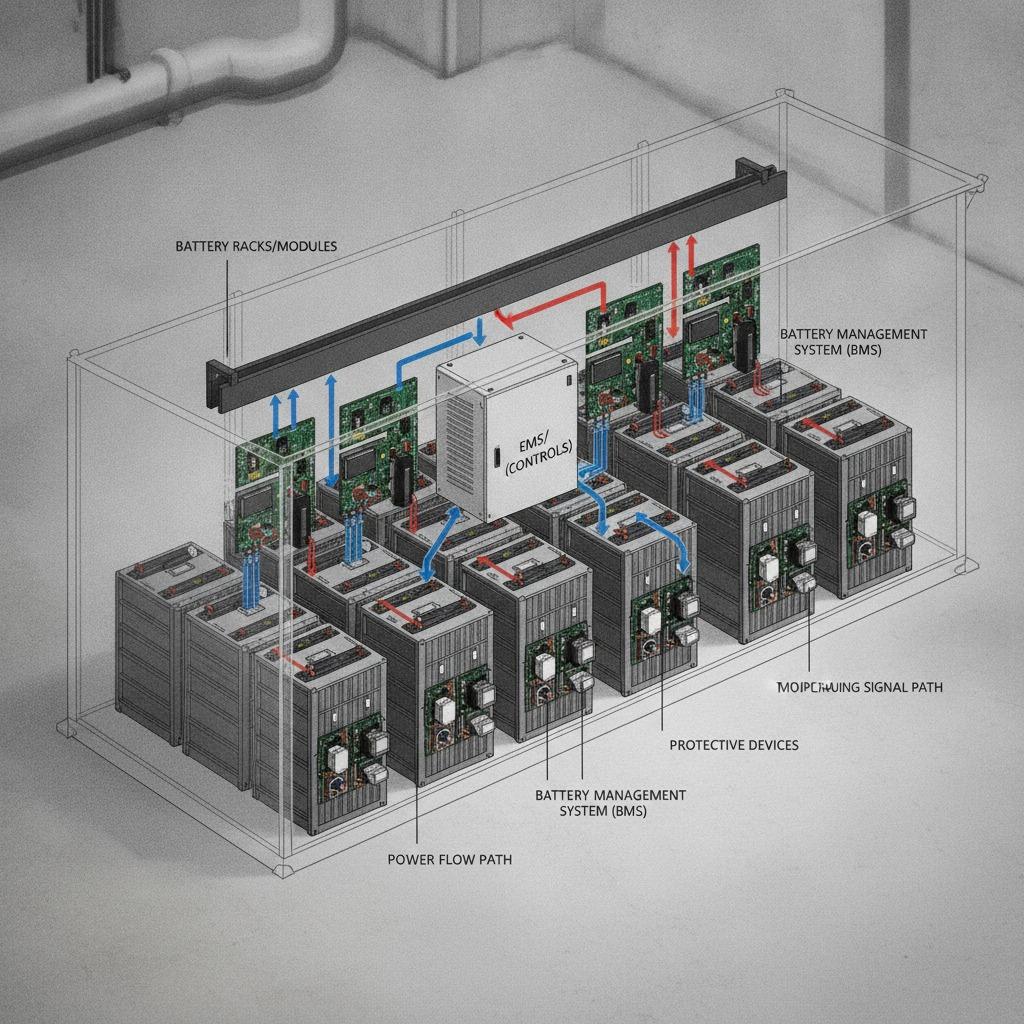
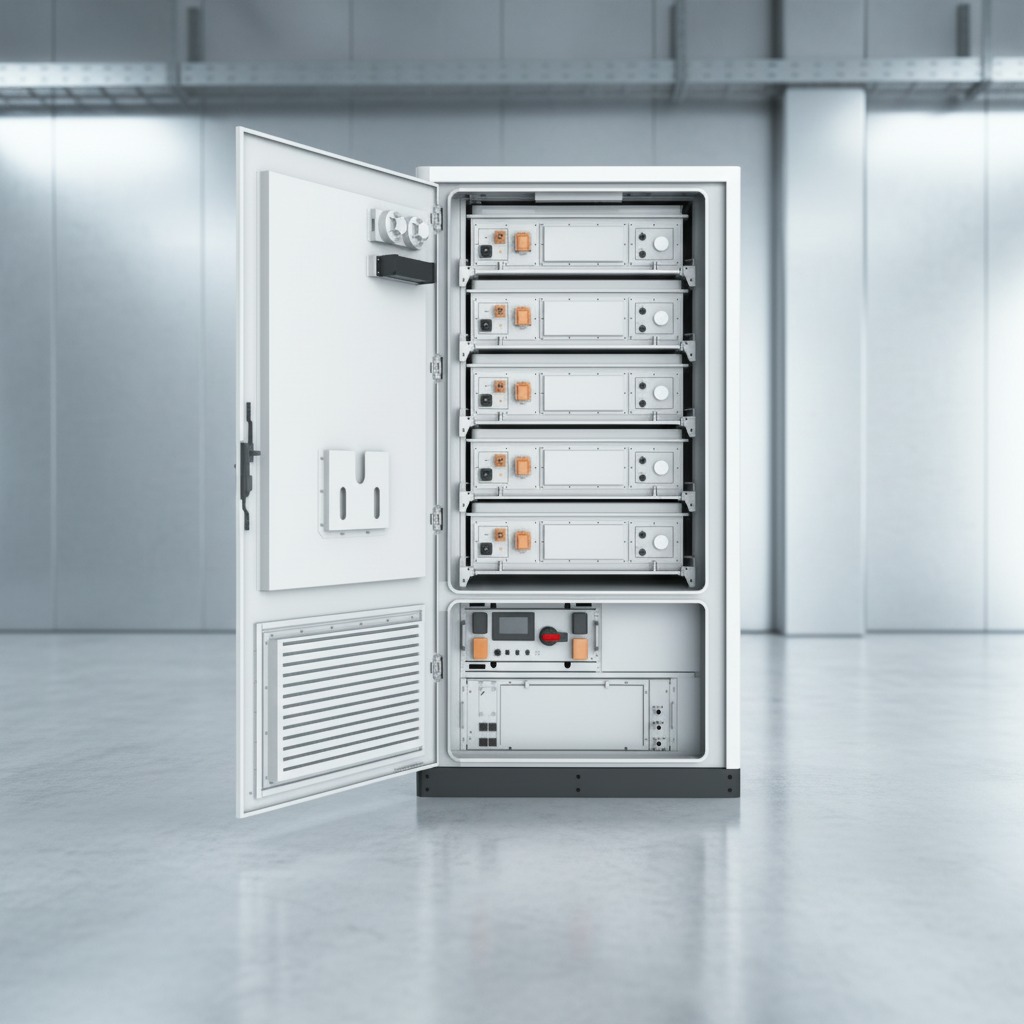
The cabinet described here is a tall rectangular metal enclosure with a hinged front door, latch or lock hardware, vented lower panel, and internal mounting frames. Inside, the upper section holds multiple stacked modular units in a rack-like arrangement, while the lower section contains a control interface module and a larger electronics unit. That layout is familiar to anyone who has worked around industrial power equipment, and it translates well to energy storage contexts because it separates major functional blocks and keeps them accessible.
A housing like this is not just a box. It is a structure that supports the internal assembly, protects sensitive components from accidental contact, and gives installers a clear path for servicing. The modular internal arrangement also matters when a project involves multiple electrical subsystems in one footprint. In residential work, space is always at a premium, so a vertical cabinet often makes more sense than spreading equipment across a wall and floor area.
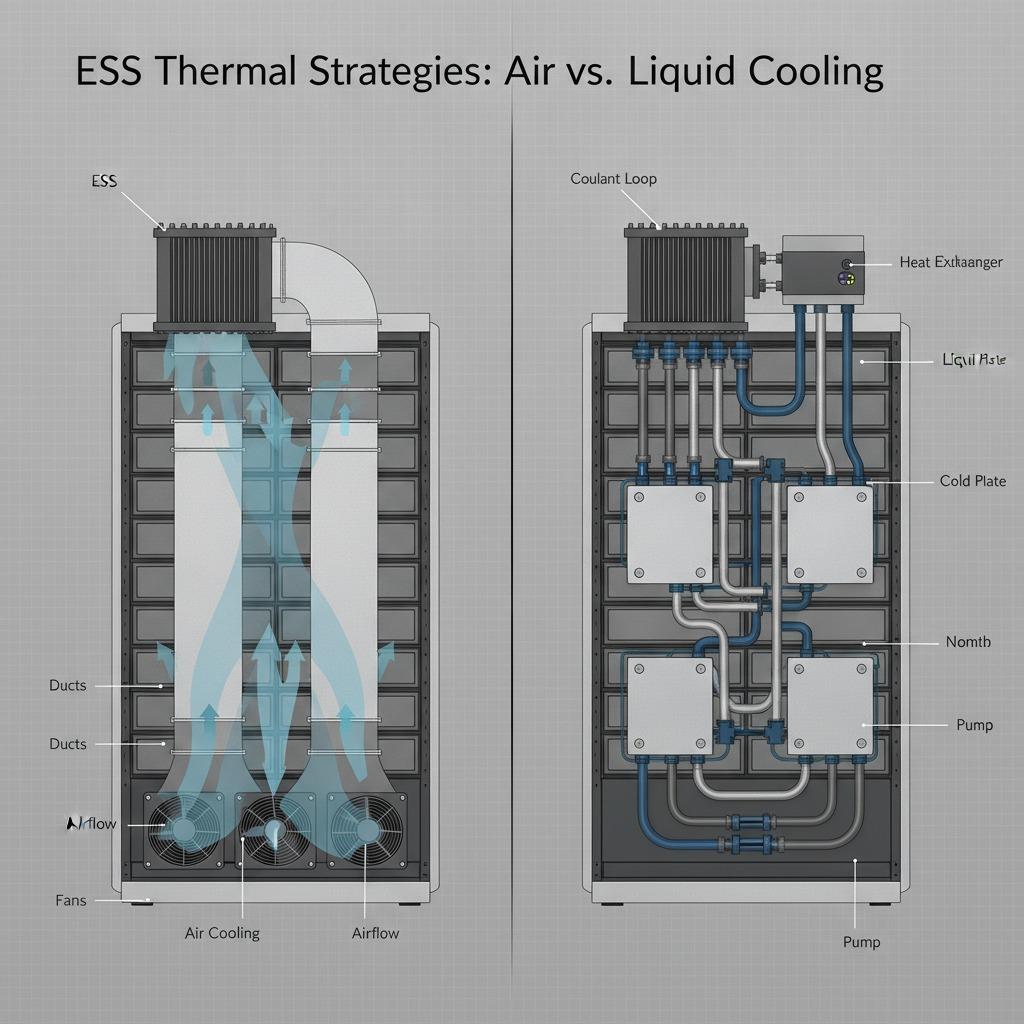
The vented lower door panel is another practical clue. In battery-adjacent systems, airflow and heat dispersion deserve attention even when exact thermal specifications are not disclosed. Venting alone does not guarantee proper thermal design, of course, but it signals that the enclosure is thinking about equipment breathing room rather than treating the cabinet as a sealed decorative shell.
Quick takeaways for buyers and project teams
If you are sourcing a residential battery energy storage system, the enclosure should help you answer four questions quickly:
How is the internal equipment organized?
How easy is it to access service points without dismantling half the system?
How are cables, airflow, and component spacing handled?
Will the cabinet fit the installation environment without creating maintenance headaches?
Those questions sound basic, but they are where many projects stumble. A unit can look compact in a brochure and still be awkward in the field once you account for door swing, clearance, and service access. A home battery storage system should not become the thing a technician dreads opening.
Cabinet features that actually affect installation
The visible construction suggests a sheet-metal fabricated enclosure, likely made from painted metal or powder-coated steel. That is a common and sensible choice for electrical storage and control cabinets because it balances structural rigidity, manufacturability, and finish quality. The darker base trim and black internal structural elements also point to a design that uses contrast to distinguish the frame from the outer shell, which can help during assembly and servicing.
Several design details are worth noting from a buyer’s perspective.
The hinged front door with lock or latch hardware supports controlled access. In residential environments, that matters not just for safety but for routine use; families, installers, and service contractors all interact with the same equipment.
The stacked modular units in the upper section suggest a scalable internal architecture. That can be useful when system designers want to package multiple battery or power modules into one enclosure without losing order.
The lower control/interface zone indicates a separate area for electronics that may need more frequent human interaction. Even if the exact function of that interface is not identified, the arrangement is logical: put the service-sensitive components where they are easier to reach.
The vented panel is a reminder that heat, while not the only issue, is always part of the conversation in residential energy storage. Buyers should still ask how airflow is managed overall, especially if the cabinet is intended for a garage, basement, or enclosed utility space.
What matters more than appearance: selection criteria
When comparing residential energy storage options, it is easy to get distracted by the outer finish or the sleekness of the front panel. Those are not meaningless, but they are secondary.
A better buying lens is this:
1. Internal layout
Does the enclosure organize modules cleanly, or is it a cramped stack of components with poor access? A clean layout reduces wiring confusion and service time.
2. Service access
A good residential battery energy storage system should allow inspection and replacement tasks without forcing a full teardown. The front-door access here is a strong sign in that direction.
3. Ventilation and heat awareness
Not every battery cabinet needs the same cooling approach, but every enclosure should show deliberate thinking about heat. Vents, spacing, and component separation all matter.
4. Mechanical robustness
Sheet-metal enclosures are common because they hold up well, but the real question is whether the doors, hinges, internal rails, and fasteners are built for repeated service, not just first installation.
5. Integration fit
A residential battery system often sits alongside inverters, solar hardware, or home electrical distribution. The cabinet should make integration easier, not force custom workarounds in the field.
Common mistakes buyers make
One frequent mistake is assuming that all battery storage cabinets are interchangeable because they perform the same broad function. They are not. Internal arrangement, cable entry, access points, and thermal behavior can differ enough to affect labor and long-term service cost.
Another mistake is underestimating the value of a well-ordered control section. In many projects, the control hardware is where troubleshooting starts. If that area is buried or poorly labeled, service calls take longer and mistakes become more likely.
A third issue is selecting a cabinet that looks compact on paper but becomes awkward in a real house. Residential equipment has to coexist with parked cars, storage shelves, wall studs, utility piping, and human movement. A slightly larger, better-organized enclosure can be the smarter choice if it avoids installation compromises.
How this design approach supports residential use
The described cabinet has a distinctly industrial character, but that is not a drawback by itself. In fact, residential battery energy storage systems often benefit from industrial-style enclosure thinking because the home environment still demands durability, structured wiring, and dependable access.
A vertical cabinet with modular internal mounting can simplify packaging. It can also reduce the number of separate wall-mounted boxes and the associated cable runs. For installers, that is a practical advantage. For homeowners, the visible result is usually a cleaner installation with fewer scattered components.
There is one caveat, though: industrial-looking does not automatically mean residential-ready. Buyers should still verify the system’s electrical compatibility, environmental suitability, and installation requirements before committing. Cabinet design is only one part of the equation, even if it is an important one.
Practical advice for sourcing teams and engineers
If you are evaluating a supplier or comparing enclosure options for solar battery storage, ask for clarity on the following points rather than relying on brochure language alone:
How are the modules mounted inside the cabinet?
What service operations can be performed from the front?
How are ventilation and cable access handled?
What parts of the enclosure are field-replaceable?
How does the cabinet support installation in a limited residential footprint?
Those questions keep the conversation grounded in manufacturability and maintenance, not just appearance. They also help separate a genuinely serviceable design from one that is merely tidy in photographs.
FAQ
Is a metal enclosure better for a home battery storage system?
Often, yes, because metal offers structural strength and good protection for internal components. But the design still has to account for access, airflow, and installation conditions.
Why does modular internal mounting matter?
It helps organize equipment, simplify assembly, and make future servicing less disruptive. In energy storage, that can save meaningful time.
Does a vented door mean the cabinet is properly cooled?
Not necessarily. It only indicates that ventilation was considered. Buyers should still ask how heat is managed as a complete system.
What should I focus on first when comparing residential energy storage cabinets?
Start with layout, access, and installation fit. Those are the attributes that most often affect real-world usability.
A useful next step
If you are sourcing a residential battery energy storage system or reviewing enclosure options for a home battery storage system, start by mapping the cabinet to the job site and the service plan. Measure the available space, think through door swing and cable entry, and ask how the internal modules are arranged. A neat enclosure is good. A neat enclosure that is easy to install and maintain is better.
For engineering teams and procurement managers, that is usually the dividing line between a product that simply ships and one that actually works in the field.