

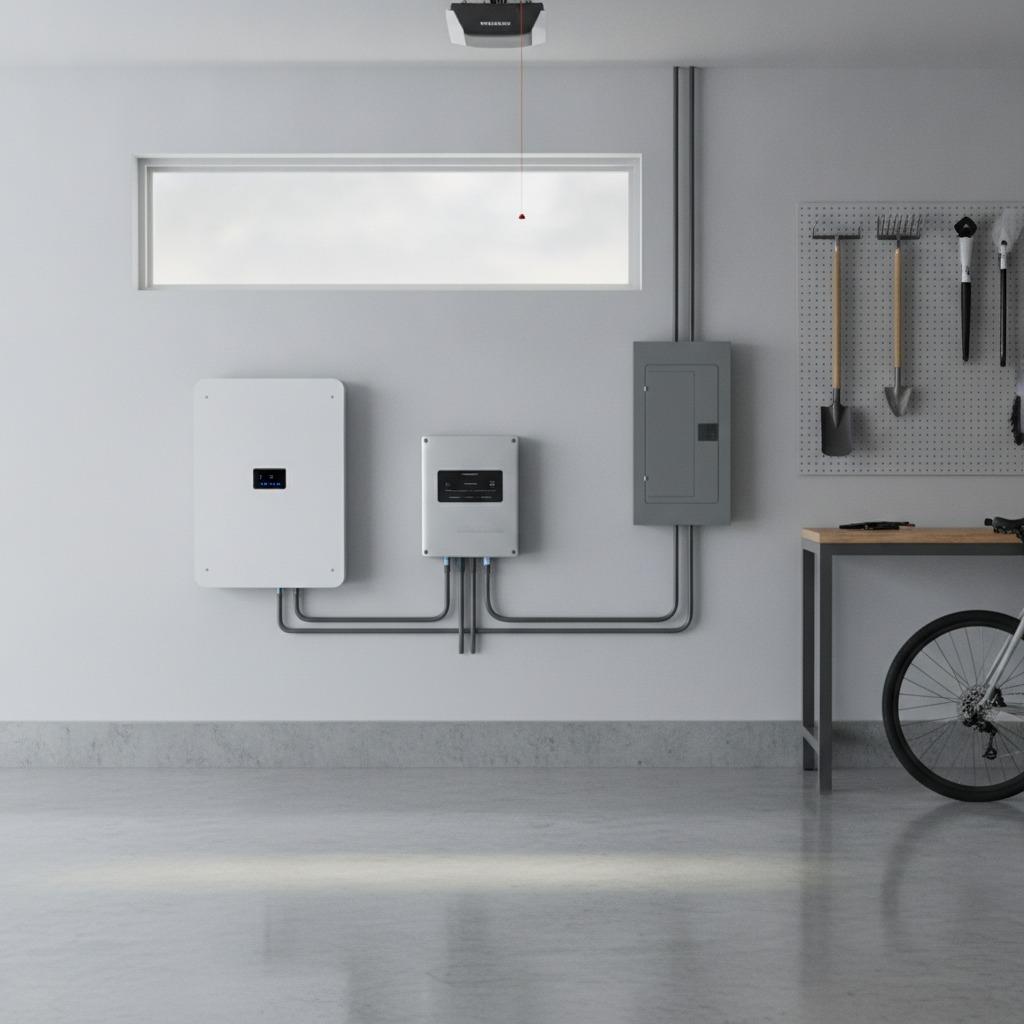
Residential Energy Storage Is No Longer a Niche Purchase
Residential energy storage has moved from a backup-power curiosity into a serious home energy decision. For many buyers, the question is no longer whether a battery system is useful, but what problem it should solve: outage protection, solar self-consumption, peak-rate control, or a blend of all three. That matters because the right system for a homeowner with rooftop solar is not always the same as the right system for a family mainly worried about blackouts, and it certainly is not the same as a system sized around future electric vehicle charging or heat-pump loads.
For engineers, sourcing teams, and product planners, the market is worth paying attention to because expectations are changing quickly. Buyers want compact equipment, safer chemistries, simpler installation, cleaner software, and less ambiguity about what the system can actually do when the grid goes down. The product is no longer just a battery. It is a packaged energy decision.
What Buyers Are Really Trying to Solve
A home battery can support several goals, but it helps to separate them before comparing products.
If the main concern is outage resilience, the priority is usable backup power, transfer behavior, and whether the battery can support critical loads for the time the homeowner expects. If the goal is to improve solar economics, then round-trip efficiency, charge/discharge scheduling, and integration with the inverter matter more. If the buyer is focused on utility rate arbitrage, software controls and time-of-use management become central.
This is where many projects go off the rails. A system sized for evening load shaving may disappoint during a multiday outage. A battery chosen mainly for backup may be oversized for daily cycling and take too long to pay back. Residential energy storage works best when the use case is defined early and the electrical layout is considered alongside the product choice.
Quick View: The Main Decision Points
1. Capacity versus power
Capacity tells you how much energy the battery can store. Power tells you how quickly it can deliver that energy. Homeowners often focus on capacity because it sounds larger and easier to compare, but power limits are what determine whether major appliances can run at the same time. That distinction is often glossed over in sales conversations.
2. Backup mode behavior
Not every battery offers the same outage experience. Some support whole-home backup when paired with appropriate switchgear; others are limited to critical loads. Some transition smoothly, while others require careful installation and configuration. The difference is not academic when a freezer, sump pump, or home office is involved.
3. Chemistry and safety profile
Many modern home systems use lithium iron phosphate, or LFP, because it is widely regarded as stable and durable for stationary storage. That does not remove the need for good enclosure design, thermal management, and proper installation practices, but it does shape buyer confidence. In the home segment, chemistry choice often influences not only cycle life but also customer comfort.
4. Software and controls
A battery system that cannot be monitored or scheduled intelligently can become an expensive box on the wall. Home energy management software should help the owner see state of charge, system status, and charging logic without forcing them into a clumsy interface. For installers and channel partners, software simplicity can reduce commissioning time and support calls.
Where Residential Energy Storage Fits in the Home Energy Stack
A useful way to think about the technology is as part of a wider home system rather than a standalone product. The battery may sit behind a solar array, an inverter, a main service panel, smart meters, load controllers, and sometimes EV charging equipment. Each piece influences the others.
That is why product selection cannot stop at battery branding. Engineers need to look at compatibility, communication architecture, enclosure type, and installation environment. Sourcing managers should also examine what is bundled and what is optional. Some systems are sold as nearly complete ecosystems. Others depend on third-party inverter or control components. Both approaches can work, but they create different risks for warranty handling, inventory planning, and serviceability.
A buyer should also ask a practical question: who will support the system after installation? A technically elegant product is only half the story if field troubleshooting is difficult or replacement parts are awkward to obtain.
Common Product Formats
Residential storage products usually appear in a few familiar forms.
Wall-mounted systems are popular because they save floor space and fit neatly into garages or utility rooms. They can simplify installation where footprint is limited, but thermal and clear-space requirements still need attention.
Floor-standing cabinets may be better for larger capacity or modular configurations. They can offer easier service access and more room for expansion, though they take up more space.
Modular stackable designs appeal to buyers who want to start small and add capacity later. This can be useful in phased projects, but only if the architecture truly supports expansion without awkward retrofit work.
In practice, the best format depends on the building, the service panel arrangement, and the customer’s appetite for future changes. A product that looks elegant in a brochure may be less elegant in a cramped garage with poor ventilation and a crowded wall.
Selection Criteria That Matter in the Real World
Several factors deserve more weight than they often get during first-round product comparisons.
Installation complexity is one. A system that demands unusual mounting conditions or multiple add-on components can raise labor time and installation risk. That affects total project cost even if the hardware price looks reasonable.
Interoperability is another. Home energy projects often bring together solar, storage, and controls from different suppliers. The more closed the ecosystem, the more important it is to verify exact compatibility before purchase.
Expandability matters for households that may add an EV charger, heat pump, or additional solar later. An undersized system may still be the right purchase if the architecture supports growth cleanly. The caution is simple: expansion should feel planned, not improvised.
Noise, footprint, and appearance may sound secondary, but they can decide whether a homeowner accepts the proposal at all. Product teams sometimes underestimate how often the installation location is a living space adjacent area rather than a purely industrial utility room.
Common Mistakes Buyers Still Make
The first mistake is buying for a headline capacity number instead of a use case. More kilowatt-hours are not automatically better if the inverter power is too low or the backup strategy is incomplete.
The second is ignoring load profiles. A house with electric cooking, a well pump, or central air conditioning behaves very differently from one with modest evening loads. Batteries should be matched to actual demand curves, not assumptions.
The third is treating software as a bonus feature. In residential energy storage, software is part of the product definition. If monitoring, controls, or alerts are weak, the ownership experience usually degrades over time.
The fourth is underestimating installation constraints. Wall strength, clearances, local code requirements, and service access all influence whether a project is straightforward or irritatingly complex. A fast procurement decision can create a slow field problem.
What Engineers and Sourcing Teams Should Ask Before Buying
A serious evaluation should cover a few plain-language questions:
What exactly is the system expected to do during an outage?
Can the battery support the required loads for the expected duration?
Is the product designed for daily cycling, standby backup, or both?
How does it integrate with inverters, meters, and monitoring tools?
What components are included, and what must be sourced separately?
How is service handled if a module, controller, or communication element fails?
These questions sound basic, but they prevent a lot of expensive confusion later. Too many residential projects are sold as complete solutions when in fact they are bundles of assumptions.
Buyer Advice: Read the Proposal Like a System Engineer
A homeowner-facing proposal should be readable, but the buyer still needs to think like a systems engineer. Do not compare only battery size and price. Look at usable capacity, power delivery, backup scope, installation requirements, and what the control software actually does.
If the proposal includes solar coupling, check whether the storage system is intended for AC coupling or DC coupling and whether that affects efficiency or complexity. If the project is backup-centric, confirm the critical loads plan rather than assuming the whole house will behave as advertised. If the project is utility-rate-driven, verify that the software can respond to the actual tariff structure, not just a generic time-of-use pattern.
Small caveat: the cleanest spec sheet is not always the easiest system to live with. Field support and commissioning quality still matter a great deal.
FAQ on Residential Energy Storage
How long does a home battery last?
That depends on capacity, power draw, and the actual loads being served. A battery may look substantial on paper and still run out quickly if several large appliances are operating together.
Can residential storage work without solar?
Yes. Some systems are installed primarily for backup or tariff management. Solar often improves the economics, but it is not a strict requirement.
Is one battery enough for whole-home backup?
Sometimes, but not always. Whole-home backup depends on load size, peak power, and outage duration expectations. In many homes, critical-load backup is the more practical design.
What should buyers watch most closely?
They should watch compatibility, safety design, usable capacity, and the quality of the controls. Those four usually decide whether the installation is satisfying or merely expensive.
A Practical Next Step
For anyone evaluating residential energy storage, the best next move is to define the use case first and then compare products against that scenario, not the other way around. Once the load profile, backup expectation, and integration requirements are clear, the field narrows quickly and the purchase becomes easier to defend.
That is the real value of a good storage decision: not just more battery on the wall, but a system that fits the house, the electrical design, and the owner’s expectations without creating headaches six months later.






