

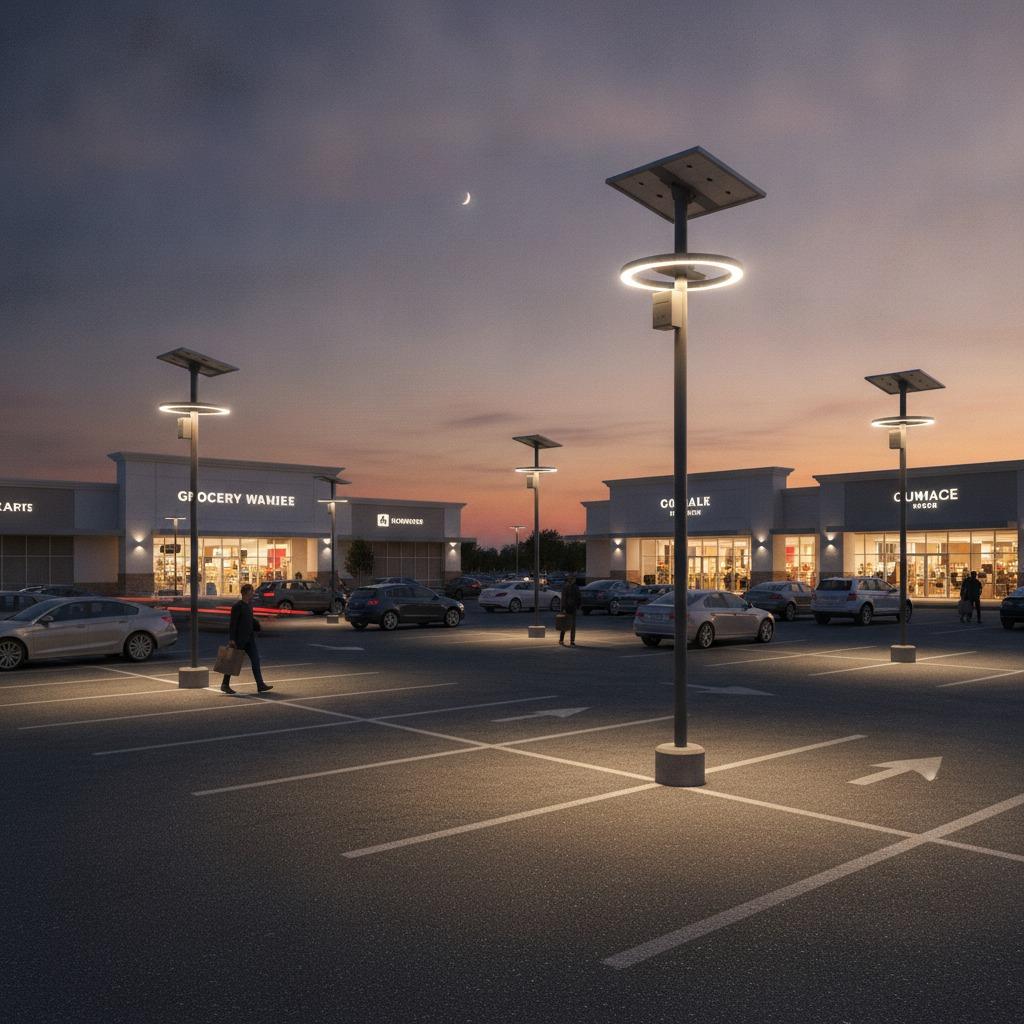
Why solar lighting for commercial parking lots is getting serious attention
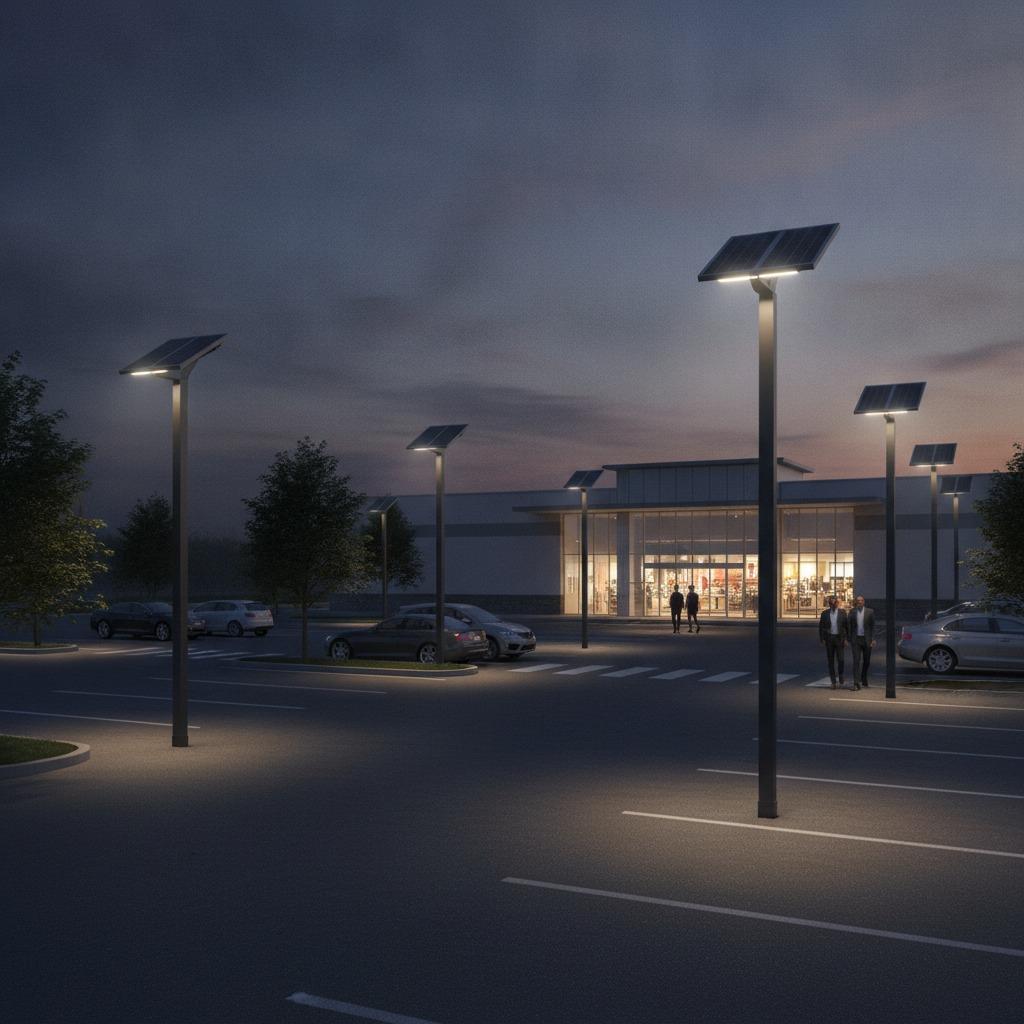
Solar lighting for commercial parking lots used to sit in the same category as a lot of “nice idea, maybe later” building upgrades. That has changed. For property owners, facility managers, and project teams, the question is no longer whether solar lighting can work in a parking lot, but where it makes business sense, what tradeoffs come with it, and how to avoid buying a system that looks good on paper and disappoints in the field.
Parking lots are not small decorative spaces. They are high-traffic, safety-sensitive areas where people make split-second decisions: where to walk, where to park, whether a space feels secure, and whether the property is easy to navigate after dark. Lighting affects all of that. It also affects utility bills, trenching costs, maintenance schedules, and the timing of project approvals. A solar approach can reduce dependence on grid power and simplify installation in certain sites, but it is not a universal replacement for conventional lighting. The decision depends on the lot’s layout, sun exposure, traffic pattern, and how much light level consistency the owner expects through the year.
What buyers are really trying to solve
Most buyers are not shopping for solar panels. They are trying to solve one of a few practical problems:
The site has no easy power access and trenching would be expensive or disruptive.
The owner wants to reduce operating costs, especially at properties with large lighting loads.
A retrofit must be installed without opening up paved surfaces or disturbing active operations.
The project needs lighting in remote corners, overflow areas, or satellite lots where running utility power is inconvenient.
In some cases, solar lighting also supports resilience planning. If the grid is unreliable or outages are a concern, an автономous system can keep selected areas lit when conventional power fails. That said, “off-grid” should not be mistaken for “maintenance-free.” Batteries age, panels collect dirt, and fixtures still need inspection. Buyers who understand that early usually make better decisions later.
How solar parking lot lighting works in plain terms
A solar parking lot lighting system typically combines four elements: a solar panel, a battery, an LED fixture, and a controller. During daylight hours, the panel charges the battery. At night, the battery powers the light. The controller helps manage charging and discharge, and in many systems it also handles motion sensing or dimming profiles.
The arrangement sounds simple, but performance hinges on balance. If the panel is undersized, the battery may not fully recover after cloudy days. If the battery is too small, the fixture may not stay lit through the required hours. If the light distribution is poor, you may end up with bright poles and dark aisles, which is not much of an upgrade from the old setup.
For parking lots, uniformity matters as much as raw brightness. Drivers need clear sightlines and pedestrians need predictable light along walkways, entrances, and crossing points. A well-designed solar system should account for those uses rather than just producing a large lumen number on a product sheet.
Where solar lighting fits best, and where it may struggle
Solar lighting for commercial parking lots tends to fit best on sites with strong daytime sun, moderate lighting demand, and clear mounting locations. That often includes suburban retail lots, auxiliary parking areas, remote employee lots, service yards, and overflow areas that are not expected to behave exactly like a downtown garage.
It can also be attractive where trenching is the real budget problem. In a conventional lighting project, the civil work sometimes costs more than the lighting hardware itself. Once you start cutting pavement, coordinating electrical pathways, and restoring the surface, the project gets expensive fast. Solar may sidestep much of that.
But the technology has limits. Sites with heavy shade, dense tree cover, snow accumulation, frequent dust, or long periods of poor weather can be tougher candidates. Large lots with demanding uniformity requirements may still need hybrid planning or conventional power. Shoppers should be cautious about claims that one solar fixture can replace every use case. It usually cannot.
Key factors to compare before you buy
1. Sun exposure and mounting position
This is the first filter. A product may perform well in a brochure yet underdeliver if the panel faces the wrong direction, sits in shade for part of the day, or is mounted where nearby structures block winter sun. Parking lots often have light poles, signage, and landscaping that create practical constraints. Site mapping matters more than sales language.
2. Required runtime
How many hours does the lot actually need light? Not every area needs full-output illumination all night. A retail lot may need different behavior than a 24-hour logistics site. Some systems offer scheduling or dimming profiles, which can help stretch battery life without making the property feel dim at peak traffic times.
3. Battery storage and replacement planning
Battery capacity is central to performance, especially during consecutive cloudy days. Buyers should ask what battery chemistry is used, how the system behaves as batteries age, and how replacements are handled. Even a very good system will eventually need battery service. That is not a flaw; it is part of ownership.
4. Light distribution and pole layout
Parking lot lighting is about coverage, not just output. A tightly focused beam might look impressive near the pole and leave the driving lane underlit. Wider optics, pole height, spacing, and mounting angle all affect the final result. If possible, review layout drawings rather than relying only on fixture specifications.
5. Controls and sensors
Motion sensing can reduce energy use and extend autonomy, particularly in lower-traffic zones. But it should be applied carefully. A lot that suddenly brightens and dims too aggressively can feel erratic to drivers and pedestrians. Controls should support the site, not create a flickering effect that makes people uneasy.
Common mistakes that cost buyers later
One mistake is treating solar lighting as a commodity purchase. It is not just a fixture; it is a system matched to weather, usage, and layout. Another is ignoring seasonal variation. A lot that seems fine in summer may behave differently in winter, especially in northern climates or areas with frequent cloud cover.
A third mistake is underestimating maintenance access. Even though solar eliminates trenching and can reduce some electrical work, crews still need safe access for cleaning panels, checking mounting hardware, and servicing batteries or controllers. If the installation is placed where lifts cannot easily reach it, future maintenance becomes awkward and more expensive.
There is also a habit, especially on fast-moving projects, of comparing only upfront cost. That can be misleading. Buyers should look at total project scope: civil work avoided, wiring avoided, utility coordination avoided, and the ongoing service needs of a solar system versus a wired one. Sometimes the solar option is clearly better. Sometimes it is simply more flexible. Sometimes it is a poor fit, and it is better to say so early.
Questions sourcing teams should ask vendors
A useful vendor conversation goes beyond wattage and lumens. Ask how the system performs after several cloudy days. Ask whether the product is designed for parking lot use or adapted from a different application. Ask how the manufacturer handles battery replacement and whether spare parts are available in a practical timeframe.
It is also worth asking for layout support. A supplier that can help evaluate pole spacing, mounting height, and expected coverage is usually more useful than one that only quotes hardware. For engineers and product teams, that distinction matters. Lighting that is technically installed is not the same thing as lighting that is actually effective.
Buying advice for commercial and industrial sites
If the site is a retrofit, start by identifying the hardest parts of the current lighting project: trenching, electrical access, downtime, or expanding coverage into remote zones. If the site is new construction, compare the solar option against the complete cost of a wired system, not just the fixture price.
For high-visibility commercial properties, the decision often comes down to confidence. Can the system deliver reliable illumination in the real weather your site sees, not just in an ideal specification sheet? If the answer is yes, solar can be a smart fit. If the answer depends on too many assumptions, a hybrid approach may be safer.
A practical buyer will also think about future change. Parking patterns evolve. Tenants change. Tree canopies grow. Delivery traffic increases. The best lighting choice is the one that can survive those shifts without becoming a maintenance headache.
FAQ: solar lighting for commercial parking lots
Can solar lighting replace all grid-powered parking lot lights?
Sometimes, but not always. It depends on sun exposure, required runtime, lot size, and the uniformity expected across the property.
Is solar lighting only for remote or rural sites?
No. It is also used in suburban and urban settings where trenching is costly or disruptive, or where only certain sections of a lot need illumination.
Does solar lighting require maintenance?
Yes. Panels should stay clean, batteries eventually need replacement, and hardware should be inspected periodically.
What matters more: lumens or system design?
System design. Output matters, but good coverage, battery sizing, and site fit matter more in practice.
Next step for project teams
If you are evaluating solar lighting for commercial parking lots, begin with a site review instead of a product search. Measure sun exposure, identify the hours the lot truly needs light, and map where uniform coverage is most important. That simple work will filter out a surprising number of weak options.
From there, compare systems on real-world fit: panel placement, battery capacity, maintenance access, and how the light will behave in winter, after cloudy stretches, and across the busiest parts of the lot. The right system is the one that solves the site problem cleanly, not the one with the flashiest spec line.






