

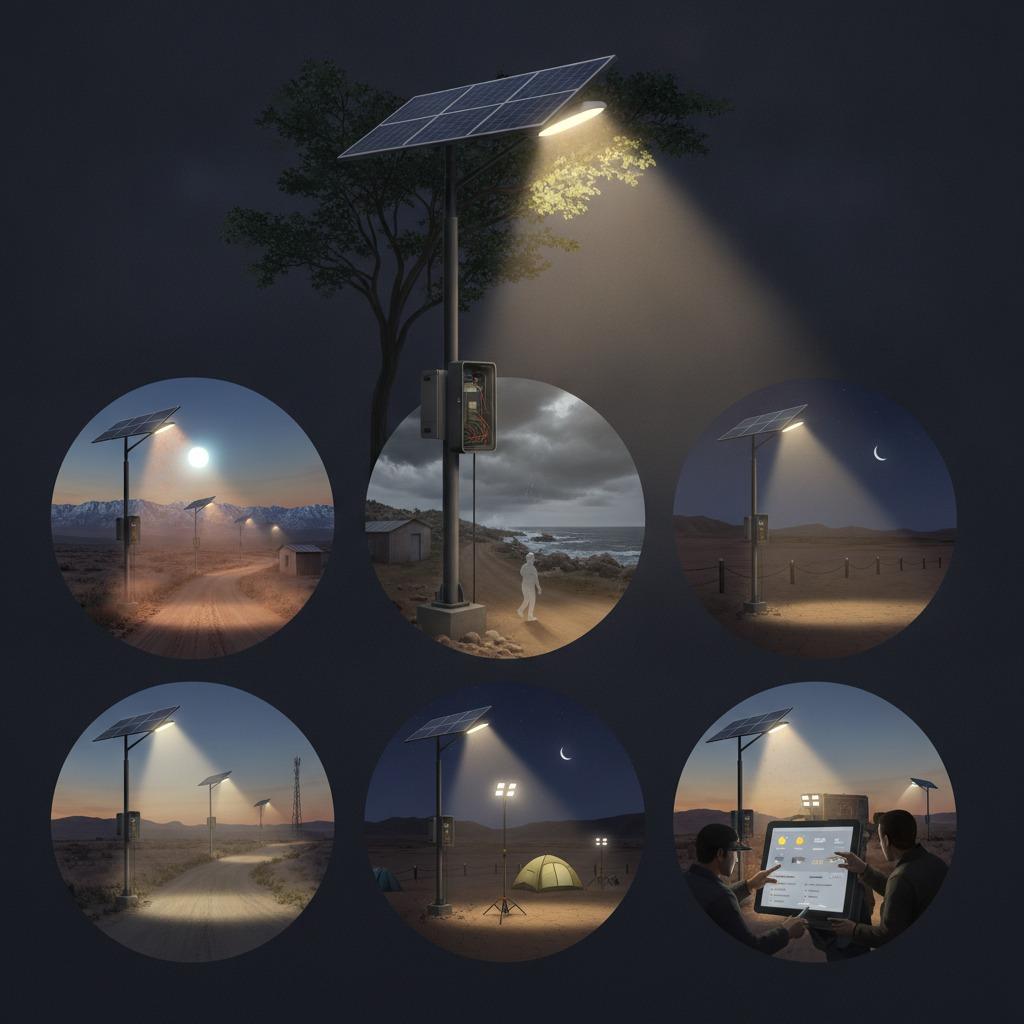
Why solar lighting in remote areas has become a practical infrastructure choice
Solar lighting in remote areas is no longer a niche option for off-grid cabins and emergency backup paths. For engineers, sourcing managers, and project teams, it has become a serious way to solve a basic infrastructure problem: how do you provide reliable light where grid power is absent, expensive to extend, or simply too unstable to depend on?
That question matters because lighting affects far more than visibility. It changes safety, night-time working conditions, security, navigation, and how often a site can operate after dark. In mining camps, rural roads, agricultural facilities, telecom sites, border posts, and disaster-relief zones, the decision is rarely about aesthetics. It is about uptime, maintenance burden, and whether the system will keep working when no one is there to nurse it along.
Solar lighting sounds straightforward, but the buying decision is usually more complicated than it first appears. The practical challenge is matching the lighting system to the site’s weather, usage pattern, mounting constraints, and service expectations. A fixture that performs well on a city street can fail badly on a remote track if the battery sizing, pole height, or control logic is wrong.
What buyers usually need to decide first
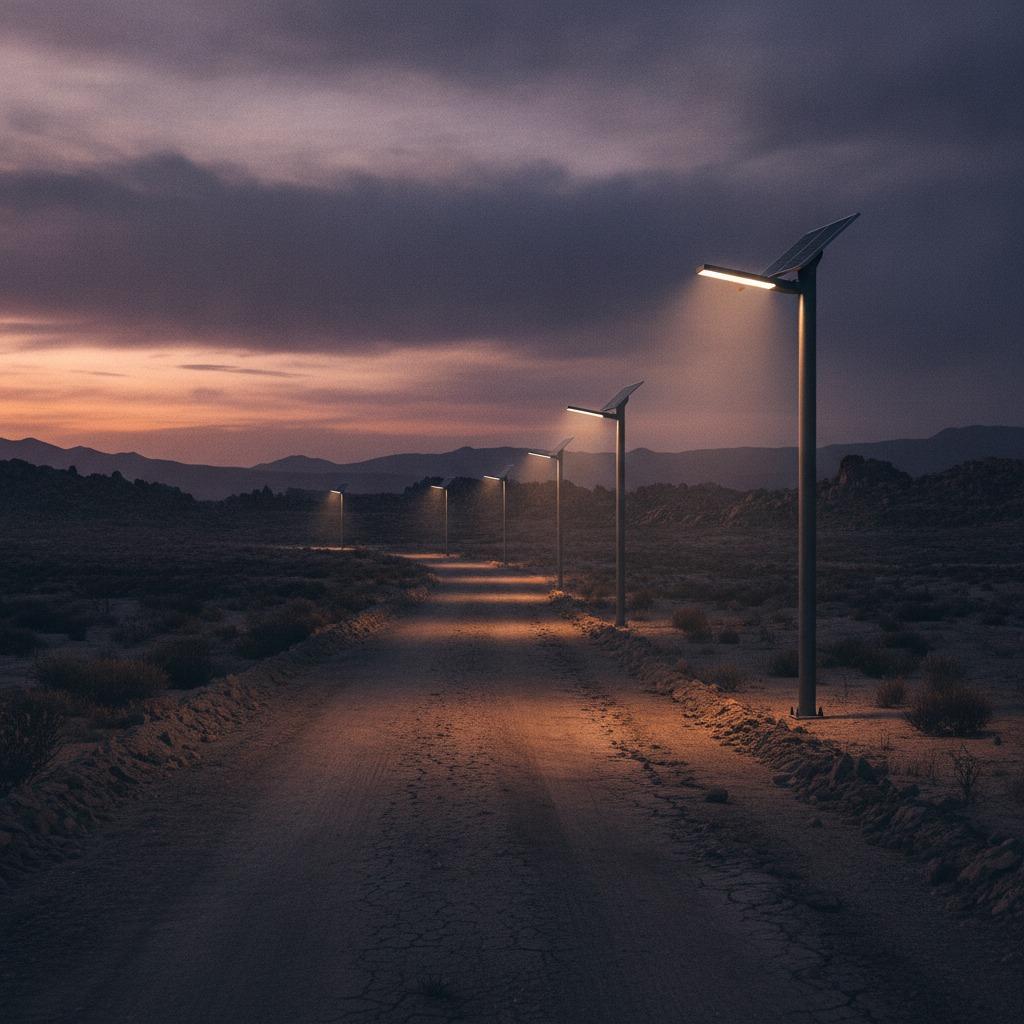
Before comparing fixtures, it helps to narrow the real requirement. In remote projects, buyers are often choosing between a few broad system types: all-in-one solar luminaires, split systems with separate panels and light heads, and larger site-lighting setups designed for poles, compounds, or road sections. The right answer depends less on the catalog description and more on the operating environment.
If the location has frequent cloud cover, heavy dust, or long winter nights, the energy budget gets tight quickly. If the site sees occasional human traffic only, motion-based operation can preserve battery life. If the installation must be vandal-resistant or easy to deploy in phases, compact integrated units may make sense. If the project needs higher light output for work zones, separate components with larger panels and batteries are often easier to scale.
A useful rule of thumb: the more remote the site, the more the buyer should value system simplicity, field serviceability, and conservative energy design over theoretical maximum brightness. Too many projects are specified around ideal daylight assumptions and then underperform after the first dusty season.
Core system elements that determine performance
Every solar lighting system is built from a few critical parts, and each one deserves attention. The panel collects energy, the battery stores it, the controller manages charging and discharge, and the LED fixture provides the light. On paper, that looks simple. In practice, the interaction between those parts determines whether the installation is dependable or troublesome.
Solar panel sizing
Panel capacity should be matched to the local solar resource and the expected daily load. In remote areas, oversizing is usually safer than cutting it close, especially if the site is hard to reach during bad weather. A system that works only under strong sun may look fine during commissioning and then disappoint when seasonal conditions shift.
Battery storage
The battery is often the hidden limiter. If the storage is too small, the light may dim early, reduce output on consecutive cloudy days, or shut down before dawn. Battery chemistry, thermal tolerance, and cycle life all matter, though the practical choice should also consider local replacement logistics. A technically impressive battery that cannot be replaced locally can become a maintenance headache.
Control and operating modes
Controls matter more than many buyers expect. Dimming schedules, dusk-to-dawn operation, and motion sensing can reduce consumption and extend service life. For some remote sites, a two-step mode is enough: full output during expected activity, reduced output afterward. That kind of logic is less glamorous than a feature-rich app, but it often does the job better.
Why remote locations punish weak product design
Remote environments are hard on equipment because there are fewer opportunities for routine intervention. A light on a city block can survive a minor fault until the next service call. A light on an isolated access road may not get that second chance. That reality changes what “good enough” means.
Dust can reduce solar collection. Salt air can attack housings near coastal sites. Heat can shorten battery life. Freezing temperatures can affect storage behavior. Strong winds can stress poles and mounting arms. In areas with wildlife or theft risk, enclosure strength and fastening methods become more than an afterthought.
For buyers, this means the selection process should include not just lumens and wattage, but environmental durability, sealing quality, mounting robustness, and how the product handles partial shading or imperfect orientation. A remote project rarely gets perfectly optimized field conditions, so the product should tolerate real-world mistakes.
Where solar lighting makes the most sense
Solar lighting in remote areas is especially useful where trenching cable is expensive or where utility power is unavailable for long stretches. Common applications include rural access roads, farm perimeters, utility corridors, remote parking areas, village walkways, temporary work camps, construction staging areas, and emergency response zones. It is also used around telecom installations and other sites where technicians need safe movement after dark but continuous grid tie-in is impractical.
These projects tend to share one trait: the cost of bringing power to the point of use is high, and the cost of failure is also high. That combination makes solar lighting attractive because it shifts energy generation to the point of consumption and reduces dependence on long supply lines.
Common selection mistakes buyers still make
The most frequent mistake is comparing products only by advertised brightness. Brightness matters, but a remote installation lives or dies on nightly runtime and seasonal resilience. A fixture that looks powerful in a brochure may not carry through an extended cloudy period.
Another common error is ignoring installation angle and shading. Even partial shading from poles, nearby trees, or equipment can cut charging performance more than buyers expect. In field projects, it is not unusual for a site to be physically suitable but electrically compromised by poor placement.
Buyers also sometimes underweight maintenance access. If a battery replacement requires special tools, a lift, or a long shutdown, that should be understood upfront. Remote projects reward products that can be inspected quickly and serviced without a large crew.
Finally, there is a tendency to specify for peak conditions rather than worst-case conditions. If the site must work through a weak solar season, the design should be based on that reality. That may mean accepting a larger panel, a larger battery, or a slightly lower output target. It is usually better to make that trade consciously than discover it later.
How to evaluate suppliers and product claims
When comparing suppliers, ask for the operating assumptions behind the design. A useful vendor should be able to explain how the system handles daily runtime, local solar availability, mounting orientation, and the expected service approach. If the answer is vague, that is a warning sign.
It is also sensible to ask how the product performs under adverse conditions such as consecutive cloudy days, high ambient temperatures, or dust buildup. Exact numbers may vary by model and configuration, so you should be cautious about any claim that sounds universal. Real performance depends on the site, not just the datasheet.
For procurement teams, lifecycle cost is the better comparison than purchase price alone. A cheaper light that needs early battery replacement, repeated truck rolls, or frequent cleaning can cost more over time. The best fit is usually the system that reduces intervention, not the one with the lowest initial quote.
Practical guidance for engineering and sourcing teams
Engineering teams should start with the load profile: how many hours the light must operate, at what intensity, and under what weather assumptions. Sourcing teams should then translate that into a manageable specification package that includes mounting constraints, environmental exposure, warranty expectations, and service access.
It also helps to separate “must-have” features from “nice-to-have” features. Remote installations benefit from rugged housings, reliable charge management, and straightforward replacement parts. Smart controls, remote monitoring, and network integration can add value, but they should not distract from basic energy balance.
For temporary sites, portability and rapid deployment may matter more than long-term modularity. For permanent infrastructure, serviceability and spare-part strategy usually deserve more weight. The wrong priorities can make a product look suitable in the office and awkward in the field.
Buyer checklist for remote projects
A solid purchasing review should answer a few blunt questions: Can the system survive the local weather? Will it operate through the expected low-sun period? Is maintenance realistic? Can the battery and electronics be replaced without redesigning the whole site? Does the mounting method suit the location? These are not glamorous questions, but they are the ones that determine whether the project feels successful a year later.
If the site is especially isolated, it is worth planning for spare parts and a basic maintenance schedule from the beginning. A small stock of critical components can save a long delay if something fails. That is often cheaper than sending a crew back out repeatedly for small corrective work.
What good solar lighting delivers when it is specified well
When solar lighting in remote areas is properly matched to the site, it delivers a practical mix of reliability, lower installation complexity, and reduced dependence on fuel or grid extension. It can improve safety, make remote assets easier to use, and reduce the cost and delay associated with conventional power delivery.
The main point is not that solar lighting is always the answer. It is that, for many remote applications, it is now a mature enough option that buyers should evaluate it seriously rather than treating it as a backup plan. The better questions are about fit, durability, and operating strategy.
Next step for project teams
If you are planning a remote installation, start by documenting the site conditions, desired runtime, maintenance access, and any seasonal weather constraints. From there, compare system types on energy budget and serviceability, not just headline output. That approach keeps the discussion grounded in what the site actually needs, which is usually where the best decisions are made.






