

Quick answer: Price per kilowatt-hour is the smallest line in a C&I storage quote. The real cost of ownership lives in round-trip efficiency, cycle life and warranty terms, temperature control, integration scope (EMS, PCS, BMS in one cabinet or three separate suppliers), installation and commissioning effort, parallel expansion limits, and the fire-safety stack included as standard. On a 100 kW / 261 kWh liquid-cooled cabinet like the BR-261 with ≥98.2% DC round-trip efficiency and ≥6,000 cycles to 70% end of life, these spec lines outweigh a small discount on the unit price every time. This article shows you how to normalise competing quotes onto the same lifecycle basis.
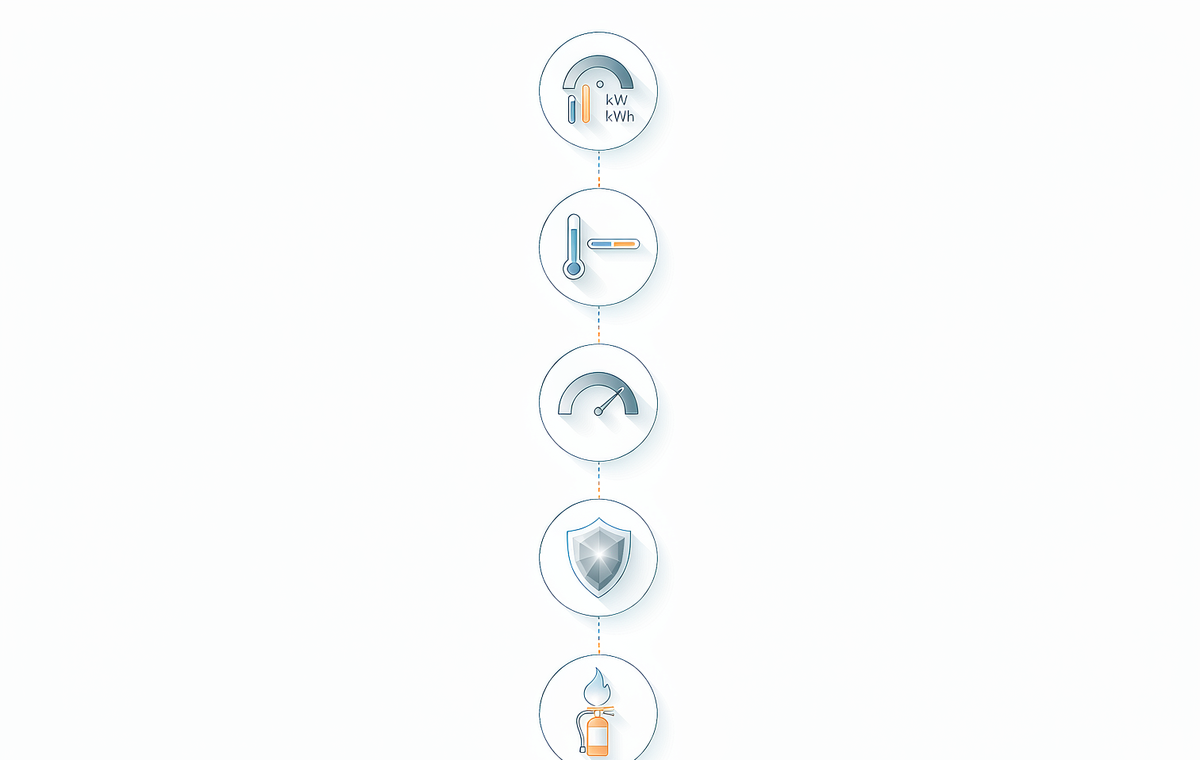
Why price per kWh misleads
Two suppliers can quote the same nominal 261 kWh capacity and deliver completely different lifetime economics. The per-kilowatt-hour figure says nothing about how much usable energy you get each day, how many cycles the pack survives, how much energy is lost on every charge-discharge round trip, or what happens when a warranty claim arises. A cheaper cabinet that loses usable capacity faster, wastes efficiency points daily, or excludes the fire-safety stack can easily cost more per delivered kilowatt-hour over ten years than a better-engineered unit with a higher sticker price.
Total cost of ownership (TCO) is therefore the only fair basis for comparison. It bundles capital cost, installation, operating losses, degradation, maintenance and replacement risk into a single view. The sections below walk through the line items that move TCO most, so you can build a like-for-like comparison across suppliers.
The seven cost drivers to normalise across quotes
1. Round-trip efficiency, labelled DC or AC
Round-trip efficiency is the share of energy you get back after a full charge and discharge. The BR-261 is stated at ≥98.2% maximum DC round-trip efficiency. Over one cycle a two-point difference looks trivial; over 6,000 cycles it becomes a permanent tax on every kilowatt-hour you shift. Always ask whether the number is DC or AC: DC excludes the power conversion system, AC includes it, and AC is the figure that maps to your electricity bill. If a quote quotes efficiency without stating the basis, treat the comparison as incomplete.
2. Cycle life and its test conditions
A cycle-life number is meaningless without its conditions. BR-261 is rated at ≥6,000 cycles at 0.5C charge and discharge, 25°C ±2°C, to 70% remaining capacity (end of life). Check three things in every quote: the charge-discharge rate, the temperature the test assumes, and the end-of-life threshold. A supplier quoting cycles to 60% EOL at a lower rate may look better while delivering less. Our article on LFP cycle life and warranty explains how to decode these figures.
3. Thermal control and degradation rate
Cell temperature decides whether the cycle-life number survives contact with your site. Liquid cooling that holds battery temperature at or below 38°C at full load and keeps cell-to-cell spread within 3°C — the BR-261 reference point — lets the pack cycle daily without the hottest cells aging first. An air-cooled cabinet in a hot industrial park will typically drift out of balance faster, pulling real-world cycles below the datasheet figure. Ask for the maximum cell temperature and cell-to-cell difference at full load in writing.
4. Integration scope: one cabinet or three suppliers
An all-in-one cabinet integrates the energy management system (EMS), power conversion system (PCS) and battery management system (BMS) in a single enclosure. Separately sourced components create integration risk: firmware mismatches, split warranties where each vendor blames the other, and longer commissioning. One integrated warranty from one responsible party is a TCO line item most buyers miss until something fails.
5. Installation, commissioning and grid interface
Outdoor-ready construction reduces site works: IP55 protection, C4 corrosion grade and an operating range of −20 to 55°C mean the BR-261 installs on a foundation without a building. Compare quotes on what is actually included — delivery, lifting, cabling, protection relays, communications (ETH, 4G, CAN, RS485, LAN), and commissioning tests. Items left "by others" appear later as unbudgeted costs.
6. Expansion path and parallel limits
Your load will grow. If a cabinet platform supports up to eight units in parallel, you can add capacity in 261 kWh steps without replacing the first asset. A platform with no parallel path forces a forklift upgrade later. Ask for the maximum parallel unit count and whether warranty terms change when units are paralleled. Our guide to scaling from 261 kWh to megawatt-hour sites covers the mechanics.
7. The safety stack as standard
Fire safety items that arrive as options are TCO items in disguise. The BR-261 includes pack- and system-level aerosol fire suppression, AC-side level-two lightning protection with fault alarm, leakage-current detection, an explosion-proof cabinet, 50 mm fire-resistant rock wool and at least one hour of fire resistance. When normalising quotes, list every safety layer as included or excluded; the excluded list is where cheap quotes hide their true cost. See battery fire safety in commercial energy storage for the full layer model.
Building a comparable TCO sheet
Put every quote into the same spreadsheet with these rows, filled from datasheets rather than sales claims:
- Capital cost per cabinet, including delivery and lifting.
- Site works and commissioning not included in the unit price.
- Rated power and usable energy, stated separately (for example 100 kW / 261 kWh).
- Round-trip efficiency with DC/AC basis stated.
- Cycle life with rate, temperature and EOL threshold.
- Thermal figures: maximum cell temperature at full load and cell-to-cell spread.
- Warranty length, capacity retention guarantee and response commitments.
- Safety layers included as standard versus priced as options.
- Parallel limit and expansion cost per additional 261 kWh step.
- Communication interfaces and remote-monitoring platform availability.
Then estimate delivered energy over the warranty period: usable energy per cycle, multiplied by expected cycles within the warranty terms, multiplied by round-trip efficiency. Cost per delivered kilowatt-hour — not per installed kilowatt-hour — is the number that ranks quotes honestly. An illustrative worked comparison of two hypothetical 261 kWh quotes will almost always flip the ranking once efficiency and cycle life enter the calculation.
Common traps in C&I storage quotes
- Capacity without usability. Nominal kWh is not usable kWh at your operating temperature and depth of discharge. Ask for usable energy at the rating.
- Efficiency without a basis. DC versus AC round-trip efficiency differs by the conversion stage; the BR-261's ≥98.2% is stated as maximum DC efficiency, and an AC-side figure will be lower after the PCS.
- Cycles without conditions. A cycle count without rate, temperature and EOL threshold cannot be compared.
- Parallel claims without warranty backing. Some platforms allow paralleling technically but void warranty terms when units are combined.
- Safety as an option list. Aerosol suppression, explosion-proof construction and fire-resistant materials should be standard on any quote you accept.
For the broader decision framework before you even collect quotes, start with how to choose a liquid-cooled C&I battery cabinet, and if you are comparing scale points, read container versus cabinet economics.
FAQ
What is total cost of ownership for a C&I battery system?
It is the sum of capital cost, installation and commissioning, energy losses across every cycle, degradation of usable capacity, maintenance and end-of-warranty risk, expressed over the project life. TCO turns a price-per-kilowatt-hour comparison into a cost-per-delivered-kilowatt-hour comparison, which is the number that reflects real economics.
How much does round-trip efficiency change the economics?
Every point of efficiency is lost on every cycle, every day, for the life of the asset. Over thousands of daily cycles, a system stated at ≥98.2% maximum DC efficiency versus a hypothetical lower-efficiency alternative shifts measurably more bill value per year, which is why efficiency belongs at the top of the comparison sheet.
Why is a warranty more than a length in years?
Read the retention curve (guaranteed remaining capacity over time or cycles), the conditions that void it, and who is contractually responsible when integrated components fail. A single-party integrated warranty on an all-in-one EMS/PCS/BMS cabinet removes the multi-vendor blame loop that stretches downtime and cost.
Should I normalise quotes per kWh or per kW?
Both. Energy (kWh) drives arbitrage and load-shifting value; power (kW) drives demand-charge reduction. A 100 kW / 261 kWh rating states both, but only the delivered-energy calculation over the warranty period reveals true cost per useful unit.
How does parallel expansion affect TCO?
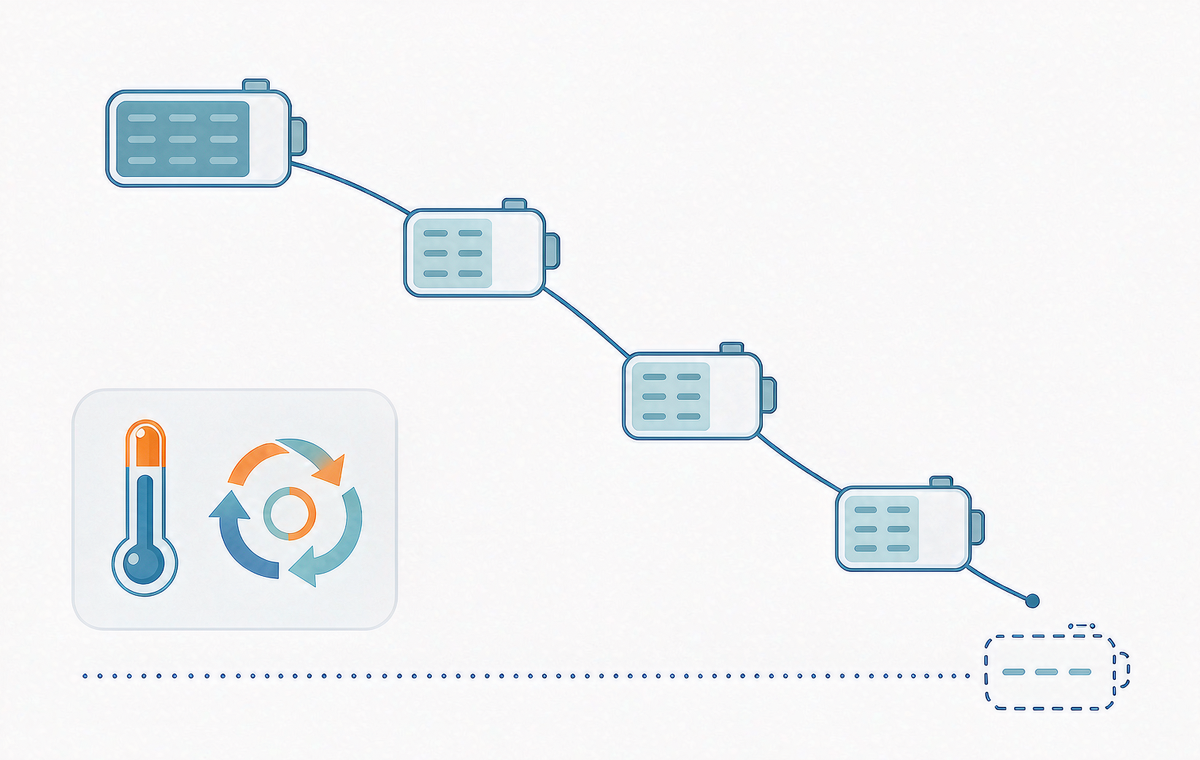
A platform that scales by adding cabinets in parallel converts your first purchase into the first step of a growth path. Up to eight BR-261 units can run in parallel, so capacity follows demand growth instead of forcing early overbuying or later forklift replacement.
Next step
Send us two or three competing quotes with their datasheets. We will produce a side-by-side TCO normalisation on the rows above — efficiency basis, cycle conditions, safety stack, parallel path and warranty terms — so you can see cost per delivered kilowatt-hour rather than price per installed one. Request a TCO comparison from BR Solar.
Continue reading
- C&I Energy Storage ROI: Payback, LCOS and Value Stacking
- Scaling with Parallel Cabinets: From 261 kWh to Megawatt-Hour Sites
- 6,000 Cycles Explained: LFP Cycle Life and Warranty
- Battery Fire Safety in Commercial Energy Storage






