

Quick answer: The economics of commercial and industrial storage are made in the tariff, not the hardware. The same 100 kW / 261 kWh liquid-cooled cabinet that pays back in four years in one market can take nine in another. What separates high-value markets from low-value ones is a short list: the gap between peak and off-peak prices, the size of demand charges, the reliability of supply, and the policy environment. Today, that combination is strongest in much of Europe, in industrial Africa where grid outages tax every operating hour, and across Southeast Asia's manufacturing economies where time-of-use spreads are wide. Buyers in these markets share one task: matching the battery's duties to the specific tariff and grid reality in front of them.

What makes a market "high-value" for C&I storage
Four characteristics determine how much money a battery can earn at a commercial site:
- Peak-valley spread. The wider the gap between expensive peak hours and cheap night hours, the more each daily arbitrage cycle earns. Industrial time-of-use tariffs in parts of Europe and Southeast Asia create spreads that make a single daily cycle genuinely profitable.
- Demand charge intensity. Where utilities bill the monthly peak heavily (common in industrial tariffs across Africa and Asia), peak shaving earns a second, independent revenue stream from the same hardware.
- Supply reliability. Where outages and voltage problems interrupt production, storage buys uptime — a value that often exceeds everything the tariff itself offers, as explained in our article on voltage sags.
- Policy and incentives. Investment grants, tax credits, low-voltage grid codes and demand response programmes shift payback meaningfully — and they change often enough that the site survey must always include the current rulebook.
A market scoring high on two or more of these is a candidate; a site scoring on three or four is usually compelling.
Europe: price spreads, grid fees and self-consumption
Europe's industrial electricity prices are among the world's highest, and retail tariffs frequently layer time-of-use pricing on top. For a factory or warehouse, that makes daily arbitrage straightforward: charge overnight, discharge through the evening peak. The second European driver is self-consumption: rooftop solar is widespread, but wholesale price curves sag at midday, so storage captures midday surplus for the evening instead of exporting it at a fraction of its value — the same logic as factory solar-plus-storage. Third, grid connection costs: in several European markets, upgrade costs and connection queues make virtual capacity expansion attractive for growing sites.
European buyers also tend to be technically demanding, which favours liquid-cooled, specification-led equipment. Requirements like the BR-261's ≥98.2% maximum DC round-trip efficiency, cell temperature ≤38°C at full load, ≤3°C cell-to-cell spread and IP55/C4 outdoor envelope map directly onto European procurement checklists, and the full datasheet logic is in our twelve-spec guide.
Africa: reliability first, tariff savings second
Across much of industrial Africa, the first value of storage is not arbitrage but continuity. Where outages and load-shedding interrupt production daily, every avoided interruption carries direct savings: idle labour, restarted batches, protected cold chains, kept commitments. A battery cabinet that carries critical loads through outages pays for itself through production alone, and tariff arbitrage or demand charge reduction stack on top.
African conditions also stress hardware in ways temperate markets do not: high ambient temperatures, dust, long cable runs from weak grid points, and sites that are genuinely remote. Equipment choices follow: wide operating envelopes (−20°C to 55°C on the BR-261, with low-temperature heating for cold highland sites), robust enclosures (IP55, C4 as standard), and microgrid capability for sites that must island — the architecture is described in microgrid-ready storage for remote industrial sites. Where loads are larger, the same liquid-cooled platform scales: the 5.01 MWh container serves industrial parks while cabinets serve individual plants, a comparison in container versus cabinet.
Southeast Asia: manufacturing loads and steep time-of-use
Southeast Asia's manufacturing economies — textiles, electronics, food processing, automotive supply chains — combine heavy daytime loads with time-of-use tariffs whose peak blocks land squarely on production hours. Demand charges are common, and rising afternoon peaks in several grids make peak windows expensive and long. That is the ideal shape for storage: a predictable industrial load, a deep and wide peak window, and often strong rooftop solar potential to pair with it.
Tropical conditions add their own requirements: sustained high humidity and temperatures push thermal management to the top of the specification list. Liquid cooling with a ≤38°C cell ceiling and 3°C spread is not a luxury in a hot climate; it is the difference between achieving the rated 6,000-cycle life and watching capacity fade early — the mechanics are in LFP cycle life and warranty. Humidity and corrosion discipline (IP55, C4) protect the enclosure through monsoon seasons.
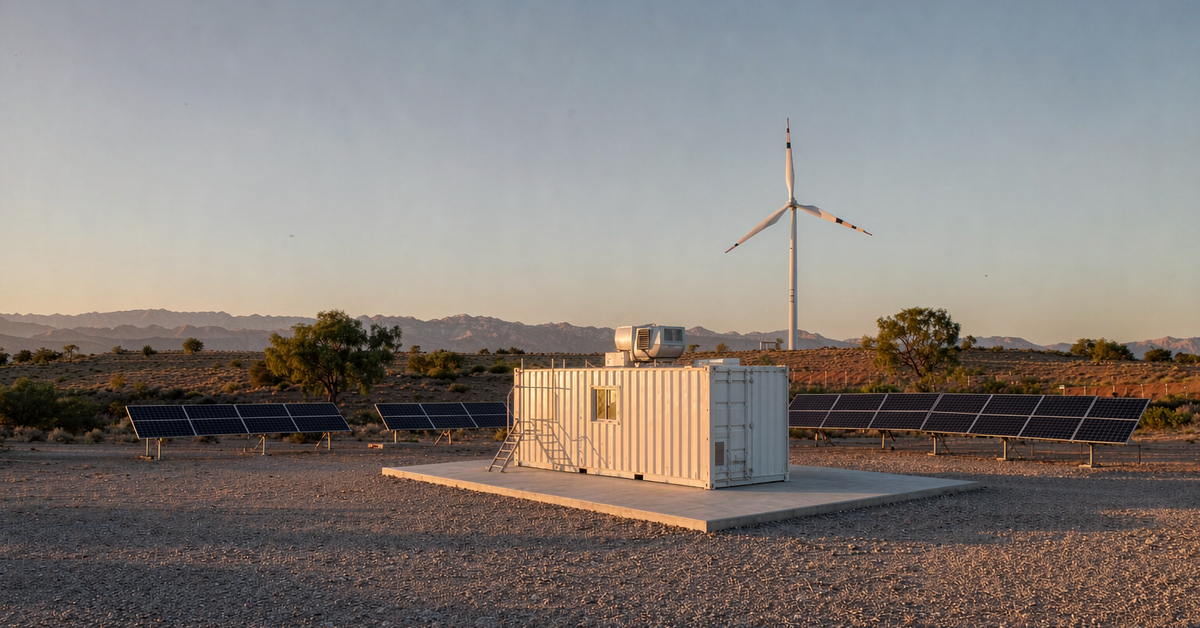
One platform, market-specific duties
The practical advantage of a standardised platform like the BR-261 across markets is that the hardware stays constant while the dispatch strategy changes:
- Europe: arbitrage-led dispatch against time-of-use spreads, with solar self-consumption and grid-fee management as secondary duties.
- Africa: reserve-led dispatch, holding state of charge for continuity, with arbitrage on the margin when supply is stable.
- Southeast Asia: demand-charge-led peak shaving through long afternoon windows, with solar shifting as a strong secondary.
The same cabinet — 100 kW / 261 kWh, paralleling to eight units, ETH/4G/CAN/RS485/LAN communications — executes all three. Fleets spanning markets manage the strategies centrally, as described in remote monitoring and fleet O&M, which is precisely why buyers in expansion mode choose one platform and vary its duties rather than mixing hardware.
Checking your own market: a four-question screen
Before commissioning a feasibility study anywhere, answer four questions with data:
- What is the actual spread between your cheapest and most expensive tariff hours, in currency per kWh?
- What do demand or capacity charges add per kW of monthly peak?
- How many production-affecting supply events did you log last year, and what did each cost?
- What incentives, tax treatments or grid rules currently apply to behind-the-meter storage at your site?
Two strong answers justify a study; four make the study a formality. The full financial method — payback, LCOS and value stacking — is laid out in ROI, payback, LCOS and value stacking.
FAQ
Which market has the fastest payback?
Whichever combines a wide peak-valley spread with heavy demand charges and unreliable supply. No single region wins universally; individual sites within each region differ more than the regions themselves. The site survey, not the map, decides.
Does the same cabinet really suit all three regions?
Yes — that is the point of the operating envelope. −20°C to 55°C with heating covers European winters and African highlands; IP55 and C4 cover monsoon humidity and coastal salt; liquid cooling covers tropical heat. The cabinet stays, the strategy changes.
How do incentives change the decision?
They accelerate it but should not drive it. A project viable on tariffs alone survives policy changes; one dependent on a single subsidy may not. Model the base case without incentives, then let incentives shorten the payback.
What about countries with subsidized electricity prices?
Where regulated tariffs compress the peak-valley spread, arbitrage weakens — but reliability value, demand charge reduction and solar self-consumption can still carry the case, particularly where outages are frequent or industrial tariffs include heavy demand components.
Can multiple markets be served from one fleet platform?
Yes. Standardised hardware with ETH/4G/CAN/RS485/LAN communications and a common EMS data model lets one monitoring layer run sites in different countries, each with its local dispatch strategy — the fleet model described in our remote monitoring article.
Next step
Send your tariff sheet, interval data and outage log for the site in question, plus the country it operates in. We will screen the market, model the duties that actually earn money there, and return a configuration with a market-specific payback estimate. Request a market assessment from BR Solar.
Continue reading
- C&I Energy Storage ROI, Payback, LCOS and Value Stacking
- Microgrid-Ready Storage for Remote Industrial Sites
- Virtual Capacity Expansion: How C&I Storage Defers Grid Upgrades
- Reading a BESS Datasheet: The 12 Specs That Actually Matter





