

Quick answer: Hotels and resorts face a double energy problem: high, spiky demand from kitchens, laundries, pools and HVAC that inflates demand charges, plus the operational and reputational cost of outages that ruin guest experiences. A battery energy storage system solves both with one asset: it clips demand peaks and shifts energy from expensive to cheap hours every day, and it stands ready as backup power for guest-critical circuits when the grid fails. A 100 kW / 261 kWh liquid-cooled cabinet like the BR-261 installs outdoors beside the plant room, runs silently from IP55-rated construction, and scales in parallel steps as the property grows.
Why hotels are a natural fit for storage
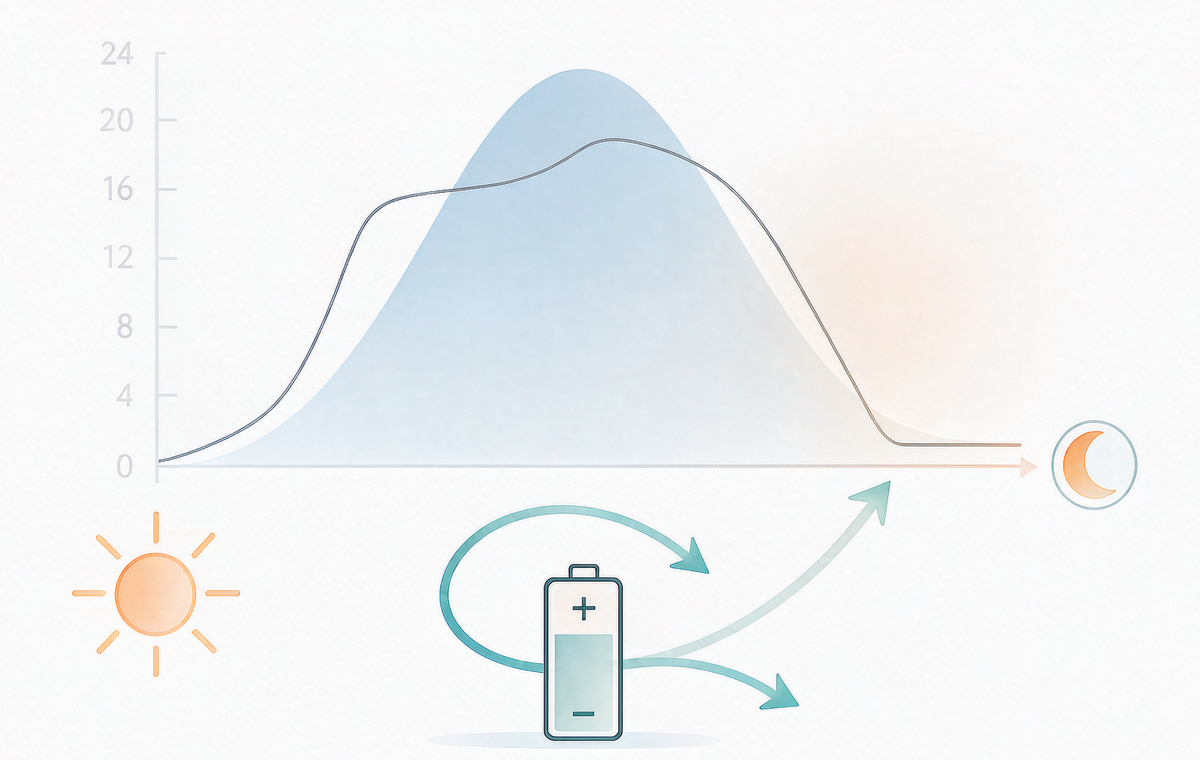
A property's load profile is almost a designed test case for battery economics. Occupancy-driven loads — air conditioning ramping with check-ins, kitchens firing before breakfast and dinner service, laundry cycles, pool pumps — create tall, predictable peaks morning and evening. Between them sit valley hours, often when tariffs are cheapest overnight. That shape gives a battery somewhere profitable to move energy and clear peaks to clip.
Properties in island, coastal or grid-edge locations add the second motive: reliability. Resorts market uninterrupted comfort, and even a short outage means elevators stop, kitchens fail mid-service, booking systems drop and reviews follow. A storage system that already cycles daily for savings costs little more to also serve as the property's ride-through and backup resource — the value stack is the business case.
The daily playbook: what the battery does hour by hour
Night and early morning: charge cheap, prepare
During valley-tariff hours the EMS charges the pack to full. On properties with rooftop or ground-mount PV, midday surplus tops the pack instead, raising solar self-consumption rather than exporting energy for a fraction of its worth. The pattern mirrors the factory case in solar plus storage for factories.
Morning peak: hold the demand ceiling
As guests wake, HVAC and hot water surge. The EMS — watching site power in real time — discharges just enough to hold total draw at the demand target, preventing the breakfast rush from setting the month's maximum. Demand-charge mechanics and sizing are covered in demand-charge management with battery storage.
Afternoon: refuel from the sun
Between peaks the cabinet recharges — from PV surplus on sunny days, from the grid in cheap windows otherwise — and stands ready for the second event of the day.
Evening peak: shift and shave again
Dinner service and evening cooling recreate the morning pattern. The battery repeats the clip, and where the tariff spreads prices widely, it simultaneously shifts stored cheap energy into the expensive hours. One cabinet, two daily cycles — sustainable because the BR-261 is rated ≥6,000 cycles at 0.5C/0.5C, 25°C ±2°C, to 70% end of life, with liquid cooling holding cells within 3°C of each other even in coastal heat.
Backup power: protecting the guest experience
Savings alone justify many projects; backup is what tips the decision. Design backup in two tiers:
- Critical circuits. Emergency lighting, elevators, fire and security systems, kitchen cold storage, booking and payment systems, selected guest-floor circuits. The storage system's fast response carries these loads through the seconds-to-minutes until generators start — or entirely, for shorter events.
- Continuity of service. For properties on weak or islanded grids, the cabinet can coordinate with existing generators and PV as a microgrid, reducing generator run-hours and fuel logistics. The integration patterns are the same as those in microgrid storage for remote industrial sites, applied to a property instead of a mine.
Size the backup tier separately from the savings tier: list critical loads, sum their power, and confirm the cabinet's 100 kW rating (144 A rated output on 380/400 V three-phase) covers the critical bundle, adding parallel units where a larger property needs more. Energy autonomy time equals usable energy divided by critical load — roughly 2.6 hours at full 100 kW output under ideal conditions from a single BR-261, and proportionally longer at lighter critical load.
Siting, safety and guest comfort
Hotels are sensitive environments, which makes the cabinet's outdoor design valuable:
- Footprint and noise. The BR-261 occupies about 1100 × 1400 mm of ground area and sits outdoors on a foundation — no interior plant-room space needed, and no guest-noticeable noise.
- Weather and corrosion. IP55 sealing and C4 corrosion resistance suit coastal salt atmospheres; the −20 to 55°C operating range with low-temperature heating covers mountain resorts too. The enclosure choice between sealing grades is explained in IP55 versus IP65 enclosures.
- Fire safety. LFP chemistry, pack- and system-level aerosol suppression, an explosion-proof cabinet, 50 mm fire-resistant rock wool and at least one hour of fire resistance form the safety stack; site it with the separation distances described in battery fire safety in commercial energy storage and integrate with the property's fire alarm network.
- Visibility for engineering staff. Cloud dashboards and remote alarms (ETH, 4G, CAN, RS485, LAN communications) let a small engineering team supervise the asset without daily rounds.
Building the property business case
Assemble the case from four savings lines, each estimated from property data:
- Demand-charge reduction from clipping morning and evening peaks every month.
- Energy arbitrage from shifting valley-priced energy into peak-priced hours, multiplied by the system's ≥98.2% maximum DC round-trip efficiency.
- Increased PV self-consumption where solar exists — every exported surplus kilowatt-hour converted to evening guest-service use.
- Avoided outage losses — the harder-to-quantify but real value of uninterrupted service, reduced generator run-hours and fuel savings where generators previously carried every event.
The full financial framework — payback, LCOS and stacking — is laid out in C&I energy storage ROI, payback and value stacking, and the general bill-cutting mechanics in behind-the-meter storage.
FAQ
Can one battery really handle both peak savings and backup?
Yes — that is the point of the dual strategy. The EMS prioritizes backup readiness as a state-of-charge floor (never discharge below the reserve needed for critical circuits) and uses only the energy above that floor for daily savings. The guest never notices, and the savings continue.
Will guests see or hear the equipment?
Properly sited, no. The cabinet installs outdoors behind service areas with IP55 weatherproofing and a compact footprint. Liquid cooling keeps acoustic output low, and remote monitoring removes the need for visible plant-room space.
How long can it run the property in an outage?
That depends on the load you designate as critical. At a full 100 kW draw a single cabinet provides roughly two and a half hours under ideal conditions; at typical critical-circuit loads well below 100 kW, autonomy stretches proportionally. Multiple parallel units extend both power and duration.
Does it work with our existing generators?
Yes. The standard pattern is battery-first: the storage carries short events instantly and quietly, generators start only for longer outages, and the EMS coordinates handover. Generator run-hours, maintenance and fuel logistics all fall.
Is the battery safe to install near occupied buildings?
The design stack — stable LFP chemistry, dual-level aerosol suppression, explosion-proof construction, fire-resistant rock wool and documented fire resistance — is engineered for commercial premises, and siting follows the fire-separation distances in our fire-safety guide, integrated with the property's alarm system.
Next step
Send us the property's load profile, tariff sheet and critical-circuit list. We will simulate the daily playbook against your occupancy pattern, confirm the backup tier's power and autonomy, and quote a configuration sized to your property — single cabinet or parallel fleet. Request a hospitality storage proposal from BR Solar.
Continue reading
- Battery Storage for Hospitals and Critical Facilities
- Demand Charge Management with Battery Storage for Factories
- Microgrid-Ready Storage for Remote Industrial Sites
- Solar Plus Storage for Factories: Raising Self-Consumption






